


The intersection of metal 3D printing and aerospace certification represents one of the most challenging yet rewarding frontiers in modern manufacturing. In March 2026, a significant milestone was achieved when VOCUS GmbH, in collaboration with Materialise and EOS, received European Aviation Safety Agency (EASA) certification for a 3D printed aircraft exhaust component . This accomplishment demonstrates that additive manufacturing can meet the rigorous safety and quality demands of the aviation industry while delivering substantial performance improvements.
This article explores the technical achievements, certification process, and broader implications of this development for the aerospace sector. At LAVA3DP, we provide professional metal 3D printing services for aerospace and other high-performance applications. Visit lava3dp.com to learn how we can support your manufacturing needs, or contact our team for project consultations.
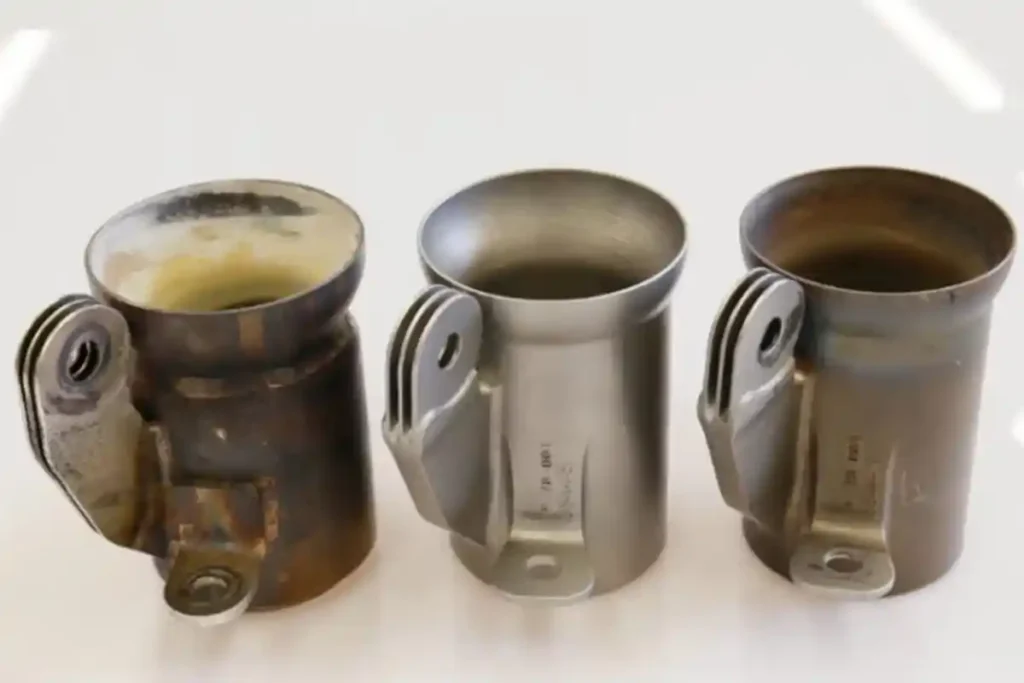
The Challenge: Limitations of Traditional Manufacturing
The aircraft exhaust components targeted for improvement were originally manufactured using manual welding techniques. This conventional approach presented multiple challenges that affected both performance and production efficiency :
- Welding deformation compromising dimensional accuracy
- Dimensional deviations requiring extensive rework
- Stress concentrations leading to premature failure
- Short service life increasing maintenance frequency
- Inconsistent quality due to manual processes
- Limited traceability complicating quality assurance
These issues are not unique to this specific component. Traditional manufacturing methods for aerospace parts often involve multiple steps, significant material waste, and inherent variability that can affect performance and reliability .
The Solution: A Digital Workflow for Additive Manufacturing Certification
VOCUS, Materialise, and EOS developed a comprehensive digital workflow that addressed the entire production chain from design to certification. This approach created a fully traceable, standardized manufacturing process capable of meeting EASA requirements .
Step 1: Reverse Engineering and Digital Reconstruction
The project began with CT scanning of original parts to generate precise digital models. This non-destructive testing approach enabled accurate reverse engineering without damaging existing components. The digital models captured every geometric detail, providing a foundation for subsequent optimization .
Step 2: Design Optimization for Additive Manufacturing
Using the scanned data, engineers performed CAD reconstruction and implemented design for additive manufacturing (DfAM) principles. Key improvements included :
- Eliminating weld-induced transition zones that previously created weak points
- Strengthening high-stress regions through strategic material placement
- Reducing overall weight while maintaining structural integrity
- Optimizing geometry for the metal 3D printing process
Research confirms that DfAM techniques such as topology optimization and generative design can significantly enhance part performance while reducing weight—a critical factor in aerospace applications where every gram affects fuel efficiency .
Step 3: Rapid Prototyping for Validation
Before committing to metal production, the team used polymer 3D printing to create physical prototypes for fit and assembly verification. This step allowed rapid design iterations at minimal cost, confirming that the optimized geometry would integrate correctly with surrounding components .
Step 4: Metal Additive Manufacturing with Inconel 718
Production parts were manufactured using EOS metal 3D printers with EOS NickelAlloy IN718—a nickel-based superalloy widely used in aerospace applications requiring high strength at elevated temperatures .
Inconel 718 (IN718) offers exceptional mechanical properties including :
- High tensile strength at temperatures up to 650°C
- Excellent oxidation and corrosion resistance
- Good fatigue and creep performance
- Precipitation hardening through γ′ and γ″ phases
The EOS systems were selected for their stable melt pool behavior and consistent printing performance—essential factors for producing repeatable, certifiable parts. The build platform accommodated six sliding components simultaneously, with integrated material test coupons for validation .
Step 5: Post-Processing and Quality Control
After printing, components underwent a comprehensive post-processing sequence :
- Stress relief heat treatment to reduce residual stresses
- Support removal using precision techniques
- Mechanical machining for critical interfaces
- Ceramic shot blasting for surface finishing
- Batch and serial number marking for traceability
Research indicates that post-processing typically accounts for approximately 13% of life cycle costs for additively manufactured aerospace components, making it an important consideration in economic evaluations .
Step 6: Digital Traceability and Data Integration
A key innovation was the implementation of a central data backbone using Materialise Streamics platform. This system connected :
- Machine parameters and build settings
- Material batch information
- Post-processing documentation
- Inspection results and quality metrics
- Final certification documentation
This comprehensive traceability aligns with EN 9100 requirements, which mandate documented evidence of all raw materials, processes, tools, and personnel qualifications throughout the supply chain .
Testing and Certification: Meeting EASA Requirements
The certification process required extensive validation of both the parts and the production workflow.
Ground Testing
EASA mandated 10 hours of ground testing, but VOCUS exceeded this requirement by completing 20 hours on Binder Motorenbau and SOLO Aero engines. The test protocol simulated real-world operating conditions :
- Cold start procedures
- Engine start-up sequences
- Full power operation (5 minutes)
- Idle operation (3 minutes)
- Cooling cycles
- Repeat sequences
Flight Testing
Following successful ground tests, the components underwent 35 hours of flight testing aboard an Arcus aircraft. The parts performed without incident, demonstrating their reliability in actual operating conditions .
Certification Achieved
The production chain received EASA Supplemental Type Certificate (STC) certification, confirming compliance with :
- EN 9100 aerospace quality management standards
- ISO 9001 quality management requirements
- Specific EASA airworthiness directives
EN 9100 certification is essential for aerospace suppliers, as it demonstrates conformance with internationally recognized quality standards and is often required for acceptance by major aircraft manufacturers .
Performance Results: Tenfold Improvement in Service Life
The certified additive manufacturing process delivered impressive results compared to traditional welded components :
- 10× longer service life—the most significant operational improvement
- Enhanced stress resistance through optimized geometry
- Superior repeatability from digital process control
- Greater precision eliminating manual variation
- Complete traceability for quality assurance
This performance improvement translates directly to reduced maintenance frequency, lower operating costs, and increased aircraft availability—benefits that align with industry goals for more efficient operations .
The Technology Behind the Achievement: Inconel 718 in Additive Manufacturing
Inconel 718 has become the most widely used nickel-based superalloy in additive manufacturing due to its favorable processing characteristics and exceptional high-temperature properties .
Material Properties
IN718 derives its strength from multiple strengthening mechanisms :
- γ′ (Ni3(Al, Ti)) precipitation strengthening
- γ″ (Ni3Nb) precipitation strengthening
- Solid solution strengthening from alloying elements
- Carbide formation for grain boundary stability
Manufacturing Considerations
Research has identified several factors that influence the quality of additively manufactured IN718 components :
| Factor | Impact on Final Part |
|---|---|
| Porosity | Affects density and mechanical properties |
| Laves phase formation | Can reduce ductility and fatigue life |
| Residual stresses | May cause distortion if not managed |
| Microstructural anisotropy | Influences directional properties |
| Surface finish | Affects fatigue performance |
Proper heat treatment is essential for optimizing microstructure and mechanical properties. Studies show that solution treatment and aging can dissolve undesirable Laves phases and promote the formation of strengthening precipitates, resulting in properties comparable to wrought material .
Comparison of Metal Additive Manufacturing Technologies
The VOCUS project utilized laser powder bed fusion (L-PBF) , which is the most common metal 3D printing technology for aerospace applications . However, other technologies offer different advantages depending on the application.
Table: Comparison of Metal Additive Manufacturing Technologies for Aerospace
| Technology | Typical Applications | Key Advantages | Limitations |
|---|---|---|---|
| Laser Powder Bed Fusion (L-PBF) | Complex small to medium parts, brackets, housings | High detail, good surface finish, aerospace-grade density | Limited build size, slower build rate |
| Directed Energy Deposition (DED) | Large parts, repairs, near-net shapes | High deposition rate, can repair existing parts, larger build volumes | Lower resolution, requires more post-processing |
| Electron Beam Melting (EBM) | Medium complexity parts | Reduced residual stresses, higher productivity | Surface finish requires improvement |
| Binder Jetting | High-volume production | Fast build speed, no supports needed | Extensive post-processing required |
Each technology has its place in the aerospace manufacturing ecosystem, and the choice depends on part size, complexity, volume, and performance requirements .
The Economics of Additive Manufacturing in Aerospace
The adoption of additive manufacturing for certified aerospace components involves complex economic considerations that extend beyond simple part cost comparisons.
Life Cycle Cost Benefits
Research indicates that additive manufacturing can significantly reduce life cycle costs for aerospace components, particularly those with high criticality. Studies have documented potential cost reductions of up to 39% compared to traditional manufacturing methods, even for parts with relatively simple design requirements .
Key economic factors include :
- Weight reduction improving fuel efficiency over the aircraft’s lifetime
- Reduced inventory through on-demand production
- Lower maintenance costs from extended component life
- Decreased downtime through faster part availability
- Consolidated assemblies reducing part count and assembly time
Production Speed Advantages
Additive manufacturing can reduce production times by factors of 2 to 10 compared to conventional techniques . For replacement parts, this means reducing aircraft downtime from weeks to days—a significant operational advantage .
Cost-Effectiveness Considerations
While metal 3D printing can be cost-effective for many applications, several factors influence economic viability :
- Build orientation affecting material usage and build time
- Batch size influencing per-part costs
- Post-processing requirements adding to total cost
- Material utilization reducing waste compared to subtractive methods
- Design optimization maximizing performance benefits
Quality Management and Certification Standards
The VOCUS achievement highlights the importance of robust quality management systems in aerospace additive manufacturing.
EN 9100 Series Requirements
The EN 9100 series of standards forms the foundation for aerospace quality management :
| Standard | Scope |
|---|---|
| EN 9100 | Design, development, production, assembly, and maintenance |
| EN 9110 | Maintenance organizations |
| EN 9120 | Aviation, space, and defense distributors |
Key focus areas include :
- Process approach with performance indicators
- Project management addressing customer-specific requirements
- Risk management for new technology introduction
- Traceability of materials, processes, and personnel
- Safety definition aligned with regulatory requirements
Certification Benefits
Organizations certified to EN 9100 gain :
- Global recognition through the IAQG network
- Entry into the Online Aerospace Supplier Information System (OASIS)
- Access to aviation, space, and defense supply chains
- Demonstrated commitment to quality and continuous improvement
Implications for the Aerospace Industry
The VOCUS achievement has significant implications for the broader aerospace industry and the future of additive manufacturing in regulated environments.
Demonstrated Certification Pathway
Perhaps most importantly, this project proves that additive manufacturing can achieve certification for flight-critical components. As one Materialise engineer noted, “We jointly demonstrated that certification is absolutely achievable when engineering expertise is combined with software-driven quality assurance” .
Opportunities for Smaller Suppliers
The project demonstrates that smaller aerospace suppliers can successfully implement certified additive manufacturing processes. By leveraging partnerships with technology providers like Materialise and EOS, companies can access the expertise and tools needed to meet regulatory requirements .
Supply Chain Resilience
Additive manufacturing offers significant potential for strengthening aerospace supply chains through :
- On-demand production reducing inventory requirements
- Distributed manufacturing enabling local production
- Rapid response to parts shortages
- Legacy part support without minimum order quantities
Future Directions
The success of this project points toward several future developments in aerospace additive manufacturing.
Advanced Materials Development
Research continues on new materials for additive manufacturing, including modified IN718 compositions with enhanced properties. Studies have explored rhenium-coated powders and other innovations to further improve high-temperature performance .
Process Monitoring and Control
Real-time monitoring systems are becoming increasingly sophisticated, enabling in-process defect detection and correction. These capabilities will further enhance quality assurance and certification processes .
Expanded Applications
As certification pathways become established, more aerospace components will transition to additive manufacturing. Potential applications include :
- Engine components such as casings and brackets
- Heat exchangers with optimized internal geometries
- Structural brackets with topology-optimized designs
- Repair applications using DED technologies
Conclusion
The VOCUS, Materialise, and EOS collaboration achieving EASA certification for 3D printed aircraft exhaust components represents a significant milestone in aerospace additive manufacturing. By developing a comprehensive digital workflow encompassing design, production, quality control, and traceability, the team demonstrated that certified metal 3D printing is not only achievable but can deliver substantial performance improvements—including a tenfold increase in service life.
For aerospace companies considering additive manufacturing, this achievement provides a validated pathway to certification. The combination of DfAM principles, robust process control, comprehensive traceability, and rigorous testing creates a framework that meets regulatory requirements while unlocking the full potential of additive manufacturing technologies.
At LAVA3DP, we specialize in professional metal 3D printing services for demanding applications. Whether you need certified aerospace components, functional prototypes, or production parts, our team has the expertise and technology to deliver results. Visit lava3dp.com to explore our capabilities, or contact us directly to discuss your project requirements.
Frequently Asked Questions (FAQs)
What types of metal 3D printing does LAVA3DP offer for aerospace applications?
LAVA3DP provides professional metal 3D printing services including laser powder bed fusion (L-PBF) for complex aerospace components. Our capabilities include Inconel 718, titanium alloys, stainless steels, and aluminum alloys, with comprehensive post-processing and quality control. Visit lava3dp.com for detailed information on our technologies and materials.
How does LAVA3DP ensure quality and traceability for certified aerospace parts?
We implement robust quality management systems aligned with aerospace requirements. Our processes include digital traceability of all materials and parameters, comprehensive inspection documentation, and adherence to recognized standards. Each project includes detailed quality records suitable for certification support. Contact our team to discuss specific quality requirements for your application.
What is the typical lead time for metal 3D printed aerospace components?
Lead times vary depending on part complexity, quantity, and post-processing requirements. Simple parts may be produced in days, while complex components requiring extensive testing and documentation may take several weeks. LAVA3DP works with clients to develop production schedules that meet project timelines. Visit lava3dp.com to request a quote for your specific parts.
Can LAVA3DP help with redesigning my existing part for additive manufacturing?
Yes, our team provides design for additive manufacturing (DfAM) support to optimize parts for metal 3D printing. We can help identify opportunities for weight reduction, performance improvement, and cost optimization through techniques such as topology optimization and generative design. Contact us to discuss your redesign needs.
What certifications does LAVA3DP hold for aerospace manufacturing?
LAVA3DP maintains quality systems appropriate for aerospace applications. While specific certifications should be confirmed based on project requirements, our processes are designed to support clients seeking EN 9100, ISO 9001, and other aerospace quality certifications. Visit lava3dp.com or contact our team for current certification status and quality documentation capabilities.