

FDM-Metal 3D Printing
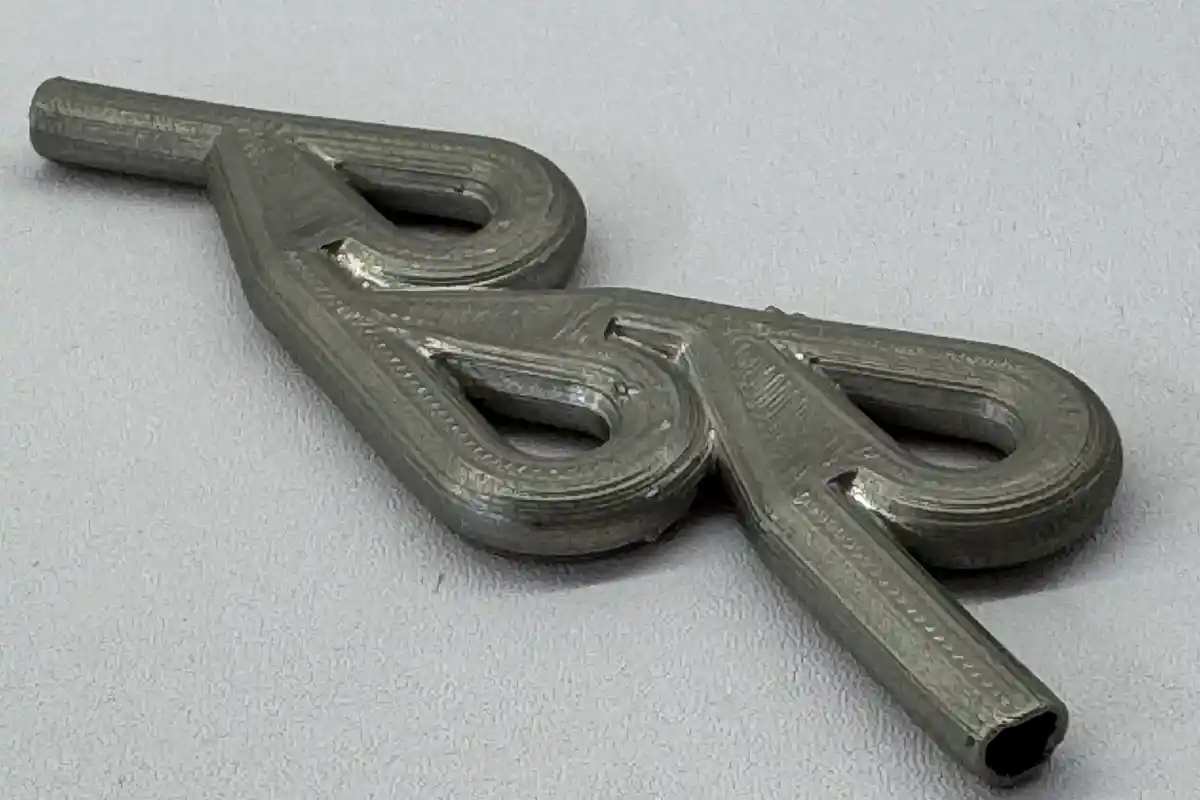
FDM-Metal 3D Printing: Bridging the Gap Between Plastic and Pure Metal
The manufacturing landscape is constantly evolving, and at LAVA3DP, we pride ourselves on offering the cutting-edge technologies our global clients need to innovate. One of the most exciting developments in recent years is the rise of FDM metal 3D printing service. This technology is democratizing access to metal parts, offering a compelling alternative to traditional manufacturing and high-cost metal printing methods, making it a low-cost metal additive manufacturing solution.
In this comprehensive guide, we will explore what metal FDM 3D printing is, how it works, its distinct advantages, the materials you can use, and its diverse applications. We will also provide a transparent look at the cost considerations and how this custom metal 3D printing service can fit into your functional metal parts manufacturing strategy.
Get an Instant QuoteFDM Metal 3D Printing Explained: A Cost-Effective Metal Manufacturing Solution
FDM-Metal, also known as metal fused deposition modeling or metal filament 3D printing service, is an additive manufacturing process that produces metal parts using standard FDM 3D printing technology. It is categorized as a material extrusion process and serves as a bridge between polymer prototyping and high-end metal production, often referred to as indirect metal 3D printing.
Unlike Direct Metal Laser Sintering (DMLS) or Selective Laser Melting (SLM), which use high-powered lasers to fuse metal powder at a high cost, FDM-Metal starts with a specialized filament. This filament is composed of a high percentage of metal powder—up to 70% metal content—bound together with a polymer binder, making it a desktop metal printing alternative.
How FDM Metal 3D Printing Works: Printing, Debinding & Sintering Process
- Printing: A standard, yet modified, FDM printer extrudes the metal-polymer filament layer by layer to create a “green part,” following key metal FDM process steps. This part is larger than the final desired dimensions to account for shrinkage.
- Debinding: The polymer binder is chemically or thermally removed from the green part, leaving behind a porous, fragile structure composed purely of metal powder, known as the “brown part,” a critical stage in debinding and sintering metal prints.
- Sintering: The brown part is placed in a high-temperature furnace. The metal particles fuse together, densifying the object through a precise metal filament sintering process. During this final stage, the part shrinks uniformly (typically 15-20%) to achieve its final, dense, all-metal form.
Key Benefits of FDM Metal Printing for Industrial & Custom Production
FDM-Metal is not just another 3D printing technology; it is a strategic tool that solves specific manufacturing challenges. Here is why it is gaining traction across industries and becoming a key part of industrial metal 3D printing solutions.
1. Unmatched Cost-Effectiveness
The most significant advantage of FDM-Metal is its accessibility. Industrial metal printers like DMLS machines can cost upwards of $500,000 to $1,000,000. In contrast, FDM-Metal leverages the simpler, more widespread FDM process, making it the cheapest metal 3D printing method for many applications. The initial investment in hardware is substantially lower, and this saving is passed on to you, positioning it as an affordable metal 3D printing service. This makes metal prototyping and low-volume production financially viable for small and medium-sized enterprises (SMEs) and startups seeking cost-effective metal prototyping.
2. Safe and Simple Workflow
Unlike powder-based systems that require specialized facilities and extensive safety protocols to handle fine metal particles, FDM-Metal uses safe, solid filament. This material is easy to handle, store, and use in standard workshop environments, making it a reliable production-grade metal printing service workflow.
3. Design Freedom for Complex Geometries
As an additive process, FDM-Metal allows for the creation of complex internal features, such as conformal cooling channels and organic lattice structures, enabling advanced complex geometry metal fabrication that is impossible to machine with CNC.
4. Rapid Iteration for Prototyping
Product development cycles are faster than ever. FDM-Metal enables rapid metal prototyping service capabilities, allowing you to iterate on functional metal prototypes quickly and affordably.
5. Material Versatility
The range of available metal filaments is growing rapidly, allowing engineers to match material properties to their specific application needs, supporting engineering-grade metal parts production.
Supported Metal Materials: Stainless Steel, Tooling Alloys & More
At LAVA3DP, we offer a selection of high-quality metal filaments to meet diverse engineering requirements as a global online metal 3D printing service. The choice of material will dictate the mechanical properties, corrosion resistance, and temperature tolerance of your final part.
- Stainless Steel (316L): The workhorse of the industry, widely used in stainless steel 3D printing service applications. 316L offers excellent corrosion resistance and good mechanical properties. It is ideal for food processing equipment, medical tools, marine hardware, and chemical components.
- Stainless Steel (17-4PH): A precipitation-hardening stainless steel known for its high strength and hardness, commonly used in 17-4 PH stainless steel printing.
- Tool Steel (A2, D2, H13): These materials are designed for wear resistance and are perfect for creating custom tooling, jigs, and fixtures in industrial-grade metal manufacturing environments.
- Inconel 625/718: A nickel-chromium superalloy known for its exceptional strength and oxidation resistance at high temperatures, widely used in industrial applications of FDM metal printing.
- Copper: With high electrical and thermal conductivity, copper supports copper filament 3D printing for heat exchangers and electrical components.
- Titanium (Ti6Al4V): Advancements in filament technology are making titanium viable for metal composite filaments, offering a high strength-to-weight ratio.
Metal Material Properties Comparison for Engineering Applications
To help you select the right material, here is a comparison of common FDM-Metal options.
| Material | Density (g/cm³) | Tensile Strength (MPa) | Typical Hardness | Corrosion Resistance | Common Applications |
|---|---|---|---|---|---|
| 316L Stainless Steel | ~7.9 | ~480 – 530 | 70-80 HRB | Excellent | Food/Medical parts, Marine Hardware |
| 17-4PH Stainless Steel | ~7.8 | ~900 – 1200 | 35-40 HRC | Good | High-strength Tooling, Shafts, Gears |
| Tool Steel (H13) | ~7.8 | ~1300 – 1500 | 50-55 HRC | Fair | Injection Molds, Die Casting Tools |
| Inconel 625 | ~8.4 | ~800 – 1000 | 30-40 HRC | Excellent (High Temp) | Turbine Blades, Rocket Components |
| Copper | ~8.9 | ~200 – 250 | 40-50 HRF | Good | Heat Sinks, Electrical Inductors |
Data compiled from industry standards and material datasheets .
Industrial Applications of FDM Metal 3D Printing in Manufacturing
The ability to produce metal parts without the overhead of traditional methods opens up a world of possibilities in on-demand metal parts service.
Functional Prototyping
Test form, fit, and function under real-world conditions with parts made from the actual final material, enabling affordable prototyping metal parts development.
Custom Tooling and Fixtures
Manufacturing floors often need specialized tools, jigs, and fixtures. FDM-Metal allows for the custom metal parts manufacturing service on demand, reducing downtime.
End-Use Parts and Spare Parts
For obsolete parts or low-volume production runs, FDM-Metal is a game-changer. Instead of warehousing thousands of spare parts, companies can store digital files and print them on demand, simplifying supply chains .
Aerospace and Defense
The ability to create lightweight, complex geometries from high-strength alloys like Inconel is invaluable for brackets, housings, and other components in the aerospace sector .
Medical and Dental
Custom surgical guides, instruments, and implants can be produced quickly and tailored to the individual patient’s anatomy using biocompatible stainless steels .
Understanding Metal 3D Printing Costs: Budget vs Performance
Understanding the cost of metal 3D printing is crucial for project planning. It is a common misconception that it is always more expensive than traditional methods, especially when compared as a low-cost alternative to CNC machining.
The cost of FDM-Metal is driven by several factors:
- Material Choice: Titanium and Inconel filaments are significantly more expensive than stainless steel, impacting overall metal printing vs casting cost comparisons.
- Part Volume and Build Height: Taller parts take longer to print, consuming more machine time in extrusion-based metal printing.
- Sintering Load: Furnaces are run in batches, impacting sintered metal parts production cost efficiency.
- Post-Processing: Additional CNC machining or polishing ensures quality-controlled metal 3D printing results.
FDM Metal vs CNC Machining vs DMLS & Casting: Cost Comparison Guide
The chart below illustrates why FDM-Metal is so compelling for specific use cases.
| Manufacturing Method | Relative Cost Index | Key Cost Drivers & Notes |
|---|---|---|
| CNC Machining | 85 | High setup costs for complex parts; material waste can add expense. Best for simple geometries. |
| DMLS / SLM | 100 | The baseline for comparison. Very high machine time and material costs, but excellent for extreme complexity. |
| FDM-Metal | 50 | Low setup costs and minimal material waste. Ideal for functional prototyping and medium complexity parts. |
| Investment Casting | 60 | High initial tooling costs for patterns, but becomes cost-effective for larger volumes than 100 units. |
*Note: Costs are indexed for comparison, with DMLS/SLM representing the baseline at 100. Actual costs vary based on part complexity and material .*
As the chart shows, while CNC and Investment Casting have high setup costs (tooling/molds), and DMLS has a high per-part cost, FDM-Metal offers a balanced, cost-effective solution for runs of 1 to 1000+ parts.
Design Guidelines for High-Quality FDM Metal 3D Printed Parts
To ensure a successful print, your design must adhere to specific rules, especially within the debinding sintering workflow.
- Minimum Wall Thickness: Maintain a minimum wall thickness of 1.0 mm or more to ensure reliable metal prototyping company level results.
- Escape Holes: Proper venting is critical for successful metal filament sintering process execution.
- Feature Size: Designing with radii ensures better outcomes in engineering certified metal parts.
- Shrinkage Compensation: Scaling ensures accuracy in high precision metal printing service outputs.
The Future of Affordable Metal Additive Manufacturing
FDM-Metal 3D printing is more than just a trend; it is a fundamental shift in how we approach metal part production. It empowers engineers and designers to think beyond the constraints of traditional manufacturing, enabling innovation through bridge production metal printing and scalable metal production solution strategies.
At LAVA3DP, we are committed to delivering expert metal additive manufacturing provider services as a trusted international metal printing company. Our workflow ensures upload CAD for metal printing simplicity and efficiency.
Ready to bring your metal parts to life? Get instant quote metal 3D printing and order metal 3D prints online by uploading your CAD file today.
Get an Instant Quote