

Vibratory Finishing
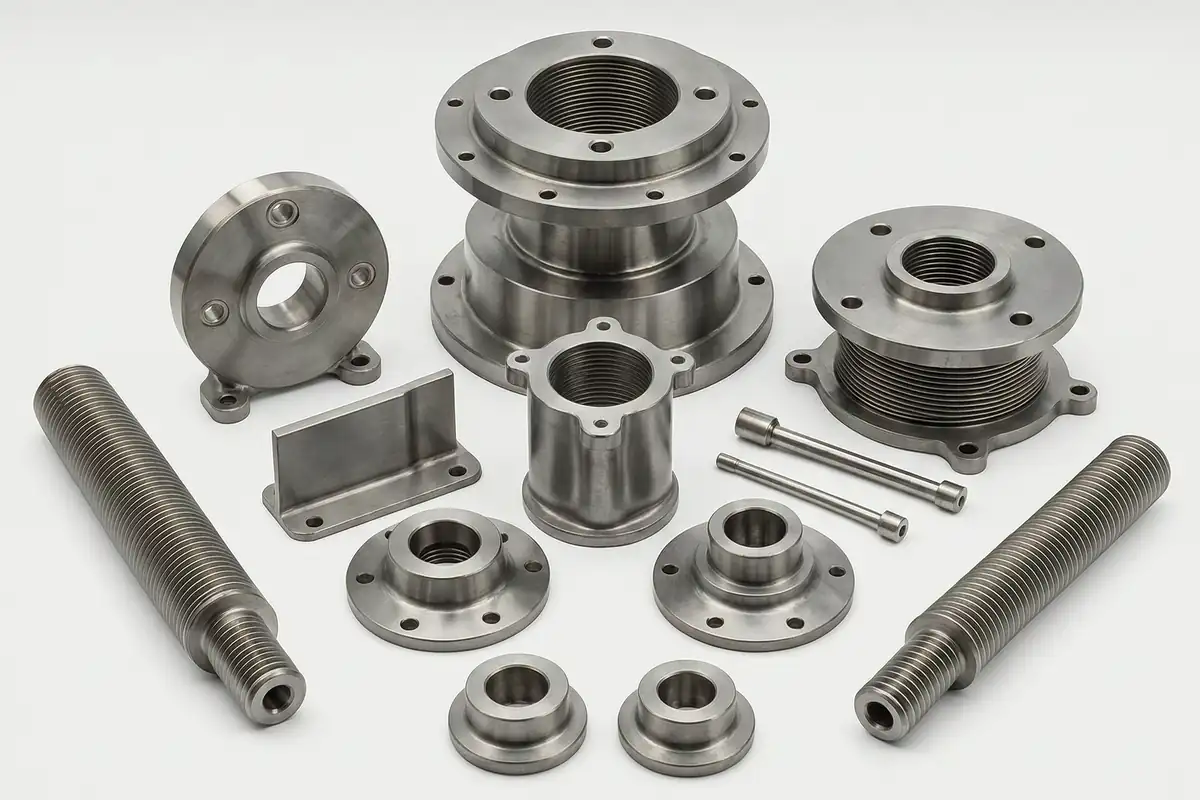
Vibratory Finishing: Surface Finishing Solution for Custom Parts
In the custom parts fabrication field, achieving the perfect surface finish is as critical as dimensional accuracy. Whether you produce CNC machined components, 3D printed prototypes, or metal castings, rough edges, burrs, and uneven surfaces can compromise functionality, safety, and aesthetics. This is where vibratory finishing comes into play – a highly efficient, automated mass finishing process that delivers superior results for a wide range of materials and geometries.
At LAVA3DP, we specialize in providing end-to-end custom parts manufacturing, including professional vibratory polishing services and vibratory deburring services. In this comprehensive guide, we will explore what Vibratory Finishing is, its key advantages, performance metrics, compatible materials, industry applications, and how you can leverage this technology to elevate your products.
Vibratory finishing enhances surface quality, deburrs edges, and polishes custom parts with consistent results. LAVA3DP offers expert vibratory finishing services and precision surface finishing for global manufacturers. Request a free quote now!
Get an Instant QuoteUnderstanding Vibratory Finishing for Precision Part Surface Enhancement
Vibratory Finishing is a mechanical surface finishing and mass finishing process used to deburr, radius edges, clean, descale, polish, and improve the surface finish of bulk parts. The process involves placing workpieces into a vibratory bowl or tub filled with abrasive or non-abrasive media and a liquid compound (usually water-based with surfactants or chemical accelerators). The machine induces high-frequency vibrations, causing the media and parts to rub against each other in a controlled, gentle manner.
Unlike manual finishing or vibratory tumbling, vibratory finishing offers uniform action across all surfaces, including internal cavities and blind holes. The process can be finely tuned by adjusting amplitude, frequency, media type, and cycle time to achieve specific Surface Roughness (Ra) values, surface roughness reduction, or aesthetic finishes.
How It Works
- Loading: Parts and media are placed into the vibratory chamber (typically 60-95% media, 5-40% parts).
- Compound Addition: A water-based compound is continuously added to lubricate, clean, and enhance cutting action.
- Vibration: The machine oscillates at 1,500–3,000 vibrations per minute, creating a circular or spiral motion.
- Action: The relative movement between media and parts results in micro-cutting, peening, or burnishing process operations.
- Separation: After the cycle, parts are separated from media using screens or magnetic separators.
- Rinsing & Drying: Finished parts are rinsed to remove residues and dried.
Benefits of Vibratory Finishing Compared to Blasting and Manual Polishing
Vibratory finishing outperforms traditional hand deburring, barrel tumbling, and abrasive blasting in several critical areas:
- Consistency and Repeatability – Every part in a batch receives the same treatment, eliminating human error. This is essential for high-volume production, ISO quality finishing services, and quality control.
- Complex Geometry Access – The vibratory action reaches internal threads, cross-drilled holes, and intricate features that are impossible to finish manually, making it ideal for surface deburring and component edge refinement.
- No Thermal or Mechanical Damage – Unlike grinding or blasting, vibratory finishing does not generate significant heat or alter the part’s microstructure, making it ideal for heat-sensitive alloys and thin-walled components.
- Cost Efficiency – One machine can finish thousands of small parts per hour, drastically reducing labor costs. The media is reusable for hundreds of cycles, making it a cost-effective industrial vibratory finishing solution.
- Automation Friendly – Vibratory finishers can be integrated with automated loading, conveying, and rinsing systems for lights-out manufacturing and high-volume finishing services.
- Multiple Finishes in One Step – With the right Ceramic Media or Plastic Media, and compound, you can achieve deburring, edge radiusing, surface smoothing process, oxide removal, descaling, and pre-plate/pre-paint preparation simultaneously.
Vibratory Finishing Performance Metrics and Surface Quality Improvements
To understand the quantitative benefits of vibratory finishing, consider the following data. The table below shows typical surface roughness reduction for common materials processed in a vibratory finisher with ceramic media and an alkaline compound (cycle time 60 minutes).
| Material | Initial Ra (µm) | After 30 min (µm) | After 60 min (µm) | % Reduction |
|---|---|---|---|---|
| Stainless Steel | 3.2 | 0.9 | 0.4 | 87.5% |
| Aluminum 6061 | 2.8 | 0.7 | 0.3 | 89.3% |
| Brass C360 | 2.0 | 0.5 | 0.2 | 90.0% |
| Titanium Grade 5 | 3.5 | 1.2 | 0.6 | 82.9% |
| ABS Plastic | 1.5 | 0.6 | 0.3 | 80.0% |
Cycle Time vs. Edge Radius (for 2 mm thick steel plate)
- 15 minutes: 0.05 mm radius (light deburr)
- 30 minutes: 0.12 mm radius (standard edge break)
- 60 minutes: 0.25 mm radius (heavy radiusing)
Cost Comparison (per 1000 small parts, ~10 mm size)
- Manual deburring: $120 – $200 (skilled labor, 2 hours)
- Vibratory finishing: $8 – $15 (machine amortization, media, compound, electricity)
These numbers clearly demonstrate that vibratory finishing is not only faster but also significantly more economical while delivering superior uniformity.
Compatible Materials and Plastics for Vibratory Finishing
One of the greatest strengths of vibratory finishing is its versatility across material families. Below are the most commonly processed materials at LAVA3DP:
Metals
- Stainless Steel (304, 316, 17-4 PH) – Ideal for medical and food-grade parts.
- Aluminum (6061, 7075, 6082) – Achieves bright or matte finishes without embedded abrasives.
- Titanium (Grade 2, Grade 5, Ti-6Al-4V) – Used in aerospace and biomedical implants.
- Brass & Bronze – Produces a luxurious, antique or high-luster finish.
- Copper – Requires non-ferrous media to avoid contamination.
- Zinc Die Cast – Gentle finishing preserves thin walls and intricate details.
- Carbon Steel – Combined with rust inhibitors to prevent oxidation.
Plastics & Composites
- ABS, Nylon (PA6/PA66), Polycarbonate (PC) – Dry or wet processes with plastic media.
- Acrylic (PMMA) – Achieves optical clarity with fine polishing steps.
- PEEK, Ultem – High-performance thermoplastics for medical and aerospace.
- Carbon Fiber Reinforced Polymers (CFRP) – Special media avoids fiber pullout.
Other Materials
- Ceramics – Light finishing to remove firing flash.
- Sintered Metals – Cleans pores without damaging structural integrity.
- Rubber & Elastomers – Cryogenic vibratory finishing for flash removal.
Key Consideration: Hardness differential between media and part is critical. Softer materials require non-abrasive media (e.g., porcelain, walnut shells) to avoid gouging.
Industrial Applications of Vibratory Finishing Across Manufacturing Sectors
Vibratory finishing is a cornerstone of surface preparation in numerous sectors:
Aerospace
- Turbine blades – Edge radiusing to reduce stress risers.
- Fasteners and brackets – Descaling after heat treatment.
- Hydraulic fittings – Internal passage deburring.
Automotive
- Engine components (valves, pistons, connecting rods) – Micro-deburring for reduced friction.
- Transmission gears – Surface smoothing for quieter operation.
- Brackets and housings – Prep for powder coating or anodizing.
Medical & Dental
- Surgical instruments – Mirror polish and passive layer restoration.
- Orthopedic implants – Surface refinement for osseointegration.
- Dental crowns and abutments – High-luster finish for aesthetics.
Jewelry & Fashion
- Rings, pendants, cufflinks – From matte to high-polish.
- Watch cases and bracelets – Uniform satin or brushed effects.
3D Printed Parts (Additive Manufacturing)
- Metal 3D prints (SLM/DMLS) – Removal of partially melted particles and support marks.
- FDM/FFF plastic prints – Smoothing layer lines without chemical solvents.
Electronics & Enclosures
- Heat sinks – Improving thermal interface surface flatness.
- RFID housings – Removing burrs from stamped or machined enclosures.
How LAVA3DP Integrates Vibratory Finishing into Custom Manufacturing Workflows
At LAVA3DP, we understand that a perfect part is more than just tight tolerances. Our in-house vibratory finishing department complements our CNC Machining, 3D printing (FDM, SLA, SLS, DMLS), and sheet metal fabrication services. Here is what you can expect when you partner with us:
- Process Consultation – Our engineers recommend the optimal media type (ceramic media finishing, plastic media, steel, or organic), compound chemistry (cutting, burnishing, cleaning), and cycle duration based on your material, geometry, and desired finish (e.g., Ra < 0.4 µm, edge break 0.1–0.5 mm, bright polish). This supports engineering-grade finishing requirements.
- Batch or Continuous Processing – From prototype quantities (5–50 parts) to full production runs (10,000+ parts per week), including batch vibratory finishing for production parts.
- Quality Assurance – Every batch undergoes surface roughness measurement (profilometer) and visual inspection. We provide finish certification upon request as part of our custom part finishing services.
- Secondary Operations – We can combine vibratory finishing with anodizing, passivation, electroplating, or powder coating for a turnkey manufacturing surface treatment solution.
- Rapid Turnaround – Standard finishing cycles range from 15 minutes to 4 hours. Expedited options available.
To get started, simply upload your CAD file or part drawing on our website, specify your surface finish requirements, and our team will reply with a quote and lead time. Contact us for a free feasibility analysis from a trusted vibratory finishing service provider.
Selecting the Right Vibratory Media and Finishing Compounds
he success of vibratory finishing depends heavily on selecting the correct consumables. Here is a quick guide:
| Media Type | Shape | Material Hardness | Best For |
|---|---|---|---|
| Ceramic | Triangle, cylinder, star | 7–8 Mohs | Aggressive deburring, descaling of steels and titanium |
| Plastic (Urea, Polyester) | Cone, pyramid | 3–4 Mohs | Soft metals (aluminum, brass), plastics, pre-plate finishing |
| Preformed Steel | Ball, pin | 5–6 Mohs | High-density metals, burnishing, producing mirror finishes |
| Organic (Walnut shell, Corn cob) | Granular | 2–3 Mohs | Drying, light polishing, cleaning without cutting |
Compounds are classified as:
- Cutting compounds – Contain abrasives (alumina, silica) for rapid material removal.
- Burnishing compounds – Soap-based, create non-abrasive sliding action for luster.
- Acid/alkaline cleaners – Remove oxidation, scale, or grease prior to finishing.
For most custom parts, we recommend a two-step process: aggressive cutting with ceramic media (30–60 min) followed by plastic media with burnishing compound (15–30 min) for a satin or mirror finish.
Why Vibratory Finishing Is Essential for High-Quality Production Parts
Vibratory finishing is a game-changer for manufacturers seeking cost-effective, repeatable, and high-quality vibratory surface finishing results. From removing microscopic burrs on aerospace fittings to creating jewelry-grade polishes on 3D printed metal, this versatile process delivers results that manual methods cannot match. It is widely used for vibratory finishing for CNC parts, vibratory finishing for stainless steel, and vibratory finishing for 3D printed parts.
At LAVA, we combine advanced vibratory finishing with world-class custom parts fabrication. Whether you need a single prototype or 50,000 production units, our team ensures every surface meets your exact specifications through production-ready surface finishing and precision metal finishing practices.
Contact us today to discuss your project, request a sample finish, or receive an instant vibratory polishing services quote.
Get an Instant Quote