

Multi-Color Injection Molding
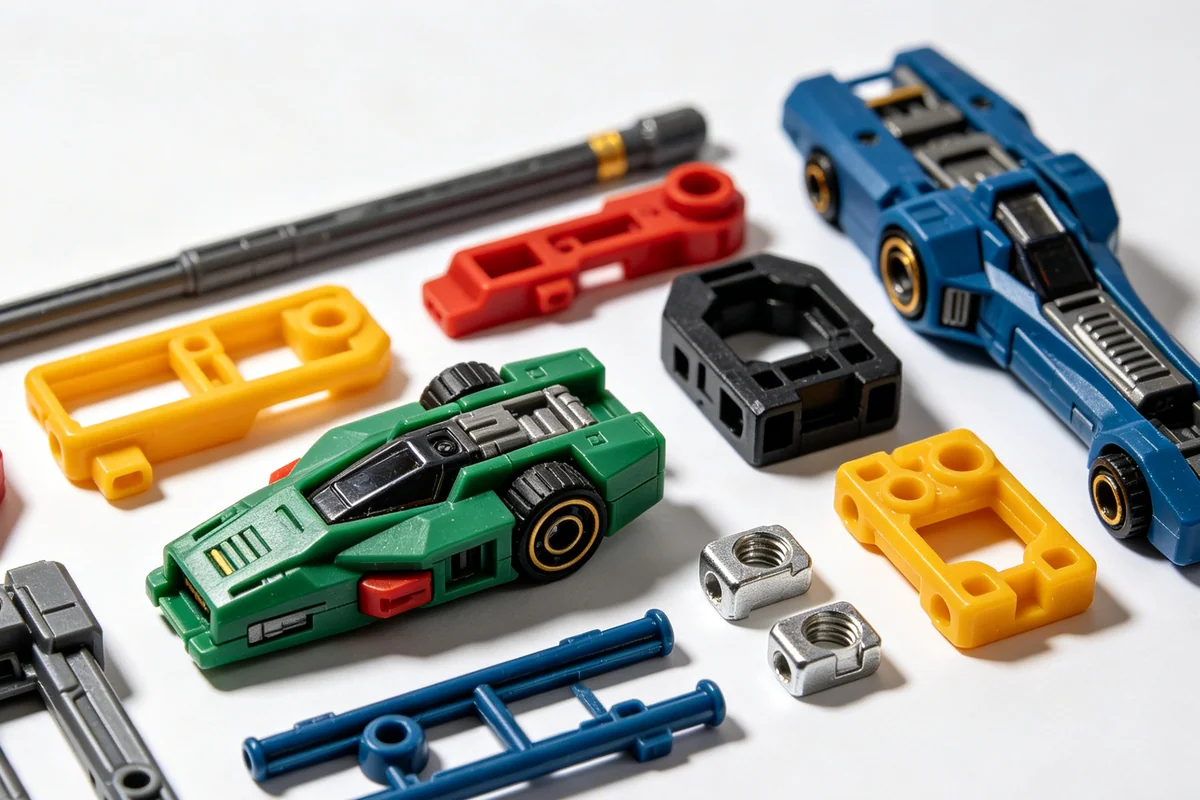
Multi-color injection molding and multi-shot injection molding enable custom parts with multiple materials or colors in one cycle. LAVA3DP delivers precision injection molding solutions, cost savings, and design freedom. Request a quote today!
In modern product development, the demand for parts that combine multiple colors, materials, or functional layers in a single component has grown significantly. Multi-color injection molding and two-shot injection molding (also known as multi-component molding, 2K injection molding services, or dual-shot molding) have emerged as the preferred solutions for achieving integrated aesthetics, ergonomics, and durability without secondary assembly. This comprehensive guide explores the core principles, advantages, material options, industry applications, and design guidelines for multi material injection molding, providing global customers with the technical knowledge needed to make informed manufacturing decisions.
Overview of Multi-Shot Injection Molding Technology
Multi-shot injection molding is an advanced manufacturing process in which two or more distinct materials—or the same material in different colors—are injected sequentially into a single mold to produce a fully integrated part in one continuous cycle. This process eliminates the need for post-molding assembly, gluing, or welding, resulting in components with superior structural integrity, precise color registration, and enhanced functionality.
The fundamental principle of two component injection molding involves specialized injection molding machines equipped with multiple injection units and a rotating or sliding platen system. In a typical two-shot (2K) process, the first material is injected into the primary cavity to form the base substrate. After partial cooling, the mold rotates or transfers the semi-finished part to a secondary cavity, where the second material is injected over or around the first. The entire cycle is fully automated and completed within a single machine, typically lasting 30 to 90 seconds depending on part complexity and material properties.
Evolution from Single-Shot to Multi-Shot Molding
Traditional single-shot plastic injection molding services produces parts from a single material or color, requiring secondary operations—such as painting, pad printing, adhesive bonding, or mechanical assembly—to add additional colors, soft-touch surfaces, or sealing features. Multi-shot plastic parts manufacturing consolidates these steps into one streamlined process, reducing production time, labor costs, and the risk of assembly defects.
Historically, dual-color injection molding was the first advancement beyond single-shot processes, commonly used for everyday items such as toothbrushes with soft-grip handles. As product complexity has increased, tri-color and quad-color molding machines have been developed to accommodate even more sophisticated designs. Today, advanced molding technologies such as multi-shot systems are widely adopted across automotive, medical, consumer electronics, and industrial sectors, driven by the demand for parts that integrate rigid structures, flexible seals, contrasting colors, and ergonomic surfaces.
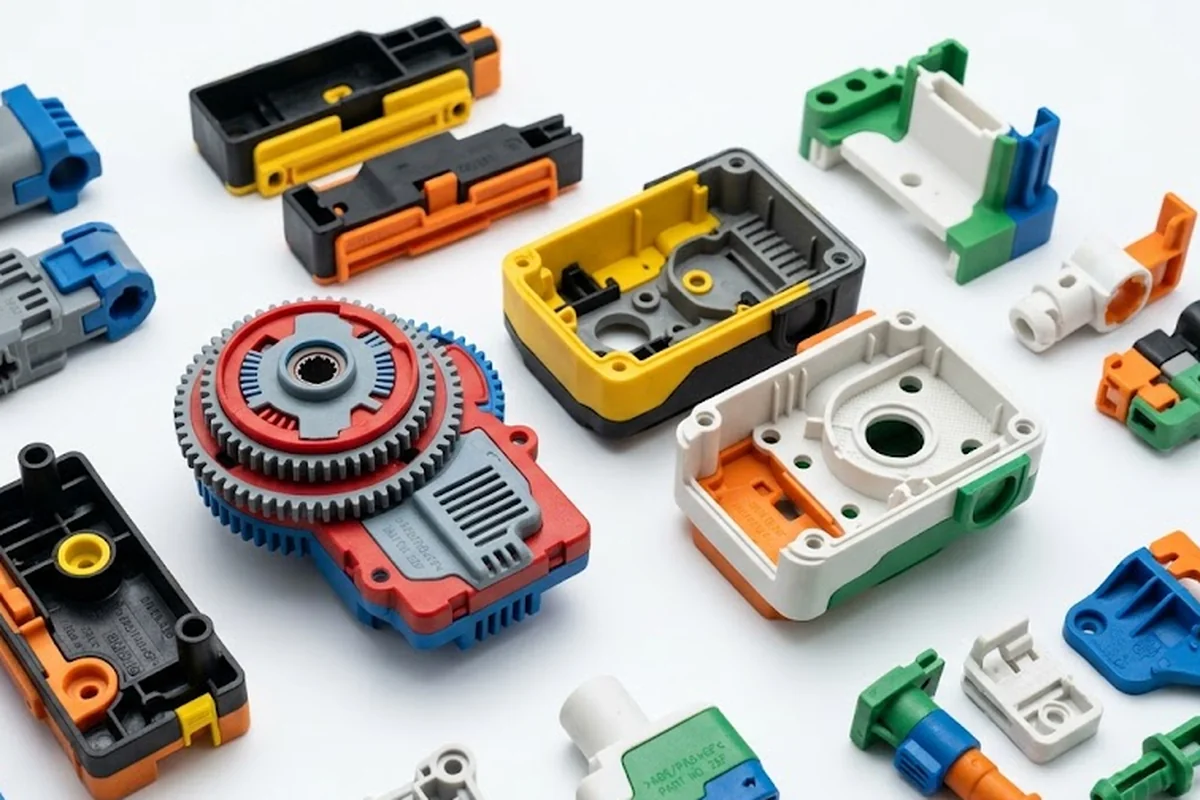
Key Advantages of Multi-Color & Dual-Material Molding
Multi-shot injection molding offers a compelling set of advantages that directly impact product quality, manufacturing efficiency, and total cost of ownership.
Elimination of Secondary Assembly
By combining multiple materials or colors in a single cycle, multi-color plastic molding eliminates secondary assembly steps such as gluing, snap-fitting, heat staking, or ultrasonic welding. This not only reduces labor and equipment costs but also removes potential failure points associated with bonded or assembled interfaces.
Superior Material Bonding and Product Integrity
In multi-shot molding, the second material is injected while the first substrate remains hot (typically between 220°C and 280°C), enabling molecular-level chemical bonding at the interface. This melt-state adhesion produces bond strengths far exceeding those achieved through post-molding assembly or pick-and-place overmolding services. For applications requiring permanent, leak-proof seals or inseparable material layers, multi-shot molding delivers unmatched reliability.
Design Freedom and Functional Integration
Multi material molding advantages expand design possibilities by allowing engineers to combine rigid structural plastics with soft-touch elastomers, transparent windows with opaque housings, or multiple colors in complex patterns without painting or printing. Common functional integrations include:
- Soft-touch ergonomic grips over hard plastic cores
- Integrated sealing gaskets for IP-rated enclosures
- Two-tone light pipes and illuminated controls
- Anti-slip surfaces on power tool handles
- Vibration-dampening layers in mechanical components
Reduced Total Cost of Ownership
Although multi-shot molds have higher initial tooling costs compared to single-shot molds (typically due to complex runner systems and rotary platens), the total cost of ownership often decreases significantly in high volume plastic manufacturing. Elimination of secondary assembly, reduced cycle times, lower reject rates, and simplified supply chain logistics contribute to substantial long-term savings. Many manufacturers achieve return on investment within months of production scale-up.
Sustainability Benefits
Multi-shot molding aligns with modern sustainability goals by minimizing material waste through precise injection control, eliminating adhesives and secondary parts that complicate recycling, and reducing energy consumption through faster, more efficient cycles. Additionally, the process supports the use of recycled and bio-based polymers where technically feasible, contributing to circular manufacturing practices.
Technical Specifications & Process Capabilities
Understanding the technical parameters of multi-shot injection molding is essential for selecting the right equipment and designing manufacturable parts. The table below summarizes key process specifications for typical multi-shot molding operations.
| Parameter | Typical Range | Purpose / Impact |
|---|---|---|
| Machine Tonnage | 150–650 tons | Determines maximum part size and clamping force for complex multi-component molds |
| Shot Capacity | Up to 500 g per shot | Maximum volume of material per injection unit |
| Cycle Time | 30–90 seconds | Combined time for both shots including cooling; varies with material and geometry |
| Registration Accuracy | ±0.05 mm | Alignment precision between first and second shot features; critical for color boundaries |
| First-Shot Melt Temperature | 220–280 °C (polymer specific) | Ensures substrate surface remains hot enough for chemical bonding |
| Second-Shot Melt Temperature | 10–20 °C above first shot | Promotes fusion and reduces surface stress at interface |
| Mold Temperature Control | Dual-zone ±0.5 °C | Balances shrinkage between different materials; maintains crisp color lines |
| Transfer Time (Rotate/Index) | ≤ 2 seconds | Retains interface temperature above glass transition (Tg) for optimal adhesion |
| Clamping Force | 45–150 tons | Ensures mold remains sealed during injection; prevents flash |
| Injection Pressure | 170–650 bar | Controls material flow into cavity; higher for complex geometries |
| Cooling Time | 10–40 seconds | Allows complete solidification before ejection; affects dimensional stability |
These parameters must be carefully optimized for each material combination and part design. For example, when overmolding TPE onto a PC substrate, the second-shot melt temperature is typically set 10–20°C above the first-shot temperature to ensure proper molecular diffusion at the interface without degrading either material.
Compatible Materials for Multi-Material Injection Molding
Successful multi material injection molding depends on material compatibility. Two critical conditions must be met: chemical compatibility (adhesion between materials) and process compatibility (similar melt temperatures and shrinkage rates). When materials are incompatible, mechanical interlocks—such as undercuts, holes, or textured surfaces—can be designed to prevent delamination through effective material compatibility testing.
Substrate Materials (First Shot / Base Layer)
| Material | Key Properties | Compatible Overmold Materials | Common Applications |
|---|---|---|---|
| ABS (Acrylonitrile Butadiene Styrene) | Cost-effective, dimensionally stable | TPE, TPU, Santoprene | Consumer electronics, tool handles |
| PC (Polycarbonate) | Impact-resistant, thermally stable (up to 135°C) | TPU, TPE (bonding grade required) | Transparent housings, medical casings |
| Nylon (PA6, PA66) | High strength, fatigue resistance | Modified TPUs with adhesion promoters | Automotive engine components, wear-resistant parts |
| PBT (Polybutylene Terephthalate) | Excellent electrical properties | Certain TPEs, TPVs | Connectors, electrical housings |
| PP (Polypropylene) | Lightweight, chemically resistant | TPO, TPE-O, selected TPVs | High-volume, cost-sensitive products |
| PC/ABS Blend | Balanced strength and heat resistance | Medical-grade TPE | Handheld electronics, smart wearables |
Overmold Materials (Second Shot / Outer Layer)
| Material | Shore Hardness Range | Key Characteristics | Compatible Substrates |
|---|---|---|---|
| TPE (Thermoplastic Elastomer) | 30–90 Shore A | High elasticity, excellent grip, bonds well to ABS, PP, PC | ABS, PP, PC (bonding grade) |
| TPU (Thermoplastic Polyurethane) | Varies | Abrasion resistance 3× higher than TPE, excellent chemical durability | PC, ABS, PA |
| Silicone Rubber | Varies (LSR) | Biocompatible, stable from −50°C to 200°C | Requires surface priming; bonds to select plastics |
| TPV (Thermoplastic Vulcanizate) | Varies | Flexible from −40°C to 125°C, excellent for sealing | Automotive-grade plastics, PBT |
| Tinted PC or PMMA | N/A | Creates dual-color aesthetics without painting | Clear PC, PMMA |
Proven Material Combinations
| First Shot (Substrate) | Second Shot (Overmold) | Bond Strength | Typical Application |
|---|---|---|---|
| PC / PC-ABS | Medical-grade TPE | ★★★★ | Handheld electronics, smart watches |
| PP | SEBS-TPE | ★★★ | Appliance knobs, protective caps |
| PA66-GF | TPU 60 Shore A | ★★★ | Automotive pedals, grips |
| Clear PC | Tinted PC | ★★★★ | Dual-color light pipes |
| ABS | TPE | ★★★★ | Power tool grips, remote controls |
| PC | TPU | ★★★★ | Wearable device housings, medical instruments |
For critical applications, adhesion testing (peel strength ≥5 N/cm) is recommended to validate bond quality before full production. Material compatibility must also account for shrinkage differences; the second shot should typically be no more than 70% of the first shot’s wall thickness to minimize warpage.
Design Guidelines for Multi-Shot Plastic Parts
Designing parts for multi-shot injection molding requires adherence to specific guidelines to ensure manufacturability, strong bonding, and dimensional accuracy.
Order of Injection
Always mold the rigid substrate first, followed by the soft or decorative layer. This sequence ensures proper mechanical support and aligns with design for manufacturability (DFM) principles.
Overlap Geometry
Design a minimum overlap of 0.5 mm or incorporate undercut features to create mechanical locking. This prevents delamination under torsional or peel stresses.
Wall Thickness Ratio
The second shot should not exceed 70% of the first shot’s wall thickness. Excessive second-shot thickness can cause warpage due to differential shrinkage during cooling.
Draft Angles
Apply draft angles of at least 1° on both shots (adjust upward for textured surfaces) to ensure clean ejection and prevent stress-whitening.
Gate Placement
Position gates to hide knit lines under ribs or logos. Use balanced valve-gate sequencing to achieve crisp color boundaries without swirl marks or material mixing.
Industrial Applications of Multi-Shot Injection Molding
Multi-shot injection molding serves a wide range of industries where integrated functionality, aesthetics, and reliability are critical. The global market for 2K injection molding services was valued at US$9.9 billion in 2024, reflecting the technology’s rapid adoption across manufacturing sectors.
Automotive Industry
Automotive manufacturers rely on multi-material injection molding for automotive applications and automotive plastic components that combine rigid structural elements with soft-touch surfaces, seals, and multi-color aesthetics. Common applications include control knobs, instrument panels, gear shifters, light lenses, weather-resistant seals, door handles with integrated soft-grip zones, and two-tone interior trim components.
Medical Devices
In medical applications, multi-shot injection molding for medical device components enables the production of ergonomic handheld diagnostic tools, surgical instruments with integrated grip zones, two-material syringe plungers, and medical device housings with built-in sealing gaskets. The ability to combine biocompatible materials such as medical-grade TPE with rigid PC or ABS housings meets stringent regulatory requirements while improving user comfort.
Consumer Electronics
Consumer electronics benefit from multi-color injection molding’s ability to produce multi-color casings for earbuds, remote controls, gaming controllers, mobile phone bezels, wearable device bands, and consumer electronics enclosures with integrated buttons and decorative elements. The process delivers consistent color placement, eliminates painting, and reduces assembly labor.
Power Tools and Industrial Equipment
Power tool manufacturers use multi-shot molding to create ergonomic tool housings that combine rigid structural frames with soft-rubber grips. Drill and driver handles, impact wrench grips, and saw housings benefit from the enhanced comfort and vibration-dampening properties of multi-material construction.
Household and Consumer Goods
Everyday items such as electric toothbrush handles, kitchen appliance knobs, soft-grip utensil handles, and protective caps are increasingly produced using multi-shot plastic parts manufacturing. The process offers an ideal balance of functionality, aesthetics, and cost-effectiveness for high-volume consumer products.
Multi-Shot Molding vs Overmolding & Insert Molding
Understanding how multi-shot molding compares to related processes helps in selecting the right manufacturing method for each application.
| Process | Description | Advantages | Limitations | Best Suited For |
|---|---|---|---|---|
| Multi-Shot (2K/3K) Molding | Sequential injection of multiple materials in one machine cycle | Fastest cycle times, strongest chemical bond, fully automated | Highest initial tooling cost, complex mold design | High-volume automated production |
| Pick-and-Place Overmolding | Cold substrate manually or robotically placed into second mold | Lower tooling cost, flexible for low volumes | Slower cycles (30s–2 min), requires part transfer | Low-volume overmolding, complex geometries |
| Insert Molding | Metal or plastic insert placed in mold before injection | Structural reinforcement, integrates dissimilar materials | Labor-intensive, slower cycles (15–60s) | Threaded inserts, PCB encapsulation |
| Single-Shot + Assembly | Separate parts molded then assembled | Lowest tooling cost | Additional labor, assembly defects, weaker joints | Low-complexity, low-volume parts |
Why Choose LAVA3DP as Your Multi-Shot Molding Partner ?
LAVA3DP specializes in custom multi-color injection molding services for plastic parts and multi-shot injection molding service provider solutions for global clients across automotive, medical, consumer electronics, and industrial sectors. As an ISO certified injection molding manufacturer, with engineering-grade thermoplastics, experienced engineering support, and rigorous quality control inspection systems, LAVA3DP delivers precision components that meet the most demanding specifications.
Key capabilities include:
- Multi-shot and dual shot injection molding for up to three materials or colors in a single cycle
- Comprehensive material selection including ABS, PC, Nylon, PBT, PP, TPE, TPU, and silicone
- Design for Manufacturability (DFM) support to optimize part geometry for multi-shot processing
- Prototype to production scalability with low-volume prototyping and production scalability solutions
- ISO-certified quality management ensuring dimensional accuracy and material traceability
Whether you require ergonomic medical device housings, automotive interior components with integrated seals, or multi-color consumer electronics casings, LAVA provides end-to-end integrated manufacturing services tailored to your specific requirements.
Contact the engineering team to discuss your project and receive a customized manufacturing proposal.
Get an Instant Quote