

PolyJet 3D Printing Service
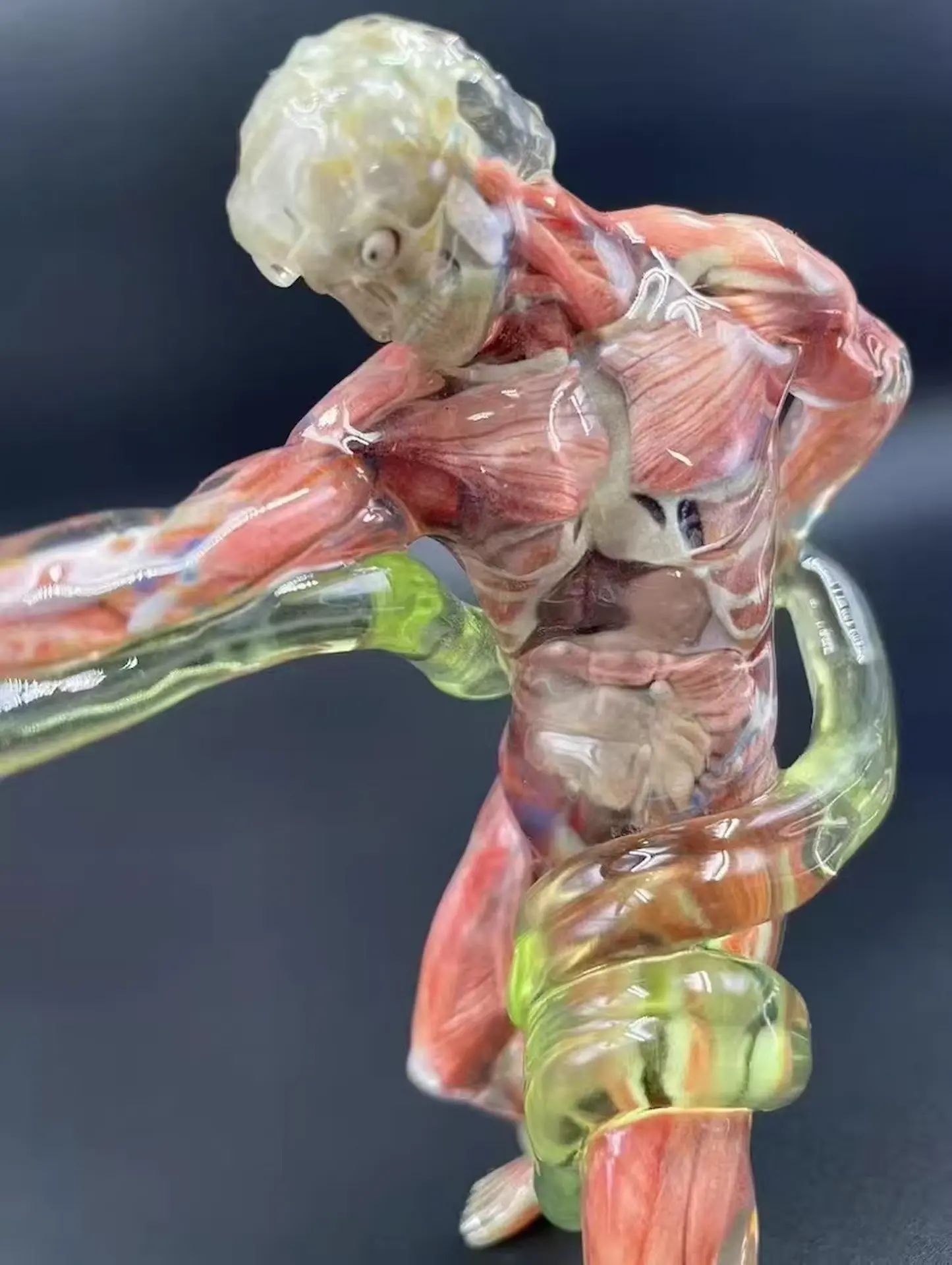
For designers and engineers worldwide, bringing a concept to life with both visual realism and functional integrity has often required a difficult choice: create a beautiful prototype or a durable one. PolyJet 3D printing ends this compromise. As a leading online PolyJet 3D printing service and PolyJet 3D printing company, LAVA is leveraging this advanced technology to deliver parts that offer an unparalleled combination of high resolution, multi-material 3D printing properties, and vibrant color, all within a single build. This article explores how PolyJet technology can accelerate your product development and transform your custom PolyJet 3D printing and PolyJet rapid prototyping needs.
PolyJet 3D Printing Technology for High-Precision, Multi-Material Prototypes
PolyJet is a powerful photopolymer 3D printing technology that operates in a manner similar to traditional inkjet printing. However, instead of jetting ink onto paper, PolyJet printers jet liquid photopolymer resin onto a build tray in ultra-thin layers, which are instantly cured by ultraviolet (UV) light . This layer-by-layer process allows for the creation of complex shapes, high-accuracy 3D printing, smooth surfaces, and intricate details with exceptional accuracy, making it a true high-resolution 3D printing service.
The technology is renowned for its high precision and ability to produce parts with smooth surface finish 3D prints straight from the printer, often requiring minimal post-processing . Furthermore, it is an office-friendly solution due to its clean operation and minimal waste, making it suitable for PolyJet prototype manufacturing and design validation 3D printing workflows.
Get an Instant QuoteKey Benefits of PolyJet 3D Printing for Custom, High-Detail Parts
PolyJet technology stands out in the additive manufacturing landscape for several compelling reasons that are particularly beneficial for PolyJet prototyping for product development and custom part fabrication.
1. Unmatched Precision and Surface Quality
PolyJet printers build parts with incredibly fine layer resolutions. For instance, the Stratasys Eden 260VS can achieve a layer thickness as fine as 16 microns . This results in models with smooth surfaces, fine details, and minimal visible layer lines, making it ideal for fine-detail additive manufacturing and injection-mold-like prototypes that need to look and feel like a production-ready product.
2. Multi-Material and Full-Color Capability
This is perhaps the most significant advantage of PolyJet technology. Advanced systems like the Stratasys J850 can simultaneously load up to seven different materials, allowing for the creation of a single part with varying properties, such as a rigid frame with soft-touch grips . This digital material PolyJet printing capability enables multi-durometer 3D printed parts, rubber-like 3D printed parts, and elastomeric PolyJet materials within a single build. This capability is powered by “Digital Materials,” which enable the printer to mix two or more base resins to create composite materials with hundreds of predefined combinations of mechanical properties .
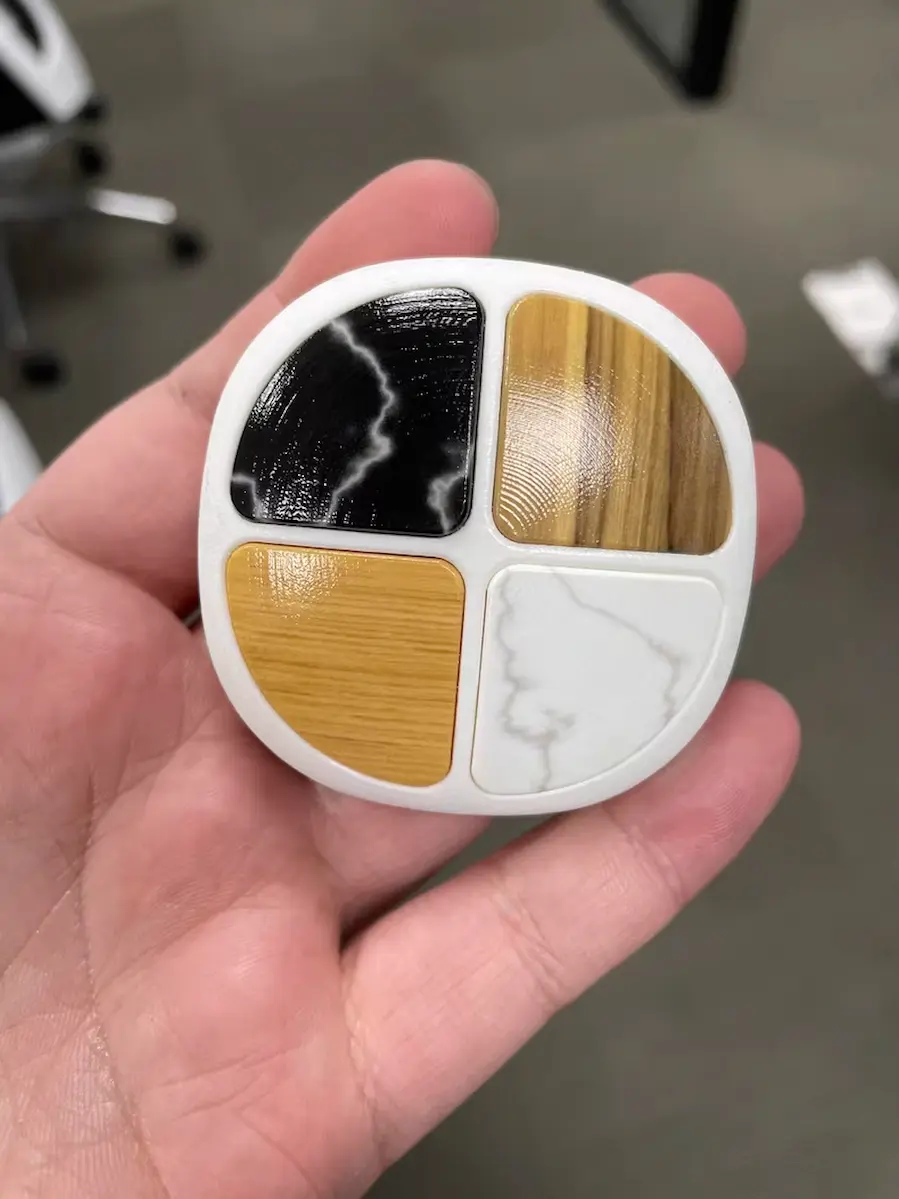
Moreover, this technology supports full-color 3D printing service capabilities. The J850 printer, for example, can produce parts with over 500,000 colors , allowing for functional visual prototypes and realistic appearance models used for market research, sales samples, and consumer product PolyJet prototypes.
3. Material Versatility
PolyJet offers a wide range of material properties, capable of simulating everything from rigid plastics to transparent 3D printing applications and flexible elastomers for overmold simulation 3D printing.
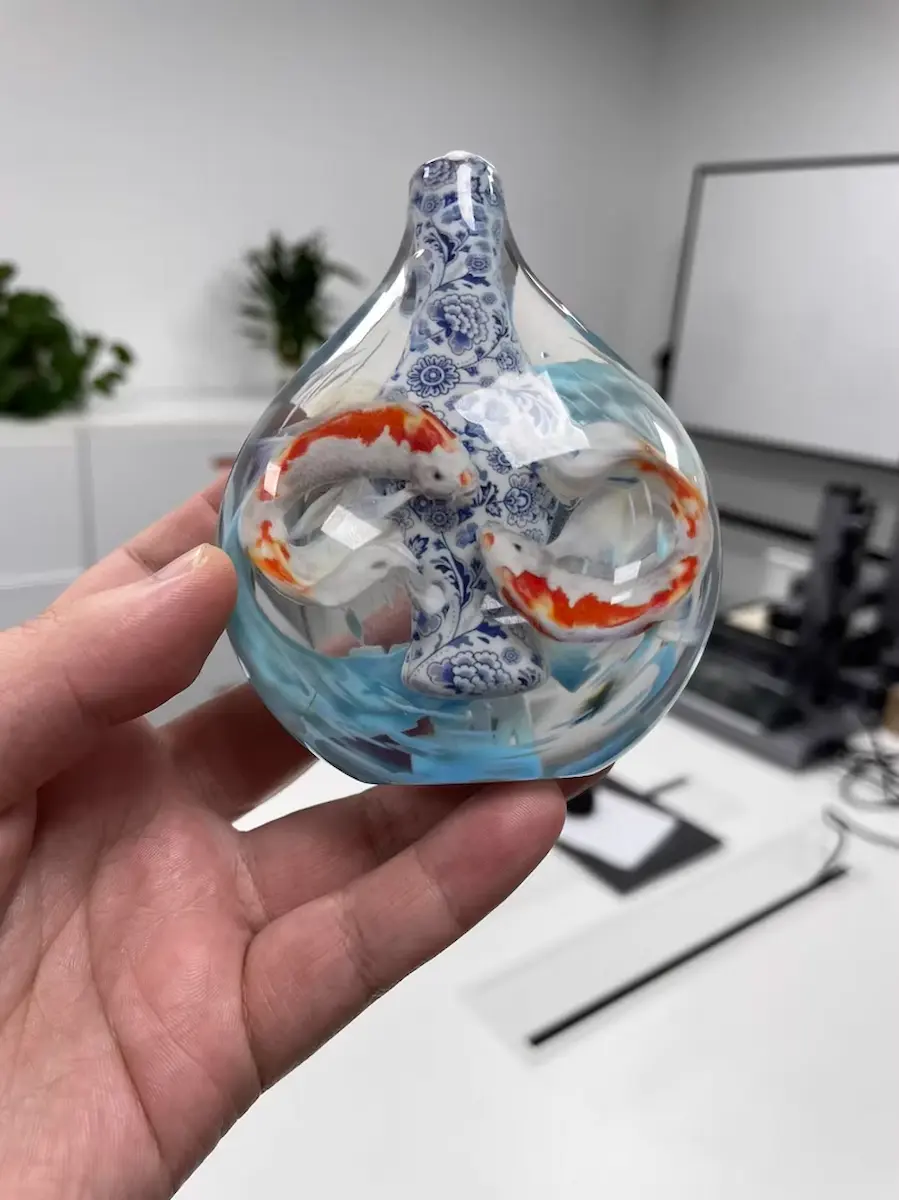
Below is a summary of available material types and their key applications:
| Material Category | Series / Family | Key Properties (Typical Rating) | Main Applications |
|---|---|---|---|
| Rigid Opaque | Vero Series | • Strength & Durability: 90% • Surface Finish: 95% • Flexibility: 10% |
• Housings & enclosures • High‑detail prototypes • Concept models • Snap‑fit assemblies |
| Elastomeric / Rubber‑like | Tango / Agilus30 | • Flexibility: 95% • Shock absorption: 90% • Tear resistance: 85% |
• Gaskets & seals • Soft‑touch grips • Wheels & dampers • Wearables & ergonomic handles |
| Transparent | VeroClear / RGD720 | • Optical clarity: 88% • Surface finish: 92% • Impact resistance: 75% |
• Lenses & light guides • Fluid flow visualization • Display cases & covers • Medical visualization devices |
| High‑Temperature | RGD525 Series | • Heat resistance: 95% • Dimensional stability: 90% • Flexibility: 30% |
• Hot air/fluid testing • Engine components • Heating fixtures • Thermal validation models |
| Polypropylene‑like | Endur / Durus | • Durability: 85% • Flexibility: 70% • Chemical resistance: 80% |
• Living hinges • Snap‑fit components • Containers & packaging • Functional prototypes |
| Biocompatible | MED Series | • Biocompatibility: 98% • Sterilization resistance: 85% • Detail resolution: 90% |
• Surgical guides & tools • Dental applications • Skin‑contact devices • Medical training models |
4. Speed for Rapid Iterations
In the competitive landscape of product development, speed is critical. PolyJet printing is fast, enabling the production of complex, multi-material parts in hours, not days. This allows design teams to conduct more design iterations in less time, significantly shortening the product development cycle and supporting short-run PolyJet production and engineering-grade PolyJet printing.
ToughONE™ PolyJet Material: Durable, Production-Grade Prototyping Solution
A common historical limitation of PolyJet resins was their brittleness, which made them less suitable for functional testing under stress. This has been decisively addressed with the 2025 introduction of ToughONE, a new class of material from Stratasys .
ToughONE is engineered for functional prototyping and selected end-use parts. It provides enhanced impact resistance, flexibility, and toughness without sacrificing the signature PolyJet benefits of surface smoothness, high resolution, and dimensional stability . This material is ideal for creating parts that must withstand real-world use, such as snap-fit assemblies, living hinges, custom electronic enclosures, and durable jigs and fixtures, helping reduce PolyJet prototype cost through fewer design revisions.
Comparison of Traditional PolyJet Material Limitations vs. ToughONE’s Advancements:
| Feature | Traditional PolyJet Material (e.g., Vero Series) | New ToughONE Material | Key Improvement |
|---|---|---|---|
| Strength & Durability | Good for display models (~60%) | High impact resistance (~95%) | +58% improvement |
| Flexibility | Rigid & brittle (~20%) | Enhanced flexibility (~75%) | +275% improvement |
| Functional Use | Limited by brittleness (visual prototypes) | Drilling, tapping, snap-fit assembly | Functional parts ready |
| Application Focus | Aesthetic prototypes | Functional prototypes & end-use parts | Expanded applications |
| Toughness Rating | Low to Medium (~40%) | High to Very High (~90%) | Industry leading |
| Impact Resistance | Low (~30%) | High (~85%) | +183% improvement |
Industries & Applications Using PolyJet 3D Printing Technology
The unique capabilities of PolyJet make it suitable for a vast array of industries. At Lava3DP, we have utilized it to solve complex challenges across multiple sectors.
- Consumer Electronics: Create full-color, multi-material prototypes of device housings, buttons, and seals that look and feel like the final product. ToughONE is perfect for impact-resistant elements and custom charger casings .
- Automotive: Produce realistic tail light covers, durable dashboard components, and ergonomic tools for assembly lines. Companies like Audi have used the J750 to create tail light prototypes, saving up to 50% in time compared to traditional methods .
- Medical Devices: Develop highly accurate, biocompatible models for surgical planning, training, and device prototyping. The technology allows for the creation of multi-colored anatomical models that differentiate between tissues, bones, and blood vessels .
- Consumer Goods: From packaging with living hinges to product designs that combine rigid and soft-touch elements, PolyJet enables comprehensive design validation before mass production. Companies like Suntory have used PolyJet to 3D print molds for bottle design, dramatically accelerating development time .
Why Choose Lava3DP as Your Trusted PolyJet 3D Printing Partner
At Lava3DP, we are dedicated to providing our global clientele with cutting-edge manufacturing solutions as an experienced rapid prototyping manufacturer and expert additive manufacturing company. Our expertise in PolyJet 3D printing allows us to deliver custom parts that bridge the gap between aesthetic appeal and functional performance. As a professional PolyJet 3D printing provider using industry-grade PolyJet machines, we support clients seeking a PolyJet printing manufacturer for medical PolyJet 3D printing models, automotive interior PolyJet parts, and PolyJet 3D printing for industrial design.
Whether you need a hyper-realistic model for client presentation, a multi-material assembly for design verification, or a robust functional prototype made with ToughONE, we deliver quality-controlled 3D printing service as a trusted PolyJet printing partner. Ready to transform your custom part fabrication? Contact us today to receive a PolyJet 3D printing quote, experience fast turnaround PolyJet printing, and access a reliable online PolyJet 3D printing service supporting PolyJet 3D printing service USA, PolyJet 3D printing UK, and PolyJet printing Europe.
Get an Instant Quote