

Chrome Plating
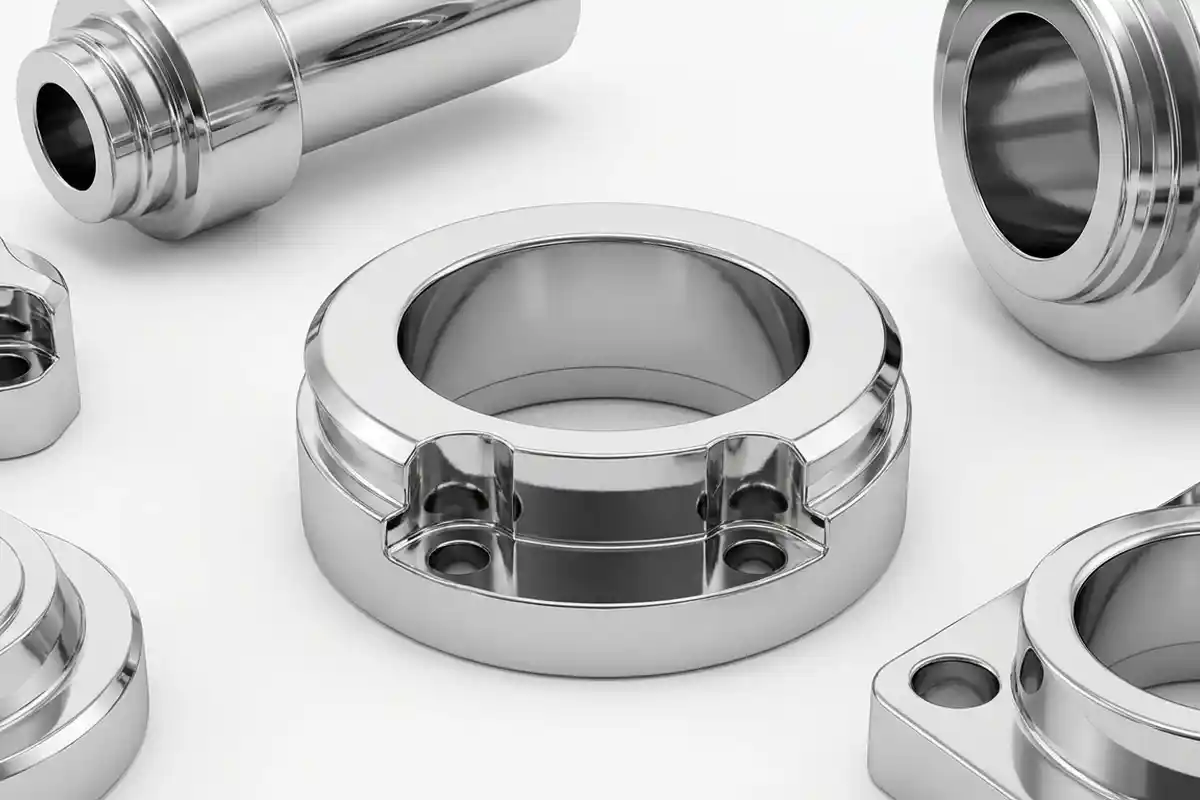
Introduction to Chrome Plating Services for Custom Parts
In custom fabrication, Chrome Plating is a critical engineering choice for performance and longevity. Beyond its lustrous look, Hard Chrome Plating provides essential hardness and a corrosion-resistant coating for aerospace, automotive, and industrial parts—ensuring reliability in demanding environments.
At LAVA3DP, we specialize in delivering precision-manufactured custom parts to clients across the globe. As part of our commitment to end-to-end manufacturing excellence, we offer professional Chrome Electroplating Services tailored to meet the rigorous demands of modern industries. This comprehensive guide explores the science, benefits, materials, applications, and economic considerations of Industrial Chrome Plating, providing engineers, product designers, and procurement specialists with the insights needed to make informed decisions regarding electroplating for custom parts and advanced metal surface treatment technologies.
Get an Instant QuoteWhat Is Chrome Plating? Types, Uses & Industrial Benefits
Chrome plating, also known as chromium electroplating, is an electrochemical process that deposits a thin layer of chromium onto a metal or plastic substrate. The process involves immersing the component in a chromic acid-based electrolyte bath and applying a direct electric current, which reduces chromium ions onto the surface of the part. This highly controlled chrome plating process is commonly used in industrial metal finishing services and precision surface engineering applications.
There are two primary types of chrome plating:
- Hard Chrome Plating (also known as industrial or engineering chrome) – Applied in thicknesses ranging from 0.0005 to 0.050 inches (12.7 to 1270 microns), hard chrome is used to enhance wear resistance, reduce friction, restore dimensional tolerances, and protect against corrosion. It is commonly employed in hydraulic cylinders, piston rods, mold surfaces, and heavy machinery components (ASTM B177, 2020). This wear resistant metal finish is especially valuable for demanding industrial environments requiring functional metal coatings and industrial hard chrome coating for wear resistance.
- Decorative Chrome Plating – Typically applied in much thinner layers (0.00002 to 0.00005 inches, or 0.5 to 1.3 microns), decorative chrome provides a bright, reflective finish that resists tarnishing. It is often applied over Nickel Chrome Plating layers to enhance corrosion resistance and is widely used in automotive trim, faucets, and consumer electronics (ASM International, 2021). This high gloss chrome finish creates a premium mirror finish plating appearance ideal for decorative and automotive chrome finishing applications.
Chrome Electroplating Process for Precision Components
Achieving a high-quality chrome finish requires rigorous process control and meticulous surface preparation. The typical workflow includes:
- Surface Preparation – The substrate is cleaned to remove oils, grease, and oxides using alkaline cleaning, ultrasonic cleaning, or vapor degreasing.
- Mechanical Finishing – Grinding, polishing, or buffing may be performed to achieve the desired surface roughness. Surface roughness directly influences adhesion and final appearance (Surface Engineering Handbook, 2022). This stage is essential in precision chrome plating and custom engineered surface finishing workflows.
- Activation – The part is immersed in an acidic solution to remove any remaining oxides and activate the surface for electrodeposition.
- Electroplating – The part is submerged in a chromic acid bath containing sulfuric acid catalysts. A rectifier applies DC current, with current density and bath temperature (typically 130–160°F) carefully controlled to ensure uniform deposition (Schlesinger & Paunovic, 2020). This controlled chromium coating services operation ensures optimal adhesion and consistent electroplated chrome coating quality.
- Post-Treatment – After plating, parts may undergo hydrogen embrittlement relief baking (per ASTM B850) to prevent cracking in high-strength steels. Additional finishing such as grinding or polishing may follow for precision applications and high tolerance plating services.
Benefits of Hard Chrome Plating in Custom Manufacturing
Chrome plating delivers a unique set of performance attributes that make it indispensable across industries.
1. Exceptional Hardness and Wear Resistance
Hard Chrome Plating achieves surface hardness ranging from 800 to 1,000 HV (Vickers hardness), significantly exceeding untreated steel. This hardness translates into superior resistance to abrasive wear, galling, and erosion (ASM Handbook, Volume 5, 2021). For components such as hydraulic piston rods and printing rollers, chrome plating can extend service life by 3 to 10 times compared to uncoated steel. These hard chrome coating benefits make it one of the most effective protective metal coating solutions available.
2. Superior Corrosion Protection
Chromium naturally forms a passive oxide layer that provides excellent resistance to oxidation, moisture, and many chemicals. In decorative applications, the nickel underlayer combined with chrome offers a barrier against corrosion in humid and saline environments (ASTM B456, 2022). This makes chrome coating for steel and corrosion protection coatings highly desirable in marine and industrial applications.
3. Low Coefficient of Friction
Chrome-plated surfaces exhibit a coefficient of friction between 0.1 and 0.2 when mated with steel or other metals, reducing energy losses and wear in moving assemblies (Stachowiak & Batchelor, 2021).
4. Restoration of Dimensional Tolerances
Hard Chrome Plating is frequently used to salvage worn or undersized components. By depositing a thick, controllable layer and subsequent grinding, manufacturers can restore parts to original specifications without requiring complete replacement—a cost-effective solution for expensive machinery components and custom hard chrome plating for industrial components.
5. Aesthetic Appeal
Decorative Chrome Plating provides a mirror-like finish that remains brilliant under UV exposure and does not tarnish. This aesthetic quality adds significant value to consumer-facing products, enhancing brand perception and market competitiveness through advanced decorative chrome finishing techniques.
Best Metals & Materials for Chrome Plating Applications
Not all substrates are equally amenable to chromium electrodeposition. The following materials are commonly plated at LAVA3DP:
| Material Category | Examples | Considerations |
|---|---|---|
| Steel & Stainless Steel | Carbon steel, alloy steel, tool steel, 300-series stainless | Pre-plating activation critical; hydrogen embrittlement relief required for high-strength steels |
| Aluminum & Alloys | 6061-T6, 7075-T6 | Requires zincate pretreatment followed by copper or nickel strike to ensure adhesion |
| Copper & Brass | C110, C360 | Excellent adhesion; often used as underlayers |
| Titanium | Grade 2, Grade 5 | Special activation processes required |
| Plastics | ABS, Polycarbonate (with conductive coating) | Electroless nickel strike applied first; used exclusively for decorative chrome |
Industrial Applications of Chrome Plated Parts Across Industries
Chrome plating’s versatility enables its deployment in diverse sectors:
- Aerospace – Landing gear components, hydraulic actuators, engine parts. Hard chrome meets stringent FAA and NADCAP requirements for wear resistance and corrosion protection (SAE AMS 2406, 2021).
- Automotive – Piston rings, shock absorber rods, transmission components, and decorative trim. The automotive industry accounts for over 30% of global chrome plating consumption (Market Research Future, 2023).
- Industrial Machinery – Molds, dies, extrusion screws, calender rolls, and printing cylinders. Chrome plating reduces downtime and maintenance costs in continuous production environments.
- Oil & Gas – Pump shafts, valve stems, and downhole tools benefit from chrome’s erosion and corrosion resistance in harsh environments (NACE International, 2020).
- Medical Devices – Surgical instruments and orthopedic implants may utilize hard chrome for wear-resistant surfaces, though biocompatibility considerations apply (ISO 13485, 2021).
Hard Chrome Performance, Durability & Cost Analysis
To assist engineers and procurement professionals in evaluating chrome plating, we present two visual summaries.
Figure 1: Comparative Surface Hardness of Common Finishes
| Surface Finish | Hardness (HV) | Relative Wear Resistance |
|---|---|---|
| Unhardened Steel | 150–250 | Baseline |
| Hardened Steel (HRC 60) | 650–750 | 4x Baseline |
| Hard Chrome | 800–1,000 | 8–10x Baseline |
| Electroless Nickel | 500–600 | 3–5x Baseline |
| Nitriding (Steel) | 600–900 | 6–9x Baseline |
Source: ASM Handbook, Volume 5; Surface Engineering Handbook (2022)
Figure 2: Cost-Benefit Analysis for Hard Chrome Plating (Hydraulic Cylinder Application)
| Metric | Uncoated Steel | Hard Chrome Plated |
|---|---|---|
| Initial Component Cost | $500 | $550 (+10%) |
| Service Life (hours) | 2,000 | 12,000 |
| Replacement Frequency (5 years) | 4x | 1x |
| Total 5-Year Cost (parts + labor) | $4,200 | $1,800 |
| Net Savings | – | $2,400 (57% reduction) |
Note: Data based on typical industrial hydraulic cylinder applications (Hydraulics & Pneumatics, 2022)
Chrome Plating Quality Standards, ISO Compliance & Certifications
At LAVA3DP, all chrome plating operations conform to internationally recognized standards, ensuring consistency, safety, and performance:
- ASTM B177 – Standard Guide for Engineering Chromium Electroplating
- ASTM B456 – Standard Specification for Electrodeposited Coatings of Copper Plus Nickel Plus Chromium
- SAE AMS 2406 – Plating, Chromium, Hard
- ISO 4525 – Metallic coatings — Electroplated coatings of nickel plus chromium on plastics
- ISO 13485 – Quality management for medical devices (where applicable)
We also offer hydrogen embrittlement relief baking per ASTM B850 for high-strength steel components, ensuring structural integrity in critical applications.
Environmental Compliance & Sustainable Electroplating Practices
Traditional hexavalent chromium plating uses chromium trioxide, which presents environmental and occupational health challenges. In response, the industry has made significant advances:
Closed-loop recovery systems reduce wastewater and chromium discharge.
- Trivalent chromium processes offer a less toxic alternative for decorative chrome, with growing adoption in automotive and plumbing applications (EPA, 2021).
- RoHS compliant plating and REACH compliance are maintained for all plating services at LAVA3DP, ensuring alignment with European and global environmental regulations.
Clients seeking environmentally preferable alternatives are encouraged to discuss trivalent chrome or alternative coatings such as electroless nickel or PVD coatings with our engineering team and expert electroplating solutions specialists.
Why Choose LAVA3DP as Your Chrome Plating Manufacturer?
As a custom parts fabrication service with a global client base, LAVA3DP combines advanced manufacturing capabilities with deep material science expertise. When you partner with us for Custom Chrome Plating, you benefit from:
- Integrated Workflow – From 3D printing, CNC machining, and casting to finishing, we manage the entire production chain, including 3D printed parts finishing and CNC machining and chrome plating.
- Engineering Support – Our team assists with design for plating (DFP), ensuring proper radii, avoiding sharp corners, and specifying correct pre-treatments for Chrome Plating for Metal Parts and Chrome plated CNC components.
- Process Control – In-process thickness monitoring (using X-ray fluorescence), adhesion testing, and salt spray corrosion testing per ASTM B117 are part of our ISO certified chrome plating quality management practices.
- Global Shipping – Reliable logistics to clients in North America, Europe, Asia, and beyond, including customers seeking Chrome plating services USA, Chrome plating company UK, and Industrial chrome plating Europe solutions.
Conclusion: Choosing the Right Chrome Plating Solution
Chrome plating remains one of the most effective surface engineering solutions for components requiring extreme hardness, wear resistance, corrosion protection, or aesthetic brilliance. Whether you are restoring a critical hydraulic cylinder or adding a premium finish to a consumer product, the process delivers measurable improvements in performance and lifecycle value through advanced Chromium metal finishing and precision engineered plating.
At LAVA3DP, we combine decades of electroplating expertise with modern manufacturing flexibility to deliver custom chrome-plated parts that meet your exact specifications. Our commitment to quality, environmental responsibility, and customer partnership ensures that your components perform reliably in the most demanding environments using professional chrome plating supplier standards and advanced manufacturing finishing services.
Get a Quote for Custom Chrome Plating Services Today
Contact LAVA today to discuss your project requirements. Our technical team is available to provide guidance on material selection, design optimization, and finishing specifications for OEM chrome plating services, Chrome plating for CNC parts, and high quality chrome electroplating services online.
Get an Instant Quote