

Plasma Spray
Introduction to Thermal Spray for Custom Manufacturing
Plasma Spray is one of the most versatile and widely adopted thermal spray techniques available today. At LAVA3DP, we integrate plasma spray technology into our custom parts fabrication service, enabling clients across aerospace, automotive, energy, medical, and heavy machinery sectors to achieve superior surface properties that bulk materials alone cannot provide.
This comprehensive guide explains what plasma spray is, how it works, which materials can be applied, its key advantages, and why LAVA3DP is your ideal partner for plasma-sprayed custom components.
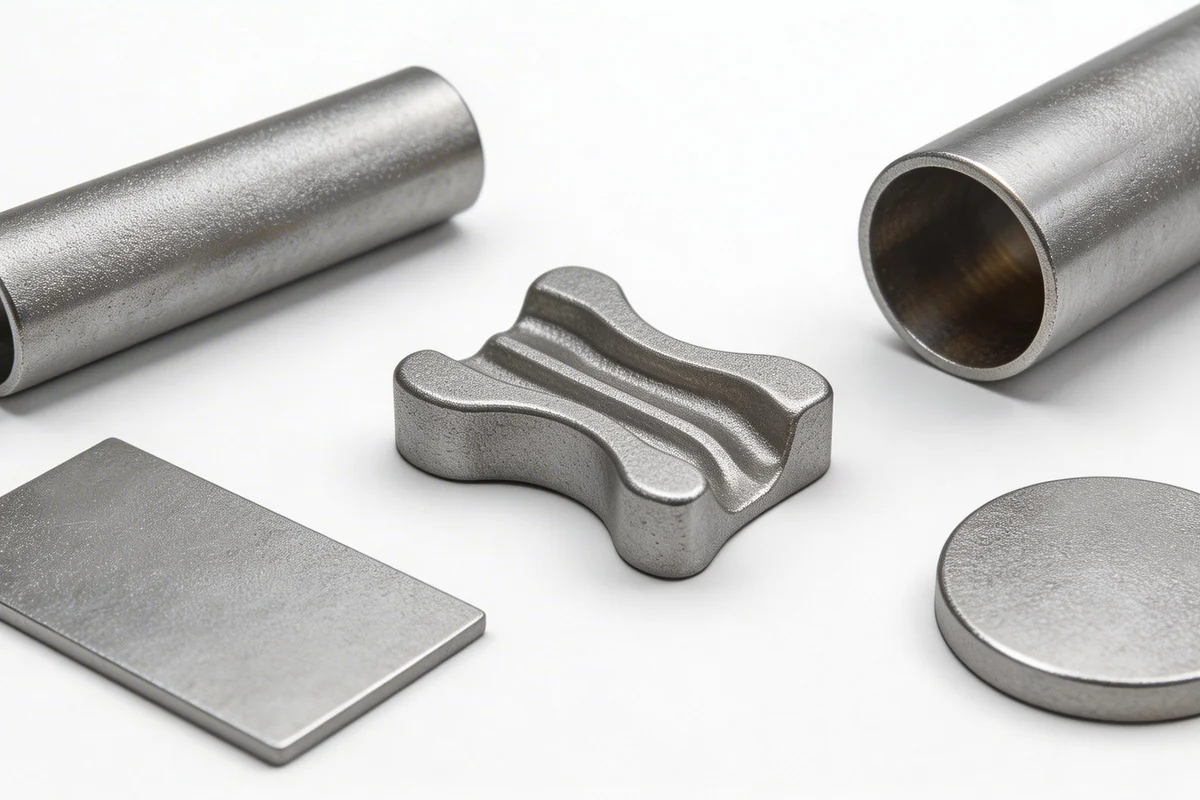
Plasma Spray coatings for custom parts. High wear resistance, thermal barriers, and corrosion protection. Get rapid prototyping and precision manufacturing at LAVA3DP. Request a quote today!
Get an Instant QuoteWhat Is Plasma Spray?
Plasma spray is a thermal spray process that uses a high-temperature plasma jet to melt powdered materials and accelerate them onto a prepared substrate surface. The molten particles flatten upon impact, rapidly solidify, and form a dense, adherent coating. The plasma torch operates at temperatures between 10,000°C and 15,000°C — hot enough to melt virtually any ceramic, metal, or cermet.
The process is performed in a controlled environment, often using an inert gas (argon, nitrogen, hydrogen, or helium) to prevent oxidation. Plasma spray is distinct from other thermal spray methods like HVOF (High-Velocity Oxygen Fuel) or wire arc spray due to its exceptionally high temperature and relatively lower particle velocity, making it ideal for ceramic and refractory materials.
How the Plasma Spray Process Works
Understanding the four key stages of plasma spray helps appreciate its capabilities:
Powder Injection
Fine powder (typically 5–100 microns) of the coating material is fed into the plasma jet using a carrier gas. The powder can be injected radially or axially relative to the torch nozzle.
Melting and Acceleration
Inside the plasma flame, particles are rapidly heated to a molten or semi-molten state. Simultaneously, the expanding plasma gas accelerates the particles toward the substrate at velocities ranging from 200 to 600 m/s.
Impact and Splat Formation
Molten droplets strike the substrate surface, flatten into thin “splats,” and interlock with surface asperities. Rapid cooling (up to 10⁶ K/s) freezes the splats, creating a lamellar microstructure.
Layer Buildup
Multiple passes of the plasma torch build coating thickness from 20 microns to several millimeters. The final coating exhibits bond strengths typically between 20 and 70 MPa, depending on the material and process parameters.
Key Advantages of Plasma Spray for Custom Parts
When you choose LAVA3DP for plasma spray coating, you gain these measurable benefits:
Extreme Material Versatility
Plasma spray can deposit almost any material with a melting point — from low-melting polymers to ultra-high-temperature ceramics like zirconia or tungsten carbide. This unmatched flexibility allows us to match the exact coating chemistry to your application.
No Substrate Heating or Distortion
Unlike welding or cladding, plasma spray adds coating without significantly heating the base material. Substrate temperatures typically remain below 200°C, preventing metallurgical changes, warping, or softening of heat-sensitive parts.
Thick Coatings and Large Areas
Plasma spray easily produces coatings from 0.1 mm to 2 mm thick, and with robotic manipulation, can coat complex geometries, internal diameters, and large components up to several meters in length.
Superior Wear and Corrosion Resistance
Plasma-sprayed coatings provide hardness values exceeding 1,200 HV for ceramics and carbides, along with dense structures (porosity <2% with optimized parameters) that block corrosive media.
Cost-Effective for High-Value Parts
Instead of manufacturing an entire component from an expensive alloy or ceramic, you can use a low-cost substrate and apply a high-performance plasma spray coating only where needed. This hybrid approach reduces material costs by 40–70%.
Materials Compatible with Plasma Spray
The table below summarizes common plasma spray materials and their typical applications:
| Material Category | Examples | Key Properties | Typical Hardness (HV) |
|---|---|---|---|
| Ceramics | Alumina (Al₂O₃), Zirconia (ZrO₂), Chromia (Cr₂O₃) | Wear resistance, electrical insulation, thermal barrier | 800–1,400 |
| Carbides | Tungsten Carbide (WC-Co), Chromium Carbide (Cr₃C₂-NiCr) | Abrasion resistance, high-temperature hardness | 1,000–1,300 |
| Metals | Molybdenum (Mo), Nickel-Chromium (NiCr), Stainless Steel | Bond coats, oxidation resistance, dimensional restoration | 200–500 |
| Cermets | Alumina-Titania, Zirconia-Yttria | Toughness + wear resistance, thermal barrier coatings (TBCs) | 600–1,000 |
| Polymers | PEEK, PTFE | Low friction, chemical inertness, non-stick | N/A (soft) |
Industrial Applications of Plasma Spray
Plasma spray coatings solve real-world problems across many industries. Here are common use cases for custom parts fabricated at LAVA3DP:
Aerospace
- Turbine blade thermal barrier coatings (TBCs) – yttria-stabilized zirconia reduces blade metal temperatures by 150–200°C.
- Abradable seals for compressor and turbine casings.
- Wear-resistant landing gear components.
Automotive and Motorsports
- Piston ring coatings (chromia or molybdenum) for reduced friction and scuffing.
- Brake rotor anti-corrosion layers.
- Cylinder bore coatings replacing cast iron liners (allowing aluminum engine blocks).
Energy and Power Generation
- Boiler tube cladding against high-temperature sulfidation and erosion.
- Gas turbine combustion chamber TBCs.
- Nuclear reactor component cobalt-free wear coatings.
Medical Implants
- Porous titanium coatings on hip and knee implants for bone ingrowth (osseointegration).
- Hydroxyapatite (calcium phosphate) coatings to accelerate bone healing.
Heavy Machinery and Printing
- Roller coatings for paper, film, and textile industries (ceramic or tungsten carbide).
- Pump shafts and sleeves rebuilt to original dimensions.
- Valve stems and seats with galling resistance.
Plasma Spray vs. Other Coating Technologies
To help you decide when plasma spray is the right choice, compare it with alternative surface treatments:
| Property / Process | Plasma Spray | HVOF | PVD/CVD | Electroplating (Hard Chrome) |
|---|---|---|---|---|
| Maximum coating thickness | >1 mm | ~0.5 mm | <10 µm | >0.5 mm |
| Bond strength (MPa) | 20–70 | 60–120 | Variable | 20–50 |
| Porosity (%) | 1–5 (sealable) | <1 | <0.1 | <0.1 |
| Substrate temperature | <200°C | <200°C | 200–500°C | Ambient (but hydrogen embrittlement risk) |
| Material range | Ceramics, metals, cermets, polymers | Metals, carbides | Metals, some ceramics | Metals only |
| Environmental compliance | No hexavalent chromium | No toxics | Vacuum process | Toxic Cr(VI) waste |
Takeaway: Plasma spray excels for thick ceramic and high-melting-point coatings on heat-sensitive substrates. When ultra-dense, high-bond-strength carbide coatings are needed, HVOF may be preferred — LAVA3DP offers both processes.
Quality Control and Testing at LAVA3DP
Every plasma-sprayed part from LAVA3DP undergoes rigorous quality assurance to meet ISO 9001 and AS9100 standards. Typical inspections include:
- Coating thickness measurement (magnetic or eddy current)
- Bond strength testing (ASTM C633 tensile adhesion)
- Porosity and microstructural analysis (optical microscopy of cross-sections)
- Hardness testing (Vickers or Rockwell)
- Surface roughness profiling (Ra, Rz)
We document all parameters — torch power, standoff distance, traverse speed, powder feed rate — ensuring batch-to-batch consistency. For high-volume production, we use robotic plasma spray cells with closed-loop process control.
Why Choose LAVA3DP for Your Plasma Spray Needs?
LAVA3DP is more than a coating job shop. We are a full-service custom parts fabrication partner. Here is what sets us apart:
- Integrated manufacturing: We can machine, 3D print (metal and polymer), or source your substrate, then apply the plasma spray coating — all under one roof. No logistics headaches.
- Rapid prototyping: Need coated test coupons or functional parts in 5–7 days? Our quick-turn service delivers.
- Global shipping: We serve clients in North America, Europe, Asia, and Australia with reliable logistics.
- Engineering support: Our materials engineers help you select the optimal coating material and thickness for your specific wear, corrosion, or thermal condition.
- Transparent pricing: Upload your CAD file at LAVA3DP for an instant quote on plasma spray coating plus substrate fabrication.
Getting Started with Plasma Spray at LAVA3DP
The process is simple:
- Submit your design – Send STEP/IGES files and specify coating requirements (material, thickness, coverage area).
- Receive a quote – Within 24 hours, you will get a cost breakdown and lead time.
- Review and approve – We may recommend a coating trial on a sample coupon.
- Fabrication and coating – Our team machines the part, prepares the surface (grit blasting), applies plasma spray, and finishes (grinding, polishing if needed).
- Quality inspection – Full dimensional and coating report provided.
- Shipment – Your coated custom part arrives ready for installation.
For urgent inquiries, contact our technical sales team.
Get an Instant Quote