

4D Printing
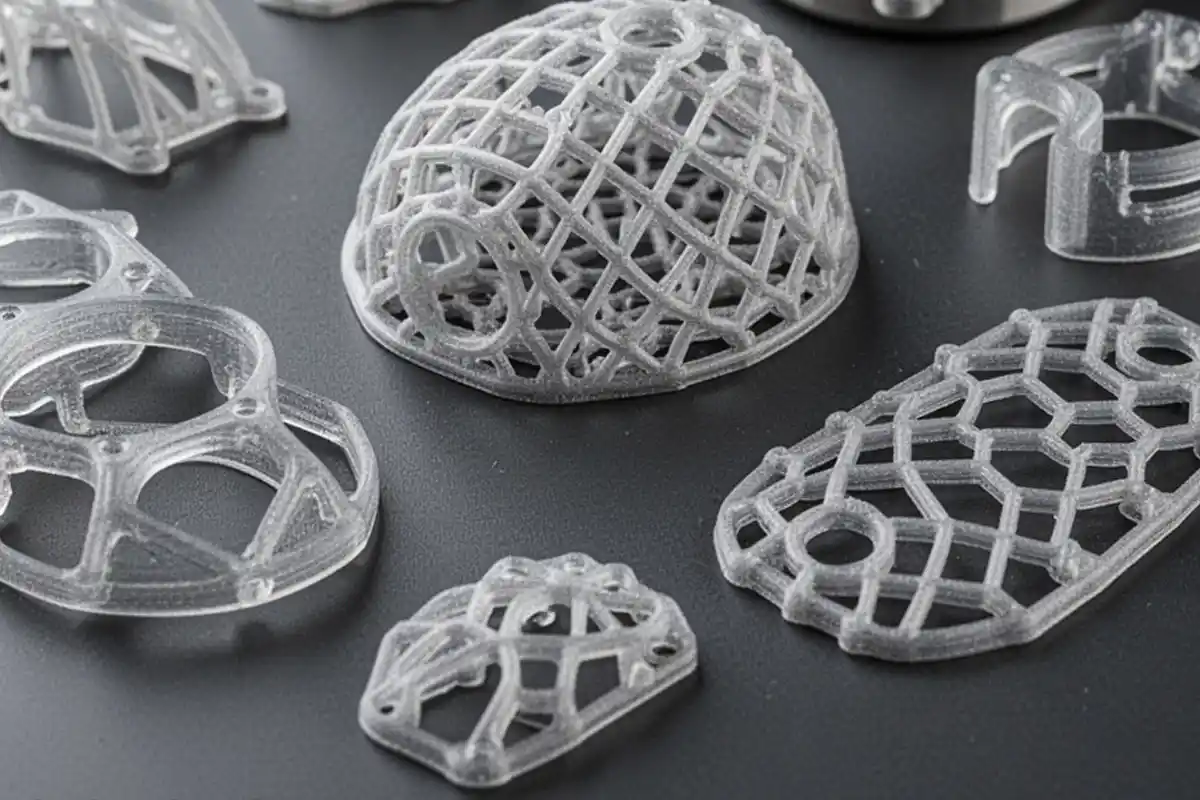
Introducing 4D Printing Services
At LAVA3DP, we released 4D Printing Service, positioning ourselves as a trusted 3D printing partner and at the forefront of this technological revolution. While 3D printing has transformed how we create static objects, 4D printing adds the dimension of time, enabling printed parts to transform, adapt, or assemble themselves in response to environmental stimuli such as heat, moisture, light, or magnetic fields, making them true self-transforming objects.
This article delves deep into the world of 4D printing service, exploring its mechanisms, materials, and monumental advantages for custom 4D printed parts and industrial 4D printing solutions. We will also provide a roadmap for global businesses looking to leverage this smart fabrication solutions approach and next-gen 3D printing services to solve complex engineering challenges.
Get an Instant Quote4D Printing Explained: Smart Materials Beyond 3D
Coined by Skylar Tibbits at MIT in 2013, 4D printing is an advanced evolution of traditional 3D printing. The “4th dimension” refers to time and the subsequent transformation a 3D-printed object undergoes, forming the basis of time-based transformation printing. The process utilizes smart materials 3D printing, specifically programmable materials printing using shape memory materials and stimuli-responsive polymers, that are precisely printed to absorb energy and change shape or function when triggered by external stimuli.
Unlike traditional manufacturing, where a part is static, a 4D-printed component is an active, responsive device. The design phase doesn’t just dictate the geometry; it enables intelligent product design and programs the future behavior of the part through dynamic material systems.
4D Printing Market Growth: Trends, Demand & Innovation
The commercial viability of 4D printing is accelerating at a remarkable pace. According to recent market analysis, the global 4D printing market is on an exponential trajectory driven by 4D printing research and innovation and the future of additive manufacturing.
Data synthesized from market research projecting a CAGR of 40.9% from 2026 to 2033. This explosive growth is fueled by increasing investments from industries using 4D printing for aerospace parts, 4D printing for medical applications, and demand for adaptive structures 3D printing, all seeking lightweight, adaptive, and cost-effective solutions.
Smart Materials Expertise at LAVA3DP
The magic of 4D printing lies in its materials. At LAVA3DP, we utilize a range of state-of-the-art engineering-grade smart materials and responsive materials manufacturing techniques to meet diverse industrial needs.
Shape Memory Polymers (SMPs)
SMPs are the workhorses of 4D printing. They can be deformed and then “remember” their original shape, recovering it when triggered by heat (thermo-responsive). These shape memory polymers (SMPs) are essential for temperature responsive materials applications. Recent advances have achieved shape recovery ratios as high as 98.56%, ensuring reliability in critical applications.
Electroactive Nanocomposites
By integrating conductive nanomaterials like Multi-Walled Carbon Nanotubes (MWCNTs) into polymer blends (such as PLA/PVDF), we create parts that respond to voltage. This enables programmable matter manufacturing and precise actuation, making it ideal for robotics and automation materials and soft robotics.
Hydrogels and Humidity-Responsive Polymers
These materials swell or shrink in response to water or humidity. This supports hydrogel 4D printing and moisture responsive materials, especially in biomedical applications and adaptive textiles with smart textiles manufacturing capabilities.
Programmable Textiles and Composites
For aerospace and automotive, we utilize fiber-reinforced composites that enable adaptive product engineering and aerospace smart components, combining structural strength with transformation ability.
Key Advantages of 4D Printing in Custom Manufacturing
Why should a global client choose 4D printing over standard 3D printing? The benefits are transformative and position LAVA3DP as an industry-leading 4D printing solutions provider and professional additive manufacturing company:
1. Self-Assembly and Automation
4D printing simplifies logistics through self-assembling structures. Imagine shipping a flat-pack component that assembles itself into a 3D structure upon activation. This reduces shipping volume and supports on-demand 4D printing and cost efficiency.
2. Enhanced Product Functionality
Products are no longer static. They can adapt dynamically, enabling responsive architecture materials and time-responsive fabrication for high-performance environments.
3. Sustainability
By creating parts that can biodegrade or disassemble, 4D printing supports circular economy models. This aligns with advanced manufacturing specialists and sustainable high-performance material engineering practices.
4. Simplified Complexity
Engineers can leverage smart material applications to design simpler geometries while achieving complex final forms through transformation, reducing production time and enabling rapid prototyping 4D printing.
Industrial Applications of 4D Printed Parts
The practical applications of 4D printing are vast and expanding rapidly across industries using 4D printing.
Aerospace and Defense
The aerospace sector benefits from defense and aerospace 4D printing and 4D printing solutions for aerospace engineering, enabling lightweight and adaptive components such as morphing wings and deployable structures. 4D printing enables the creation of adaptive vents, self-deploying antennas, and morphing wing structures . For defense applications, this technology supports the creation of smart structures that can withstand extreme conditions while reducing the logistical burden of carrying multiple rigid parts .
Biomedical Engineering
The medical field is leveraging 4D printing for groundbreaking treatments. Researchers are developing vascular stents that can be printed small for insertion but expand to the correct size once inside a blood vessel . In tissue engineering, 4D-printed scaffolds can mimic the dynamic mechanical environment of biological tissues, aiding in regeneration .
Soft Robotics and Actuators
Traditional robots are made of rigid metal. Soft robotics utilizes 4D-printed materials to create grippers that can handle delicate objects without sensors or complex controls. Using electroactive polymers, we can create robotic hands that mimic human motion precisely under low-voltage electrical stimulation .
Automotive Manufacturing
The automotive industry benefits from 4D printing in creating adaptive interiors, self-regulating engine components, and lightweight structures that improve fuel efficiency without sacrificing strength .
LAVA3DP Workflow: From Design to Programmable Parts
Navigating the shift from 3D to 4D requires expertise from certified 4D printing experts. At LAVA3DP, our 4D printing service provider workflow is built on precision and programmability.
Computational Design: We utilize advanced CAD tools for adaptive structures 3D printing and simulation-driven intelligent product design.
Multi-Material Printing: Enables programmable materials printing and hybrid material structuring.
Stimuli Programming: Supports time-based transformation printing and activation control.
Post-Processing and Activation: Ensures reliable transformation for custom 4D printing service applications.
4D Printing Challenges & Future Opportunities
While the potential is immense, 4D printing is still in its “embryonic developmental stages” . Current challenges include high initial development costs and the need for specialized simulation software to predict shape-morphing accurately .
Furthermore, as 4D printing integrates with Industry 4.0, concerns regarding cybersecurity arise—ensuring that the programming of these smart parts cannot be tampered with is a priority .
However, the trends are overwhelmingly positive. The integration of AI-driven design optimization is accelerating the discovery of new shape-changing geometries . We are moving towards a future where “Manufacturing as a Service” includes not just making parts, but programming behaviors .
At LAVA3DP, we position ourselves as a trusted 3D printing partner, delivering advanced additive manufacturing services and helping clients access 4D printing service worldwide to build adaptive, intelligent products.