

Meta Description: The U.S. Department of Defense is accelerating the adoption of metal 3D printing with a $900 million investment in military vehicle parts. Discover how additive manufacturing is reshaping defense logistics and what it means for the industry at LAVA3DP.
In a significant move that underscores the growing importance of additive manufacturing in national defense, the Grainger College of Engineering at the University of Illinois Urbana-Champaign has secured a $9 million contract with the U.S. Department of Defense (DoD). Announced on March 2, 2026, this initiative aims to advance the application of metal 3D printing for producing large-scale components for military vehicles.
This article explores the details of this project, its alignment with broader defense strategies, and the technological advancements making metal additive manufacturing a cornerstone of modern military logistics.
A $9 Million Commitment to Metal Additive Manufacturing Research
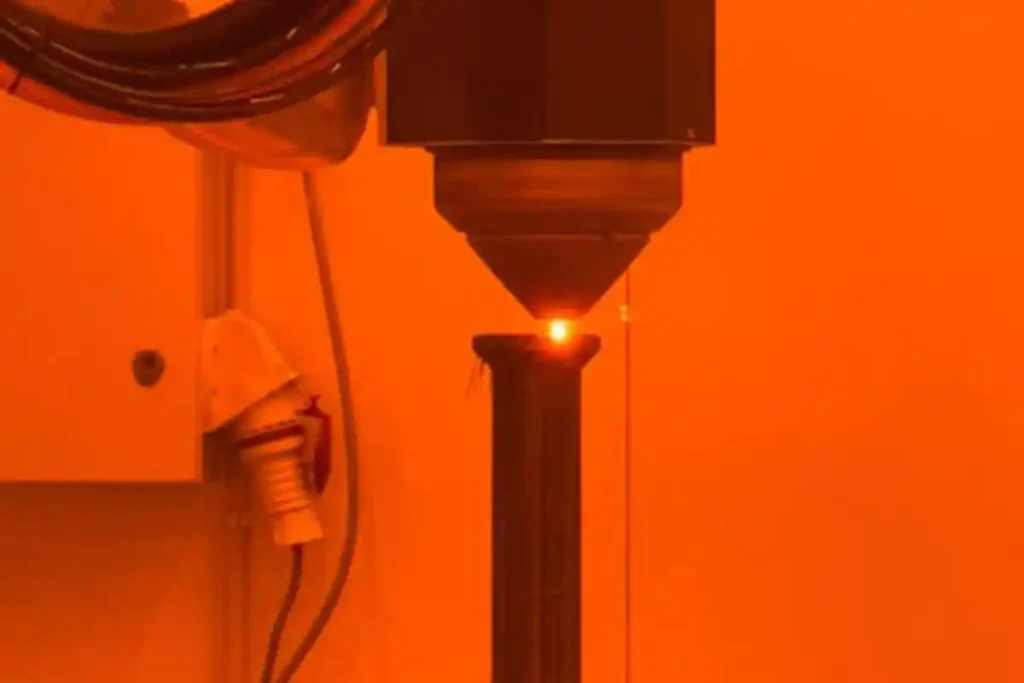
The new facility, located within the university’s research park, will be equipped with two state-of-the-art metal 3D printers valued at approximately $1.2 million and $2.5 million respectively. The DoD is contributing $8.15 million toward the project, with the university funding the remaining $905,000 for construction. Initially approved last year, the center is currently under construction and expected to announce further developments later in 2026.
The Illinois Manufacturing Institute (IMI) is overseeing the project. As Executive Director Federico Sciammarella confirmed, the research scope will eventually expand to include aerospace and automotive applications. The core objective is to develop metal 3D printing processes that can be scaled from prototyping to full-rate production.
Why the Military is Betting Big on Metal 3D Printing
This investment is not an isolated event. It reflects a strategic shift within the U.S. military to leverage additive manufacturing for enhancing supply chain resilience and military readiness.
1. Explosive Growth in Defense Funding
The U.S. military’s fiscal year 2026 budget request includes $3.3 billion for additive manufacturing projects, representing an 83% increase from the previous year. This funding surge indicates that 3D printing is no longer a experimental technology but a recognized solution for critical defense challenges.
2. The Imperative of Frontline Manufacturing
Traditional supply chains are lengthy and vulnerable. As additive manufacturing expert John Borgeo noted, “If you’re in a conflict area and don’t have a supply chain, the ability to deploy additive manufacturing facilities to forward-deployed bases allows for the repair, replacement, or manufacture of parts needed by warfighters”
This concept of “taking production lines to the frontline” is gaining traction . Recent examples include:
- The U.S. Navy successfully printing a replacement pump for an Arleigh Burke-class destroyer while deployed in Spain, reducing production time by 80% compared to traditional casting
- The U.S. Army’s observation that a Black Hawk external fuel tank could be 3D printed for approximately $3,000 versus $14,000 for traditionally manufactured replacements
3. Addressing Quality and Safety Concerns
While the benefits are clear, producing mission-critical metal parts presents challenges. As Borgeo explained, “Because you’re melting metal, there’s potential for micro-cracks and porosity. In some applications this isn’t an issue, but when weight is critical, the risks are high”.
This explains why the DoD is turning to academic experts. Professor Bill King from the Grainger College of Engineering emphasized, “We’re turning to experts like King and other faculty members to ensure we’re not putting people at risk”.
Complementary Research Initiatives Across the United States
The Illinois project is part of a broader ecosystem of metal 3D printing research funded by the DoD and other agencies.
Penn State’s DARPA-Funded Acoustic Monitoring
Researchers at Penn State, led by Associate Professor Christopher Kube, received a $1 million grant from DARPA’s Structures Uniquely Resolved to Guarantee Performance (SURGE) program. Their goal is to develop acoustic sensors that detect porosity defects during the printing process itself .
“Currently, advanced X-ray computed tomography is used to inspect for pores after printing, which is costly and time-consuming,” Kube explained. His team is developing techniques to make bubbles in the melt pool “sing” to ultrasonic microphones, enabling real-time defect detection .
Mississippi State’s In-Situ Monitoring Systems
At Mississippi State University’s Center for Advanced Vehicular Systems (CAVS), Dr. Matthew Priddy is developing systems that collect and analyze data during manufacturing. “As we build larger, more complex parts, it’s difficult to evaluate them post-build. Destructive or non-destructive testing is expensive and time-consuming. Ideally, you print the part and know it’s good,” Priddy stated .
Velo3D Partnership with U.S. Army
In January 2026, Velo3D entered a Cooperative Research and Development Agreement (CRADA) with the U.S. Army DEVCOM Ground Vehicle Systems Center. This partnership focuses on rapidly qualifying additively manufactured parts for combat vehicles, addressing supply chain challenges for ground systems .
Technological Innovations Driving Adoption
Several technological advances are making metal 3D printing more viable for defense applications.
Printer Capabilities
The University of Illinois facility features an Open Additive Panda printer capable of printing volumes of 11″ x 11″ x 11″ using materials like stainless steel and Inconel—a superalloy suitable for hypersonic vehicle applications .
New Materials Development
At Oak Ridge National Laboratory, researchers have advanced DuAlumin-3D, an aluminum alloy specifically designed for laser powder bed fusion. This material outperforms traditional aluminum alloys in high-temperature applications while maintaining excellent printability, offering lightweighting solutions for both automotive and aerospace sectors .
Cold Spray Technology
During the Navy’s Trident Warrior 25 exercise, SPEE3D demonstrated its Cold Spray Additive Manufacturing (CSAM) technology. Notably, the system was used to repair a damaged aviation part by adding material precisely, rather than manufacturing an entirely new component .
Visualizing the Impact: Key Data on Military AM Adoption
The following chart illustrates the dramatic increase in U.S. military investment in additive manufacturing and the tangible benefits observed in recent deployments.
Figure 1: Comparison of DoD additive manufacturing budget increase (bars, left axis) versus reported production time reduction for 3D printed naval components (line, right axis).
The table below summarizes key metal 3D printing initiatives across U.S. defense and academic institutions:
| Institution/Agency | Project Focus | Key Technology/Material | Funding |
| Grainger College of Engineering | Large-scale military vehicle parts | Stainless steel, Inconel | $9 million |
| Penn State University | In-process defect detection | Acoustic sensors, ultrasound | $1 million (DARPA) |
| Mississippi State University | Real-time monitoring systems | In-situ data collection | Not specified |
| Velo3D + U.S. Army | Ground vehicle parts qualification | Laser Powder-Bed Fusion | CRADA agreement |
| SPEE3D + U.S. Navy | Deployable shipboard manufacturing | Cold Spray Additive Manufacturing | Trial exercise |
| Oak Ridge National Laboratory | High-temperature alloy development | DuAlumin-3D aluminum alloy | Not specified |
Future Implications for Commercial Industry
While defense applications are driving significant investment, the technologies developed will inevitably transfer to commercial sectors. The center at Illinois explicitly includes plans to expand into aerospace and automotive applications.
For businesses considering metal 3D printing, several trends emerge:
- Quality assurance systems are becoming sophisticated enough for mission-critical applications
- Material options continue expanding, with new alloys designed specifically for additive processes
- Supply chain resilience justifies the investment in in-house printing capabilities
At LAVA3DP, we help businesses navigate these technological shifts. Whether you’re exploring prototypes or planning production-scale additive manufacturing, our team provides the expertise needed to succeed in this rapidly evolving landscape.
Ready to Explore Metal 3D Printing for Your Business?
At LAVA3DP, we provide comprehensive additive manufacturing solutions tailored to your specific requirements. From material selection to production scaling, our team helps you navigate the complexities of metal 3D printing.
[Contact us] today to discuss your project and discover how additive manufacturing can strengthen your supply chain and accelerate your product development.
Frequently Asked Questions (FAQs)
What types of metal can be used in industrial 3D printing?
Industrial metal 3D printing systems can process a wide range of materials including stainless steel, titanium, Inconel (nickel-based superalloys), aluminum alloys, and tool steels. Research institutions like Oak Ridge National Laboratory continue developing specialized alloys such as DuAlumin-3D for high-temperature applications .
How does metal 3D printing compare to traditional manufacturing costs?
Cost comparisons depend on volume and complexity. For low-volume, complex parts, additive manufacturing can be more economical by eliminating tooling costs and reducing material waste. The U.S. Army reported cost reductions of 60-80% for specific components compared to traditionally manufactured replacements . However, for high-volume production, traditional methods may remain more cost-effective.
Is metal 3D printing suitable for load-bearing or mission-critical parts?
Yes, with appropriate quality controls. The U.S. military is actively qualifying additively manufactured parts for combat vehicles through programs like the Velo3D CRADA with DEVCOM GVSC . Advanced in-situ monitoring systems, such as those being developed at Penn State and Mississippi State, help ensure part quality by detecting defects during the printing process .
How long does it take to produce a metal 3D printed part?
Production times vary based on part size and complexity, but significant time savings are common. The U.S. Navy reduced production time by 80% for a replacement pump compared to traditional casting, completing the part while the ship remained deployed rather than waiting for supply chain delivery .
What industries benefit most from metal additive manufacturing?
While defense and aerospace are current leaders due to the need for lightweight, complex parts and supply chain independence, other industries gaining value include automotive (for high-performance components and tooling), medical (for custom implants and surgical guides), and energy (for replacement parts in remote locations).