

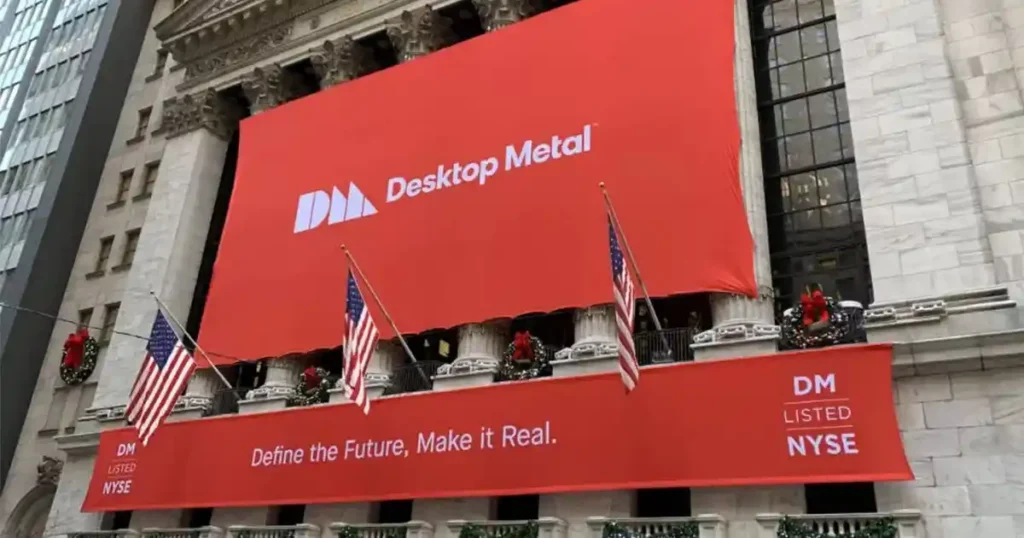
The additive manufacturing (AM) industry watched in disbelief as Desktop Metal, once the most celebrated metal 3D printing startup, spiraled from a staggering $2.5 billion valuation to a bankruptcy sale in just five years . A deep-dive report by the New York Times in early 2026 chronicled this dramatic collapse, offering a powerful case study on the perils of hype and the difficult path to industrial adoption . For businesses seeking reliable, practical AM solutions today, understanding this story is essential. At LAVA3DP, we believe in building partnerships on a foundation of realistic applications and proven technology, not unfulfilled promises.
Here is the story of an empire’s rise and fall, and the enduring lessons it holds for the future of manufacturing.
The Unicorn’s Ascent: A “Dream Team” and the SPAC Frenzy
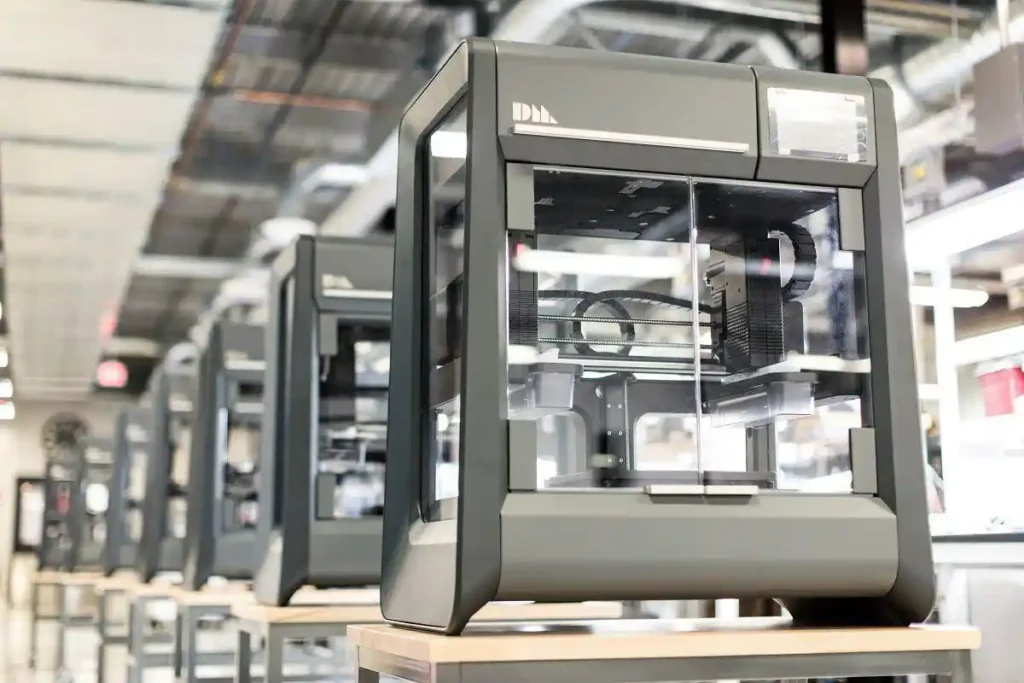
Founded in 2015 in Burlington, Massachusetts, Desktop Metal assembled a “dream team” of founders, including MIT professors and veterans from successful tech companies like SolidWorks . Their mission was nothing short of revolutionary: to make metal 3D printing accessible, safe, and fast enough for mainstream industrial manufacturing—a vision they called “Additive Manufacturing 2.0.”
The narrative was incredibly compelling. They promised office-friendly metal printing systems that would sidestep the dangers of high-powered lasers and loose metal powder. This vision attracted a who’s who of investors, including Google Ventures (GV), BMW, Ford, and Koch Industries . By the time of its SPAC merger announcement in 2020, Desktop Metal had raised over $438 million .
| Round | Key Investors | Implied Valuation |
| Series A (2015) | Kleiner Perkins, NEA | ~$50 Million (Est.) |
| Series E (2019) | Koch Disruptive Technologies | $1.5 Billion |
| SPAC Merger (2020) | Trine Acquisition Corp. | $2.5 Billion |
Data compiled from SEC filings and TechCrunch reports .
In late 2020, Desktop Metal went public via a SPAC (Special Purpose Acquisition Company) merger, valuing the company at $2.5 billion . The deal brought in $575 million in cash, fueling an aggressive acquisition spree. The company spent over $1 billion to acquire a portfolio of technologies, including industry pioneers like ExOne (binder jetting) for $575 million and EnvisionTEC (DLP) for $300 million . On paper, it was building an AM empire.
The Collapse: When Hype Met Reality
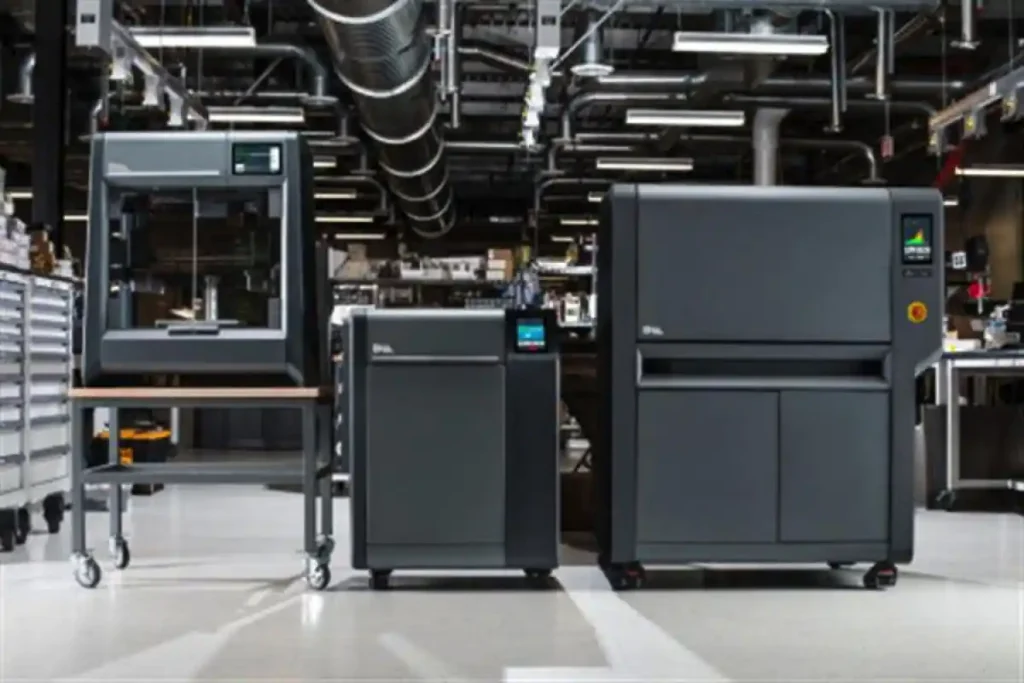
The glittering facade began to crack when the technology failed to deliver on its most ambitious promises. The core of the strategy was the P-50, a “mass production” metal binder jetting system that was supposed to revolutionize factories. According to the New York Times, the machine “never really worked well enough to be sold in large volumes” . It was a flagship product without a functional flag.
The Financial Fall: Desktop Metal’s Revenue and Net Loss (2022-2024)
The chart below visualizes the growing chasm between the company’s revenue and its staggering net losses, highlighting the unsustainable financial trajectory.
This technological gap had severe financial consequences.
- Unrealistic Projections: The company had projected nearly $1 billion in revenue by 2025, a target that was wildly out of touch with market realities .
- Mounting Losses: Despite the narrative, Desktop Metal never turned a profit. Its accumulated losses quickly consumed the capital raised from investors. In 2024 alone, the company reported a GAAP net loss of $219.5 million on revenue of just $148.8 million .
- The Acquisition Burden: Integrating so many acquired companies proved complex and expensive, creating a heavy cost structure that the core business could not support.
- The Final Blow: A last-ditch attempt to be acquired by Nano Dimension devolved into a legal battle. Although Desktop Metal won the lawsuit, it was saddled with over $29.7 million in legal fees, which became “the straw that broke the camel’s back” .
In July 2025, Desktop Metal filed for Chapter 11 bankruptcy. The remnants of its core binder jetting and materials business were sold for just $7 million to Arc Impact, a mere fraction of its former valuation . The empire had fallen.
Valuable Lessons for the Age of Additive Manufacturing
The story of Desktop Metal is not just a cautionary tale; it’s a crucial learning opportunity for anyone using or investing in 3D printing. The industry has emerged from this period with a healthier, more pragmatic perspective.
- Lesson 1: Applications, Not Specs. The hype era was about raw speed and groundbreaking promises. Today, the focus is rightly on applications—solving specific customer problems and ensuring machines deliver tangible value .
- Lesson 2: The Technology Chasm. Developing industrial-grade technology is profoundly difficult. Promising a “moonshot” product like the P-50 before it’s ready can destroy a company. Successful innovation requires iterative development and honest communication about a technology’s technology readiness level.
- Lesson 3: The Limits of Financial Engineering. A SPAC merger or a massive valuation cannot substitute for a sound business model. The Desktop Metal story shows that cash burn without a clear path to profitability is a recipe for disaster.
- Lesson 4: The Market is Growing, Realistically. Despite the bankruptcy, the market for metal 3D printing is still expanding. The global market is projected to grow at a CAGR of 11.8% , reaching $3.6 billion by 2032 . This growth is now driven by real-world applications in aerospace, healthcare, and automotive, not speculative hype .
How LAVA3DP Embodies a Better Way
At LAVA3DP, we’ve watched the rise and fall of Desktop Metal with a keen eye. Our approach is built on the lessons learned from this era. We don’t promise to “disrupt” entire industries overnight. Instead, we focus on integrating mature, reliable additive manufacturing technologies to deliver exceptional results for our clients.
We partner with proven industrial 3D printing system manufacturers to ensure every part we produce meets stringent quality standards. Whether you need a complex prototype or a small batch of end-use parts, our focus is on application engineering. We work with you to understand your specific design and production challenges, recommending the best process—be it SLM (Selective Laser Melting) , binder jetting, or another technology—to create parts that are functional, cost-effective, and reliable.
Conclusion
The bankruptcy of Desktop Metal marks the end of an era of irrational exuberance in 3D printing. It serves as a powerful reminder that technological revolution is a marathon, not a sprint. The industry is now stronger, wiser, and more focused on the practical work of manufacturing.
For businesses looking to harness the power of additive manufacturing, the path forward is clear: partner with experienced, application-focused providers. At LAVA3DP, we are ready to put these lessons into practice for you.
Frequently Asked Questions (FAQs)
1. What types of metal 3D printing technologies does LAVA3DP use?
At LAVA3DP , we utilize industry-proven technologies, primarily Powder Bed Fusion (PBF) , which includes methods like Selective Laser Melting (SLM) . We also leverage Binder Jetting technology for specific applications that require high throughput or unique material properties. Our choice of technology is always driven by the specific requirements of your project to ensure the best balance of precision, mechanical properties, and cost.
2. What is the typical turnaround time for a metal 3D printing project?
Turnaround times vary based on part complexity, size, and quantity. For standard prototypes, we can often ship parts within 3-5 business days after design validation. For larger production runs or parts requiring significant post-processing, the timeline is discussed and confirmed during the project scoping phase. We prioritize clear communication to ensure your schedule is met.
3. What industries and applications are best suited for your metal 3D printing service?
Our services are ideal for industries that demand high-performance, complex metal parts. This includes aerospace for lightweight brackets and engine components, automotive for custom tooling and functional prototypes, and the medical field for patient-specific surgical guides and implants. We also serve general industrial manufacturers needing end-use parts or replacement components .
4. How do you ensure the quality of the printed metal parts?
Quality assurance is integral to our process. We follow strict protocols, beginning with material verification and build setup. During printing, we monitor key parameters, and post-production, parts often undergo inspection using techniques like CMM (Coordinate Measuring Machine) and surface finish analysis to ensure they meet your dimensional and mechanical specifications.
5. How can I get a quote for my project?
Getting a quote is simple. You can upload your files to get an instant quote or visit our contact page and send us your 3D model (STL or STEP file) along with your requirements, including material, quantity, and any desired surface finish or post-processing. Our engineering team will review your project and provide a detailed quote and design for manufacturability feedback promptly.