

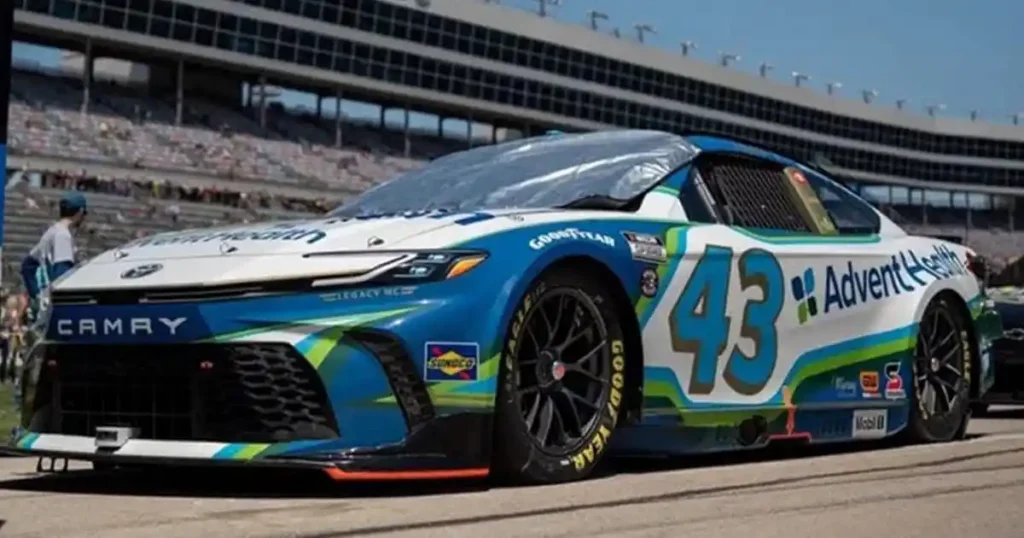
In the high-stakes world of NASCAR racing, victory is determined by fractions of a second. This relentless pursuit of performance demands rapid innovation, where even a small aerodynamic advantage or a slight reduction in weight can make the difference between winning and finishing in the pack. For LEGACY MOTOR CLUB, a premier team co-owned by seven-time champion Jimmie Johnson and racing icon Richard Petty, the key to staying competitive isn’t just found on the track, but also in their North Carolina workshop . By integrating large-format 3D printing into their workflow, the team has revolutionized how they design, test, and produce parts, achieving dramatic reductions in both time and cost .
This article explores how LEGACY MOTOR CLUB leverages additive manufacturing to overcome traditional production bottlenecks, providing a powerful blueprint for manufacturers and innovators worldwide. If your business is looking to achieve similar gains in speed and efficiency, the experts at LAVA3DP can help you navigate the possibilities of professional 3D printing.
The Need for Speed: Overcoming Outsourcing Delays
Before adopting in-house 3D printing, LEGACY MOTOR CLUB faced a familiar foe: time. Outsourcing the production of specialized parts often meant waiting two to three weeks for delivery . For a team that needs to iterate quickly and test new designs between races, this delay was a significant handicap.
Tony Cardamone, Shop Foreman for the team, highlighted the value of bringing production in-house. “I can’t afford to outsource and wait two to three weeks to develop a part. Being able to 3D print different designs, put them in the car, and redo if it’s not right, is priceless” . This shift from outsourcing to on-demand production is at the heart of their newfound agility. By investing in their own capability, they have effectively collapsed development cycles from weeks to mere days.
The Solution: Large-Format 3D Printing with BigRep
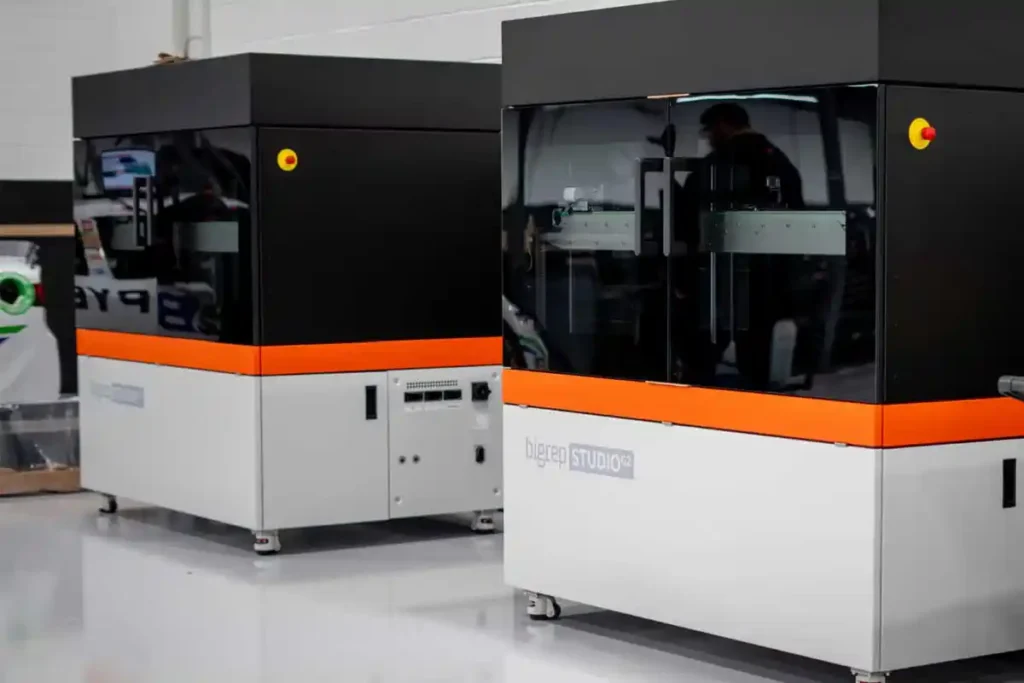
To meet their needs, LEGACY MOTOR CLUB equipped their shop with two BigRep STUDIO 3D printers . These are not your average desktop machines. The BigRep STUDIO is a professional, large-format 3D printer offering a substantial build volume of 1000 x 500 x 500 mm—roughly ten times that of a standard desktop printer . This generous capacity allows the team to print sizable, complex parts in a single piece, eliminating the need for assembly and ensuring structural integrity.
Key features of the BigRep STUDIO, as detailed by the manufacturer, include:
- 250-Liter Enclosed Build Chamber: Provides a controlled environment for printing with engineering-grade materials .
- Dual Extrusion (up to 280°C): Enables multi-material printing and the use of soluble support structures for creating intricate geometries .
- Open Material System: Crucially, the printer allows the use of a wide variety of filaments, giving engineers the flexibility to choose the exact material properties needed for each application .
Real-World Applications: From Cooling Ducts to Aerodynamic Skirts
The versatility of their in-house additive manufacturing capability has led to its application across a wide spectrum of needs, from shop floor tools to race-ready components.
1. End-Use Race Parts: The Gear Cooler Plenum
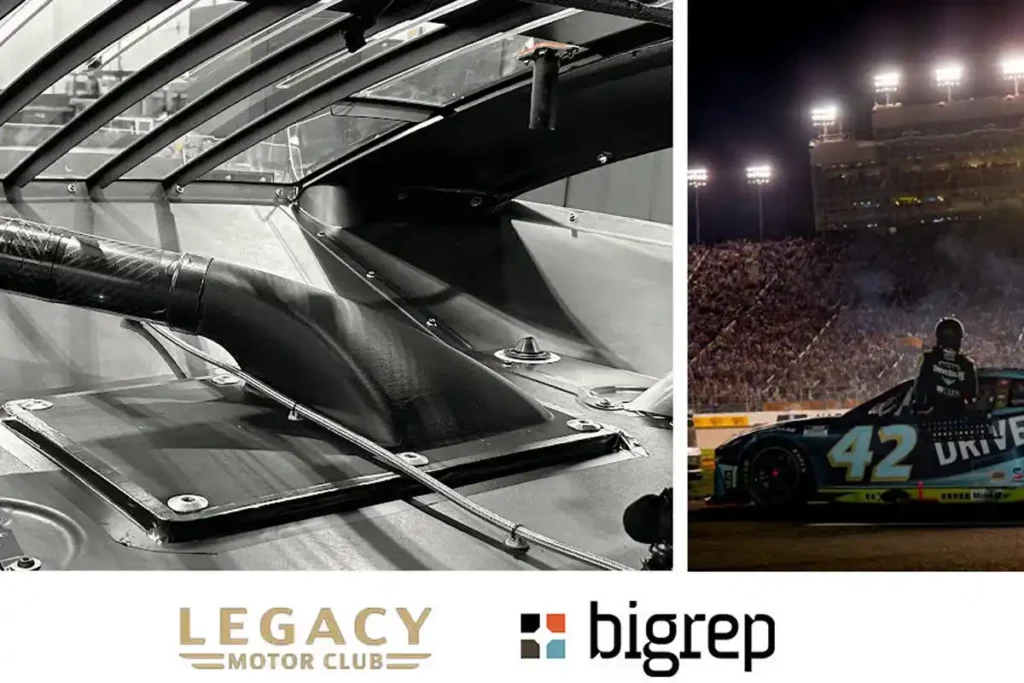
One of the first major successes was the production of a gear cooler plenum, a component designed to improve the cooling of the transaxle . Its size and geometric complexity made it impossible to produce on smaller printers, forcing reliance on outsourcing. With the BigRep STUDIO, the team can now produce these complex parts on-demand. The performance benefits are clear: Curtis Neumann, an Aero Engineer with the team, noted, “We’re printing parts that go on the car and perform under very high heat and heavy load conditions” .
2. Responding to New Regulations: Rocker Extension Skirts
In the fall of 2024, NASCAR introduced a new regulation requiring teams to add rocker extension skirts to their cars to enhance stability and prevent liftoff during high-speed incidents . The quick turnaround required to comply with such mid-season rule changes could have been a major disruption. However, LEGACY MOTOR CLUB’s Director of Aerodynamics, Steven Sander, was able to quickly design and print the mandated part using PA6/66 material on their BigRep system, ensuring they were ready for the season’s start . This highlights how additive manufacturing enables rapid compliance and adaptation in a way traditional methods cannot match.
3. Production Tooling and Assembly Fixtures
Beyond end-use parts, the team uses 3D printing extensively for creating jigs, fixtures, and templates. These tools are essential for ensuring build quality and repeatability across their three race cars . For instance, they print templates to ensure that graphics, like the signature gold stripe on the car’s nose, are placed with pinpoint accuracy every single time . They also use flexible TPU material to print protective covers for delicate dashboard electronics during the frequent disassembly and reassembly processes between races .
The Data-Driven Impact: Quantifying Cost Savings
The most compelling argument for adopting industrial 3D printing is often the return on investment. LEGACY MOTOR CLUB’s experience provides clear, quantifiable data on cost and time savings. The following charts illustrate the dramatic financial impact of bringing production in-house.
Cost Reduction Analysis: Grille Bezels
The following chart compares the cost of producing a single grille bezel through traditional outsourcing versus in-house 3D printing.
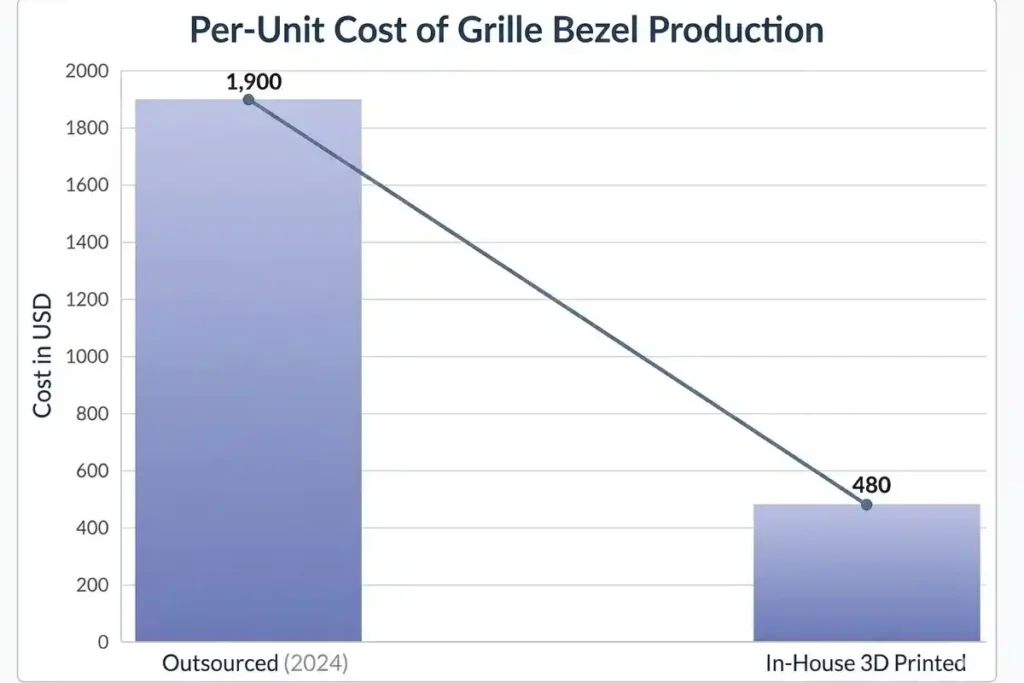
As the chart shows, the cost per bezel plummeted from $1,900 when sourced from external suppliers to just $471 when produced in-house using 3D-printed molds. With the team using approximately 30 bezels per season, this resulted in projected annual savings of over $32,000 .
Material Efficiency: Gear Cooler Plenum
The production of the gear cooler plenum provides another powerful example of cost efficiency. In the 2024 season, the team used 20 different versions of this part. The cost breakdown is staggering:
- Outsourced Cost: $2,000 per part + a one-week lead time.
- Total Outsourced Season Cost: ~$40,000.
- In-House 3D Printing Cost: 1.5 kg of material at $37.95/kg = $56.93 per part.
- Total In-House Season Cost (Projected): $1,139.50.
This represents a cost reduction of approximately 97% for this specific component, not to mention the invaluable time saved . The ability to iterate and produce 20 different versions over a season would have been logistically and financially prohibitive with traditional methods.
The Bigger Picture: A Trend in Motorsports and Manufacturing
LEGACY MOTOR CLUB is not alone in harnessing the power of additive manufacturing. The technology is rapidly transforming the entire automotive and motorsports landscape.
- NASCAR R&D: NASCAR’s own research and development team uses Stratasys Neo800 SLA printers to prototype aerodynamic components like engine panel strakes. This approach has led to a 50% reduction in prototyping costs and has cut development cycles by a full week, enabling faster validation of new designs in wind tunnels .
- Formula 1 with Honda: In the pinnacle of motorsports, Honda has integrated metal 3D printing to produce components for Oracle Red Bull Racing’s F1 cars. They 3D print complex, thin-walled turbine housings in Inconel and high-strength pistons, achieving geometries impossible with casting and forging while reducing weight and lead times .
- Material Science Advancements: The future of automotive 3D printing is also being shaped by new materials. Research institutions like the Oak Ridge National Laboratory are testing new aluminum alloys like DuAlumin-3D, designed specifically for laser powder bed fusion to create high-temperature, lightweight components for more efficient engines . Similarly, scientists at Nagoya University have developed new aluminum alloys that leverage the rapid cooling rates of 3D printing to remain strong and flexible at temperatures up to 572°F, opening new possibilities for engine design .
Conclusion
The story of LEGACY MOTOR CLUB is a powerful testament to how industrial 3D printing is no longer just a tool for prototyping, but a strategic asset for production. By embracing large-format additive manufacturing, the team has slashed costs, accelerated development, and gained the flexibility to innovate on their own terms. Their success demonstrates that in any competitive field, the ability to produce parts faster, cheaper, and with greater design freedom is a game-changing advantage.
Is your organization ready to build its own legacy of innovation? LAVA3DP offers a range of professional 3D printing services and expert guidance to help you implement solutions just like these. From rapid prototyping to low-volume production, we have the technology and expertise to bring your ideas to life. For more information on how we can assist with your next project, please contact us today.
Frequently Asked Questions (FAQs)
1. What types of 3D printing technologies does LAVA3DP use for production parts?
At LAVA3DP, we utilize a range of industrial additive manufacturing technologies to meet diverse project requirements. This includes Fused Filament Fabrication (FFF) for large-format, durable parts, as well as high-resolution technologies like Stereolithography (SLA) for parts requiring fine detail and smooth surface finishes. We select the optimal technology based on your part’s geometry, material needs, and application.
2. Can LAVA3DP produce parts using engineering-grade materials for functional testing?
Yes. We offer a wide selection of engineering-grade thermoplastics. Our material library includes options like PA6/66 (Nylon) for strength and heat resistance, TPU for flexible components, and carbon fiber-reinforced composites for high stiffness-to-weight ratio parts. We can help you select the right material to ensure your prototype or end-use part performs under real-world conditions.
3. What is the typical turnaround time for a 3D printing service order?
Turnaround times are project-dependent, but one of the primary benefits of 3D printing services is speed. Once a design file is finalized and approved, simple prototypes can often be produced and shipped within a few business days. For more complex projects or larger production runs, we will provide a clear timeline during the project scoping phase. We pride ourselves on offering lead times significantly faster than traditional manufacturing methods like injection molding or CNC machining.
4. How does LAVA3DP ensure the quality and accuracy of printed parts?
Quality assurance is integral to our process at LAVA3DP. We begin by consulting with you to understand your application and ensure the design is optimized for the chosen printing process. During production, we use calibrated industrial machines with controlled environments to ensure repeatability. After printing, parts are carefully inspected and finished according to your specifications, ensuring they meet the required tolerances and surface quality.
5. Is LAVA3DP suitable for both one-off prototypes and larger production runs?
Absolutely. Our service is designed to be flexible, catering to both rapid prototyping and low-volume production. For prototyping, we offer the speed and design freedom to iterate quickly. For production, we can manufacture end-use parts on-demand, helping you avoid the high costs and long lead times associated with tooling for traditional manufacturing. Whether you need a single part or hundreds, we can provide a cost-effective solution.