

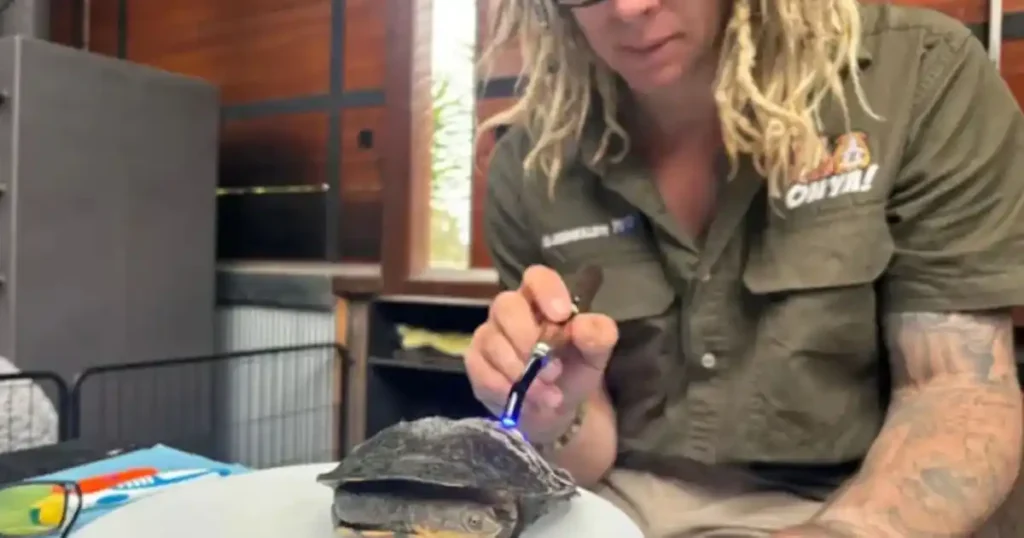
In the vast and often rugged landscapes of Victoria, Australia, an unlikely hero is using cutting-edge technology to perform life-saving surgeries on a very delicate group of patients. Wildlife caregiver Josh Neille has spent the past year treating nearly 15 freshwater turtles, most of whom have been struck by vehicles while crossing roads. The solution he employs is a remarkable blend of traditional care and modern innovation: 3D printing combined with recycled dental resin to repair shattered shells.
This powerful application of additive manufacturing demonstrates a growing trend in veterinary medicine and wildlife conservation. It moves beyond industrial prototypes to offer bespoke, compassionate solutions for animals. At LAVA3DP, we are inspired by such stories and offer professional 3D printing services to help bring your own innovative projects to life, whether for medical, engineering, or creative purposes.
The Challenge: Road Trauma in the Wild
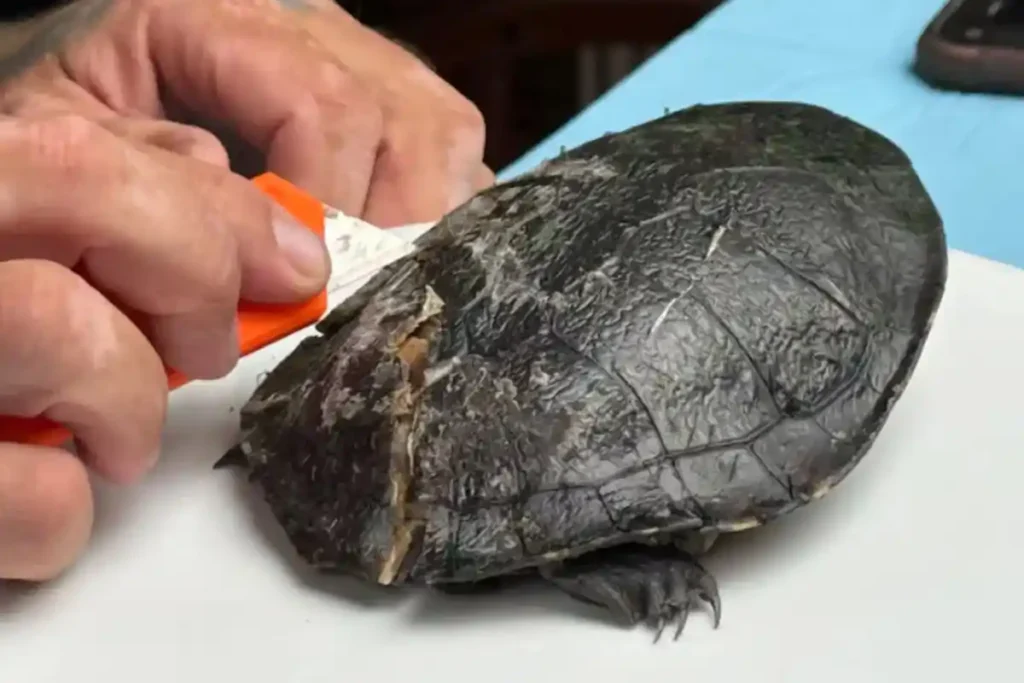
For turtles, a simple journey across a road can be fatal. Their primary defense—their shell—is no match for a car tire. As Josh Neille, who works on a farm in Gippsland, explains, “I’m just a panel beater for turtles now.” He compares his work to auto body repair: “A turtle is like your car that’s been in an accident and has a dented body. So, you have to sand everything down, prime it, clean all the contaminants, and then basically fill it with putty to repair it”.
The injuries are not just cosmetic. A cracked shell exposes sensitive nerve endings and blood vessels, leaving the animal vulnerable to fatal infections. Traditional repair methods, while effective for simple cracks, struggle with complex or large missing sections where precision is paramount.
The 3D Printing Solution: Precision from Pixels to Plaster
This is where 3D printing technology provides a groundbreaking advantage. Instead of relying solely on manual sculpting, Neile utilizes a process that mirrors the highest standards of digital fabrication:
- 3D Scanning: The turtle’s damaged shell and, if possible, a healthy counterpart are scanned to create a precise digital model of the missing piece.
- Digital Design: Using CAD software, a custom “patch” is designed to fit the unique contours of the fracture perfectly.
- Additive Manufacturing: The design is sent to a 3D printer, which builds the patch layer by layer.
- Application: The printed piece is then carefully integrated into the shell using specialized adhesives and resins.
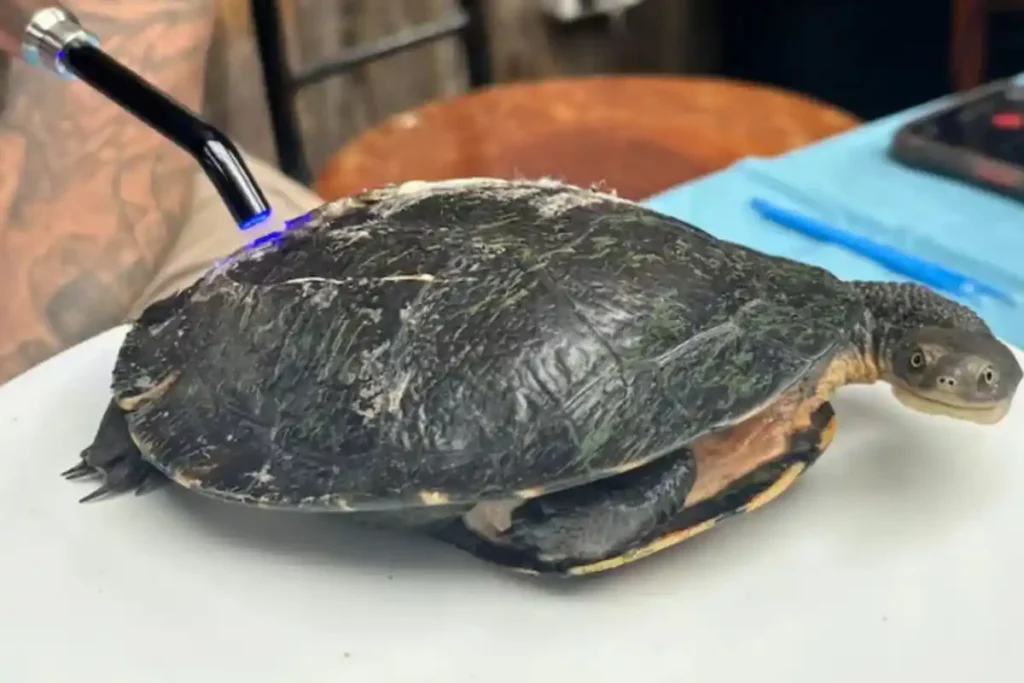
For one eastern long-necked turtle under Neile’s care, this technology was critical. The animal suffered a severe fracture that exposed tissue near vital organs. The ability to create a precise, custom-fit cover using 3D printing was essential for its survival, requiring three months of intensive care before recovery.
Visualizing the Impact
The table below outlines a typical treatment process for a turtle with a severe shell fracture, highlighting where 3D printing integrates with traditional veterinary care.
| Treatment Stage | Duration | Key Actions & Technologies Used |
|---|---|---|
| Triage & Stabilization | 1-3 Days | Initial assessment, wound cleaning, pain management, and administration of antibiotics to prevent infection. |
| Digital Design Phase | 2-5 Days | 3D scanning of the injury, digital modeling of the replacement “patch” in CAD software, and preparation for printing. |
| Fabrication | 1-2 Days | 3D printing of the custom shell segment using materials like recycled resin. |
| Surgical Repair | 1 Day | Surgical site preparation, application of the 3D printed patch, sealing with medical-grade resin, and UV curing. |
| Post-Operative Recovery | 4 Days to 3 Months | Monitoring in a controlled environment, ensuring the repair integrates, and physical therapy before release back into the wild. |
The Science of Sustainability: Recycling Resin
A unique and vital aspect of this story is the source of the printing material. Josh Neille receives supplies from local dentist Dr. Yanna Stevens, who donates surplus dental materials, including resins that would otherwise go to waste.
This practice aligns with significant scientific advancements in sustainable 3D printing. Recent studies have explored the mechanical recycling of photocured acrylic resins, the type commonly used in digital light processing (DLP) printing for dental models .
- The Process: Researchers have developed methods to grind discarded 3D-printed dental models into a fine, micrometer-size powder using a ball milling process. This powder is then mixed with new resin .
- The Performance: Incredibly, tests show that resins containing up to 50 parts of recycled powder per hundred (phr) retain excellent printing accuracy. They maintain a tensile strength of around 30 MPa and even show improved compressive strength of up to 153 MPa, making them perfectly viable for applications like turtle shell repair .
- The Circular Economy: This creates a “cradle-to-cradle” approach, transforming waste from one medical procedure (dental model printing) into a resource for another (wildlife rehabilitation). As Dr. Stevens notes, the expectation is that these durable dental materials, designed to last for years in a person’s mouth, will provide a robust and lasting repair for the turtles.
This isn’t an isolated case. Globally, additive manufacturing is being harnessed for animal rehabilitation. A famous example is Charlotte, a sea turtle with “bubble butt syndrome”—a condition where trapped air prevents her from diving. A collaborative team used SLS 3D printing with a carbon-fiber-reinforced nylon to create a custom harness that allows her to swim normally .
Furthermore, 3D printing is gaining traction in clinical veterinary medicine for orthopedic surgeries on dogs, where patient-specific guides and anatomical models improve surgical precision and reduce operating times .
A Future Built on Collaboration
The success of these projects often hinges on collaboration. Josh Neille not only relies on local dentists but also leverages his large social media following to get reports of animals in need. Similarly, the project to save Charlotte involved a partnership between an aquarium, a sportswear company (New Balance), and a 3D printing manufacturer .
This spirit of collaboration is at the heart of what we do at LAVA3DP. Whether you are an engineer, a designer, a researcher, or a hobbyist, having access to reliable, high-quality 3D printing services is the key to turning a concept into reality.
Conclusion: From Niche to Necessary
The story of Josh Neille and his turtle patients is more than just a heartwarming tale; it is a testament to the versatility and power of additive manufacturing. By combining the precision of 3D scanning and printing with the sustainability of recycled materials, we see a future where technology works in harmony with nature. This accessibility means that innovative solutions are no longer confined to large corporations. They are in the hands of dedicated individuals and accessible through professional service providers like LAVA3DP.
Whether you are looking to prototype a new product, create a unique piece of art, or perhaps even develop a custom solution for a unique challenge, 3D printing is the tool that can make it possible. Visit lava3dp.com today to learn more about how our services can help you build your next project, layer by layer.
Frequent Asked Questions (FAQs)
1. What file formats do you accept for 3D printing, and what are the requirements?
We primarily accept STL (stereolithography) files, which are the standard format for 3D printing. You can also upload other formats like OBJ, 3MF, or STEP files for review. For the best results, please ensure your model is “watertight” (manifold) and has no holes or inverted normals. If you have a concept but no 3D model, our design team can assist you—just contact us to discuss your needs.
2. How long does it take to get a part printed?
The turnaround time depends on several factors, including the size and complexity of the model, the chosen 3D printing technology (e.g., FDM, SLS, or DLP), and the post-processing required. A small, simple part can be ready in as little as 24-48 hours, while larger, more complex projects may take several days. Once we review your file, we can provide an accurate estimate.
3. Which 3D printing technology is best for my project?
The best technology depends on what you are making.
- FDM (Fused Deposition Modeling) is great for large, strong parts and functional prototypes using materials like PLA, ABS, or PETG.
- SLS (Selective Laser Sintering) uses a nylon powder to create durable, complex geometries with excellent mechanical properties, ideal for end-use parts.
- Resin printing (SLA/DLP) offers the highest detail and smoothest surface finish, perfect for miniatures, jewelry patterns, and dental or medical models.
Not sure? Contact us at lava3dp.com/contact/ with your project details, and we can recommend the ideal solution.
4. Can you print in colors or with multiple materials?
Yes, we offer a range of options. For FDM printing, we can print in various single colors. We also offer Multi-Jet Fusion (MJF) technology, which can produce parts in greyscale or black and white. For full-color, detailed models, we utilize PolyJet (Material Jetting), which can print in a wide spectrum of colors and even multiple material properties in a single print run.
5. Do you offer finishing or post-processing services?
Absolutely. The finish of a raw 3D printed part varies by technology. We offer a comprehensive range of post-processing services to give your part a professional look. These include support removal, sanding, priming, painting, and smoothing. For a truly polished final product, just let us know your requirements when you upload your file or reach out via our contact page.