

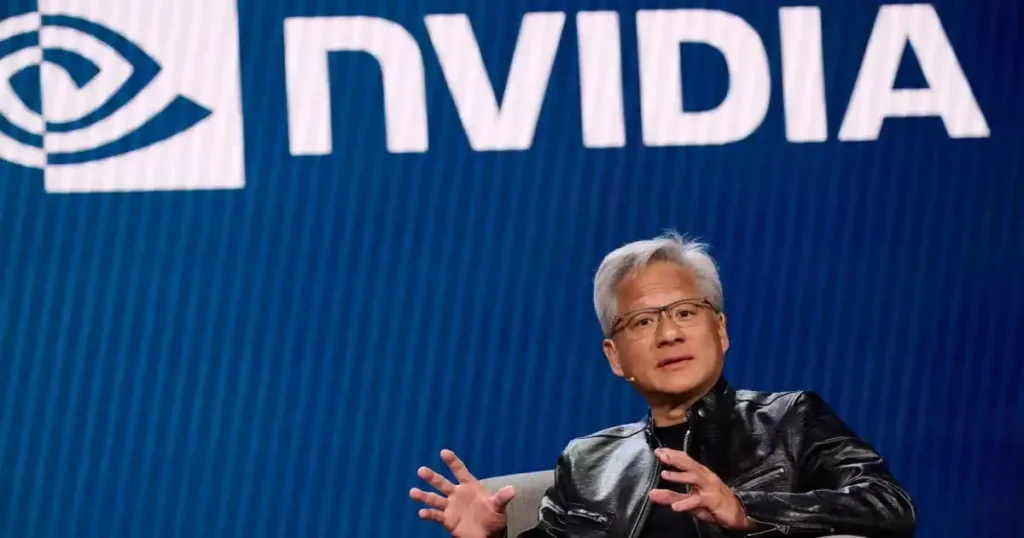
March 2026 — When NVIDIA announced its $4 billion investment in Lumentum and Coherent on March 2, 2026, the news sent ripples through the technology sector . The primary objective is clear: securing AI data center optical interconnect capacity for next-generation computing systems. But for those watching the additive manufacturing space, an interesting question emerges—will this massive infusion of capital into laser technology benefit the 3D printing industry?
The short answer is yes, but not in the way you might expect. This investment represents what industry analysts call “indirect spillover”—real but gradual benefits that will unfold over years rather than months .
Understanding the Investment: AI Drives Optical Demand
NVIDIA’s $4 billion commitment—$2 billion each to Lumentum and Coherent—comes with long-term supply agreements focused squarely on AI data center infrastructure . The funds target expansion of indium phosphide (InP) optical chips, co-packaged optics (CPO) , and high-speed optical modules for NVIDIA’s GB200/GB300 AI computing systems.
Both companies maintain 3D printing-adjacent laser product lines, but these represent minor portions of their overall business:
- Lumentum generates core revenue from optical communications and 3D sensing (smartphone facial recognition). Its 3D printing relevance centers on UV lasers for SLA technology, not the high-power fiber lasers dominant in metal additive manufacturing. The company supplies these primarily through OEM arrangements without significant scale .
- Coherent maintains broader laser operations, with SLM/DMD fiber lasers for metal 3D printing and small-format metal systems like the CREATOR series. However, 3D printing-related business constitutes a minimal fraction of overall revenue—its laser segment overall represents just 23% of revenue, with additive manufacturing a subset of that .
Recent financial results underscore this dynamic. Coherent’s extraordinary 17% revenue growth came from data center communications (orders now extend through 2027), while Lumentum’s 65.5% revenue surge resulted from optical circuit switches (OCS) and co-packaged optics demand . Neither company’s earnings reports mentioned 3D printing as a growth driver.
The AI-Laser Connection: Solving Real 3D Printing Challenges
Despite the investment’s primary focus on data centers, the convergence of artificial intelligence and laser technology holds genuine promise for additive manufacturing. Machine learning algorithms enabling real-time parameter adjustment and closed-loop control could address persistent industry challenges :
1. Precision and Stability Enhancement
AI-powered laser systems can monitor temperature variations, spot geometry changes, and material melt dynamics during printing. By dynamically adjusting power, frequency, and scan speed, these systems compensate for the “fixed parameter” limitations of conventional lasers. This capability directly addresses common defects in metal printing—porosity and cracking—while improving detail resolution in SLA processes .
2. Multi-Material Printing Simplified
Different 3D printing materials—resins, metal powders, ceramic slurries—exhibit vastly different behavior under laser energy. Traditional systems require extensive manual parameter tuning by experienced operators. AI algorithms trained on material performance data can automatically match optimal laser settings, reducing expertise requirements and accelerating adoption .
3. Efficiency Gains and Waste Reduction
Intelligent laser dispatching—similar to the “on-demand” logic in advanced LiDAR systems—minimizes idle scanning and reduces energy consumption. This proves particularly valuable in precision small-part manufacturing, exactly the niche where Coherent’s compact metal systems and Lumentum’s precision UV lasers compete .
Market Context: AI and 3D Printing Convergence
The NVIDIA investment represents just one facet of broader convergence between artificial intelligence and additive manufacturing. Industry analysts identify three primary paths for AI connecting to the physical world:
- AI + commercial services (Alibaba, Tencent model)
- AI + standardized hardware (Xiaomi, Huawei approach)
- AI + integrated software-hardware represented by consumer 3D printing
The global consumer 3D printing market reached $4.1 billion in 2024, growing at a 28.6% compound annual rate over five years. Equipment represents 51% of this market, serving as the primary growth engine . Industry observers draw parallels to smartphone evolution, with 2022’s Bambu Lab X1 representing an “iPhone 1 moment” and 2026 potentially bringing an “iPhone 4 moment” through multi-color printing breakthroughs .
Companies like Shenzhen-based xTool have already launched AI creative agents—AImake debuted at CES 2026—that transform natural language concepts into manufacturable designs, dramatically lowering entry barriers for laser-based fabrication .
Why Lumentum and Coherent Won’t Dominate 3D Printing
Despite NVIDIA’s backing, significant barriers prevent Lumentum and Coherent from achieving scale in additive manufacturing lasers :
Business Focus Mismatch
Both companies derive overwhelming revenue from optical communications and general industrial lasers. 3D printing represents a peripheral application. Even with AI-enhanced laser development, R&D priorities will align with core markets—AI optical interconnects, consumer electronics—where returns justify investment. The economics simply don’t support diverting substantial resources to low-volume additive manufacturing applications .
Implementation Hurdles
AI-laser integration requires extensive training data from real 3D printing scenarios: diverse materials, varied processes, multiple equipment types. Lumentum and Coherent lack this accumulated experience. Additionally, intelligent lasers carry 30%+ cost premiums over conventional alternatives. Price-sensitive equipment manufacturers—particularly small and medium players—will resist adoption, confining AI-enhanced lasers to premium niches .
Established Competition
Current 3D printing laser leaders—IPG, Trumpf, Raycus, Maxphotonics, JPT—have already initiated AI-laser development programs. These companies possess richer application data and mature integration experience. Even if Lumentum and Coherent introduce competitive products, they face an uphill battle against entrenched suppliers offering proven reliability at competitive price points .
Where AI-Powered Lasers Will Make a Difference
Rather than transforming mainstream metal additive manufacturing, AI-enhanced lasers will likely find initial success in specialized applications :
- Micro/nano printing: Ultra-precision applications leveraging Lumentum’s UV expertise
- Small metal components: Coherent’s compact system strengths
- Multi-material prototyping: Applications requiring rapid material switching
- Ceramic additive manufacturing: Currently niche but growing applications
The Broader AI-Additive Manufacturing Landscape
Beyond laser technology, artificial intelligence penetrates additive manufacturing across multiple dimensions :
Digital Twins and Simulation
Companies like Siemens integrate additive manufacturing into comprehensive digital twin strategies, where printed components maintain digital records tracking performance and maintenance requirements. AI-driven simulation optimizes designs before printing .
Production Optimization
The Directed Energy Deposition (DED) 3D printing market—projected to reach $5.76 billion by 2036, growing at 17.5% annually—increasingly incorporates AI-powered real-time monitoring for quality assurance .
Design Democratization
AI-powered design tools enable non-specialists to create printable models, expanding the additive manufacturing user base and driving equipment sales .
Visualizing the Opportunity
Chart 1: Laser Companies’ Revenue Exposure to 3D Printing vs. AI Data Centers
| Company | AI Data Center Revenue Exposure | 3D Printing Revenue Exposure | Primary 3D Printing Laser Types |
|---|---|---|---|
| Lumentum | ~70% of total (optical comm) | <2% of industrial laser segment | UV lasers for SLA |
| Coherent | 72% of Q2 FY2026 revenue (datacom) | Minimal (% of 23% laser revenue) | Fiber lasers for SLM/DMD, small-format metal systems |
| IPG | Moderate | Significant (market leader) | High-power fiber lasers |
| Trumpf | Limited | Major (top-tier supplier) | Fiber and green lasers |
Source: Company financial reports, industry analysis
Chart 2: Projected Timeline for AI-Laser Integration in 3D Printing
| Phase | Timeframe | Expected Developments |
|---|---|---|
| Short-term | 2026-2028 | AI-enabled laser prototypes; niche applications in micro-printing; premium pricing limits adoption |
| Medium-term | 2028-2031 | Cost reduction through scale; broader material compatibility; integration with mid-range equipment |
| Long-term | 2031+ | Standard feature in premium systems; significant market penetration; new application categories |
Source: Industry forecast synthesis
Chart 3: Global Directed Energy Deposition (DED) Market Forecast by Energy Source (2026-2036)
| Energy Source | 2026 Market Share | 2036 Projected Market Share | CAGR (2026-2036) |
|---|---|---|---|
| Laser-based DED | 58% | 52% | 16.2% |
| Arc-based DED (WAAM) | 22% | 28% | 19.8% |
| Electron Beam DED | 12% | 13% | 17.1% |
| Plasma-based DED | 8% | 7% | 15.8% |
Source: Meticulous Research market analysis
NVIDIA’s Direct 3D Printing Investments
Notably, NVIDIA has directly invested in additive manufacturing companies. California-based metal 3D printing manufacturer Freeform received multiple NVIDIA investments and operates an internal data center featuring NVIDIA H200 GPU clusters . Freeform’s systems—equipped with 18 one-kilowatt lasers—leverage this computing power for real-time simulation, machine learning optimization, and process control, representing a more direct path for AI-3D printing convergence .
What This Means for LAVA3DP Customers
For businesses seeking professional 3D printing services, these developments signal gradual but meaningful improvements:
- Improved part quality over time as AI-optimized lasers reduce defects
- Expanded material options as AI algorithms simplify new material adoption
- Faster turnaround through efficiency gains
- More complex geometries enabled by better process control
However, these advances will reach service bureaus incrementally, not overnight. LAVA3DP continues monitoring technology developments to provide customers with the best available additive manufacturing solutions.
Conclusion: Measured Optimism for AI-Powered 3D Printing
NVIDIA’s $4 billion investment in Lumentum and Coherent represents a vote of confidence in photonics and optical technology—domains intimately connected to laser-based 3D printing. While the immediate impact on additive manufacturing remains limited, the long-term trajectory points toward smarter, more capable laser systems.
The convergence of artificial intelligence and laser technology addresses genuine industry needs: improved precision, simplified operation, and greater efficiency. But realizing these benefits requires overcoming significant barriers: business focus mismatches, implementation costs, and entrenched competition.
For the 3D printing industry, the NVIDIA investment reinforces a broader trend: AI increasingly serves as an enabling technology for manufacturing. Whether through smarter lasers, automated design tools, or intelligent process control, artificial intelligence will gradually reshape how physical objects are created.
LAVA3DP remains committed to leveraging these advances as they mature, providing customers with reliable, high-quality additive manufacturing services. To discuss your next project or learn more about our capabilities, please contact our team.
Frequent Asked Questions (FAQs)
1. What 3D printing technologies and materials does LAVA3DP offer?
At LAVA3DP, we provide a range of professional additive manufacturing services to meet diverse project needs. Our primary technologies include Fused Deposition Modeling (FDM) for strong, functional parts and Stereolithography (SLA) for high-resolution, detailed finishes. We work with a variety of materials, from standard plastics like PLA and ABS to engineering-grade resins and specialty filaments. For a complete list of our current capabilities and material options, please visit our contact page and our team will be happy to assist.
2. How do I upload my 3D model and get a quote for a 3D printing service?
Getting a quote from LAVA3DP is simple. You can upload your 3D design files—commonly in .stl, .obj, or .step formats—directly through the upload section on our website to get an istant quote. For projects with specific requirements or if you need design assistance, please don’t hesitate to contact us directly. Our engineering team reviews the model for printability and will provide a detailed quote, including production time and costs.
3. What is the typical turnaround time for orders?
Turnaround times at LAVA3DP depend on the complexity of the model, the chosen technology, and the order volume. For standard FDM and SLA projects, production typically begins within 1-2 business days after order confirmation. We offer various shipping options at checkout. For urgent prototypes or large-scale rapid prototyping runs, please mention your deadline when you request a quote, and we will do our best to accommodate your schedule.
4. Can LAVA3DP help me if I need to modify my design for 3D printing?
Absolutely. Our goal is to ensure your project’s success. If your design has potential issues like unsupported overhangs or walls that are too thin, our technicians will identify these during the review process. We offer design for manufacturing (DFM) feedback and can provide design optimization services to make your model printable and functional. Contact our support team via the contact page to discuss your project’s specific design needs.
5. What are your quality control and privacy policies for customer parts?
LAVA3DP takes both quality and confidentiality seriously. Every part undergoes a thorough quality check after printing to ensure it meets specifications before shipment. We are committed to protecting your intellectual property; your designs and data are never shared or used without your explicit permission. For more details on our manufacturing standards and privacy practices, please review our terms of service or contact us with any specific concerns.