

EBM (Electron Beam Melting)
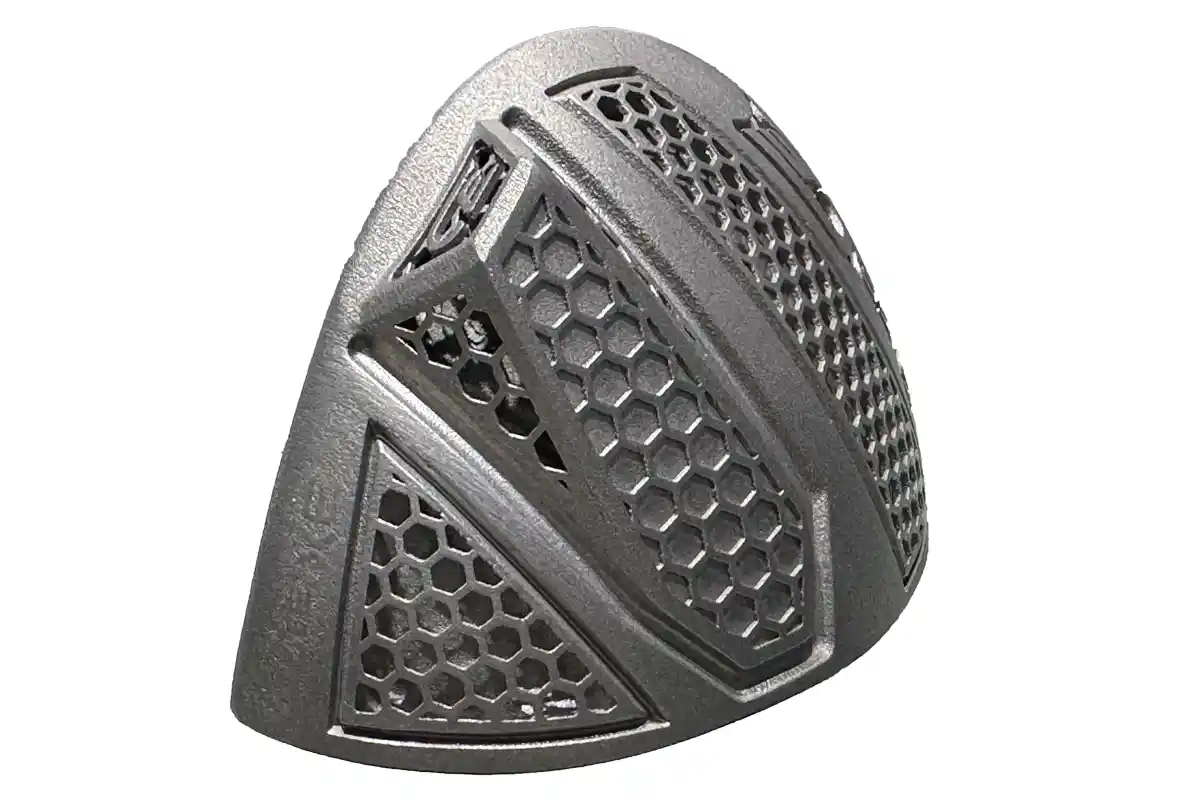
What Is Electron Beam Melting (EBM) in Metal Additive Manufacturing?
Electron Beam Melting (EBM) is an advanced form of additive manufacturing classified under the powder bed fusion EBM family. While it shares similarities with Selective Laser Melting (SLM), the defining difference lies in the energy source. As the name implies, EBM uses a high-energy electron beam to melt and fuse metallic powder particles, enabling layer-by-layer metal fabrication and dense metal part manufacturing from the ground up.
Get an Instant Quote
The origins of this technology date back to 1993 when Swedish company Arcam (now part of GE Additive) patented the process in collaboration with Chalmers University of Technology. Their goal was to harness the power of electrons to create dense, fully solid metal components. Today, EBM stands as a critical solution for manufacturing parts that were previously impossible to create through subtractive methods and is a key part of modern EBM additive manufacturing.
At LAVA3DP, we specialize in bridging the gap between innovative design and functional reality. As your trusted online partner for custom parts fabrication, we offer state-of-the-art electron beam melting service and industrial metal 3D printing services to clients globally. This comprehensive guide will explore how EBM works, its distinct advantages over other direct metal printing technologies, the materials we use, and the critical applications that make it the technology of choice for mission-critical components.
How the Electron Beam Melting (EBM) Process Works Step-by-Step
Understanding the workflow of EBM helps illustrate why it produces such superior parts. Here is a step-by-step breakdown of how we at Lava3DP bring your digital models to physical life:
- 3D Model Preparation: The journey begins with a CAD file. We optimize your design for the EBM process, following design guidelines for EBM printing and adjusting for factors like support structures and thermal dynamics.
- Vacuum Chamber Setup: Unlike laser-based systems that use inert gas, EBM requires a high-vacuum environment, making it a true vacuum 3D printing process. This vacuum is crucial as it prevents oxidation of the metal powder at high temperatures and allows the electron beam to operate without scattering off gas molecules.
- Pre-Heating: A powerful electron beam pre-heats the entire build platform. This high temperature metal printing environment reduces thermal stress during printing.
- Layer Deposition & Melting: A thin layer of metal powder is spread across the platform. The electron beam selectively scans the geometry of the part, demonstrating the efficiency of electron beam fusion technology in producing complex geometries.
- The “Sinter-Cake” Effect: One of the unique visual results of EBM is that the powder surrounding the part becomes lightly sintered due to the high chamber temperature. This “cake” acts as a natural support structure and is one of the best metal powder sintering alternatives available today.
- Cooling and Recovery: After the build finishes, the machine is left to cool. Notably, most of the unused powder can be recycled and reused, making EBM a sustainable advanced manufacturing solution.
EBM vs SLM/LPBF: Key Differences in Metal 3D Printing Technologies
Engineers often ask us why they should choose EBM over the more common laser-based systems. The answer lies in the physics of the heat source. The chart below highlights the key performance indicators where EBM outperforms its laser counterparts.
| Performance Indicator | EBM (Electron Beam Melting) | LPBF / SLM (Laser-Based) | Analysis / Why It Matters |
|---|---|---|---|
| Build Speed | ⭐⭐⭐⭐⭐ Excellent (Faster) | ⭐⭐⭐ Good | Why: EBM uses a more powerful heat source and thicker layers. It can scan and melt material faster, making it superior for high-volume production . |
| Thermal Stress & Warping | ⭐⭐⭐⭐⭐ Low | ⭐⭐ Moderate/High | Why: The high pre-heat temperature in EBM (600-1000°C) minimizes thermal gradients. Laser systems often require more support structures to prevent warping . |
| Surface Finish | ⭐⭐ Acceptable (Matte/Rough) | ⭐⭐⭐⭐ Good (Smoother) | Why: Laser systems use finer powders and smaller melt pools, resulting in a smoother as-printed surface. EBM’s rougher finish can be beneficial for medical implants but may require post-machining for mating parts . |
| Material Cost Efficiency | ⭐⭐⭐⭐ High | ⭐⭐⭐ Moderate | Why: EBM typically uses slightly coarser, less expensive powder. More importantly, up to 98% of unused powder can be recycled, reducing waste significantly . |
| Residual Stress | ⭐⭐⭐⭐⭐ Very Low | ⭐⭐ Moderate/High | Why: Because the part cools slowly in a hot environment, EBM parts usually do not require stress-relieving heat treatments before removal from the build plate . |
| Oxidation Control | ⭐⭐⭐⭐⭐ Excellent | ⭐⭐⭐⭐ Good | Why: The vacuum chamber in EBM eliminates oxygen, making it ideal for reactive materials like titanium. Lasers typically use inert gas, which is effective but slightly less pure . |
| Feature Resolution | ⭐⭐ Good for macro features | ⭐⭐⭐⭐⭐ Excellent (Fine details) | Why: The laser’s smaller, more controlled spot size allows for finer details, thinner walls, and sharper edges compared to the broader electron beam . |
Data derived from industry standards regarding typical machine outputs and post-processing requirements. EBM generally excels in speed and low residual stress, while laser systems currently offer finer surface details .
Benefits of EBM 3D Printing for High-Performance Metal Parts
When you upload a design to LAVA3DP for an EBM quote, you are leveraging several distinct advantages that directly impact the performance and cost of your final part.
1. Superior Mechanical Strength and Material Integrity in EBM Parts
Because the process occurs in a vacuum and at high temperatures, the resulting parts are exceptionally pure and dense. The slow cooling rate within the build chamber results in a unique microstructure (specifically, a Widmanstätten structure in titanium) that often yields higher fracture toughness and fatigue resistance compared to laser-printed parts .
2. High Productivity Metal 3D Printing with Lower Cost Per Part
The electron beam enables faster production, making it ideal for low volume production using EBM technology and cost-effective metal 3D printing for aerospace applications. The electron beam is significantly more powerful than a laser. It can scan faster and melt thicker layers. For production runs, this means we can nest multiple parts within the build volume. A prime example is the production of acetabular cups for hip replacements; EBM machines can stack dozens of cups in a single build, drastically reducing the cost per unit compared to laser systems which print them one by one .
3. Reduced Support Structures in EBM Powder Bed Fusion
The high-temperature environment partially sinters the powder around the part, creating a supportive “cake.” This allows us to design with fewer bulky supports, saving material and reducing post-processing time. It is particularly beneficial for parts with severe overhangs or complex internal channels .
4. Low Residual Stress in Electron Beam Melted Components
Because the powder bed is kept at a consistently high temperature, the thermal gradients that cause warping and residual stress in laser melting are significantly reduced. Parts printed via EBM rarely require stress-relieving heat treatments before being removed from the plate, leading to greater dimensional accuracy out of the machine .
5. EBM Capabilities for Reactive and High-Temperature Alloys
Materials like Titanium are highly reactive with oxygen. The vacuum environment ensures that these materials remain uncontaminated, preserving their corrosion resistance and biocompatibility. Furthermore, EBM excels at processing crack-sensitive materials like Titanium Aluminide (TiAl), which are difficult to manage with other methods .
Materials Used in EBM Metal 3D Printing (Titanium, Inconel & More)
At LAVA3DP, we ensure that our material library meets the rigorous demands of global clients. EBM technology requires materials to be electrically conductive, as the electron beam charges the powder particles. Here are the primary materials we utilize:
| Material Category | Common Alloys | Key Properties | Typical Applications |
|---|---|---|---|
| Titanium & Alloys | Ti6Al4V (Grade 5/23), CP-Ti (Grade 2) | High strength-to-weight ratio, Biocompatible, Corrosion-resistant | Aerospace brackets, Orthopedic implants (hip cups, spinal cages), Automotive components |
| Nickel Superalloys | Inconel 718 | Heat resistant, Corrosion resistant, maintains strength at high temps | Turbine blades, Rocket nozzles, Power generation components |
| Cobalt-Chrome (CoCr) | ASTM F75 | Biocompatible, Excellent wear resistance, High hardness | Dental restorations, Femoral knee components, Load-bearing medical implants |
| Copper & Alloys | Pure Copper (99.95%) | High electrical conductivity, High thermal conductivity | Induction coils, Heat exchangers, Electrical terminals |
| Tool Steels & Stainless | H13, 316L | Wear resistance, High ductility, Corrosion resistance | Industrial tooling, Molds, Functional prototypes, Pump components |
Titanium Aluminide (TiAl) is another notable material used in EBM for lightweight turbine blades, offering a 50% weight reduction over traditional nickel alloys .
Industrial Applications of EBM in Aerospace, Medical & Engineering
Because EBM technology and materials command a premium, it is reserved for applications where part performance is critical, and design complexity adds significant value.
✈️ Aerospace and Defense
The aerospace industry is the biggest driver of EBM innovation. GE Aviation famously uses EBM to produce fuel nozzles and turbine blades for the LEAP engine. EBM allows for the creation of lightweight titanium aluminide blades with complex internal cooling channels that improve engine efficiency and reduce weight by up to 20% . We also produce structural brackets and housings that consolidate multiple traditionally manufactured parts into a single, stronger unit.
🏥 Medical and Dental
EBM is a cornerstone of modern orthopedic manufacturing. The rough surface finish created by the process—often seen as a drawback—is actually a benefit for implants, as it promotes osseointegration (the bonding of bone to the implant surface) . We manufacture custom:
- Cranioplasty plates tailored to a patient’s CT scan .
- Hip stems and acetabular cups with lattice structures that mimic bone.
- Spinal fusion cages with optimized porosity for bone growth .
🏎️ Automotive and Motorsports
For high-performance automotive applications, weight reduction is paramount. EBM enables the production of custom titanium connecting rods, turbocharger wheels, and brackets that are lighter and stronger than steel equivalents. It is also used for rapid prototyping of functional metal parts for electric vehicle drivetrains .
🏭 Industrial Tooling and Energy
EBM is revolutionizing thermal management. As noted in our research, companies are using EBM to produce pure copper induction coils with 400% longer service lives than traditionally welded coils. The design freedom allows for conformal cooling channels that fit perfectly around the workpiece, speeding up heating and cooling cycles .
LAVA3DP EBM Services: Trusted Global Partner for Metal Fabrication
Choosing the right manufacturing partner is critical. At LAVA, we don’t just press “print.” We offer a comprehensive service that combines engineering expertise with cutting-edge machinery.
- Global Reach: We operate as a global metal 3D printing supplier and international 3D printing company, serving clients worldwide.
- Design for Additive Manufacturing (DfAM): Our expert additive manufacturing engineers optimize designs for performance and cost efficiency.
- Quality Assurance: We follow strict quality assurance in metal 3D printing, ensuring certified material traceability and high reliability for critical applications.
Design Considerations for Your EBM Project
To ensure success, keep these tips in mind when submitting files to LAVA3DP:
- Internal Channels: Design channels carefully for manufacturability in complex lattice structure EBM printing service projects.
- Surface Finish: Expect a matte finish typical of EBM surface finish and tolerances, with optional CNC post-processing.
- Minimize Overhangs: Designing efficiently improves outcomes in industrial EBM additive manufacturing services.
Future of EBM Technology in Advanced Manufacturing Industries
The EBM landscape is rapidly evolving. As innovations continue, the future of EBM technology in advanced manufacturing industries looks promising, especially as costs decrease and accessibility improves for online EBM 3D printing service worldwide platforms.
Conclusion: Why Choose EBM for Custom Metal 3D Printing
Electron Beam Melting represents the pinnacle of metal additive manufacturing for high-performance applications. Its ability to produce dense, stress-free, and incredibly strong parts from expensive and reactive materials makes it indispensable for aerospace metal parts 3D printing, orthopedic implant manufacturing, and advanced industrial sectors.
Whether you need a patient-specific medical implant, a lightweight bracket for a satellite, or a highly durable tooling insert, Lava3DP.com delivers custom metal parts manufacturing service with precision and reliability. Use our online metal 3D printing service with instant quote to get started today.
Get an Instant Quote