

Chocolate and Food 3D Printing
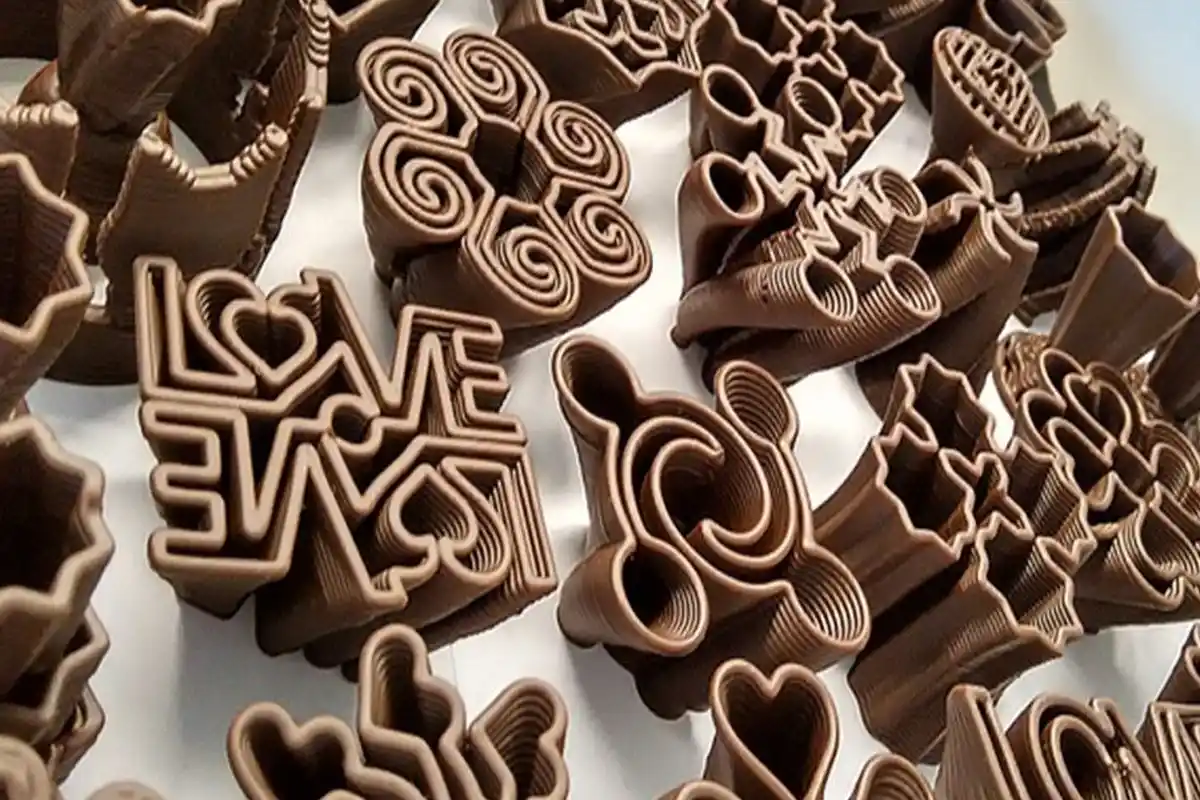
Chocolate and Food 3D Printing at LAVA3DP
At LAVA3DP, we are proud to introduce a service that sits at the exquisite intersection of technology and gastronomy: Chocolate and Food 3D Printing Service. This isn’t just about making things to eat; it’s about engineering taste, texture, and form with the same precision we apply to industrial prototypes using edible 3D printing technology.
Whether you are a Michelin-starred chef looking to push culinary boundaries, a boutique chocolatier aiming to scale personalized confections, or a marketer seeking unforgettable branded giveaways, LAVA3DP’s food 3D printing service turns digital imagination into delectable reality.
Get an Instant Quote
The global food landscape is undergoing a silent revolution. The edible 3D printing market, valued at approximately $1.11 billion in 2025, is on a trajectory to reach $2.92 billion by 2030, growing at a compound annual growth rate (CAGR) of over 21% . Other analyses suggest an even more explosive growth in specific sectors, with the broader 3D food printing market projected to expand at a staggering CAGR of 58.2% through 2035, driven by demand for personalization and sustainable production in 3D printing in the food industry.
Edible Additive Manufacturing: How Food 3D Printing Works
How exactly does one “print” a chocolate? The technology mirrors traditional Fused Deposition Modeling (FDM) but replaces plastic filament with organic, edible materials. However, the complexity lies in the rheology—the flow of matter in food-safe additive manufacturing.
1. Extrusion-Based Printing
The most common method for chocolate and paste-like foods is extrusion-based printing . In this process, a food “ink” (like chocolate, puree, or dough) is loaded into a syringe or cartridge. The material is then deposited layer-by-layer through a nozzle onto a build plate using paste-based 3D printing. For chocolate, precise temperature control is paramount. Traditional hot-melt extrusion requires chocolate to be held within a narrow temperature band of 31°C to 36°C to ensure it flows correctly yet solidifies quickly upon deposition, ensuring effective chocolate printing temperature control.
2. The Cold Extrusion Breakthrough
Recent innovations, such as the Chocolate-based Ink 3D Printing (Ci3DP) technique developed by the Singapore University of Technology and Design (SUTD), have revolutionized the process. Researchers discovered that by mixing chocolate syrups and pastes with cocoa powder, the resulting ink exhibits shear-thinning properties—it flows like a liquid when forced through a nozzle but returns to a toothpaste-like, semi-solid state at rest . This allows for “cold extrusion” at room temperature, eliminating the need for complex heating elements and preserving the integrity of temperature-sensitive additives using cocoa-based printing materials.
3. Beyond the Nozzle: Binder Jetting and Inkjet
While extrusion is king for chocolate, other methods exist for different food stuffs. Binder jetting involves spraying a liquid binder (like water or sugar syrup) onto a bed of powder (such as sugar or starch), building intricate structures layer by layer using sugar-based 3D printing. Inkjet printing is often used for decorative elements, applying edible ink onto surfaces like cookies or cakes with high precision, highlighting the contrast of edible ink vs chocolate extrusion.
Benefits of Professional Food 3D Printing Services
Why choose a 3D printed dessert over a hand-crafted one? The answer lies in three pillars: Complexity, Customization, and Consistency—core benefits of food 3D printing.
Unparalleled Geometric Complexity
Human hands are skilled, but they cannot achieve the intricate, mathematically precise geometries that 3D printed chocolate designs can. We can fabricate chocolate structures with internal lattices, interlocking shapes, and overhangs that would be impossible to achieve with traditional molding. Imagine a chocolate sculpture with a specific porous architecture designed to melt at a specific rate on the tongue, releasing flavors in a programmed sequence through precision food fabrication technology.
Mass Customization and Personalization
This is the killer application for food printing. In a world that demands personalization, 3D printing allows for every single unit in a batch to be different without retooling. This is ideal for:
- Branded Confections: Printing corporate logos, slogans, or product shapes with micron-level accuracy.
- Event-Specific Designs: Creating unique chocolate favors for weddings where each piece reflects the table setting or guest name.
- Nutritional Personalization: tailoring the sugar content, vitamin fortification, or ingredient composition to an individual’s dietary needs .
Novelty and Experience
In the hospitality industry, experience is currency. Serving a dessert that has been “printed” offers a story, a talking point. It elevates the perceived value of the product through the fusion of technology and tradition, especially in luxury dessert customization.
Food-Grade Materials: Chocolate, Sugar & Edible Inks
At LAVA3DP, we prioritize quality and safety. Our food printing materials are sourced to meet stringent international standards, ensuring they are not only printable but delicious and safe for consumption.
Chocolate: The Flagship Material
Chocolate remains the most popular medium for food printing due to its ideal thermal properties and widespread appeal . We typically work with:
- Dark, Milk, and White Chocolate: Offering a range of flavor profiles and visual contrasts. Recent developments even allow for color mixing, where two different colored chocolates can be combined in a static mixer to produce gradient effects and multi-colored structures .
- Couverture Chocolate: High-quality chocolate with extra cocoa butter, ensuring a glossy finish and satisfying snap.
Beyond Chocolate: Alternative Food Inks
While chocolate is our specialty, the technology extends to other paste-like foods:
- Sugar-based formulations: For creating stunning, glass-like decorative pieces.
- Fruit Purees and Jams: For soft, flavorful centers or decorative elements.
- Doughs and Batters: For personalized pasta, crackers, or pancakes .
- Alternative Proteins: As the world looks for sustainable food sources, 3D printing is being used to make insect-based proteins or plant-based meats more palatable by shaping them into familiar, appealing forms .
Safety and Certification
Safety is non-negotiable. Food-safe 3D printing requires that all components contacting the food are sanitary. Innovations in the field include add-ons that isolate food materials from the mechanical parts of the printer, and many edible inks now come with certifications like FDA approval, Halal, and Kosher to meet global dietary laws .
Industry Applications of Chocolate & Food 3D Printing
The utility of printed food extends far beyond the pastry kitchen, expanding into applications of edible 3D printing.
Haute Cuisine and Bakery
High-end restaurants use 3D printing to create garnishes and main components that defy traditional cutting and molding. Bakeries utilize it for intricate cake toppers and custom-decorated cookies where precision is key using bakery 3D printing solutions. Startups like Belgium’s Miam Factory have demonstrated the commercial viability by printing chocolate beer bottles as corporate gifts, showcasing 3D printed chocolate for events and the ability to turn any 3D model into an edible reality.
Healthcare and Geriatric Nutrition
Perhaps one of the most socially significant applications is in healthcare. For patients with dysphagia (difficulty swallowing), food must be pureed—a presentation that is often unappetizing. 3D printing can take these pureed foods and reform them into the recognizable shapes of the original ingredients, improving outcomes with safe edible materials and hygienic edible manufacturing process, making meals visually appealing and easier to eat.
Corporate Branding and Events
In a crowded market, tangible brand experiences stand out. Companies can order batches of branded chocolate 3D printing and custom logo chocolate 3D printing service outputs in the exact shape of their new product, logo, or mascot for product launches, trade shows, or employee gifts, enabling edible 3D printing for branding and marketing.
Food 3D Printing Market Trends & Consumer Insights
Understanding the market is key to leveraging this technology. While the growth projections are astronomical—with the chocolate and confectionery segment alone expected to grow at a CAGR of 64.1% through 2035—adoption is also influenced by psychology and global demand for custom chocolate 3D printing.
The Psychology of Acceptance
Research indicates that consumer innovativeness and prior knowledge of the technology significantly predict behavioral intentions to buy 3D-printed food . However, “Novel Technology Neophobia” (fear of new food tech) remains a barrier.
This tells us that transparency is vital. By offering this service, LAVA3DP helps bridge the gap between technological curiosity and culinary acceptance. We provide the assurance of food-grade certified 3D printing and quality-controlled chocolate printing, allowing consumers to focus on the novelty and taste rather than the process.
The Future is Now: Trends to Watch
The industry is rapidly moving toward industrial-scale production. Companies are developing printers with multi-nozzle systems for continuous, high-volume output supporting automated confectionery production. Furthermore, the integration of precision-fermented ingredients into printed foods is shaping the future of 3D printed food.
Why Choose LAVA3DP for Custom Edible 3D Printing
LAVA3DP is not just a service bureau; we are a partner in innovation. Our foray into food printing is backed by the same rigorous engineering standards applied to our industrial manufacturing services using industry-grade 3D printing systems. We understand the nuances of material science, whether it’s aerospace-grade titanium or single-origin chocolate.
- Global Reach: We serve clients globally, ensuring that your edible creations are designed, printed, and shipped with the utmost care as a global food 3D printing company offering international edible printing services.
- Expertise: Our team understands the design rules for food printing—how to design for self-supporting angles, optimal wall thickness, and material flow with expert chocolate designers.
- Customization: From a single masterpiece to a bulk order of branded confections, we scale to meet your needs including bulk custom chocolate printing and professional edible 3D printing services.
Future of Food 3D Printing & Custom Manufacturing
Chocolate and Food 3D Printing is more than a gimmick; it is a new medium for expression and a tool for solving real-world problems in nutrition and sustainability. At LAVA, we are excited to offer this capability to our global clientele, inviting chefs, marketers, and dreamers to bring their edible ideas to life through on-demand edible printing and rapid prototyping for edible products. Whether you desire a geometrically complex showpiece or a batch of personalized corporate gifts like 3D printed chocolate gifts for corporate events, we are here to print the future of food.
Ready to create something delicious? Upload your 3D model to LAVA3DP today and order 3D printed chocolate online or request a chocolate 3D printing quote to start building—layer by edible layer.
Get an Instant Quote