


Explore the future of composite 3D printing with Large-Format Additive Manufacturing (LFAM). Discover how robotic systems are enabling lighter, stronger parts. Partner with LAVA3DP for your next project.
The additive manufacturing (AM) landscape is undergoing a significant transformation. While desktop 3D printing has democratized prototyping, a new wave of industrial technology is redefining what is possible in terms of scale and material performance. Large-Format Additive Manufacturing (LFAM), particularly when combined with advanced composite materials, is moving beyond research labs and into critical applications across marine, aerospace, construction, and automotive sectors. At LAVA3DP, we are following these developments closely to understand how they inform the future of large-scale production. This article explores the trajectory of LFAM and composite printing, drawing on the latest industry data and innovations to provide a comprehensive overview for a global audience.
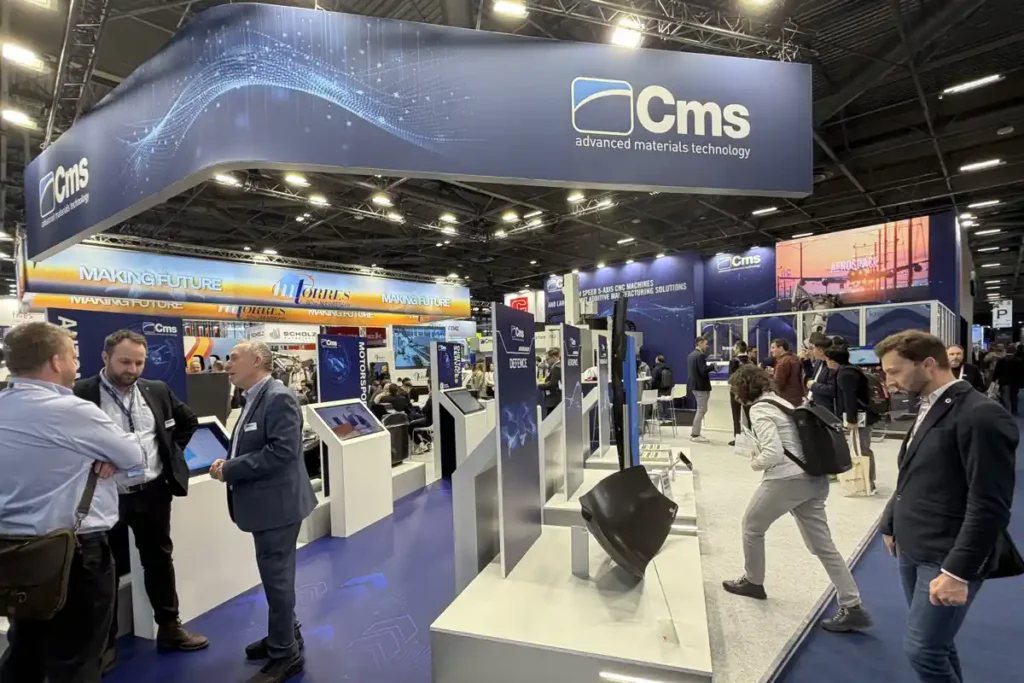
The LFAM Revolution: More Than Just a Bigger Printer
Large-Format Additive Manufacturing is not simply a scaled-up version of the desktop printer. It represents a fundamental shift in manufacturing logic. According to industry experts, LFAM enables the creation of structural components with high precision using polymers and composites, freeing architects and engineers from the constraints of traditional methods like concrete forming . Instead of building a massive, single-purpose gantry, many modern LFAM systems leverage robotic 3D printing systems.
Companies like Orbital Composites have pioneered the use of six-axis robots that can tilt the print head to eliminate support structures, reducing waste and enabling complex geometries . Similarly, Dutch manufacturer CEAD has developed systems that combine robot arms with pellet extrusion, achieving deposition rates as high as 85 kilograms (187 lbs) per hour . This marriage of robotics and material science allows for the production of objects that were previously impossible to manufacture efficiently, from one-piece ferry hulls to large-scale autoclave tools for aerospace .
Why Composite Materials Are Central to LFAM
The “secret sauce” of modern LFAM lies in its materials. Standard polymers often lack the structural integrity required for end-use parts. This is where composite materials come into play. By embedding reinforcing agents—such as carbon fiber, fiberglass, or ceramics—into a thermoplastic matrix, manufacturers can achieve properties that rival metals at a fraction of the weight.
Continuous fiber reinforcement represents the pinnacle of this technology. Unlike materials with chopped fibers, continuous fibers can be laid down along stress vectors, optimizing structural performance. Northrop Grumman’s patented 3D fiber printing technology, for example, ejects resin and fiber simultaneously from a single nozzle, creating parts suitable for demanding aircraft components . The Red Dot Award-winning Additive Molding Carbon-Fiber Truss from Arris Composites demonstrates this principle, achieving double the specific stiffness of steel while weighing less than half as much, by aligning fibers with stress vectors .
Even at the resin level, innovation is rapid. The recent launch of ThOR 10, a ceramic-filled composite resin by polySpectra and Tethon 3D, highlights the push toward production-grade materials. With a glass transition temperature of 131°C and a Notched Izod impact strength of 55 J/m, such materials are closing the gap between prototyping resins and engineering thermoplastics like PEEK .
Market Context: A Maturing Industry
To understand where LFAM and composites are headed, it helps to look at the broader market. The Wohlers Report 2026, powered by ASTM International, valued the global AM market at $24.2 billion in 2025, with a year-over-year growth of 10.9% . While this growth is more measured than the pre-pandemic boom, it signals a maturing industry. Notably, AM services grew by 15.5%, indicating that companies are increasingly leveraging external expertise for production rather than just buying machines .
The Asia-Pacific region is leading this charge with an average revenue growth of 19.8%, compared to 12.6% in the Americas and 9.0% in EMEA . This regional divergence suggests that the adoption of advanced manufacturing technologies is closely tied to industrial policy and supply chain strategies, particularly in nations looking to secure local production capabilities.
Visualizing the Data: LFAM Capabilities and Market Impact
To effectively present the numerical values associated with this technology, the following chart compares key performance metrics of leading LFAM and composite technologies discussed in this article.
Comparison of Key LFAM and Composite Technologies
Innovations Driving the Future
The future of composite 3D printing is not just about making things bigger, but making them smarter and more integrated. Several key innovations are paving the way:
- Convergent Manufacturing: Processes like Additively Reinforced Thermoforming (ART), developed by Oak Ridge National Laboratory (ORNL), combine 3D printing with traditional thermoforming. Reinforcements are printed onto flat sheets, which are then formed into 3D parts. This method reduces labor, weight, and improves structural deflection performance by up to 30% compared to non-reinforced parts .
- In-Situ Resource Utilization: Looking toward space exploration, technologies that can print with composite materials on-demand are critical. The ability to 3D print parts using a mixture of polymers and planetary regolith could significantly reduce launch costs for long-duration missions .
- Hybrid Manufacturing: The integration of additive and subtractive processes within a single cell is becoming standard. CEAD’s Flexbot, for example, is equipped with a tool changer and milling spindles, allowing it to machine parts after printing to achieve tighter tolerances .
- Advanced Simulation and Software: As Logtenberg of CEAD noted, hardware is only part of the equation. The complexity of robotic printing requires sophisticated software for toolpath generation. Partnerships with software providers like ADAXIS and Siemens are essential to prevent crashes and optimize the printing process .
Applications Across Industries
The convergence of LFAM and composites is enabling tangible results across the industrial spectrum:
- Marine & Defense: The strategic importance of LFAM is perhaps most evident in the defense sector. Al Seer Marine in Abu Dhabi commissioned a 36-meter-long robotic 3D printer from CEAD to produce large-scale structures, including unmanned surface vessels. This capability allows for the rapid, local production of assets to protect coastlines and infrastructure .
- Aerospace: The need for lightweight, strong parts makes composites ideal for aerospace. Northrop Grumman’s technology is being qualified for flight use, targeting applications like brackets, bearings, and cockpit panels .
- Construction: LFAM is moving beyond concrete printing. By using polymer and composite materials, companies can produce lightweight façade panels, modular housing components, and complex architectural features that are easier to transport and assemble on-site .
- Consumer Goods & Furniture: On a more commercial level, companies like Haddy are using hybrid-additive machines to produce tailor-made furniture. By using parametric design, they can create custom pieces efficiently, demonstrating a scalable business model for local micro-factories .
Conclusion: Scaling the Future with LAVA3DP
Large-Format Additive Manufacturing is not a distant future concept; it is a present-day solution for producing high-performance, lightweight structures. From robotic arms depositing carbon fiber-reinforced pellets at record speeds to hybrid processes that combine printing with thermoforming, the industry is rapidly evolving to meet the demands of aerospace, marine, and construction sectors. The data from the Wohlers Report 2026 confirms that while the market matures, the shift toward services and application development is where the real value lies.
At LAVA3DP, we understand that navigating this new frontier requires expertise, the right technology, and a partner who understands the nuances of composite materials. Whether you are looking to prototype a complex design or scale up to full production, the future of making is large, and it is composite.
Ready to bring your large-scale ideas to life? Contact LAVA3DP today to discuss how our capabilities can transform your next project.
Frequently Asked Questions (FAQs)
1. What types of composite materials can LAVA3DP work with for large-format projects?
At LAVA3DP, we specialize in processing a wide range of advanced materials suitable for LFAM. Our capabilities include engineering thermoplastics reinforced with carbon fiber and fiberglass, available in both pellet and filament form. We continuously evaluate new materials, including high-performance polymers like PEEK and PA6 (Nylon), to match the specific mechanical and thermal requirements of your application.
2. What are the primary advantages of using large-format composite 3D printing over traditional manufacturing for tooling and molds?
Using LFAM for tooling offers significant benefits over subtractive methods like CNC machining from solid blocks. It allows for rapid production of near-net-shape tools with complex internal geometries, such as conformal cooling channels. This process drastically reduces material waste, lead times, and overall costs, while still producing lightweight, durable tools suitable for autoclave and forming processes.
3. How does LAVA3DP ensure the quality and structural integrity of large-scale printed parts?
Quality assurance is central to our process. We leverage advanced robotic 3D printing systems combined with precise simulation and toolpath generation software to ensure accuracy. For projects requiring the highest performance, we utilize continuous fiber reinforcement technologies, aligning fibers with stress vectors to maximize strength-to-weight ratios, ensuring the final part meets stringent engineering standards.
4. Can LAVA3DP handle the entire production process from design to post-processing for a large composite part?
Yes, we offer comprehensive, end-to-end solutions. Our team collaborates with you on design for additive manufacturing (DfAM) to optimize your part for large-format additive manufacturing. Beyond printing, our services include post-processing capabilities such as CNC machining, surface finishing, and inspection to ensure your component is production-ready upon delivery.
5. What file formats do you require to provide a quote for a large-format composite 3D printing project?
To provide an accurate assessment and quote, please contact our engineering team with your 3D model. We accept standard CAD file formats, primarily STEP (AP242) and STL. Including information about the intended application, environmental conditions, and mechanical load requirements helps us recommend the optimal material and printing strategy for your project.