

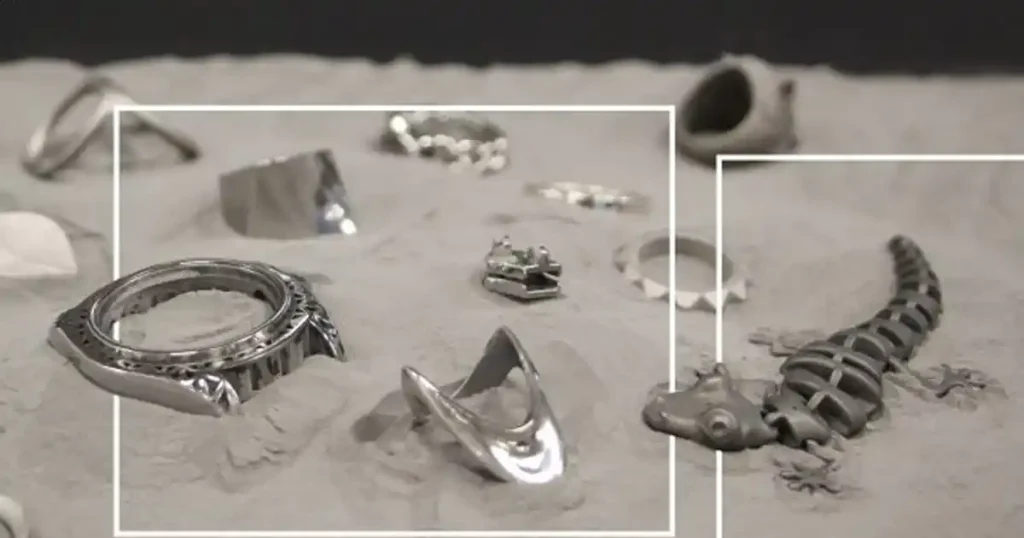
Discover how Legor’s 3D Metal Hub is bridging the gap from jewelry to industry. Learn about advanced metal 3D printing services and how LAVA3DP can elevate your projects. Explore solutions with us today.
The landscape of manufacturing is undergoing a profound transformation, driven by the capabilities of additive manufacturing. At the forefront of this evolution is the ability to work directly with metals, a sector that has seen explosive growth and innovation. A significant development in this field is the introduction of comprehensive service models like the Legor 3D Metal Hub, which promises to democratize access to advanced metal production, spanning from the intricate details of jewelry to the robust demands of industrial applications.
Traditionally, the worlds of high-end jewelry creation and industrial component manufacturing were separate, employing different technologies and materials. The emergence of sophisticated metal 3D printing services is blurring these lines. Companies like Legor, a renowned name in the metallurgy field, are creating hubs that serve as a single point of entry for businesses looking to leverage this technology without the massive upfront investment in machinery and expertise. This article explores the significance of such hubs and how they are reshaping production, with a special look at how specialized service providers are making these technologies accessible.
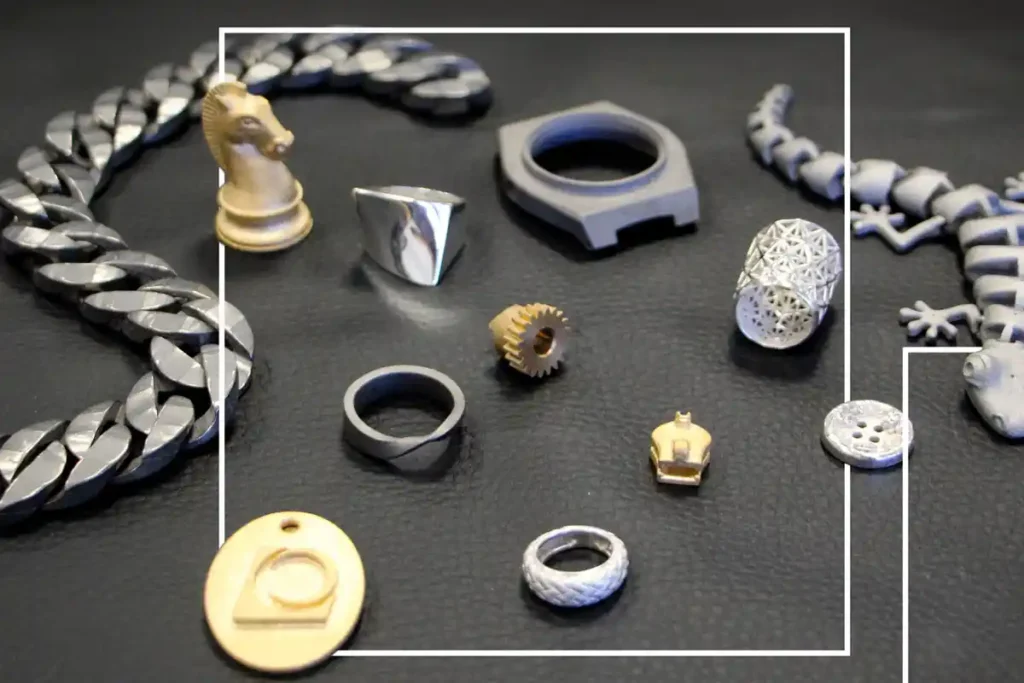
The Rise of the Metal 3D Printing Service Bureau
The barrier to entry for industrial metal additive manufacturing has historically been high. The cost of a single machine, such as those using Powder Bed Fusion (PBF) technology, can run into the high six figures. This is before considering the necessary facilities, safety equipment, and specialized personnel required to operate them. This is where the service bureau model, like the Legor 3D Metal Hub, becomes indispensable.
Service bureaus act as manufacturing partners, offering access to a fleet of industrial printers, a range of materials, and deep application expertise. They allow companies to:
- Prototype Rapidly: Iterate on designs quickly without the constraints of traditional tooling.
- Scale Production: Move from prototype to small-batch or mass production seamlessly.
- Access Expertise: Tap into the knowledge of engineers who understand design for additive manufacturing (DfAM).
From Precious Metals to High-Performance Alloys: A Material Revolution
One of the most compelling aspects of modern metal 3D printing is the expanding palette of materials. Legor’s expertise lies in precious metals, making their hub particularly interesting for the jewelry and luxury goods sectors. But the true power lies in the convergence with industrial materials.
A modern metal hub typically offers capabilities across a broad spectrum:
- Precious Metals for Luxury: Gold, platinum, silver, and their alloys can now be printed directly, enabling the creation of jewelry with complex, organic lattices and personalized structures that are impossible to cast. This allows for lightweight designs with substantial visual volume and minimal material waste—a critical factor when working with expensive commodities.
- Medical and Dental Grades: Cobalt-chrome and titanium alloys are routinely used to print custom medical implants, surgical guides, and dental prosthetics like crowns and bridges.
- Industrial and Engineering Alloys: Stainless steel, tool steels, Inconel (a nickel-chromium superalloy), and aluminum are used for functional parts, lightweight brackets, heat exchangers, and tooling inserts with conformal cooling channels.
This convergence means that a single service hub can cater to a jeweler needing a custom 3D printed wax pattern or a direct metal masterpiece, and an aerospace engineer requiring a complex bracket made from a high-temperature superalloy.
[Placeholder for Chart 1: Projected Market Growth of Metal AM by Application (2025-2030)]A chart showing the estimated compound annual growth rate (CAGR) for metal AM in jewelry, medical, aerospace, and automotive sectors.
How LAVA3DP Complements the Metal 3D Printing Ecosystem
While comprehensive industrial hubs like Legor’s are pivotal for large-scale or highly specialized metal production, the path from a digital design to a physical metal object often requires a versatile partner. This is where LAVA3DP positions itself within the additive manufacturing ecosystem. We understand that innovation is not one-size-fits-all.
For creators in the luxury and jewelry markets, the journey into 3D printing often begins with polymer-based patterns for investment casting. This hybrid approach combines the design freedom of 3D printing with the traditional artistry of metal casting. LAVA3DP specializes in delivering high-precision 3D printed models and patterns, perfectly optimized for the lost-wax casting process. This service allows jewelers and luxury brands to explore intricate geometries and achieve rapid prototyping without disrupting their established workflows.
By offering expert additive manufacturing services in high-resolution polymers and waxes, we serve as the crucial first step for many businesses before they commit to the direct metal printing route. Whether it’s a detailed prototype for a new ring design or a master pattern for a limited-edition collection, our focus is on precision, quality, and seamless integration with your craft.
The Advantages for the Luxury and Jewelry Markets
The adoption of 3D printing in the luxury sector is not just about novelty; it’s about tangible business benefits. For jewelers and luxury goods manufacturers, the advantages are clear:
- Unprecedented Design Freedom: Create geometries that are impossible to achieve with traditional methods, such as intricate filigree, interlocking parts, and organic textures.
- Reduced Waste and Cost: Direct metal printing on precious metals significantly reduces material waste compared to subtractive methods like CNC milling from a solid block.
- Mass Customization: Produce one-of-a-kind pieces or small batches of personalized items economically. Each piece can be digitally unique without slowing down the production line.
- Faster Time-to-Market: Eliminate the need for tooling and molds, compressing the development cycle from months to days or weeks.
Conclusion
The launch of specialized centers like the Legor 3D Metal Hub signals a maturing market where metal additive manufacturing is becoming a standard tool, not a futuristic concept. By bridging the gap between precious and industrial metals, these hubs are fostering cross-industry innovation. For businesses ready to explore this frontier, having a knowledgeable partner is key.
Whether your goal is to prototype a new masterpiece in wax or create a final product in metal, the journey begins with a digital file and the right expertise. Explore how additive manufacturing can transform your creative and industrial projects. Contact the team at LAVA3DP today to discuss your next innovation.
Frequent Asked Questions (FAQs) about 3D Printing for Luxury & Jewelry Markets
1. What types of 3D printing technology are best for creating jewelry prototypes and patterns?
For jewelry and luxury goods, Stereolithography (SLA) and Material Jetting are the most common and effective technologies. They offer extremely high resolution and smooth surface finishes, which are essential for creating detailed castable patterns or master models. These printers use wax-like or resin materials that burn out cleanly during the investment casting process, leaving no ash or residue in the mold.
2. Can 3D printing work with my existing jewelry-making process, like lost-wax casting?
Absolutely. This is one of the most popular applications of 3D printing in jewelry today. The process, often called “printed wax” or “resin pattern” investment casting, seamlessly integrates with traditional techniques. You design your piece digitally, we 3D print it in a special castable resin, and you then use that printed part as you would a traditional wax model to create your plaster mold and cast your metal. It speeds up the pattern-making phase significantly and allows for far more complex designs.
3. What precious metals can be used with direct metal 3D printing for final pieces?
Direct metal 3D printing, specifically Laser Powder Bed Fusion (LPBF), can process a wide range of precious metals. This includes various karats of gold (such as 18k and 14k yellow, white, and rose gold), platinum, palladium, silver, and bronze. The metal is used in powder form and is fused layer by layer with a laser to create the final, solid piece of jewelry ready for finishing and setting.
4. How does the cost of 3D printed jewelry compare to traditionally manufactured pieces?
For single pieces or small batches, 3D printing can be significantly more cost-effective than traditional methods like casting from a handmade wax or machining, as it eliminates the need for expensive tooling or molds. While the cost per gram for direct metal printing can be higher than casting for very large runs, it drastically reduces material waste—a critical saving with expensive precious metals. For prototyping, the speed and low cost of printed resin patterns offer unparalleled value compared to hand carving.
5. What level of detail and surface finish can I expect from a professional 3D printing service?
Professional services like LAVA3DP utilize industrial-grade machines that can achieve layer resolutions as fine as 10 to 25 microns. This results in patterns and models with very smooth surfaces and the ability to capture intricate details like pave setting seats, fine textures, and complex filigree. While direct metal prints may have a slightly grainy “as-printed” surface, they are designed to be finished with standard jewelry polishing and finishing techniques to achieve a high-gloss, ready-to-wear appearance.