

Metal Injection Molding
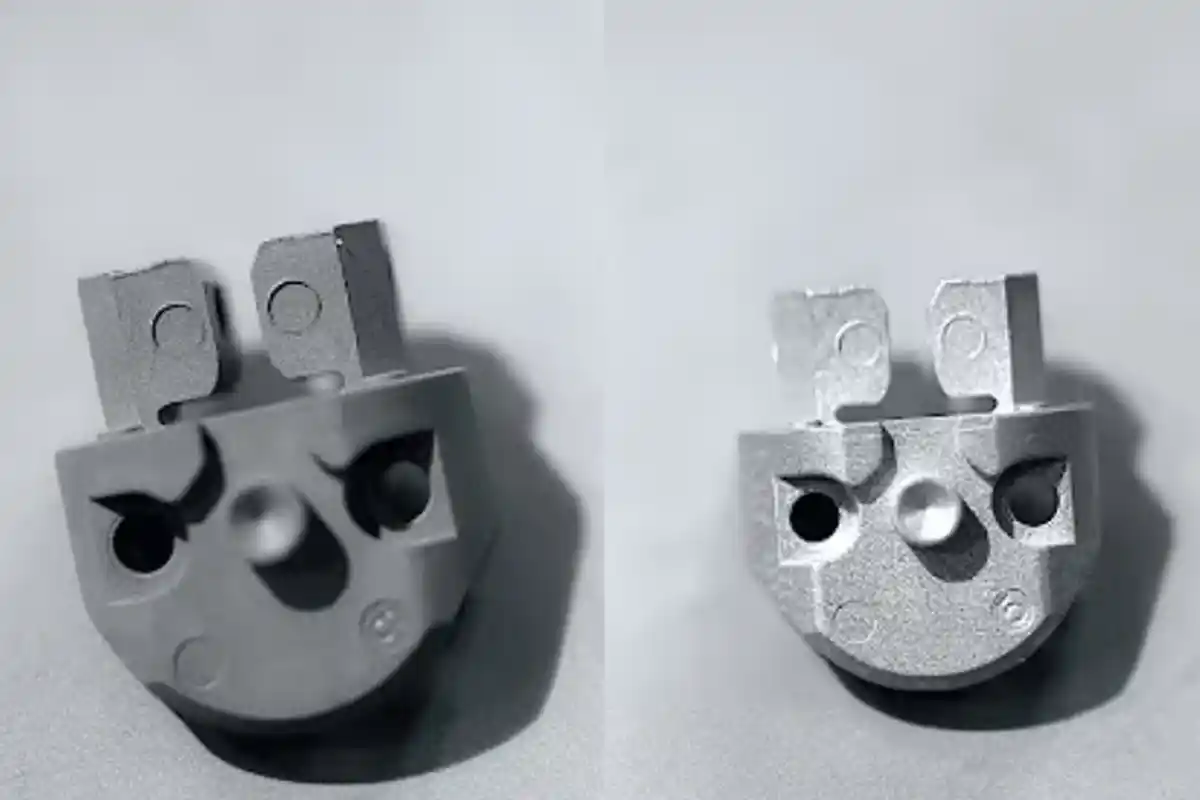
Metal Injection Molding (MIM): Overview & Key Benefits
Metal Injection Molding (MIM), a revolutionary process that blends the versatility of plastic injection molding with the strength and integrity of wrought metal, making it a leading solution for custom metal injection molding and small metal parts manufacturing.
Since its first demonstration in the 1930s and commercialization in the 1970s for products like dental brackets and watch cases, MIM has evolved into a mainstream production technique for high-performance applications. Today, it is the go-to solution for industries ranging from aerospace to medical devices, enabling the manufacture of complex geometry metal parts and high precision metal components that were once impossible or too expensive to produce. At LAVA3DP, a reliable MIM manufacturing partner and metal injection molding manufacturer, we harness the full potential of Metal Injection Molding to deliver custom parts that meet the most demanding specifications, combining near-net-shape precision with excellent mechanical properties.
Get an Instant QuoteMIM Process Explained: From Metal Powder to Precision Parts
Understanding the MIM process is key to appreciating its capabilities. It is a meticulous journey that transforms fine metal powders into dense, functional components, often referred to as powder metallurgy injection molding. The process can be broken down into four distinct steps:
1. Feedstock Compounding: The Foundation of Quality
The journey begins with mixing very fine metal powders with a multi-component polymer binder (typically wax and polypropylene). This mixture, known as feedstock, is compounded, extruded, and pelletized to ensure a homogeneous distribution of metal particles within the binder. The binder acts as a temporary carrier, allowing the metal to flow into complex mold geometries, a critical step in MIM parts manufacturing. The proportion of metal powder in the matrix is typically 90-94% by weight.
2. Injection Molding: Shaping the “Green” Part
The feedstock is heated and injected into a mold cavity under high pressure, just like in plastic injection molding. Upon cooling, it solidifies into what is called a “green” part. At this stage, the part is an exact replica of the mold cavity but is approximately 15-20% larger than the final product to account for subsequent shrinkage. This step allows for the creation of intricate shapes, thin walls, and fine details that are the hallmark of precision metal injection molding and injection molded metal components.
3. Debinding: Removing the Carrier
The green part is then subjected to debinding, a critical process where the majority of the polymer binder is removed, also known as the binder removal process. This can be achieved through various methods, including solvent, thermal, or catalytic debinding. The result is a porous, fragile “brown” part, where the metal particles are now held together by a small amount of remaining binder or by weak inter-particle forces.
4. Sintering: Achieving Full Density
The final and most transformative step is sintering. The brown parts are placed in a high-temperature furnace, typically under a vacuum or controlled atmosphere, and heated to just below the melting point of the base metal (often between 1100-1400°C). During this sintering process metal parts, the metal particles fuse together through diffusion. The part undergoes its predictable 15-20% linear shrinkage, densifying to over 97% of theoretical maximum, and achieving the mechanical properties of wrought material. The final component is a high-density, high-strength metal part with an excellent surface finish.
MIM Materials: Stainless Steel, Titanium & Advanced Alloys
One of the greatest strengths of Metal Injection Molding is its compatibility with a vast array of materials. This versatility allows engineers to select the perfect alloy for their application’s specific mechanical and environmental requirements, making it ideal for materials used in MIM.
- Stainless Steel: The most widely used material in MIM, accounting for over 60% of the market share. Grades like 316L and 17-4PH are prized for their excellent corrosion resistance, strength, and biocompatibility, making them ideal for medical and automotive applications and widely used in MIM stainless steel parts and stainless steel injection molding.
- Low-Alloy Steels: Materials such as 4605 (iron-nickel-carbon) offer high hardness and wear resistance after heat treatment, making them cost-effective for structural and mechanical components in high volume metal production.
- Titanium & Titanium Alloys: Ti6Al4V is increasingly used in MIM for lightweight, high-strength applications in aerospace and for biocompatible medical implants like spinal fixation devices .
- Copper & Copper Alloys: Essential for thermal management applications, MIM can produce complex copper components with excellent electrical and thermal conductivity for electronics and heat sinks .
- Tool Steels & Superalloys: For high-wear applications like cutting tools or for extreme environments in aerospace engines, MIM technology can process nickel-based superalloys and tool steels like M2 .
- Soft Magnetic Alloys: These are used to produce intricate components for sensors and actuators in the automotive and electronics sectors .
- Refractory Metals: Pure Molybdenum and Tungsten can be molded for high-temperature applications in furnaces, electronics, and nuclear industries .
Why Choose Metal Injection Molding for Complex Metal Parts
Why should an engineer or product designer choose MIM over other manufacturing methods? The advantages of metal injection molding are compelling, particularly for the right part profile.
- Unparalleled Design Freedom: MIM allows for the creation of geometries that are impossible or prohibitively expensive to machine. Complex three-dimensional shapes, thin walls (<100 µm), threads, splines, and undercuts can all be molded in a single step, aligning with design guidelines for MIM.
- Material Properties and Density: Unlike die-casting, which can have porosity issues, MIM components are sintered to near-full density (typically >97%). This results in mechanical properties—strength, ductility, and hardness—that are comparable to wrought or machined materials .
- Cost-Effectiveness for High Volumes: While the initial tooling investment can be significant, the per-part cost drops dramatically at high volumes. MIM is a high-volume production marvel, offering significant cost savings over multi-step machining processes and supports affordable metal injection molding services and bulk metal parts manufacturing.
- Superior Surface Finish and Tolerances: The process yields excellent surface finish, typically 0.8 to 1.0 μm, with the capability to achieve less than 0.3 μm. Dimensional tolerances are tight, generally holding ±0.3% to ±0.5%, ideal for fine tolerance metal parts.
- Material Efficiency: MIM is a near-net-shape process, meaning very little material is wasted. It achieves 96-98% powder utilization, compared to traditional machining, which can waste 40-50% of the material . This is both cost-effective and environmentally sustainable.
- Sustainability: The ability to recycle polymer binders and metal feedstocks further enhances the green credentials of MIM. Studies show that feedstocks can be successfully recycled multiple times while maintaining acceptable properties, supporting resource-efficient manufacturing .
Metal Injection Molding Applications Across Industries
The unique capabilities of Metal Injection Molding have led to its adoption across a diverse range of industries .
| Industry | Applications | Key Benefits Utilized |
|---|---|---|
| Medical & Dental | Surgical instruments, orthodontic brackets, orthopedic implants (spinal, hip), dental implants, components for pacemakers . | Biocompatibility (Stainless Steel, Titanium), complex shapes, high strength, cost-effectiveness for sterile, single-use tools . |
| Automotive | Engine components, transmission parts, sensor housings, gears, fuel injection systems, turbocharger rotors, EV battery housings and connectors . | Lightweighting (20-40% lighter than machined parts), high strength, complex geometries, cost reduction for high volumes . |
| Firearms | Triggers, safeties, sights, magazine catches, and other small, intricate components . | High strength, excellent tolerance control, repeatability, and the ability to create complex, interlocking parts. |
| Consumer Electronics | Smartphone components, laptop hinges, connectors, SIM card trays, camera modules, wearable device casings . | Miniaturization, complex shapes, high strength in thin walls, electromagnetic shielding properties . |
| Aerospace & Defense | Aircraft systems components, jet engine parts, missile components, waveguide components, high-temperature fasteners . | Ability to process high-performance superalloys and titanium, high strength-to-weight ratio, complex internal features . |
| Industrial | Cutting tools, textile machinery parts, components for pumps and valves, industrial fasteners . | Wear resistance (tool steels), corrosion resistance, ability to produce small, complex parts in large quantities. |
Quality Assurance in MIM: Tolerances, Testing & Certification
In critical applications like medical implants and jet engines, the quality of a MIM part is non-negotiable. The performance and longevity of the component are directly tied to its composition and density. At LAVA3DP, a certified metal parts supplier and ISO certified MIM manufacturer, we prioritize rigorous quality control in MIM.
- Chemical Analysis: We employ advanced techniques like Spark Optical Emission Spectroscopy (OES) to verify the composition of raw metal powders and finished components, ensuring material traceability metal parts. This ensures they meet the required specifications and are free of impurities that could compromise performance.
- Dimensional Validation: Given the predictable ~20% shrinkage during sintering, precision mold design and process control are paramount. We utilize simulation software and in-process inspection to ensure final dimensions meet customer specifications, supporting precision engineered components.
Why LAVA3DP for Metal Injection Molding Services
At LAVA, we don’t just offer a service; we offer a partnership. As a global MIM manufacturer and metal injection molding company for high volume production runs, we bridge the gap between your innovative designs and high-volume reality.
By choosing LAVA3DP for your metal injection molding services worldwide, you gain access to:
- Expertise Across Industries: From medical to automotive, our team understands the industries using MIM parts.
- End-to-End Support: We guide you through the entire process, from material selection and DFM feedback to production and post-processing, including rapid metal prototyping services.
- Quality Commitment: We adhere to strict quality control protocols, including material certifications, to ensure every part meets the highest standards.
- Scalability: Whether you need a pilot run or millions of parts, our MIM manufacturing services are designed to scale with your project.
Ready to bring your complex metal components to life? Get metal injection molding quote and contact our engineering team today to discuss your project.
Get an Instant Quote