

Foam Molding
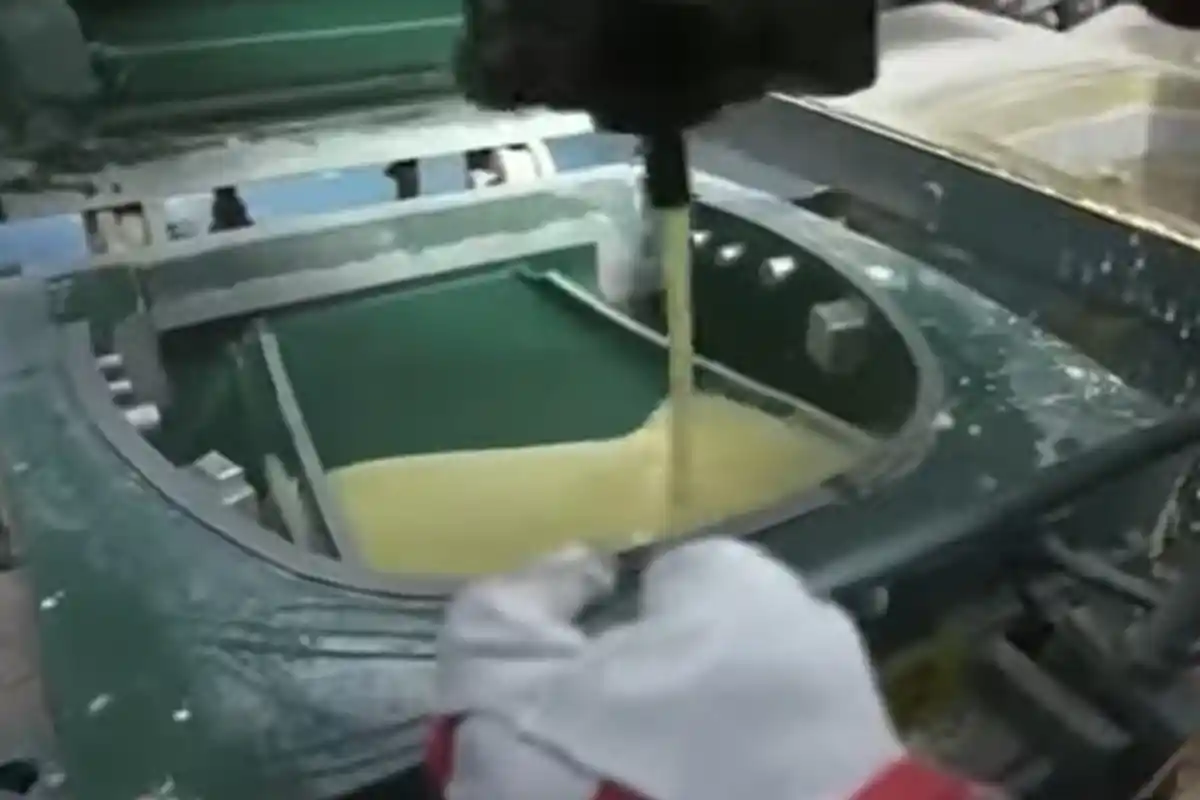
The Evolution of Foam Molding in Manufacturing
Industries are relentlessly pursuing weight reduction without compromising structural integrity, industrial foam molding has emerged as a cornerstone manufacturing process. At LAVA3DP, we harness the power of advanced foam molding technology to deliver custom foam molding solutions that are not only lighter but also stronger, more insulating, and cost-effective than their solid counterparts.
Explore foam molding services for lightweight, durable custom foam products. Learn about materials (EPP, EPS, PU), applications, and market trends. Upload your design to LAVA3DP to get foam molding quote today!
Get an Instant QuoteWhat is Foam Molding? Process, Techniques & Key Insights
Foam molding is a foam manufacturing technique that produces parts with a cellular core structure. It involves introducing a gas (either through chemical blowing agents or physical gas injection) into a polymer melt or expanding pre-foamed beads within a closed mold. The result is a composite structure featuring a solid outer skin and a lightweight, porous core.
The Fundamental Principle
The process relies on thermodynamic instability. By altering the pressure and temperature of a polymeric substance, manufacturers create nucleation sites where gas bubbles form and expand. This expansion is carefully controlled within a mold to achieve the desired final shape and density, ensuring optimal foam density and durability.
Key Foam Molding Techniques
There are several established methods for producing foam parts, each suited to different materials and applications:
- Injection Foam Molding: Gas or a blowing agent is mixed with the polymer melt before injection into the mold. The part expands to fill the cavity, reducing internal stress and sink marks, making it a variant of foam injection molding.
- Bead Foam Molding: Pre-expanded beads (like EPS or EPP) are filled into a mold and fused together using steam (Steam-Chest Molding) or adhesives, commonly used for EPS foam molding and EPP foam parts.
- Reactive Foam Molding: Liquid components (such as polyol and isocyanate for polyurethane) are mixed and poured into a mold, where they chemically react and expand, widely used in polyurethane foam molding.
- Extrusion Foaming: Continuous process for producing foam sheets or profiles, which can be subsequently thermoformed as part of broader foam fabrication services.
Key Advantages of Foam Molding for Industrial Applications
Why choose foam molding over traditional injection molding or other fabrication methods? The benefits are compelling across multiple engineering metrics.
Unparalleled Lightweighting
The most significant advantage is the dramatic reduction in weight. By creating a cellular structure, foam molding can reduce material usage by 20% to 50% compared to solid plastics while maintaining a high strength-to-weight ratio, making it ideal for lightweight foam parts.
High Strength-to-Weight Ratio
Components produced via foam molding exhibit excellent mechanical properties. The solid outer skin provides rigidity and impact resistance, while the foam core absorbs energy, making these parts ideal for protective and structural applications and high tolerance foam components.
Thermal and Acoustic Insulation
The closed-cell structure of foams like polyurethane (PU) and polypropylene (EPP) traps air, providing exceptional thermal insulation and sound-dampening properties, ideal for thermal insulation foam parts.
Design Freedom and Dimensional Stability
Foam molding allows for the creation of complex geometries with variable wall thicknesses that would be impossible or prohibitively expensive with solid molding. Furthermore, the elimination of high packing pressures reduces internal stresses, resulting in parts that are less prone to warpage and support advanced custom foam part design.
Cost-Effectiveness
- Lower Tooling Costs: Compared to high-pressure injection molding, tooling for foam molding can be significantly less expensive.
- Material Savings: The cellular structure uses less raw material to fill the same volume, enabling cost-effective foam production.
- Part Consolidation: Complex assemblies can often be replaced by a single foam-molded component.
Foam Molding Materials: PU, EPS, EPP & More
The selection of material is critical to the performance of the final part. At LAVA3DP, we work with a wide spectrum of foamable materials to meet diverse client requirements.
Expanded Polystyrene (EPS)
EPS is one of the most common and cost-effective foam materials .
- Characteristics: Rigid, closed-cell, excellent moisture resistance, superior cushioning, and thermal insulation .
- Applications: Protective packaging, building insulation, cold chain logistics containers, flotation devices .
Expanded Polypropylene (EPP)
EPP is a high-performance engineering foam known for its durability and resilience .
- Characteristics: Extremely tough, flexible, reusable, excellent energy absorption, chemical resistance, and 100% recyclable .
- Applications: Automotive interiors (bumpers, sun visors), reusable packaging, sports equipment, child car seats, and furniture .
Polyurethane (PU) Foam
PU foams are incredibly versatile, ranging from flexible to rigid formulations .
- Characteristics: Can be formulated for varying densities and hardness levels; excellent load-bearing and comfort properties .
- Applications: Furniture cushioning, automotive seating, thermal insulation panels, acoustic dampening, and medical supports .
Polyethylene (PE) Foam
Cross-linked PE foams, such as TORAYPEF™, offer unique properties .
- Characteristics: Semi-rigid, fine textured surface, superior chemical resistance, waterproof, and highly workable .
- Applications: Sports equipment, pipe covers, joint fillers, and industrial materials.Thermoplastic Polyurethane (TPU) Foam (ETPU)
ETPU, often known by the brand name Infinergy®, represents the high-performance end of the market.
- Characteristics: High elasticity, exceptional energy return, flexibility across a wide temperature range .
- Applications: Athletic shoe midsoles, ergonomic products, impact-absorbing components.
Material Selection Guide at LAVA3DP
| Material | Key Properties | Typical Applications |
|---|---|---|
| EPS | Rigid, Insulating, Cost-Effective | Packaging, Building Insulation |
| EPP | Tough, Resilient, Reusable | Automotive Parts, Protective Gear |
| PU | Versatile (Flexible/Rigid), Comfort | Seating, Cushioning, Panels |
| PE | Chemical Resistant, Waterproof | Industrial, Sports, Medical |
| TPU | Elastic, High Energy Return | Athletic Footwear, Damping |
Global Foam Molding Market Trends & Industry Growth
he foam molding industry is on a robust growth trajectory, driven by demands for lightweighting and sustainability.
Market Size and Forecast
According to recent market analysis, the global foaming mould market was valued at US$ 316 million in 2024. It is projected to reach a readjusted size of US$ 507 million by 2031, growing at a Compound Annual Growth Rate (CAGR) of 6.9% during the forecast period, highlighting the rise of the global foam manufacturing company ecosystem.
Growth Drivers
- Automotive Lightweighting: The push for electric vehicles (EVs) and fuel efficiency drives demand for lightweight foam components in interiors, exteriors, and battery casings, especially in foam molding in automotive industry.
- Sustainability and Circular Economy: There is a growing emphasis on recyclable materials like EPP and the development of bio-based foams, supporting eco-friendly foam solutions.
- E-commerce and Cold Chain Logistics: The boom in online shopping and food delivery increases the need for high-performance protective and insulating packaging such as molded foam packaging.
Future Directions
The market is evolving towards intelligent and environmentally friendly solutions. Industry 4.0 technologies are being integrated to improve production efficiency and precision. Simultaneously, the development of green, recyclable materials and low-emission production technologies is accelerating to meet stringent environmental regulations.
Comparative Analysis: Foam Molding vs. Other Processes
Understanding where foam molding fits in the manufacturing landscape is crucial for making informed decisions. Below is a comparative analysis based on typical industry data, adapted from foundry and molding benchmarks.
Process Comparison: Key Metrics
| Manufacturing Process | Typical Tooling Cost | Typical Lead Time | Part Cost (High Volume) | Ideal for Complex Shapes | Weight Reduction Potential |
|---|---|---|---|---|---|
| Structural Foam Molding | Low-Moderate ($$) | Moderate (4-8 wks) | Low ($) | High | Excellent (20-50%) |
| Traditional Injection Molding | High ($$$$$) | Long (12-20 wks) | Very Low ($) | Moderate | None (Solid) |
| Thermoforming | Low ($$) | Short (2-6 wks) | Moderate ($$) | Low | Good (Thin Walls) |
| CNC Machining from Solid | None ($) | Very Short (days) | Very High ($$$$$) | High (Subtractive) | None |
| 3D Printing | None ($) | Very Short (days) | High ($$$$) | Very High | Material Dependent |
Note: The data presented in this table synthesizes information from manufacturing process comparisons and foam molding specifications to provide a relative overview. Actual values depend on part geometry, volume, and material.
Industrial Applications of Custom Foam Molded Parts
The versatility of foam molding means its applications span nearly every sector of the global economy.
Automotive
The automotive industry is a primary consumer of foam-molded parts. Applications include interior components (door panels, instrument panels, sun visors), seating, exterior parts, and under-hood components for insulation. EPP is particularly prized for its energy absorption in bumpers and child seats, reinforcing applications of foam molding.
Packaging
From delicate electronics to heavy automotive parts, foam molding provides custom-fit packaging that ensures product safety through foam cushioning solutions and protective foam inserts.
Construction and Building
EPS and PU foams are fundamental to modern construction, providing thermal insulation for walls, roofs, and floors. They are also used as void formers and lightweight fill materials in foam insulation components.
Medical and Healthcare
In the medical field, foam-molded parts are used for equipment housings, ergonomic supports, patient positioning devices, and protective packaging for sensitive instruments and pharmaceuticals, aligning with foam in medical devices.
Consumer Goods and Sports
From the core of surfboards to the padding in bicycle helmets and the midsoles of running shoes, foam molding enables high-performance consumer products and foam for consumer products. It is also widely used in furniture, toys, and childcare items.
Custom Foam Molding Services by LAVA3DP
At LAVA3DP, we bridge the gap between concept and reality as a reliable foam manufacturing partner. We understand that every project is unique, and we offer a seamless path from design to production.
End-to-End Support
Our process mirrors the industry’s best practices to ensure quality and transparency:
- Enquiry and Design Review: Upload your 3D models. Our engineers provide custom foam engineering services and review the design for manufacturability (DFM).
- Quoting and Project Kick-off: We provide transparent quotes so you can get foam molding quote and finalize technical details.
- Mold Building and Sampling: We manage mold construction and provide T1 samples for your approval using foam tooling and molds expertise.
- Full Production and Logistics: Upon sample approval, we initiate full-scale production and manage delivery with quality controlled foam production.
- Mold Ownership and Re-orders: You own the tooling, and re-ordering parts is simple and efficient.
Why Choose LAVA3DP for Foam Manufacturing?
- Global Network: Access to a vetted network of manufacturing partners ensures we can handle projects of any scale as a foam parts supplier worldwide.
- Material Expertise: Guidance in selecting the perfect material—EPP, EPS, PU, or engineering foams—for your application with proper foam material selection.
- Quality Assurance: Commitment to rigorous quality control, ensuring every part meets specifications as an ISO certified foam manufacturer.
Conclusion: Choosing the Right Foam Molding Partner
Foam molding is more than just a manufacturing process; it is an enabler of innovation. It allows designers to create parts that are lighter, more efficient, and more sustainable. As the global market grows and materials evolve, the potential for foam-molded components will only expand.
Whether you are an engineer looking for custom foam molding services for industrial parts, a logistics manager seeking durable reusable packaging, or a product designer creating the next generation of sports equipment, foam molding offers a path to success. Partner with LAVA, a foam molding company for lightweight durable components, to bring your vision to life with precision, quality, and expertise.
Ready to start your project? Contact LAVA3DP today for a consultation and custom foam molding quote.
Get an Instant Quote