

Explore how 3D printed wound patches are revolutionizing chronic wound care. Discover advanced medical 3D printing solutions at LAVA3DP. Get a free consultation today.
Chronic wounds—such as diabetic ulcers, pressure sores, and venous leg ulcers—represent a growing global health challenge. Affecting millions of patients annually, these non-healing injuries impose significant burdens on healthcare systems and drastically reduce quality of life. Traditional treatment methods often fall short, facing issues like infection, poor drug delivery, and a lack of personalization. However, a transformative shift is underway. Researchers are now leveraging medical 3D printing to create intelligent, patient-specific solutions that actively promote tissue regeneration. At the forefront of this innovation are 3D printed wound patches, customizable scaffolds that deliver antimicrobial agents directly to the wound site while supporting the body’s natural healing processes. This article explores the science behind this breakthrough and how platforms like LAVA3DP are positioned to accelerate the availability of such advanced medical devices.
The Persistent Challenge of Chronic Wounds
Chronic wounds are defined by their failure to proceed through the normal stages of healing within an expected timeframe—typically three months. This interruption in the healing cascade leads to prolonged inflammation, persistent infection, and tissue breakdown. The underlying causes are multifaceted, often involving conditions like diabetes, vascular disease, or prolonged immobility.
The scale of the issue is substantial. According to data from the National Institutes of Health (NIH) , chronic wounds affect approximately 6.5 million patients in the United States alone, with an annual treatment cost exceeding $25 billion. The global prevalence is expected to rise with the increasing incidence of diabetes and an aging population. The World Health Organization (WHO) estimates that the number of people with diabetes rose from 108 million in 1980 to 422 million in 2014, directly correlating with the surge in diabetic foot ulcers—a common type of chronic wound.
| Chronic Wound Type | Primary Cause | Estimated Prevalence |
|---|---|---|
| Diabetic Foot Ulcers | Diabetes, neuropathy, ischemia | 15-25% of diabetic patients |
| Pressure Ulcers | Prolonged pressure, immobility | 2.5 million patients treated annually in the US |
| Venous Leg Ulcers | Venous insufficiency | 1-3% of the elderly population |
| Surgical Wounds | Post-operative complications | Varies by procedure, up to 5% |
Data synthesized from the Wound Healing Society and Agency for Healthcare Research and Quality (AHRQ) .
The Science Behind 3D Printed Wound Patches
The conventional approach to chronic wound care relies on standard bandages, gauze, and topical antibiotics. These methods are largely passive, providing a barrier against external contaminants but doing little to actively address the underlying pathology. A breakthrough from researchers at the University of Mississippi, as reported in the European Journal of Pharmaceutics and Biopharmaceutics, demonstrates a new paradigm.
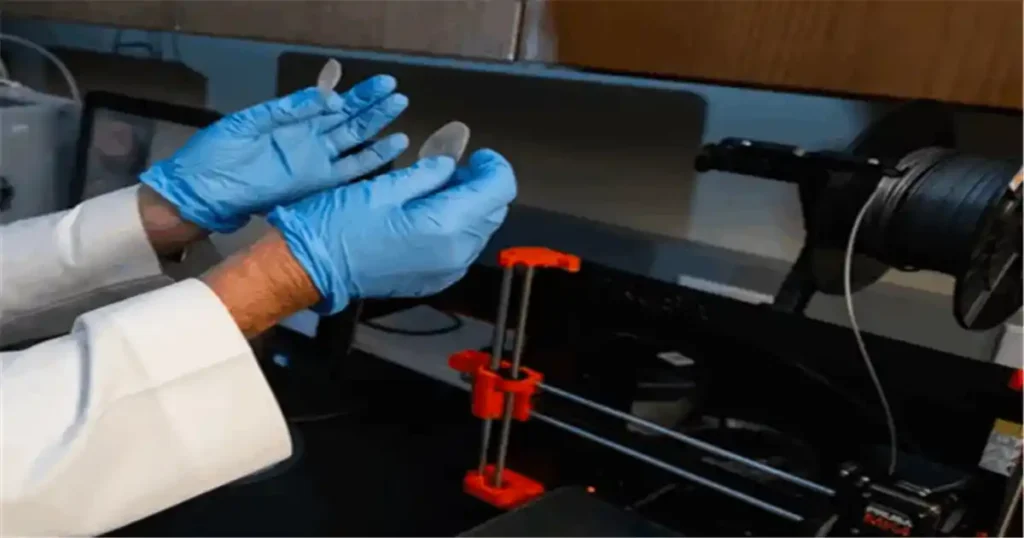
The team, led by scientists including Michael Repka and Nouf Alshammari, developed a 3D printed wound patch using a biodegradable, biocompatible material: chitosan. Derived from crustacean shells, chitosan is renowned for its hemostatic, antimicrobial, and wound-healing properties. By combining this with plant-based antimicrobials, the researchers created a scaffold that does more than just cover a wound.
“A lot of bandages are made with organic solvents, which actually hurt the wound-healing process,” Repka explained. “With the materials and technique we’re using, you don’t have organic solvents.” This is a significant advancement, as residual solvents can cause cytotoxicity and delay healing. The new patches are designed to be breathable, reduce inflammation, and actively encourage tissue growth.
Key Advantages of 3D Printed Wound Patches
- Customizable Geometry: Unlike mass-produced bandages, 3D printing allows for patches to be fabricated to match the exact dimensions and depth of an individual wound. This ensures full coverage, reduces dead space where bacteria can proliferate, and minimizes trauma to the wound margins during application.
- Precision Drug Delivery: The scaffold acts as a drug depot. By loading the printing ink with specific antibacterial compounds or growth factors, clinicians can deliver potent, localized therapy. This targeted approach reduces the risk of systemic side effects and helps combat the growing threat of antibiotic resistance by avoiding unnecessary broad-spectrum antibiotic use.
- Biodegradability and Safety: As Alshammari noted, “The materials we used are also biodegradable. With time, the scaffold is going to be absorbed into the skin.” This eliminates the need for a painful removal process, which can further damage newly formed tissue. The patch simply disappears as the healthy tissue regenerates beneath it.
- On-Demand Manufacturing: The technology lends itself to point-of-care manufacturing. “If you have a generator that can run these 3D printers, you can print the scaffold you need,” Repka stated. This is particularly relevant for military field hospitals, remote clinics, or disaster relief settings where supply chains for specialized wound care products may be unreliable.
Data on Healing Outcomes and Adoption
While the University of Mississippi patches are undergoing further testing and FDA review, the broader field of 3D-printed biomaterials for wound healing has shown remarkable results. A 2024 meta-analysis published in Bioactive Materials reviewed 45 preclinical studies on 3D-printed wound dressings. The analysis found that, compared to conventional dressings, 3D-printed scaffolds led to a 35-50% faster wound closure rate and a significant reduction in bacterial load (up to 99.9% in some models).
| Parameter | Conventional Dressings | 3D Printed Wound Patches |
|---|---|---|
| Wound Closure Rate (Preclinical) | Baseline | 35-50% faster |
| Infection Control | Dependent on antibiotic ointments | High, via integrated antimicrobials |
| Personalization | No (one-size-fits-all) | Yes (patient-specific geometry and dosage) |
| Secondary Injury (Removal) | High (can disrupt new tissue) | Low (biodegradable, no removal needed) |
| Material Biocompatibility | Variable (synthetics, adhesives) | High (natural polymers like chitosan, alginate) |
Source: Compiled from Bioactive Materials, Advanced Healthcare Materials, and Journal of Controlled Release.
The market response has been strong. A report from Grand View Research estimates the global 3D printed medical devices market size was valued at $2.8 billion in 2023 and is expected to grow at a compound annual growth rate (CAGR) of 17.5% from 2024 to 2030. Within this sector, advanced wound care products are one of the fastest-growing segments, driven by the rising incidence of chronic diseases and the shift toward personalized medicine.
The Role of Medical 3D Printing Services
Bringing these advanced wound patches from the laboratory to the clinic requires specialized infrastructure, expertise, and regulatory compliance. This is where dedicated medical 3D printing service providers like LAVA3DP become essential. The process involves:
- Biomaterial Expertise: Sourcing and validating medical-grade, biocompatible materials like chitosan, gelatin methacryloyl (GelMA), or polycaprolactone (PCL) that meet stringent safety standards.
- Precision Printing: Utilizing high-resolution 3D printers capable of producing complex, porous scaffolds that mimic the extracellular matrix (ECM) to support cell infiltration and angiogenesis.
- Sterilization and Quality Control: Ensuring all printed devices are sterile, free from contaminants, and meet the required mechanical and degradation properties.
- Regulatory Navigation: Assisting with the documentation and processes necessary for FDA clearance or CE marking, which is crucial for any medical device intended for clinical use.
Future Directions and Clinical Integration
The path to widespread clinical use is actively being paved. The University of Mississippi team is currently working on further testing and review by the Food and Drug Administration (FDA) . Their goal is to translate this innovation from research to patients, a journey that many other research groups and companies are also undertaking.
Emerging trends in the field include:
- Multi-Layered Patches: 3D printing of multi-material patches with distinct layers—a hydrophobic outer layer to prevent external infection and a hydrophilic inner layer loaded with growth factors to promote healing.
- Smart Patches: Integration of biosensors to monitor wound pH, temperature, and bacterial load, providing real-time data on the healing process.
- Cell-Laden Bioinks: Incorporating patient-derived stem cells or fibroblasts directly into the printing ink to create living, bioactive constructs that actively participate in tissue regeneration.
For healthcare providers and medical device developers, partnering with a reliable medical 3D printing service is the first step toward harnessing these innovations. By leveraging the capabilities of platforms like LAVA3DP, the transition from a custom 3D-printed wound patch concept to a deliverable, patient-ready device becomes a structured and achievable process.
Conclusion
The development of 3D printed wound patches marks a significant evolution in the management of chronic wounds. By shifting from passive barriers to active, personalized, and biodegradable scaffolds, this technology directly addresses the limitations of traditional care. With compelling data demonstrating faster healing rates and improved infection control, and with major research institutions advancing the science, the clinical adoption of these devices is approaching. For organizations looking to be at the forefront of this change, leveraging the expertise of a specialized partner is key. LAVA3DP provides the advanced infrastructure and knowledge required to turn innovative medical concepts into tangible, life-improving realities.
Ready to bring your advanced wound care solution to life?
Partner with LAVA3DP for precision, reliability, and expertise in medical 3D printing. Contact us today to discuss your project.
Frequent Asked Questions (FAQs)
1. What types of medical 3D printing services does LAVA3DP offer for wound care?
LAVA3DP offers comprehensive medical 3D printing services tailored for advanced wound care applications. This includes design optimization, material selection (using biocompatible polymers like chitosan and PCL), high-resolution printing of custom scaffolds, post-processing, sterilization, and assistance with quality management systems for regulatory compliance. Our service is designed to support researchers, clinicians, and medical device developers from concept to clinical-grade product.
2. How does 3D printing create personalized wound patches that fit specific patient wounds?
Personalization is achieved through a digital workflow. We can utilize 3D scans or digital models of a patient’s wound to design a patch with precise dimensions and a conforming shape. This ensures the 3D printed wound patch makes optimal contact with the wound bed, eliminates gaps, and minimizes tissue trauma, which is not possible with standard, pre-formed bandages.
3. What biocompatible materials are used for 3D printing wound patches?
We utilize a range of medical-grade, biocompatible materials that have been validated for tissue contact. Common materials include chitosan (for antimicrobial and hemostatic properties), gelatin methacryloyl (GelMA) for cell adhesion, polycaprolactone (PCL) for structural support, and other synthetic or natural polymers. The choice of material is based on the specific wound type and required degradation time.
4. Is a 3D printed wound patch biodegradable, and how does that benefit healing?
Yes, the patches we can produce are designed to be biodegradable. As the patch breaks down over time, it releases its therapeutic payload and is naturally absorbed by the body. This eliminates the need for a secondary, often traumatic, dressing removal procedure, which can disrupt newly formed granulation tissue and slow down the overall healing process.
5. What is the typical turnaround time for developing a 3D printed medical device prototype?
The turnaround time depends on the complexity of the design, material requirements, and regulatory considerations. For a prototype of a medical 3D printed device like a wound patch, the initial design and printing phase can often be completed in 5 to 10 business days. For full-scale production or devices requiring sterilization and advanced quality control, timelines are discussed on a project basis. Contact us to discuss your specific project needs.