

Discover how automotive 3D printing is scaling to production. Explore BMW’s automated additive manufacturing systems and how LAVA3DP delivers industrial-grade solutions for the automotive sector. Contact us for a consultation.
The automotive industry stands at a pivotal moment in manufacturing history. What began as a tool for rapid prototyping has matured into a production-grade technology capable of reshaping vehicle development, supply chains, and aftermarket support. The BMW Group’s recent expansion of its additive manufacturing capabilities, as reported by 3D Mag, serves as a clear indicator of this transformation.
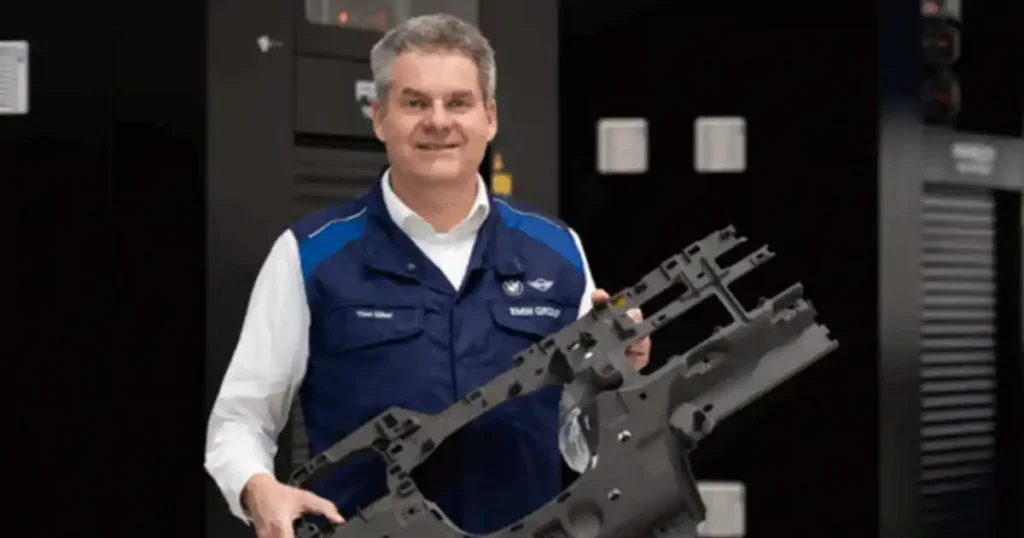
At its Additive Manufacturing Campus in Oberschleißheim, BMW is implementing automated additive manufacturing systems with open-material platforms and digitally networked process chains. This is not an isolated experiment; it is a strategic move to integrate 3D printing across the entire vehicle lifecycle—from early concept development to series production and after-sales parts.
For businesses seeking to leverage similar capabilities, LAVA3DP provides the industrial-grade expertise and systems necessary to bring additive manufacturing into production environments. This article examines BMW’s approach, supported by industry data and trends, to illustrate how automated additive manufacturing is becoming a cornerstone of modern automotive production.
The Shift to Production-Ready Additive Manufacturing
For years, the perception of 3D printing in automotive circles was limited to prototyping and one-off components. However, the technology has evolved. According to Timo Göbel, Head of Additive Manufacturing at BMW Group, the technology is now “fully integrated across all phases of the product life cycle.” BMW uses 3D-printed components in early development, prototype production, series production, and to support its global production network.
This integration is part of a broader industry trend. The 2024 Wohlers Report noted that the automotive sector remains one of the largest adopters of additive manufacturing, accounting for approximately 16% of the global AM market. More significantly, the report highlighted that the use of 3D printing for final part production surpassed prototyping for the first time in 2023 among industrial users.
The table below illustrates the shift in application focus within the automotive sector based on recent industry surveys:
| Application Area | 2019 Share | 2024 Share | Change |
|---|---|---|---|
| Prototyping | 55% | 38% | -17% |
| Tooling & Fixtures | 25% | 27% | +2% |
| Final Production Parts | 20% | 35% | +15% |
Data compiled from Wohlers Report 2020 and 2024, and SmarTech Analysis automotive AM reports.
This data confirms that automotive 3D printing is no longer a niche activity. It is a production methodology that is being scaled deliberately.
Automation: The Key to Industrial Scaling
A central element of BMW’s strategy is the deployment of automated, digitally networked process chains. Göbel emphasized that “automated, digitally networked process chains, open-material systems, and open interfaces” are key pillars enabling additive manufacturing to integrate into existing production structures.
Automation addresses one of the primary barriers to scaling additive manufacturing: throughput. Without automation, the post-processing steps—part removal, powder handling, support removal, and heat treatment—remain labor-intensive and prone to inconsistency. By implementing automated systems, BMW can achieve the repeatability and speed required for high-volume production environments.
A 2025 report from McKinsey & Company estimated that automation of post-processing can reduce total manufacturing costs for metal 3D printing by 30-50% for production-scale runs. This cost reduction is essential for justifying the transition from traditional manufacturing methods to additive processes for high-volume components.
For companies looking to replicate this level of efficiency, LAVA3DP offers integrated solutions that combine hardware, software, and workflow automation to streamline production.
Expanding the Technology Portfolio: WAAM and Open Materials
BMW is expanding its technology mix beyond traditional powder bed fusion. The company plans to introduce Wire Arc Additive Manufacturing (WAAM) into its production network. WAAM uses a welding arc to deposit metal wire layer by layer, enabling the rapid production of large metal components.
This method is particularly suited for automotive applications that require large-format parts without the size constraints of powder bed systems. Göbel noted that WAAM “significantly accelerates the production of large-format components and integrates optimally into our existing systems.” BMW is already using the technology in prototype development and vehicle testing, with series production of WAAM-produced components scheduled for 2027.
The adoption of WAAM reflects a broader movement toward open-material platforms. Unlike early 3D printers that locked users into proprietary materials, BMW’s approach emphasizes flexibility. Open-material systems allow manufacturers to select the most suitable feedstock based on cost, performance, and supply chain considerations. This flexibility is particularly valuable in automotive production, where material specifications are stringent and supply chain resilience is a priority.
Supply Chain Resilience and Digital Warehousing
One of the most compelling value propositions for automotive 3D printing is the ability to create digital warehouses. Instead of maintaining large physical inventories of spare parts, manufacturers can store digital files and produce components on demand.
BMW has already implemented this model for certain after-sales parts. By 3D printing parts at the point of need, the company reduces warehousing costs, minimizes obsolescence, and shortens supply chains. This approach gained significant traction during the global supply chain disruptions of the early 2020s, and it has since become a standard practice for many automotive manufacturers.
According to a 2025 report by the Boston Consulting Group (BCG) , automotive companies that adopted additive manufacturing for after-sales parts reduced inventory holding costs by an average of 20-35% while improving part availability. The report also noted that the number of distinct part numbers produced via 3D printing in the automotive aftermarket is expected to grow at a compound annual rate of 28% through 2030.
The Role of Additive Manufacturing in EV Production
The transition to electric vehicles (EVs) is creating new opportunities for additive manufacturing. EVs have different design constraints than internal combustion engine vehicles, including the need for lightweight structures, integrated cooling systems, and complex battery housings. 3D printing enables the production of geometries that are impossible to achieve with traditional casting or machining.
BMW’s use of additive manufacturing for EV components aligns with this trend. The company’s Additive Manufacturing Campus serves as a hub for developing these applications, with a focus on lightweighting and part consolidation. By producing components as single, optimized parts rather than assemblies, manufacturers can reduce weight, improve performance, and simplify assembly.
A 2024 study from the Fraunhofer Institute for Manufacturing Technology and Advanced Materials (IFAM) found that 3D-printed EV components can achieve weight reductions of 30-50% compared to traditionally manufactured parts, depending on the application. For battery housings and structural components, these weight savings translate directly to improved vehicle range.
The Growth of Automotive Additive Manufacturing
As the Automotive Additive Manufacturing Market Report 2025 said, the production parts segment is expected to experience the most significant growth, increasing from approximately $0.9 billion in 2024 to $5.5 billion by 2030. This growth reflects the ongoing transition of additive manufacturing from a prototyping tool to a core production technology.
Quality Standards and Certification
For automotive 3D printing to achieve widespread adoption in series production, components must meet rigorous quality and safety standards. The automotive industry operates under frameworks such as IATF 16949, which sets requirements for quality management systems in automotive production.
BMW’s approach to scaling additive manufacturing includes the development of robust quality assurance processes. The company has invested in in-situ monitoring systems, computed tomography (CT) scanning for non-destructive testing, and standardized material specifications. These measures ensure that 3D-printed components meet the same reliability standards as traditionally manufactured parts.
LAVA3DP works with clients to establish quality management protocols that align with industry standards, ensuring that production components meet certification requirements for automotive applications.
Conclusion: The Road Ahead
BMW’s expansion of automated additive manufacturing systems represents a clear signal to the industry: 3D printing is no longer an experimental technology but a foundational element of modern manufacturing strategy. By combining automation, open-material platforms, and a diverse technology portfolio that includes WAAM, BMW is demonstrating how additive manufacturing can be scaled for production while maintaining quality and cost-effectiveness.
For automotive suppliers, aftermarket parts manufacturers, and OEMs, the opportunity is clear. Additive manufacturing offers a path to more resilient supply chains, optimized component designs, and faster time-to-market.
LAVA3DP provides the industrial 3D printing systems, materials expertise, and workflow integration necessary to bring these capabilities into your production environment. Whether you are looking to implement automated post-processing, explore WAAM for large-format parts, or establish a digital warehouse for after-sales components, our team delivers solutions tailored to automotive manufacturing requirements.
Ready to explore how automotive 3D printing can transform your production process? Contact LAVA3DP today to discuss your application requirements.
Frequent Asked Questions (FAQs)
1. What automotive applications are best suited for 3D printing?
Automotive 3D printing is used for a range of applications including functional prototyping, custom tooling and fixtures, end-use production parts, and aftermarket components. Common examples include lightweight structural brackets, coolant fittings, custom interior trim, and low-volume spare parts. The technology is particularly valuable for complex geometries that are difficult or costly to produce with traditional manufacturing methods.
2. How does 3D printing for automotive parts compare to traditional manufacturing in terms of cost?
Cost comparisons depend on production volume and part complexity. For low to medium volumes—typically up to 5,000–10,000 units—3D printing often offers lower total costs than injection molding or casting due to the elimination of tooling expenses. For high-volume production, traditional methods may have lower per-unit costs, but additive manufacturing can provide advantages in design optimization, lead time reduction, and supply chain simplification. A detailed analysis of your specific part and volume is required to determine the optimal approach.
3. What materials are available for automotive-grade 3D printing?
Automotive 3D printing supports a wide range of materials that meet industry requirements. For metals, common options include aluminum alloys (AlSi10Mg, 6061), titanium (Ti6Al4V), stainless steel (316L, 17-4 PH), and high-strength nickel alloys. For polymers, production-grade materials include carbon fiber-reinforced nylon, PEEK, PEKK, and high-temperature polyamides. LAVA3DP works with open-material systems, allowing selection of materials that meet specific mechanical, thermal, and certification requirements.
4. What quality certifications are required for 3D-printed automotive production parts?
Production parts for automotive applications typically require compliance with IATF 16949 quality management standards. Individual components may also need to meet specific customer specifications or industry testing standards. Achieving certification involves controlled process parameters, documented material traceability, and non-destructive testing methods such as CT scanning or ultrasonic inspection. LAVA3DP assists clients in establishing quality workflows that align with automotive certification requirements.
5. Can 3D printing be integrated into existing automotive production lines?
Yes, automated additive manufacturing systems are designed for integration into existing production environments. BMW’s approach demonstrates how digitally networked process chains with open interfaces allow 3D printing to function alongside conventional manufacturing equipment. Integration considerations include workflow automation, material handling, post-processing, and quality control. LAVA3DP provides consultation on system integration to ensure additive capabilities complement and enhance your existing production infrastructure.