

Passivation
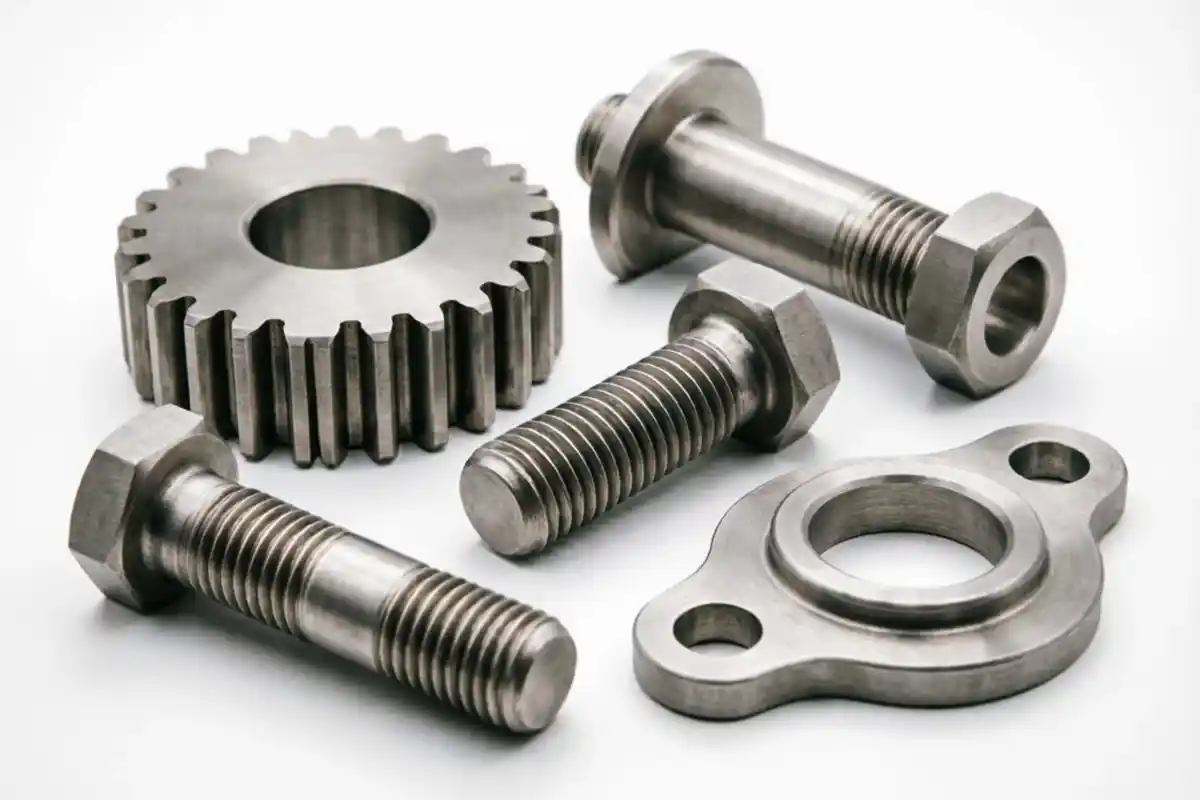
Introduction: Passivation — The Invisible Shield for Metal Parts
At LAVA3DP, we specialize in producing high-precision custom parts for a global clientele. While our name is synonymous with advanced additive manufacturing, our expertise extends to comprehensive metal finishing services, including stainless steel passivation and industrial passivation service solutions. This process is not merely a “cleaning step”; it is a critical chemical treatment that restores and enhances the innate engineering-grade corrosion resistance of metals.
This article serves as a comprehensive guide to passivation treatment. We will explore the chemistry behind the process, its critical advantages, the materials that benefit from it, and why it is an indispensable step in industries ranging from medical device passivation applications to aerospace and aerospace grade passivation requirements.
Passivation for custom parts: Discover how LAVA3DP’s precision passivation services chemical finishing process removes contaminants, maximizes corrosion resistance, and extends part lifespan. Get a free quote for passivation services and high-precision manufacturing today.
Get an Instant QuoteUnderstanding Passivation: The Science Behind Surface Protection
Passivation is a non-electrolytic chemical process typically using Nitric Acid or Citric Acid through nitric acid passivation and citric acid passivation methods to remove “free iron” contamination from the surface of stainless steel and other alloys. In the context of custom parts fabrication, it serves a dual purpose:
- Contaminant Removal: During machining, grinding, or 3D printing, microscopic iron particles can become embedded in the surface of the metal. These particles act as corrosion sites (anodic points) that initiate rust. This surface contamination removal process supports free iron removal and helps remove embedded iron contamination from critical components.
- Oxide Layer Enhancement: The chemical bath removes these contaminants and promotes the formation of a stable, protective Chromium Oxide Layer (Cr2O3Cr2O3) film on the surface, creating a durable passive oxide layer.
According to ASTM A967 and AMS 2700, the two primary industry standards governing ASTM A967 passivation and AMS 2700 passivation standard requirements, a properly passivated surface exhibits a chromium-to-iron ratio significantly higher than the base metal, creating a chemically inert barrier.
Benefits of Passivation for Custom Metal Components
For engineers sourcing components from LAVA3DP, integrating passivation into the production workflow offers measurable returns on investment.
Enhanced Corrosion Resistance
The most immediate benefit is the dramatic increase in resistance to rust and oxidation. This corrosion prevention process helps improve corrosion resistance and increase oxidation resistance. In salt spray testing per ASTM B117, untreated Stainless Steel 316 parts may show signs of red rust within 24-48 hours if contaminated. Passivated parts can endure over 1,000 hours without degradation.
Extended Product Lifespan
By eliminating micro-contaminants, passivation prevents galvanic corrosion and pitting. This helps improve metal lifespan, improve long term performance, and extends the fatigue life of components in cyclical stress environments, a critical factor in automotive and structural applications.
Improved Surface Cleanliness
For industries governed by strict hygiene standards—such as food processing and pharmaceuticals—passivation provides a surface that is not only passive but also easier to sterilize. It removes machining oils and particulates that could leach into sensitive environments, making it an effective metal surface cleaning and anti corrosion finishing solution.
Preservation of Mechanical Properties
Unlike electroplating or painting, passivation does not alter the dimensional tolerances of the part. It is a “zero-growth” process, making it ideal for precision-engineered custom parts where tolerances are measured in microns. This precision finishing for custom parts approach preserves accuracy.
Cost-Effectiveness
Preventing premature failure reduces warranty claims and maintenance cycles. According to a study by the National Association of Corrosion Engineers (NACE), corrosion costs the global economy approximately $2.5 trillion annually. Passivation remains a low-cost metal post processing solution and surface protection for machined components strategy that mitigates a significant portion of this risk.
Material Compatibility: Metals Suitable for Passivation
Not all metals respond to passivation in the same way. At LAVA3DP, we tailor the process to the specific alloy to ensure optimal results.
| Material Type | Passivation Suitability | Common Applications |
|---|---|---|
| Austenitic Stainless | Excellent (300 Series: 304, 316, 316L) | Medical implants, marine hardware, chemical storage |
| Martensitic Stainless | Moderate (400 Series: 410, 430) | Cutlery, turbine blades, fasteners |
| Precipitation Hardening | Good (17-4 PH, 15-5 PH) | Aerospace structural components, gears |
| Nickel & Cobalt Alloys | Specialized (Inconel, Hastelloy) | High-temperature exhaust systems, nuclear reactors |
| Titanium | Acid-Based | Biomedical implants, aerospace frames |
Data Chart: Corrosion Resistance Improvement by Alloy
To illustrate the effectiveness of passivation, consider the typical corrosion rates (in mils per year, MPY) observed in a 5% salt spray environment.
| Alloy | Condition | Corrosion Rate (MPY) | Improvement Factor |
|---|---|---|---|
| 304 SS | Unpassivated | 12.4 | Baseline |
| 304 SS | Passivated (Nitric) | 0.8 | 15x |
| 316L SS | Unpassivated | 5.2 | Baseline |
| 316L SS | Passivated (Citric) | 0.3 | 17x |
Data synthesized from industry testing standards and Materials Performance journal (Vol. 58, 2019).
Industrial Applications of Stainless Steel Passivation
The versatility of passivation makes it a cornerstone of quality assurance in high-stakes industries.
Medical and Dental
The human body is a highly corrosive environment. Surgical tools, orthopedic implants (such as bone screws), and dental instruments require passivation to meet ISO 13485 and FDA guidelines. The removal of surface iron ensures that the device does not trigger an inflammatory response or promote bacterial biofilm formation [Source: Journal of Biomedical Materials Research].
Aerospace and Defense
Components operating in high-altitude or maritime environments face extreme humidity and temperature fluctuations. Fasteners, hydraulic fittings, and structural brackets are passivated per AMS 2700 to ensure they meet the stringent safety standards of the Federal Aviation Administration (FAA) .
Food and Beverage
Sanitary fittings, storage tanks, and conveyor components must resist acidic foods and cleaning agents (CIP – Clean-in-Place). Passivation ensures that these surfaces meet 3-A Sanitary Standards and prevents the discoloration that occurs when free iron reacts with food products.
Electronics and Semiconductors
In semiconductor manufacturing, “ionic cleanliness” is paramount. Passivation removes ionic contaminants that could cause leakage currents or short circuits in sensitive electronic housings.
Automotive
Modern electric vehicles (EVs) utilize stainless steel in battery cooling plates and structural battery enclosures. Passivation ensures these components maintain thermal conductivity and structural integrity over the vehicle’s lifespan [Source: SAE International].
Why Choose LAVA3DP for Integrated Passivation Services
As a digital manufacturing partner, LAVA integrates passivation into a seamless workflow. We do not treat it as an afterthought but as an integral step in the custom parts journey.
- CNC Machining & 3D Printing: Whether your part is milled from Stainless Steel 316 billet or printed via Selective Laser Melting (SLM), we understand the unique surface contaminants associated with each method and provide post processing for metal parts, finishing for additive manufacturing, and CNC machining finishing services expertise.
- Citric vs. Nitric: We utilize both methods. While Nitric acid is traditional, we often employ citric acid passivation for stainless steel for its environmental safety and superior performance on complex geometries, supported by precision surface engineering principles and research from the Electrochemical Society.
- Validation: Every batch is validated using water immersion, humidity testing, or copper sulfate testing to verify the absence of free iron prior to shipment. Our process follows ISO quality controlled finishing, manufacturing quality assurance, and certified metal finishing process standards.
Visual Insights: Performance & Cost Benefits of Passivation
To contextualize the cost-benefit analysis, the following chart compares the “Cost of Prevention” (Passivation) versus the “Cost of Failure” (Corrosion Repair/Replacement) across three key industries.
| Industry Sector | Avg. Cost of Passivation per Part | Avg. Cost of Corrosion Failure (Replacement & Downtime) | Risk Reduction |
|---|---|---|---|
| Medical Implants | $5 – $15 | $15,000 – $50,000 (Surgical revision) | 99% |
| Aerospace Fittings | $20 – $50 | $2,500+ (Inspection + Replacement) | 95% |
| Industrial Food Equipment | $100 – $500 (Batch) | $10,000+ (Product recall + cleaning) | 90% |
Ready to ensure your metal parts are built to last? Upload your design files today to receive an instant quote on CNC machining and passivation services.