

- What is Soft Rubber 3D Printing?
- The Two Pillars of Flexible Additive Manufacturing
- Material Deep Dive: SLS Thermoplastic Polyurethane (TPU)
- Material Deep Dive: SLA Soft Rubber Resin
- Comparative Analysis: SLS TPU vs. SLA Soft Rubber Resin
- Key Advantages of Digital Rubber Manufacturing
- Industry Applications for Soft Rubber 3D Printed Parts
- Design Considerations for Flexible 3D Printing
- Why LAVA3DP is Your Partner for Custom Soft Rubber Parts
- Frequently Asked Questions (FAQs)
Explore soft rubber 3D printing with SLS TPU and SLA soft rubber resin at LAVA3DP. Learn about custom manufacturing advantages, applications, and get a quote for flexible parts today.
In the evolving landscape of modern manufacturing, the demand for flexible, durable, and custom-engineered components has never been higher. Traditional molding processes for rubber parts often involve high upfront tooling costs, long lead times, and significant design restrictions. To address these challenges, soft rubber 3D printing has emerged as a revolutionary force, enabling the production of complex geometries that were previously impossible with conventional methods.
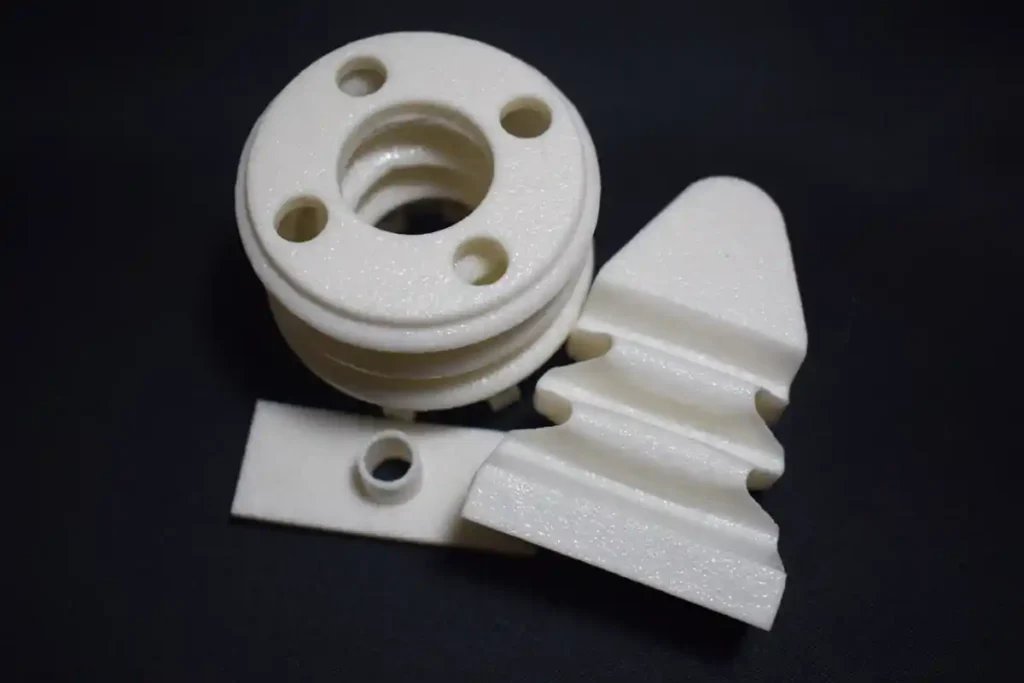
At LAVA3DP , we specialize in bridging the gap between digital design and physical reality. By leveraging advanced Selective Laser Sintering (SLS) and Stereolithography (SLA) technologies, we provide custom parts fabrication services that cater to a global audience. This guide explores the intricacies of printing with flexible materials, focusing on SLS TPU and SLA soft rubber resin, to help you determine the best solution for your next project.
What is Soft Rubber 3D Printing?
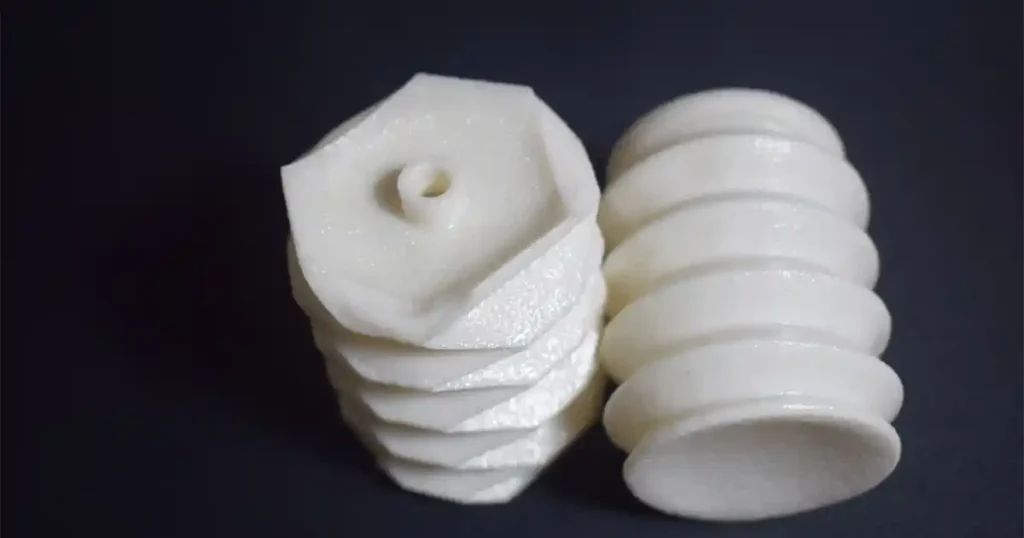
Soft rubber 3D printing refers to the additive manufacturing process used to create parts with elastomeric properties—flexibility, compression set resistance, and high elongation at break. Unlike rigid plastics such as ABS or Nylon, these materials mimic the feel and function of traditional rubber, silicone, or foam.
For manufacturers, the value lies in design freedom. Internal lattice structures, living hinges, overmold-like textures, and airtight seals can be produced in a single print run without the need for assembly. This technology utilizes two primary industrial methods: powder-based SLS for TPU and liquid-based SLA for specialty rubber-like resins.
The Two Pillars of Flexible Additive Manufacturing
To serve the diverse needs of industries ranging from automotive to medical, LAVA3DP focuses on two distinct yet complementary technologies:
- SLS TPU (Selective Laser Sintering): Utilizing high-powered lasers to fuse thermoplastic polyurethane powder particles.
- SLA Soft Rubber Resin: Using a laser or DLP projector to cure liquid photopolymer resins engineered for flexibility.
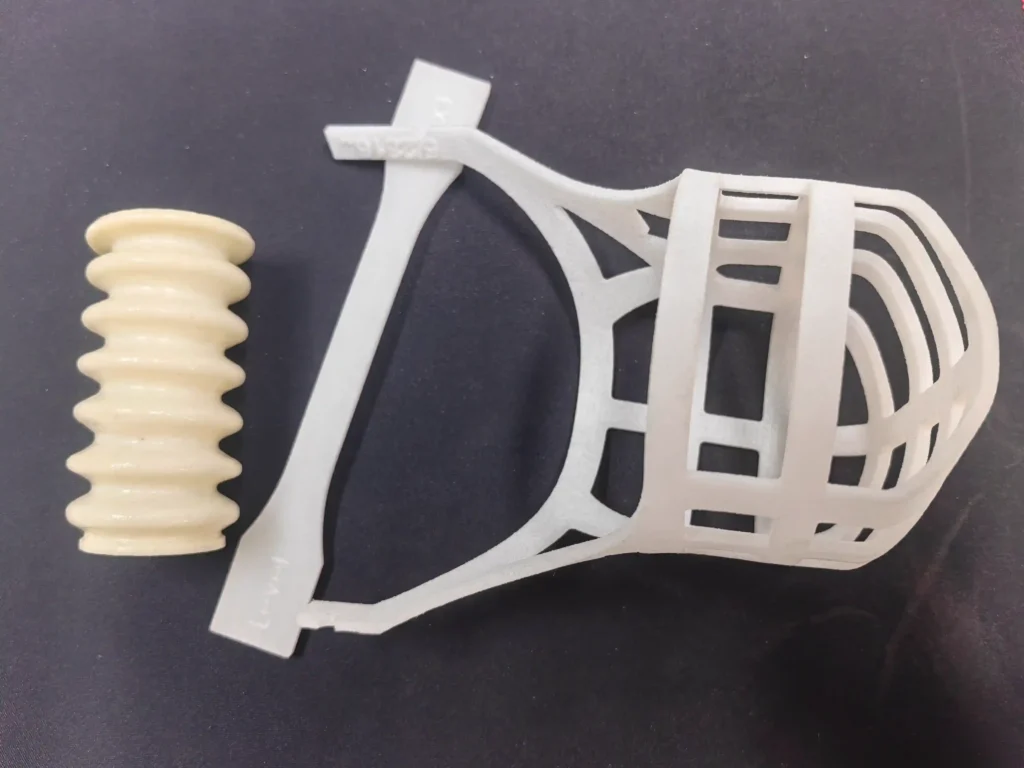
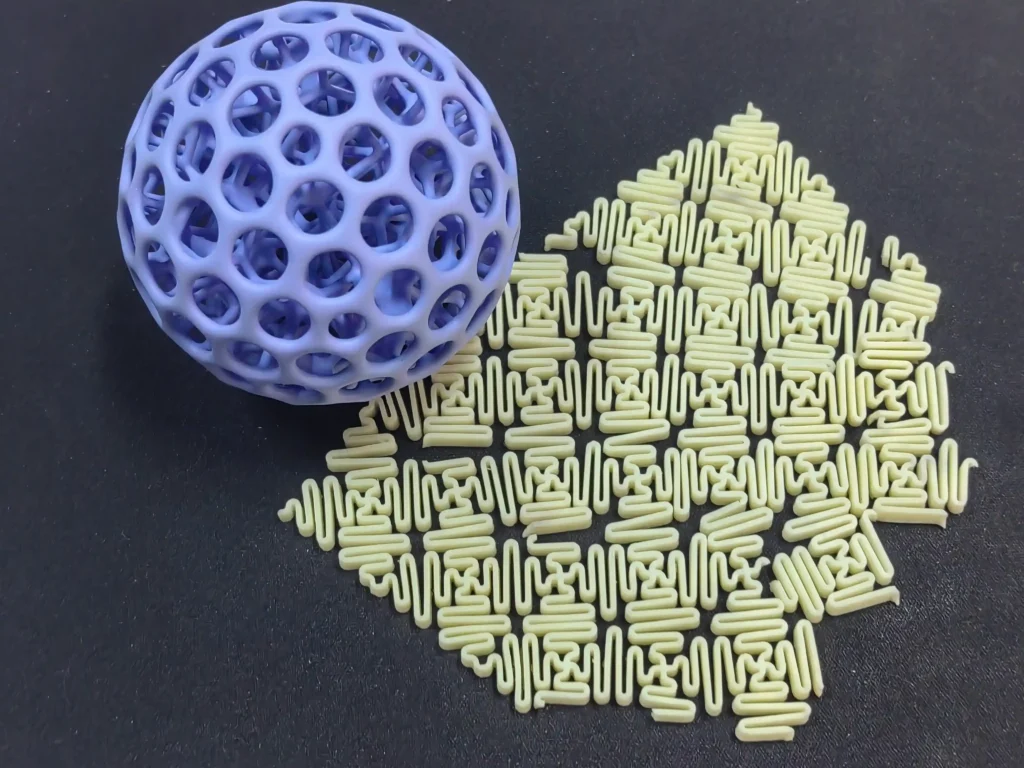
Both methods offer distinct mechanical properties, surface finishes, and structural capabilities.
Material Deep Dive: SLS Thermoplastic Polyurethane (TPU)
SLS TPU is the industry standard for functional, durable, and chemically resistant flexible parts. Because the SLS process does not require support structures (the unsintered powder acts as a natural support), it is ideal for complex geometries, moving assemblies, and hollow tubes.
Key Properties of SLS TPU
- Hardness: Typically ranges from Shore A 65 to Shore A 90.
- Tensile Strength: High tear resistance, suitable for load-bearing applications.
- Flexibility: Excellent elongation at break (often exceeding 300%), allowing for repeated bending.
- Chemical Resistance: Resistant to oils, greases, and fuels.
- Temperature Stability: Maintains properties in environments ranging from -20°C to 130°C.
SLS TPU is the go-to choice for functional prototyping and end-use production where durability is paramount. It produces a slightly matte, grainy surface texture typical of sintered powder, which is excellent for friction grips and sealing surfaces.
Material Deep Dive: SLA Soft Rubber Resin
For applications requiring a smoother surface finish, higher detail resolution, or a softer touch, SLA soft rubber resin is the superior option. SLA 3D printing uses a laser to cure liquid resin layer by layer. While support structures are often required, the resulting parts exhibit exceptional surface quality and fine feature resolution.
Key Properties of SLA Soft Rubber Resin
- Hardness: Can range from very soft (Shore A 30) to rigid rubber-like (Shore A 90).
- Aesthetics: High-quality, smooth surface finish that is often translucent or paintable.
- Elasticity: Excellent rebound properties and low compression set.
- Accuracy: Tighter tolerances compared to SLS, ideal for intricate details like micro-textures or small gaskets.
SLA rubber resin is often used for visual prototypes, ergonomic grips, and parts where aesthetic appeal is as important as function. While it may not offer the same level of chemical resistance as TPU, new engineering-grade resins are rapidly closing this gap.
Comparative Analysis: SLS TPU vs. SLA Soft Rubber Resin
Choosing the right technology depends entirely on your part’s application, required durability, and aesthetic needs. To help visualize the differences, consider the following comparison chart highlighting typical performance metrics:
| Feature / Metric | SLS TPU | SLA Soft Rubber Resin |
|---|---|---|
| Hardness Range | Shore A 65 – 90 | Shore A 30 – 90 |
| Tensile Strength | High (10–18 MPa) | Medium (3–10 MPa) |
| Elongation at Break | 200% – 400% | 50% – 200% |
| Surface Finish | Matte, slightly textured | Smooth, glossy, high detail |
| Support Structures | None required | Required, leaving small witness marks |
| Chemical Resistance | Excellent (Oils, Fuels) | Moderate (Sensitive to solvents) |
| Best Use Case | Functional parts, seals, hinges | Ergonomic grips, prototypes, complex details |
Data represents average values based on standard industrial materials. Actual properties depend on specific material grades and geometry.
Key Advantages of Digital Rubber Manufacturing
Switching from injection molding or silicone casting to soft rubber 3D printing at LAVA3DP offers quantifiable benefits:
1. No Tooling Costs
Traditional rubber molding requires expensive metal molds. With 3D printing, you skip the tooling phase entirely. You pay only for the parts you need, making low-volume production (1 to 10,000 units) economically viable.
2. Rapid Iteration
Because there is no tooling, design changes can be implemented instantly by updating a CAD file. This allows engineers to test multiple hardness zones, wall thicknesses, and lattice structures in a fraction of the time required for traditional methods.
3. Complex Geometry Freedom
You are no longer restricted to the draft angles and uniform wall thicknesses required for molding. SLS TPU excels at creating airtight channels, collapsible structures, and assemblies that move without assembly.
4. Material Efficiency
Both SLS and SLA processes are additive, meaning material is only used where the part exists. In SLS, unsintered powder can be recycled, and in SLA, excess resin is recoverable, reducing waste compared to subtractive manufacturing.
Industry Applications for Soft Rubber 3D Printed Parts
Our clients at LAVA3DP utilize soft rubber printing across a vast spectrum of industries. The versatility of SLS TPU and SLA soft rubber resin allows for innovation in:
- Automotive & Aerospace: Custom grommets, vibration dampeners, hose connectors, and interior soft-touch components.
- Medical & Healthcare: Prosthetic sockets, orthopedic insoles, medical device handles, and patient-specific surgical guides that require a soft interface with tissue.
- Consumer Goods: Custom footwear midsoles, wearable technology bands, ergonomic grips for tools, and overmold replacements.
- Industrial Robotics: Bellows for dust protection, soft robotic grippers (which require variable flexibility), and end-of-arm tooling (EOAT) pads.
- Electronics: Protective cases, sealing gaskets for waterproof enclosures, and strain relief boots for cables.
Design Considerations for Flexible 3D Printing
To ensure success in your custom parts fabrication project, consider these design guidelines:
Wall Thickness:
For SLS TPU, a minimum wall thickness of 1.0mm is recommended for durability. For SLA soft resin, walls can be as thin as 0.5mm, though flexibility increases proportionally with thinness.
Integration of Hinges:
One of the most popular applications is the living hinge. SLS TPU is exceptionally suited for this, allowing for thin membrane hinges that can withstand hundreds of thousands of cycles without fatigue. SLA resins are generally less suited for high-cycle hinges due to brittleness over time.
Texturing:
Soft rubber parts often require grip textures. SLA soft resin excels here, capturing fine textures (like diamond knurling or leather grain) directly from the CAD model. SLS TPU can also achieve textures, though they are slightly softer in resolution due to the powder grain size.
Why LAVA3DP is Your Partner for Custom Soft Rubber Parts
Navigating the complexities of additive manufacturing requires expertise. At LAVA3DP , we offer a streamlined platform for engineers, product designers, and businesses worldwide. Whether you need a single prototype to validate ergonomics or a batch of 5,000 functional production parts, our infrastructure supports your scale.
We maintain a rigorous quality control process. For SLS TPU parts, we ensure optimal sintering density to prevent delamination. For SLA soft rubber resin, we manage post-processing to eliminate support marks and ensure a professional, clean finish ready for use.
Our global shipping network and instant quoting system ensure that your lead times are minimized. By partnering with us, you gain access to a catalog of certified materials that meet industry standards for flammability, biocompatibility, and environmental resistance.
Frequently Asked Questions (FAQs)
1. What is the difference between SLS TPU and SLA soft rubber resin in terms of durability?
SLS TPU offers superior durability, chemical resistance, and tear strength, making it ideal for end-use functional parts that will undergo friction, flexing, or exposure to oils. SLA soft rubber resin provides a smoother surface finish and softer Shore A values, but it is generally better suited for prototyping, ergonomic grips, or applications where aesthetics are prioritized over mechanical stress.
2. Can soft rubber 3D printed parts be used for waterproof or airtight seals?
Yes, both technologies can produce airtight components. SLS TPU is particularly effective for creating gaskets, seals, and tubing with complex internal channels. The powder-based process allows for the creation of monolithic parts that do not have seams or bonding lines, ensuring high integrity for pressure applications. However, achieving a perfect seal often requires design optimization and finishing, which our engineering team at LAVA3DP assists with.
3. What is the typical turnaround time for custom soft rubber parts?
At LAVA3DP , lead times vary based on complexity and quantity but typically range from 3 to 7 business days for standard prototypes and low-volume production. Because there are no tooling delays, we can expedite orders significantly faster than traditional injection molding, which often takes 4–6 weeks just for tool fabrication.
4. How do I choose between SLS TPU and SLA soft resin for my project?
Consider the part’s end-use environment. If the part requires high elasticity under repetitive motion, resistance to chemicals, or will be used as a structural flexible component, choose SLS TPU. If the part is small, highly detailed, requires a glass-smooth surface, or needs to match a specific Shore A hardness below 65, SLA soft rubber resin is the better choice. You can contact our team for a free material consultation.
5. Do you offer finishing services for flexible 3D printed parts?
Yes. LAVA3DP offers a variety of post-processing options. For SLS TPU, we provide tumbling, media blasting, and custom dyeing for color. For SLA soft rubber resin, we offer support removal, dying, and clear coating. If you require specific colors or surface textures, we can accommodate those requirements to ensure your parts arrive ready for integration or final assembly.