
The landscape of metal 3D printing is undergoing a significant transformation. Historically, the barrier to entry for creating dense, functional metal parts has been prohibitively high, requiring substantial capital investment in large industrial systems and dedicated facilities. However, a new wave of innovation is challenging this norm, bringing metal additive manufacturing out of specialized factories and into labs, classrooms, and even offices.
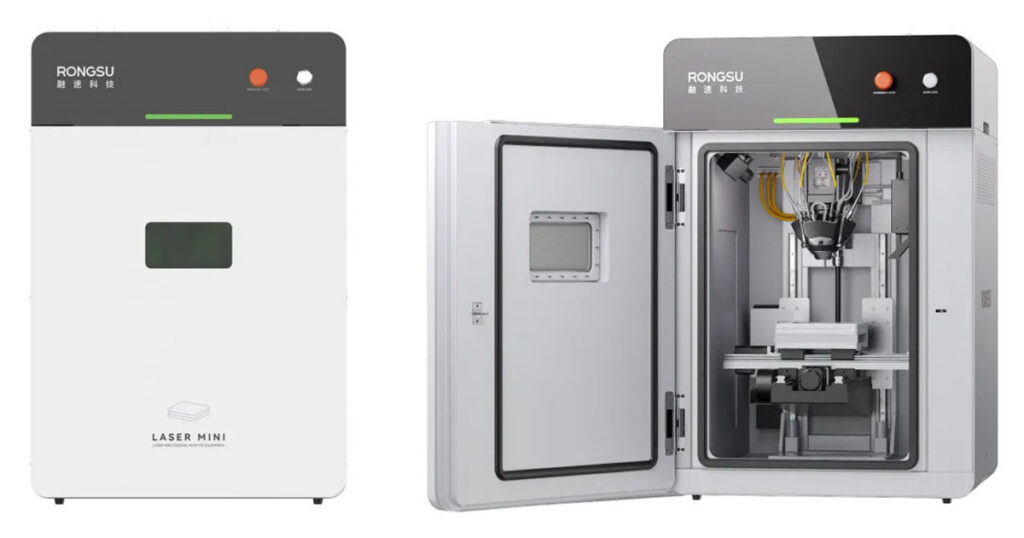
A prime example of this shift is the unveiling of the Laser Mini, a desktop multi-laser wire-feed metal 3D printer by Chinese manufacturer Rongsu Technology, set to debut at the 2026 TCT Asia exhibition . This development signals a pivotal moment for the industry, making the technology more accessible than ever before. At LAVA3DP, we are committed to tracking these innovations to help you navigate the evolving world of additive manufacturing. For personalized advice on integrating these technologies, feel free to contact our team.
The Shift Towards Desktop Metal Additive Manufacturing
The global metal 3D printing market is on an exponential trajectory. According to The Business Research Company, the market is projected to grow from $14.76 billion in 2026 to $36.94 billion by 2030, at a compound annual growth rate (CAGR) of 25.8% . This growth is fueled by demand from aerospace, automotive, and healthcare sectors for complex, lightweight components . A key trend within this expansion is the desktop 3D printer segment. Data from Context indicates that in Q1 2025, global shipments of entry-level systems surpassed one million units, with Chinese manufacturers accounting for approximately 95% of that volume . This demonstrates a massive global appetite for accessible, benchtop solutions.
Deep Dive: Rongsu Technology’s Laser Mini
The Rongsu Technology Laser Mini is a case study in how manufacturers are addressing the traditional barriers of cost, complexity, and footprint. Let’s break down its core features and what they mean for the industry.
1. “Small Body, Big Capabilities”
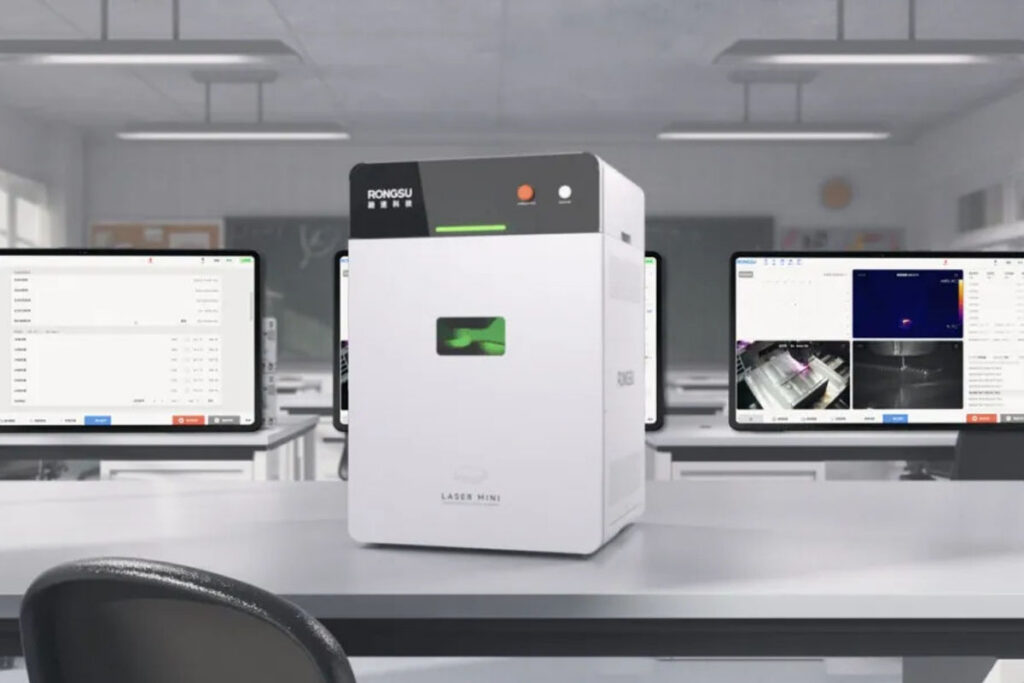
The most immediate differentiator of the Laser Mini is its physical form. With dimensions of just 550 x 520 x 820 mm, it occupies less than 0.3 square meters—roughly the space of a school desk . This is a radical departure from industrial DED (Directed Energy Deposition) or PBF (Powder Bed Fusion) systems that can require entire rooms. This compact size allows for flexible deployment in shared spaces like laboratories, classrooms, and design studios, removing the need for dedicated, high-cost facilities.
2. Democratizing the Technology: Ease of Use
Historically, operating a metal 3D printer required specialized engineering expertise. The Laser Mini aims to change this with a “novice-friendly” design that reportedly allows users to become proficient in a single day . This ease of use is further enhanced by its ability to run on standard 220V power, enabling true “plug and play” operation without costly electrical upgrades . This drastically lowers the operational barrier, making it an ideal “teaching and research assistant.”
3. The Technology Behind the Precision: VEAM
Despite its small size, the Laser Mini is engineered for industrial-grade results. This is achieved through its proprietary VEAM (multi-laser coaxial wire feeding) technology. Key innovations include:
- Custom Energy Field & Power Following Technology: This allows for precise control of energy input, reportedly reducing heat input by up to 40% . This minimization of residual stress and thermal deformation is crucial for producing high-quality, dimensionally accurate parts.
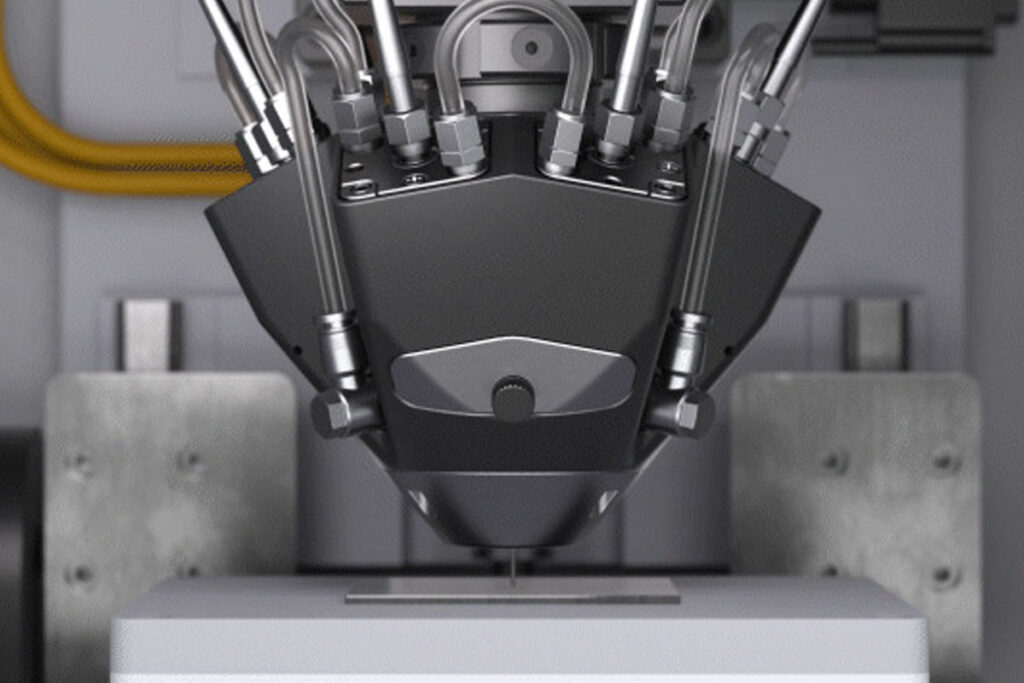
- Five-in-One Integration: The system integrates water, gas, wire, light, and electricity into a compact print head, enhancing stability and performance .
- Process Monitoring: The inclusion of AMtwin software and a melt pool camera enables real-time monitoring and data logging, ensuring process traceability—a critical requirement for research and quality assurance .
4. Material Efficiency and Versatility
Unlike powder-based systems which can have material utilization rates as low as 50% (excluding recycling), the Laser Mini utilizes metal wire, achieving a material utilization rate of nearly 100% . This not only reduces material costs but also minimizes waste. Furthermore, its global airtight design can maintain oxygen levels below 100 ppm, enabling the printing of reactive materials like titanium alloy, which is highly sought after for its strength-to-weight ratio in industries like aerospace .
Comparative Analysis: Wire vs. Powder for Desktop Applications
To understand the significance of the Laser Mini, it’s helpful to compare its DED (wire) technology to the more common PBF (powder) technology found in other desktop metal systems.
The following table provides a simplified comparison of key characteristics for desktop applications.
| Feature | Laser Mini (DED – Wire) | Typical Desktop PBF System |
| Feedstock | Metal Wire | Metal Powder |
| Material Utilization | ~100% | Varies, requires powder handling & sieving |
| Facility Requirements | 220V, standard lab/office | Often requires inert gas, specialized ventilation |
| Safety | Reduced risk from airborne powder | Potential hazards from fine powder inhalation |
| Key Applications | Research, education, prototyping, repair | Small, complex geometries, dental, jewelry |
Applications and Impact on Key Sectors
The arrival of accessible desktop metal printers like the Laser Mini is poised to create new opportunities across several fields.
- Education and Research: Universities are rapidly integrating metal 3D printing into their curricula. Institutions like Missouri University of Science and Technology have invested in industrial-scale systems to train students . Desktop systems like the Laser Mini can make this education even more hands-on and widespread, allowing students to experiment with metal printing earlier in their studies. Projects like Germany’s MINT’oVation are even exploring how AR/VR can be combined with metal 3D printing for immersive learning .
- Rapid Prototyping for SMEs: For small and medium-sized enterprises (SMEs), the cost and complexity of industrial printers have been a major hurdle. A techno-economic study highlights the need for affordable AM solutions for SMEs . Desktop metal printers fill this gap, enabling companies to iterate on functional metal prototypes in-house, accelerating product development cycles and reducing reliance on external suppliers.
- On-Demand Manufacturing and Repair: The compact size and ease of use open possibilities for distributed manufacturing. Spare parts could be printed on-site, reducing inventory and lead times. Furthermore, DED technology is inherently suitable for repair applications, allowing worn metal components to be rebuilt layer by layer.
Challenges and Future Outlook
While the arrival of desktop multi-laser wire printers is exciting, it is not without challenges. The technology is new, and the ecosystem of materials, software, and post-processing tailored for these systems is still developing. The initial part quality, while promising, will need to be consistently validated against industry standards. Furthermore, tariffs and trade policies can impact the cost of key components and materials, potentially affecting market adoption rates .
Despite these hurdles, the trajectory is clear. Major industry players are consolidating, such as Nano Dimension’s acquisition of Desktop Metal, to strengthen their positions in the market . This validates the long-term potential of accessible metal printing. As companies like Rongsu Technology continue to innovate, and as they showcase their advancements at major events like TCT Asia and Formnext , we can expect the capabilities of desktop systems to rapidly converge with those of their industrial predecessors.
Conclusion
The introduction of the Laser Mini is more than just a product launch; it is a symbol of the democratization of metal 3D printing. By combining a compact, user-friendly design with sophisticated VEAM multi-laser wire technology, it promises to unlock new levels of innovation in education, research, and small-scale manufacturing. At LAVA3DP, we believe this trend towards accessible, high-performance metal AM will continue to accelerate, fundamentally changing how we design, prototype, and produce metal parts. To explore how these advancements can benefit your specific projects, we invite you to contact our team of experts.
Frequent Asked Questions (FAQs) about Metal 3D Printing with LAVA3DP
1. What types of metal 3D printing technologies does LAVA3DP support?
At LAVA3DP, we provide expertise and solutions across the spectrum of metal additive manufacturing. This includes Directed Energy Deposition (DED) , similar to the wire-feed technology seen in new desktop systems, as well as Powder Bed Fusion (PBF) . Our goal is to help you select the right technology—whether it’s for prototyping, tooling, or production—based on your specific part geometry, material requirements, and budget.
2. Is metal 3D printing cost-effective for small businesses and researchers?
Yes, the landscape is changing rapidly. The emergence of desktop metal 3D printers has significantly lowered the financial and operational barriers. These systems offer a lower total cost of entry compared to industrial machines, with reduced facility requirements and high material efficiency (especially with wire systems). This makes metal 3D printing a viable option for SMEs, research labs, and educational institutions for rapid prototyping and small-batch production. Contact us to discuss a solution that fits your budget.
3. What are the key benefits of using metal wire instead of powder for 3D printing?
Using metal wire offers several advantages, particularly in a desktop or lab setting. It is safer, as it eliminates the health risks associated with handling fine metal powders. It is also more material-efficient, with near 100% material utilization since unused wire isn’t wasted. Wire is also generally easier to store and manage, and systems using wire are often simpler to set up and operate, frequently requiring only standard power.
4. What industries commonly use parts produced by metal 3D printing?
Metal 3D printing is utilized across a wide range of industries. The aerospace and defense sector uses it for lightweight brackets and complex engine components . The automotive industry leverages it for rapid prototyping, custom tooling, and performance parts. In healthcare, it is used for custom surgical guides and medical implants . Additionally, it is increasingly adopted for producing complex machinery parts and for research in academic settings.
5. How do I get started with metal 3D printing for my specific application?
The first step is to define your application and requirements. What parts do you need to make? What materials are required? What are your volume and budget constraints? At LAVA3DP, we guide you through this process. We can help you evaluate whether a technology like DED or PBF is right for you, select appropriate materials, and develop a path from design to finished part. Visit our contact page to schedule a consultation with one of our additive manufacturing specialists.