
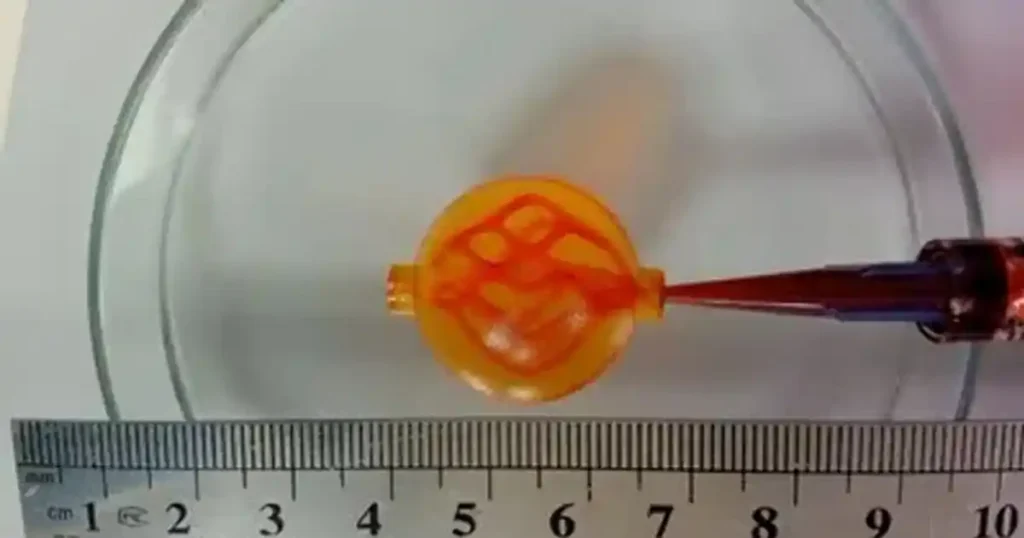
The field of regenerative medicine is rapidly evolving, driven by innovations that bridge the gap between laboratory research and clinical application. In a move set to streamline workflows for researchers, Israeli biotechnology company CollPlant (NASDAQ: CLGN) has announced the launch of BioFlex, a ready-to-use 3D bioprinting kit based on recombinant human collagen (rhCollagen) . Designed specifically for Digital Light Processing (DLP) 3D bioprinting systems, BioFlex aims to simplify the complex process of bioink formulation, allowing scientists to focus on creating functional tissue models .
This article explores the details of this launch, its significance for the broader tissue engineering landscape, and the market dynamics surrounding advanced biomaterials. For researchers and institutions looking to leverage these cutting-edge tools.
What is the BioFlex Kit?
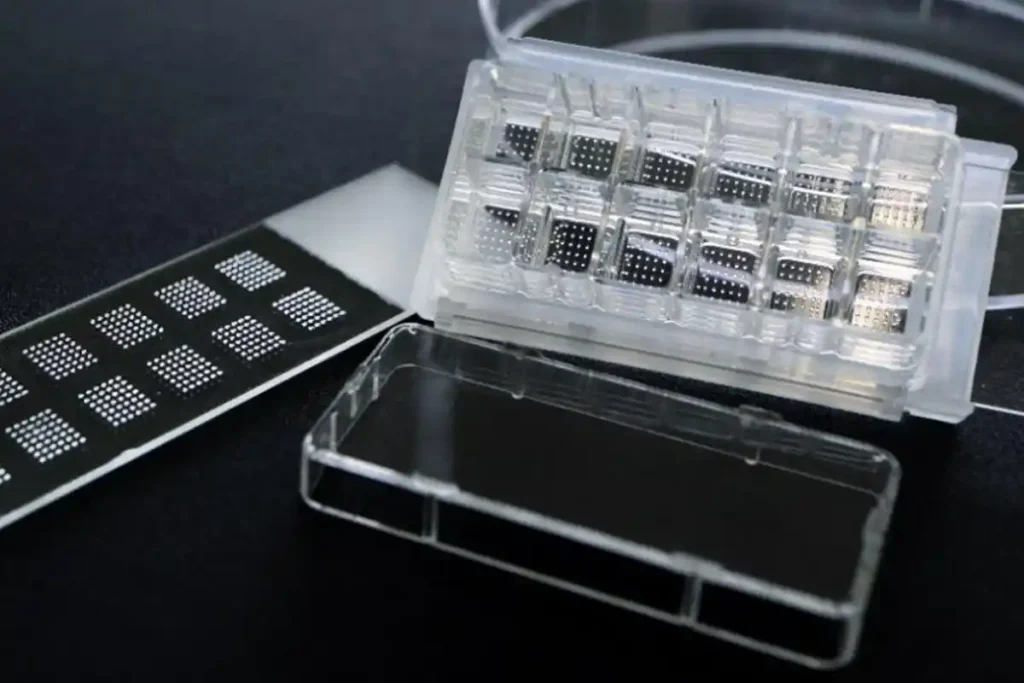
CollPlant’s BioFlex is not just another bioink; it is a comprehensive, ready-to-print kit. It integrates the company’s proprietary plant-derived recombinant human collagen (rhCollagen) with a biodegradable polymer called Collink.3D 50 and specialized photoactive agents . This combination is pre-optimized for high-resolution DLP 3D bioprinting, a technology that uses digital light projection to cure photosensitive materials layer by layer with exceptional speed and accuracy.
The primary advantage of BioFlex lies in its “plug-and-play” nature. Traditionally, developing a bioink with tunable properties requires extensive, time-consuming screening of components. BioFlex eliminates this hurdle by providing standardized formulation and printing guidelines. This allows users to generate customized bioinks with adjustable mechanical properties—such as tensile strength, elasticity, and structural integrity—without the need for complex preparation protocols .
The Shift Toward Animal-Free, Recombinant Collagen
One of the most significant aspects of this launch is the use of recombinant human collagen. Most conventional bioinks, such as gelatin methacrylate (GelMA), are derived from animal sources (porcine or bovine). While effective, these materials carry risks of batch-to-batch variability and potential pathogen transfer, raising safety concerns for clinical translation .
Recombinant collagen, produced by expressing human genes in host organisms (like plants or yeast), offers a solution. It provides a human collagen structure that ensures superior biofunctionality and consistency. Furthermore, CollPlant’s plant-based expression system eliminates animal components entirely, creating an animal-free product that supports better reproducibility in research—a factor for meeting stringent regulatory standards for future therapies .
Key Applications in Tissue Engineering and Drug Discovery
The launch of BioFlex is poised to impact several areas within biomedical research. Its ability to create tissue-mimetic constructs makes it a versatile tool for:
- Academic and Industrial R&D: The kit is tailored for laboratories exploring 3D bioprinting for basic research and product development .
- Tissue Engineering and Regenerative Medicine: Researchers can use BioFlex to biofabricate scaffolds that support cell attachment and proliferation. Recent studies highlight the use of DLP bioprinting with collagen-based materials to create complex structures like osteochondral scaffolds for joint repair, demonstrating the potential for regenerating bone and cartilage .
- Drug Discovery and Development: By enabling the creation of reliable, human-like tissue models (e.g., liver or tumor models), BioFlex allows pharmaceutical companies to conduct drug screening and toxicity testing on platforms that more accurately predict human responses than traditional 2D cultures or animal models .
Market Context: The Booming 3D Bioprinting Landscape
CollPlant’s product launch arrives at a time of rapid expansion in the 3D bioprinting market. According to recent reports, the global market size is projected to grow from an estimated $2.7 billion in 2026 to over $6.21 billion by 2030, at a compound annual growth rate (CAGR) of more than 23% . This exponential growth is driven by rising demand for organ transplants, increased funding for biomedical research, and the push for personalized medicine.
Within this market, the materials segment, particularly bioinks, holds strategic importance. The native collagen market, valued at $2.22 billion in 2025, is also seeing a significant shift. While bovine-derived collagen currently dominates due to cost and availability, recombinant and marine collagen are emerging as the fastest-growing segments, driven by demands for purity and consistency in high-precision applications . CollPlant’s BioFlex is well-positioned to capitalize on this trend.
The Technology Behind the Print: DLP Bioprinting
The BioFlex kit is specifically optimized for DLP 3D bioprinting, which offers distinct advantages over other methods like extrusion or inkjet printing. DLP technology provides:
- High Resolution: It can create intricate structures that mimic the complex microarchitecture of native tissues .
- Speed: By curing an entire layer at once, DLP is significantly faster than point-by-point extrusion methods, which is for maintaining high cell viability during long prints .
- Material Versatility: It is ideal for processing photocurable hydrogels and smart biomaterials used in soft tissue engineering and biosensor production .
By combining rhCollagen with DLP technology, BioFlex enables the fabrication of constructs with enhanced tissue-mimetic performance, potentially accelerating the path from concept to clinic .
Future Perspectives and Industry Impact
CollPlant’s CEO, Yehiel Tal, emphasized that BioFlex is designed to shorten development cycles and reduce complexity for end-users, reinforcing the company’s role as a key supplier in next-generation bioprinting workflows . As major pharmaceutical companies, like Eli Lilly with its recent acquisition of Organovo’s programs, increasingly integrate 3D bioprinted tissue models into their R&D pipelines, the demand for reliable, standardized tools like BioFlex will only intensify .
For researchers aiming to stay at the forefront of this revolution, partnering with a knowledgeable equipment provider is essential. LAVA3DP and our partners are committed to supporting the regenerative medicine community by offering state-of-the-art solutions for all your bioprinting needs. Whether you are involved in cancer research, orthopedic repair, or developing the next generation of bioengineered organs, having the right tools makes all the difference.
To learn more about how our platforms can support your work with advanced bioinks and DLP 3D bioprinters, please do not hesitate to contact our team of specialists.
Conclusion
The introduction of CollPlant’s BioFlex marks a step forward in making 3D bioprinting more accessible and reliable. By combining a ready-to-use format with the biological fidelity of recombinant human collagen, it empowers researchers to push the boundaries of tissue engineering and drug discovery. As the market continues its upward trajectory, such innovations are paving the way for a future where bioprinted tissues and organs become a clinical reality.
Frequent Asked Questions (FAQs)
1. What types of bioinks are compatible with the 3D bioprinters available at LAVA3DP?
At LAVA3DP, we offer systems compatible with a wide spectrum of bioinks to suit various applications. Our platforms support everything from natural polymers like alginate, gelatin methacrylate (GelMA), and collagen, to synthetic materials and advanced formulations like recombinant human collagen (e.g., CollPlant’s BioFlex). We provide detailed specifications for each printer to ensure material compatibility, helping you select the right system for your specific tissue engineering or drug discovery project. You can explore our range to find the perfect match for your research needs at lava3dp.com.
2. How does DLP bioprinting compare to extrusion bioprinting for creating tissue scaffolds?
Digital Light Processing (DLP) and extrusion are two leading 3D bioprinting technologies, each with distinct strengths. DLP bioprinting uses light projection to cure an entire layer of bioink at once, offering superior resolution (capable of creating finer details) and significantly faster print speeds. This makes it ideal for fabricating complex, cell-laden scaffolds that mimic intricate tissue microarchitectures. Extrusion bioprinting, on the other hand, is better suited for printing with very high-viscosity materials and creating larger, more robust constructs. The best choice depends on your application; our experts at LAVA3DP can guide you through this selection process.
3. Can your 3D bioprinters be used for cancer research and creating tumor models?
Yes, absolutely. 3D bioprinting is a transformative tool in oncology research. Our bioprinters enable researchers to create biomimetic tumor models that recapitulate the 3D environment, cell-cell interactions, and even the mechanical properties of real tumors. These models are far superior to traditional 2D cultures for studying tumor progression, invasion, and especially for high-throughput drug screening. By using patient-derived cells, these models also open avenues for personalized medicine approaches to test the efficacy of chemotherapies.
4. What level of technical support and training does LAVA3DP provide after a purchase?
At LAVA3DP, we believe in building lasting partnerships. When you purchase a system from us, you gain access to comprehensive after-sales support. This includes on-site installation and training for your team to ensure you can operate the equipment effectively from day one. We also provide ongoing technical support, application assistance, and maintenance services to ensure your research progresses without interruption. Our goal is to empower your laboratory to achieve its regenerative medicine and tissue engineering goals.
5. What are the sterilization and biocompatibility requirements for 3D printed constructs intended for in vivo studies?
Sterilization and biocompatibility are paramount for any construct intended for implantation. The specific method often depends on the material used. Common sterilization techniques include ethylene oxide (EtO) gas, gamma irradiation, or sterile filtration of bioinks prior to printing. Our systems are designed to be placed in sterile environments like biosafety cabinets. Regarding biocompatibility, LAVA3DP provides access to printers that work with a range of certified materials. For advanced applications, we recommend using animal-free bioinks like those based on recombinant human collagen to minimize immune rejection risks and ensure reproducibility, which is for successful translation to in vivo models. Please contact us for specific protocols and material recommendations.