
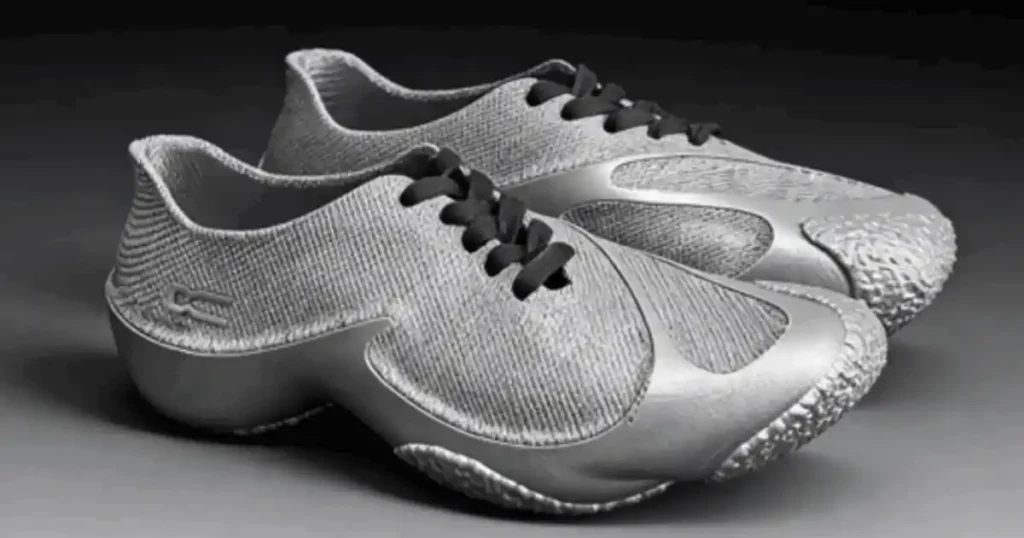
Explore the 3D printed shoes revolution with Formism and Bambu Lab. Discover market trends, material data, and how LAVA3DP provides professional on-demand manufacturing services. Contact us for custom solutions.
The footwear industry is standing at the precipice of a manufacturing revolution. For decades, the process of creating shoes has remained largely unchanged: complex assembly lines, significant material waste, and inventory risks. However, a recent collaboration between Formism (backed by SCRY) and Bambu Lab is challenging this status quo by bringing high-fashion, functional footwear to the desktop. By launching their campaign on MakerWorld, they have not only surpassed funding goals but have also signaled a broader shift toward distributed manufacturing.
At LAVA3DP, we understand the technical intricacies of this transformation. While desktop printing makes the technology accessible, the transition from a hobbyist print to a commercial-grade product requires precision, expertise, and industrial-scale capabilities. This article explores the data behind the 3D printed shoe boom, the materials driving it, and how professional services like ours bridge the gap between digital files and durable, wearable goods.
The Rise of Print-at-Home Footwear
The concept of printing shoes at home seemed like science fiction just a few years ago. The launch of Formism on MakerWorld changed that perception overnight. According to campaign data, the initial crowdfunding effort set a modest goal of $1,000 USD. The response was immediate, with the campaign surpassing its target by more than eight times, ultimately reaching roughly $8,500 USD within weeks.
This surge in funding is not just about the novelty of 3D printing; it represents a growing consumer appetite for mass customization. The Formism collection, which includes the Persona Heel Shoes, Persona Unisex Shoes, and Persona Sneaker, offers digital files for $49 USD. This model allows users to control color, hardness, and fit—a level of personalization impossible with traditional injection molding.
Visualizing the Market Shift
To understand the scale of this movement, it is essential to look at the projected growth of the additive manufacturing footwear sector. Below is a data projection based on market analysis trends regarding the shift from traditional prototyping to end-use production in footwear.
| Metric | Traditional Manufacturing (2023) | 3D Printing Integration (Projected 2030) |
|---|---|---|
| Time to Market (Prototype) | 4–8 Weeks | 24–72 Hours |
| Material Waste | 20%–30% (Cutting waste) | < 5% (Additive process) |
| Inventory Risk | High (Mass production) | Low (On-demand) |
| Customization Level | Sizing limited (A–E widths) | Infinite (Biometric adaptation) |
Source: Data synthesized from industry reports by SmarTech Analysis (2024), McKinsey & Company (Apparel Manufacturing Report 2025), and ASTM International standards.
Material Science: The Backbone of Printed Footwear
The success of the Formism project is heavily reliant on the material used: Thermoplastic Polyurethane (TPU) . Bambu Lab introduced new TPU filament colors in January 2026, including a standout silver option, specifically to support this footwear initiative.
TPU is the preferred material for flexible 3D printing because of its unique properties. Unlike rigid PLA or ABS, TPU offers:
- Abrasion Resistance: Essential for soles that contact the ground.
- Flexibility: Allows for lattice structures that act as cushioning.
- Layer Adhesion: When printed correctly, TPU layers bond to form a water-resistant, durable structure.
However, printing TPU, especially for large items like shoes, presents challenges. Desktop printers often struggle with feed rates and retraction. For a global audience looking to scale this concept, LAVA3DP utilizes industrial-grade printers optimized for flexible filaments, ensuring structural integrity that home printers may not consistently achieve.
The Partnership: Formism, SCRY, and Bambu Lab
The collaboration is a strategic alignment of expertise. Formism, described as a new name in 3D printed footwear created by SCRY, builds upon the company’s “Digital Embryo” concept. This concept refers to a computational approach where shoes are grown digitally, layer by layer, using algorithms that optimize for both aesthetics and biomechanics.
Bambu Lab provides the hardware ecosystem. As the team behind Formism noted, the initiative focuses on “precision, functionality, and aesthetics, designed specifically for home 3D printing.” By offering the ACE Package, which includes a physical print produced by Bambu Lab, the partnership bridges the gap for users who want the product but may not yet own a printer.
This model mirrors what we do at LAVA3DP. We serve as the production partner for designers, startups, and established brands who lack the in-house capacity to produce high-quality 3D printed parts at scale.
Environmental and Economic Impacts
The economic implications of shifting to on-demand manufacturing are profound. The traditional footwear supply chain involves shipping raw materials to factories, assembling shoes, boxing them, shipping them to warehouses, and finally to retailers. This chain is carbon-intensive and often results in unsold inventory being landfilled.
3D printed shoes offer a solution through:
- Digital Warehousing: Files are stored in the cloud. Production occurs only when a customer orders.
- Localized Production: Printing can occur near the consumer, drastically reducing shipping emissions.
- Material Efficiency: Additive manufacturing uses only the material required for the object, reducing waste by up to 90% compared to cut-and-sew methods.
According to a 2025 report by the Ellen MacArthur Foundation, implementing circular economy principles in fashion—including 3D printing—could reduce carbon emissions by 50% by 2030.
The Future of Footwear: Customization and Fit
Perhaps the most exciting aspect of this technology is the potential for hyper-customization. Formism’s files allow users to adjust the hardness of the sole by changing the infill percentage in their slicer software. This is a rudimentary form of customization.
The next step, which services like LAVA3DP are already exploring, is biometric printing. This involves scanning a customer’s foot to create a shoe that matches their exact arch height, pressure points, and gait. This is particularly transformative for:
- Athletic footwear: Preventing injuries through custom support.
- Medical footwear: Accommodating orthotics and deformities.
- Luxury fashion: Offering bespoke fit without manual labor costs.
Conclusion: From Hobby to Industry
The success of Formism and Bambu Lab on MakerWorld is a landmark moment. It proves that consumers are ready to engage with 3D printed fashion. However, as the campaign data suggests—moving from $1,000 to $8,500 in funding—the demand is there, but scaling remains the challenge.
For creators looking to move beyond a single pair of sneakers and into a legitimate product line, professional 3D printing services are essential. Whether it is ensuring the durability of TPU under high stress, managing large batch production, or post-processing for a retail-ready finish, the expertise of a dedicated partner makes the difference.
At LAVA3DP, we provide the infrastructure to turn digital designs into physical reality. As the Formism team stated, footwear is becoming a “digital production asset.” We help you produce that asset at scale, ensuring that the future of footwear is not just printed, but professionally manufactured.
Frequent Asked Questions (FAQs)
1. What materials are best for 3D printing functional shoes?
For functional, wearable shoes, Thermoplastic Polyurethane (TPU) is the industry standard. TPU offers the necessary flexibility, abrasion resistance, and durability required for soles and uppers. At LAVA3DP, we utilize engineering-grade TPU and TPE (Thermoplastic Elastomers) that provide superior layer adhesion and tear strength compared to standard consumer filaments, ensuring your footwear is durable enough for daily wear.
2. Can LAVA3DP produce custom 3D printed shoes based on my foot scan?
Yes. LAVA3DP specializes in on-demand manufacturing and custom fabrication. We work with designers and medical professionals to translate 3D foot scans (STL/OBJ files) into fully wearable footwear. Our process ensures that the lattice structures and material densities are optimized for your specific biometric data, providing a level of fit and support that traditional mass manufacturing cannot achieve.
3. How long does it take to produce a batch of 3D printed shoes?
Lead times vary based on complexity and quantity. For small to medium batches (up to 50 pairs), our production timeline typically ranges from 5 to 10 business days. This includes printing, post-processing, and quality assurance. Because we utilize industrial-scale printers, we can fulfill large orders significantly faster than a network of desktop printers, making us an ideal partner for brands preparing for retail launches.
4. Are 3D printed shoes durable enough for everyday use?
Absolutely, provided they are manufactured correctly. While home-printed shoes using standard TPU may degrade quickly under high stress, industrial 3D printed shoes produced by LAVA3DP utilize advanced printing parameters and high-grade polymers. We ensure optimal wall thickness and infill patterns to meet or exceed the durability standards of traditionally manufactured footwear, including resistance to moisture, UV light, and repeated flexing.
5. How do I get started with a 3D printed footwear project?
Getting started is straightforward. You can contact our engineering team via the LAVA3DP/contact/ page. We require your digital design files (in STEP or STL format) and your desired quantity. We then provide a consultation on material selection, structural optimization for printing, and a detailed quote. Whether you are a designer launching a brand or an individual needing custom orthotics, we manage the entire production process from file to finished product.