
- Introduction
- What is Hard Anodizing?
- The Technical Advantages: Why Choose Hard Anodizing?
- Material Compatibility: Which Alloys Work Best?
- Applications in Custom Manufacturing
- Visual Data: Properties at a Glance
- Hard Anodizing vs. Traditional Coatings
- The LAVA3DP Advantage
- Conclusion
- Frequent Asked Questions(FAQs)
Hard Anodizing transforms aluminum components into wear-resistant, corrosion-proof powerhouses. Discover the technical advantages, material specs, and applications at LAVA3DP. Get a quote for your custom parts today!
Introduction
In the realm of advanced manufacturing, surface finish is not merely an aesthetic consideration; it is a critical determinant of a component’s lifespan, functionality, and performance. For engineers and product developers sourcing custom parts, selecting the right surface treatment is paramount. Among the pantheon of metal finishing techniques, Hard Anodizing stands out as the gold standard for aluminum components requiring exceptional durability.
At LAVA3DP, we specialize in bridging the gap between digital design and physical reality. While we are renowned for our additive manufacturing capabilities, our expertise in CNC machining and precision finishing ensures that we deliver fully realized components for global clients. This guide explores the science, benefits, and applications of Hard Anodizing, illustrating why it is the definitive choice for high-wear industrial and consumer applications.
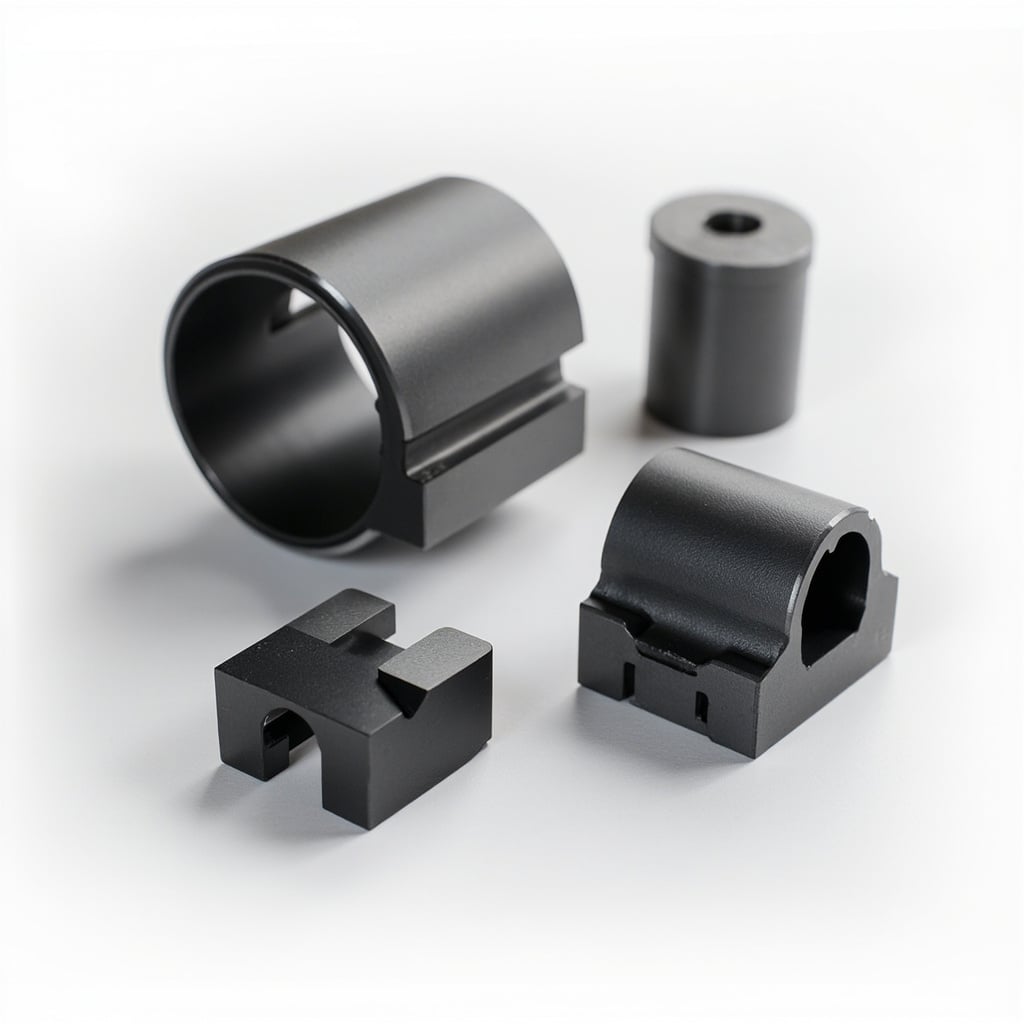
What is Hard Anodizing?
Hard Anodizing, often referred to as Type III anodizing (per MIL-A-8625 standards), is an electrochemical process that converts the surface of aluminum and its alloys into a durable, ceramic-like oxide layer. Unlike standard paint or plating, this process does not merely coat the metal; it integrates with the substrate.
The process involves submerging a machined aluminum part in a cold sulfuric acid electrolyte bath. An electric current is passed through the solution, causing the aluminum surface to oxidize into aluminum oxide (Al₂O₃). While standard anodizing creates a layer typically between 5 to 25 microns, Hard Anodizing generates a significantly thicker layer, ranging from 25 to 150 microns (1 to 6 mils).
This thickness is achieved through controlled low temperatures and higher current densities, resulting in a microstructure that penetrates half into the substrate and builds half above the original surface line. This creates a surface harder than tool steel, rivaling the hardness of sapphire on the Mohs scale.
The Technical Advantages: Why Choose Hard Anodizing?
When manufacturing custom parts for aerospace, automotive, or consumer electronics, the selection of surface treatment directly correlates with product success. Here are the quantifiable advantages of Hard Anodizing.
1. Unparalleled Surface Hardness
The primary value proposition of Hard Anodizing is its extreme hardness. The oxide layer typically achieves a Rockwell hardness of 60 to 70 on the Rockwell C scale (HRC) . To put this in perspective:
| Material | Approximate Hardness (HRC) |
|---|---|
| Hard Anodized 6061 Aluminum | 60 – 70 |
| Mild Steel | 45 – 55 |
| Martensitic Stainless Steel (Heat Treated) | 55 – 60 |
| Tool Steel (Untreated) | 60 – 65 |
This hardness translates to exceptional resistance to abrasion, galling, and wear, making it suitable for moving mechanical parts like pistons and hydraulic cylinders.
2. Superior Wear and Abrasion Resistance
In applications involving friction, Hard Anodizing significantly reduces material loss. The Taber Abrasion Test (ASTM D4060) demonstrates that Hard Anodized coatings exhibit a wear index that is up to 10 times lower than standard anodized coatings. This ensures that parts maintain tight tolerances over extended operational lifetimes, reducing maintenance cycles for end-users.
3. Electrical Insulation
Aluminum is a natural conductor. However, the aluminum oxide layer created during Hard Anodizing is a dielectric (non-conductive) barrier. With a dielectric strength ranging from 800 to 1,500 volts per 0.001 inch (25 microns) , Hard Anodizing is essential for electronic housings, circuit board heat sinks, and aerospace components where electrical isolation is required to prevent short-circuiting.
4. Corrosion Resistance
While standard anodizing offers corrosion protection, the density of the Hard Anodized layer offers superior defense against harsh environments. When sealed properly—either with hot deionized water, nickel acetate, or PTFE (Teflon™)—the coating provides a barrier that withstands salt spray testing (ASTM B117) for over 1,000 hours without corrosion, making it ideal for marine and chemical processing equipment.
Material Compatibility: Which Alloys Work Best?
Not all aluminum alloys respond to Hard Anodizing equally. The composition of the alloy dictates the quality, uniformity, and clarity of the resulting coating. At LAVA3DP, we guide our clients in selecting the optimal base material for their custom fabrication needs.
- 5xxx Series (Aluminum-Magnesium): These alloys (such as 5052 and 5083) anodize well, producing a hard, uniform coating. They are ideal for marine applications due to their inherent corrosion resistance combined with the hardened shell.
- 6xxx Series (Aluminum-Magnesium-Silicon): This is the most common family for machining and anodizing. 6061-T6 and 6063 are the industry workhorses. They provide an excellent balance between machinability and anodizing quality, producing a consistent, hard coating suitable for 95% of general engineering applications.
- 7xxx Series (Aluminum-Zinc): High-strength alloys like 7075 are used extensively in aerospace. While they can be hard anodized, the zinc content can lead to a darker, grayish finish and slightly lower uniformity compared to 6xxx series. However, the mechanical strength of the base metal combined with the hard coat makes this combination ideal for structural components.
Note: High-silicon alloys (die-cast aluminum) are generally not recommended for Hard Anodizing as the silicon content disrupts the oxide formation, resulting in a dark, powdery, and uneven coating.
Applications in Custom Manufacturing
The versatility of Hard Anodizing makes it a staple across virtually every industry that relies on precision mechanics.
Aerospace and Defense
The aerospace sector demands materials that can withstand extreme temperature fluctuations, UV radiation, and mechanical stress. Hard Anodizing is used for:
- Hydraulic actuators and landing gear components.
- Avionics housings requiring dielectric protection.
- Gun barrels and optical equipment mounts (where dimensional stability is critical).
Automotive and Motorsports
High-performance vehicles rely on the thermal management and friction reduction offered by this finish.
- Brake calipers and pistons.
- Pneumatic valve components.
- Suspension components and differential cases.
Medical Devices
The biocompatibility and non-porous nature of sealed Hard Anodizing make it suitable for surgical tools and medical equipment housings, ensuring they can withstand repeated autoclave sterilization cycles without degradation.
Robotics and Automation
In the world of custom robotics, moving parts require low friction and high wear resistance. Hard Anodizing, often co-deposited with PTFE, provides a lubricious surface that reduces the need for external lubricants, keeping clean-room robots free from contamination.
Visual Data: Properties at a Glance
To better illustrate the numerical performance metrics of Hard Anodizing compared to standard anodizing, refer to the chart data below.
Comparative Performance Metrics: Hard Anodizing vs. Standard Anodizing
| Property | Standard Anodizing (Type II) | Hard Anodizing (Type III) | Improvement Factor |
|---|---|---|---|
| Coating Thickness | 5 – 25 µm | 25 – 150 µm | +500% |
| Surface Hardness (HV) | 200 – 400 VHN | 400 – 600 VHN | +100% |
| Wear Resistance (Taber Index) | High Wear | Very Low Wear | Up to 10x |
| Dielectric Strength | < 500V per 0.001″ | > 800V per 0.001″ | +60% |
| Thermal Tolerance | Up to 80°C (continuous) | Up to 200°C (continuous) | +150% |
Hard Anodizing vs. Traditional Coatings
When deciding on a finish for custom CNC machined parts, clients often ask how Hard Anodizing stacks up against alternatives.
- Hard Chrome Plating: While hard chrome is also extremely hard (up to 70 HRC), it is an electroplated coating that sits on top of the base metal. This creates a risk of flaking or spalling under load. Hard Anodizing is an integral coating that cannot peel. Additionally, the environmental regulations surrounding hexavalent chromium (a carcinogen) make Hard Anodizing a far more environmentally responsible choice.
- Electroless Nickel: This offers excellent corrosion resistance but lacks the hardness of anodized aluminum (typically 45-55 HRC). It is also significantly heavier and more expensive. For lightweight components, Hard Anodizing is the superior choice.
The LAVA3DP Advantage
At LAVA3DP , we understand that the success of a custom part lies in the details. Our integrated manufacturing workflow allows us to manage the entire lifecycle of your project—from initial CAD design and CNC machining to precision Hard Anodizing.
We partner with certified finishing facilities that adhere to strict military specifications (MIL-A-8625 Type III) and commercial standards. Our quality control ensures:
- Dimensional Accuracy: We account for the 50/50 growth/penetration ratio of the coating to ensure threaded holes and critical mating surfaces remain within tolerance after processing.
- Color Matching: While Hard Anodizing typically results in a gray to black color depending on alloy and thickness, we offer sealing and dyeing options to meet aesthetic requirements without compromising structural integrity.
- Consistency: For high-volume production runs, we ensure batch-to-batch consistency in coating thickness and surface finish.
Conclusion
Hard Anodizing is more than a finish; it is a performance enhancement that transforms aluminum from a versatile but relatively soft metal into a component capable of enduring the most demanding industrial environments. For custom parts requiring longevity, wear resistance, and thermal stability, there is no superior alternative.
Whether you are prototyping a new drone motor, designing a hydraulic manifold, or scaling production for medical instrumentation, LAVA3DP is your partner in precision. We combine cutting-edge additive and subtractive manufacturing with world-class finishing capabilities to deliver parts that exceed specifications.
Ready to elevate your next project? Explore our capabilities and submit your design files today.
Frequent Asked Questions(FAQs)
1. What is the difference between Type II (Standard) and Type III (Hard) Anodizing offered by LAVA3DP?
Type II anodizing creates a thinner, decorative coating (5-25 microns) ideal for corrosion resistance and dyeing. Type III Hard Anodizing, which we specialize in at LAVA3DP , produces a significantly thicker (25-150 microns) and harder (60-70 HRC) ceramic layer. It is engineered for components requiring maximum wear resistance, electrical insulation, and durability in high-stress mechanical applications.
2. Can LAVA3DP hard anodize complex geometries or parts with internal threads?
Yes. Our team at LAVA3DP specializes in custom parts with complex geometries. However, Hard Anodizing adds dimension (growing approximately 50% outward). We account for this growth in our machining phase by adjusting tolerances on threads and bores to ensure that after the anodizing process is complete, your parts fit perfectly without the need for secondary operations.
3. Does Hard Anodizing affect the dimensional accuracy of my custom machined parts?
Yes, Hard Anodizing does alter dimensions, as the coating consists of 50% penetration into the substrate and 50% build-up above it. At LAVA3DP , we manage this through pre-anodizing machining. By calculating the final coating thickness during the design phase, we adjust critical dimensions (such as pin holes and shaft diameters) to ensure that after the Hard Anodizing process, the part meets your specified tolerances precisely.
4. Is Hard Anodizing environmentally friendly compared to other metal finishes?
Absolutely. Unlike hard chrome plating, which utilizes toxic hexavalent chromium, Hard Anodizing uses a sulfuric acid electrolyte bath that is significantly less hazardous. At LAVA3DP , we are committed to sustainable manufacturing. The process is energy-intensive but produces no heavy metal waste, and the resulting surface is inert, biocompatible, and does not leach chemicals, making it suitable for food processing and medical applications.
5. What aluminum alloys work best for Hard Anodizing through LAVA3DP?
The 6xxx series, specifically 6061-T6 and 6063, are the most compatible, offering the best balance of machinability and uniform coating hardness. For high-strength aerospace components, 7075 is also viable, though it results in a darker finish. If you have a specific alloy in mind, LAVA3DP recommends consulting our engineering team to verify the suitability and expected coating results for your custom project.