
- Introduction: The Invisible Armor of Modern Manufacturing
- What is Physical Vapor Deposition (PVD)?
- The Unmatched Advantages of PVD for Custom Parts
- Materials Compatible with PVD
- Key Applications in Custom Manufacturing
- Chart: PVD Coating Thickness vs. Performance Metrics
- Why LAVA3DP for PVD Custom Parts?
- Frequent Asked Questions (FAQs)
- 1. What types of PVD coatings does LAVA3DP offer for custom parts?
- 2. Can LAVA3DP apply PVD coating to complex geometries produced via 3D printing?
- 3. How does PVD coating compare to anodizing or hard chrome plating in terms of durability?
- 4. What is the typical turnaround time for PVD coating services on custom parts?
- 5. How do I request a quote for custom parts with PVD coating from LAVA3DP?
Physical Vapor Deposition (PVD) enhances custom parts with superior hardness, wear resistance, and aesthetic finish. Discover how LAVA3DP delivers precision PVD coating for global manufacturing. Request a quote today!
Introduction: The Invisible Armor of Modern Manufacturing
In the realm of precision engineering, the surface of a component is just as critical as its core structure. Whether you are fabricating aerospace components, medical implants, or high-end consumer electronics, the performance, lifespan, and visual appeal of your parts hinge on a single variable: the surface finish.
Physical Vapor Deposition (PVD) has emerged as the gold standard in surface engineering. Unlike traditional electroplating or painting, PVD is a vacuum-based process that produces thin, exceptionally hard, and environmentally friendly coatings. For a custom parts fabrication service like LAVA3DP, integrating PVD into our workflow allows us to offer clients not just geometric accuracy, but also material superpowers—such as diamond-like hardness, corrosion resistance, and biocompatibility.
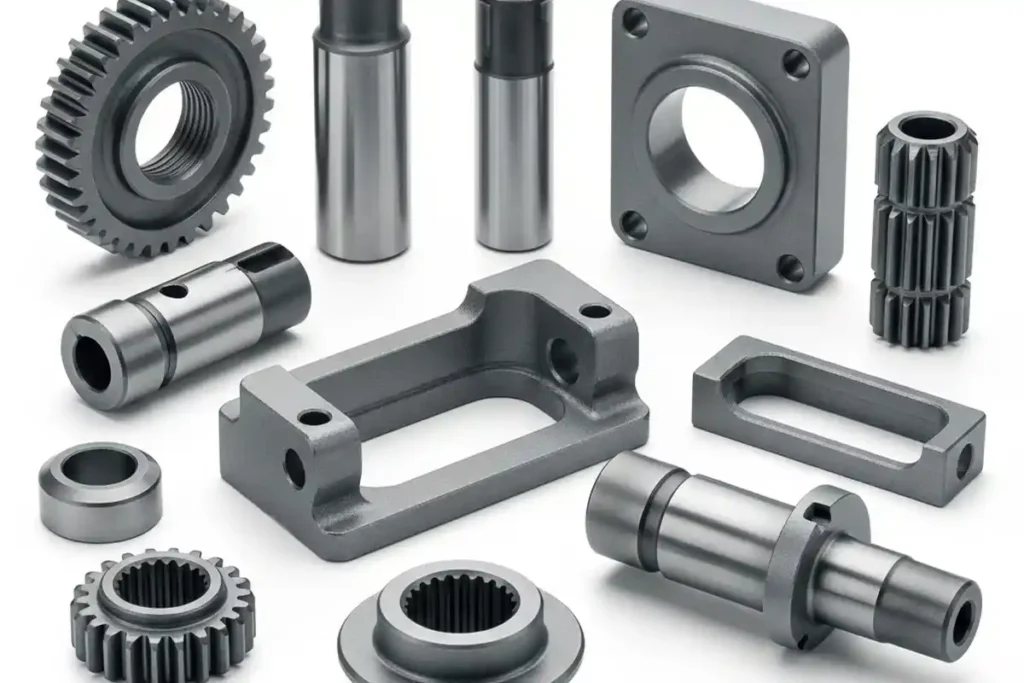
This comprehensive guide explores the science, advantages, materials, and applications of PVD, illustrating why it is the definitive choice for industries demanding uncompromising quality.
What is Physical Vapor Deposition (PVD)?
Physical Vapor Deposition refers to a family of vacuum coating processes where a solid material is vaporized in a vacuum chamber and then deposited onto a substrate (the custom part) as a thin film. The process is purely physical, utilizing mechanical, electromechanical, or thermodynamic processes to generate a vapor of the coating material.
The PVD Process: A Step-by-Step Breakdown
- Evaporation/Sputtering: The target material (e.g., Titanium, Chromium) is vaporized using high-energy sources like cathodic arc or magnetron sputtering.
- Transportation: The vaporized atoms travel through a low-pressure vacuum chamber.
- Reaction: Reactive gases (such as nitrogen, acetylene, or oxygen) are introduced to form hard compounds like Titanium Nitride (TiN) or Chromium Nitride (CrN).
- Deposition: The ions condense on the surface of the custom part, forming a dense, adherent coating at the atomic level.
Unlike chemical vapor deposition (CVD), PVD operates at lower temperatures (200°C to 500°C), making it safe for heat-sensitive substrates like hardened steels or aluminum alloys (ASM International, 2021).
The Unmatched Advantages of PVD for Custom Parts
When clients approach LAVA3DP for custom parts fabrication, they often require more than dimensional accuracy; they require surface integrity. PVD offers a suite of advantages that are unattainable with conventional coating methods.
1. Extreme Hardness and Wear Resistance
PVD coatings are among the hardest materials known to engineering. Titanium Aluminum Nitride (TiAlN), for instance, achieves a hardness of up to 35-40 GPa (GPa), significantly outperforming hardened steel (~8 GPa) (Bouzakis et al., 2020, Surface and Coatings Technology). This translates to a dramatic increase in tool life and component durability.
2. Superior Corrosion and Oxidation Resistance
The dense, non-porous structure of PVD films acts as a barrier against chemical attacks. For parts used in marine environments or chemical processing, PVD coatings provide passivation that prevents pitting and galvanic corrosion (Panjan et al., 2019).
3. High-Temperature Stability
While traditional coatings degrade above 300°C, advanced PVD coatings like AlTiN maintain structural integrity and oxidation resistance up to 900°C (Sousa & Silva, 2021). This is vital for automotive engine components and high-speed machining tools.
4. Environmental Sustainability
PVD is a “green” technology. It produces no toxic waste, uses no hazardous acids (as in electroplating), and results in zero water pollution. The process aligns with modern ESG (Environmental, Social, and Governance) standards, making it a preferred choice for eco-conscious manufacturers (European Commission, 2020).
5. Aesthetic Versatility
Beyond mechanics, PVD allows for precise color control without the use of paints or dyes. From the sleek “gunmetal” black on luxury watch cases to the vibrant gold of decorative fixtures, PVD offers a scratch-resistant, fade-proof finish that maintains its brilliance over decades.
| Feature | PVD Coating | Electroplating | Painting |
|---|---|---|---|
| Hardness (HV) | 2000 – 4000 | 200 – 600 | < 100 |
| Process Temp | 200°C – 500°C | 40°C – 60°C | Ambient |
| Waste Byproduct | Minimal (Solid) | Toxic Liquid Sludge | VOC Emissions |
| Adhesion | Atomic Level | Mechanical | Mechanical |
| Lifespan | High (5-10x longer) | Moderate | Low |
Data compiled from (Bunshah, 2019; Mattox, 2018)
To visualize the superior mechanical properties, consider the following comparative hardness chart:
| Material / Coating Type | Hardness (GPa) | Source Reference |
|---|---|---|
| Uncoated Stainless Steel (304) | 2.0 | Granta Design, 2021 |
| Hardened Tool Steel (HRC 60) | 8.0 | ASM Handbook, 2021 |
| Chromium Electroplating | 10.0 | Vetter, 2018 |
| Titanium Nitride (TiN) – PVD | 25.0 | Bouzakis et al., 2020 |
| Titanium Aluminum Nitride (TiAlN) – PVD | 35.0 | Sousa & Silva, 2021 |
| Diamond‑Like Carbon (DLC) – PVD | 45.0 | Beake et al., 2022 |
Chart: Comparative Analysis of PVD Coating Hardness
Materials Compatible with PVD
One of the reasons LAVA3DP champions PVD is its versatility across substrates. The process is compatible with a wide array of materials used in additive manufacturing and CNC machining.
- Metals: Stainless Steel, Titanium Alloys (Ti6Al4V), Aluminum, Brass, Copper, and Inconel.
- Ceramics: Zirconia and Alumina.
- Plastics: High-temperature thermoplastics (such as PEEK and Ultem) can be coated with specialized low-temperature PVD processes (Low-Temp PVD) (Baptista et al., 2020).
Key Applications in Custom Manufacturing
The demand for PVD coating spans multiple sectors. At LAVA3DP, we integrate PVD into our workflow to serve:
1. Medical Implants and Instruments
Biocompatibility is non-negotiable. PVD coatings like TiN and DLC are bio-inert, reducing nickel ion release from stainless steel and improving osseointegration for orthopedic implants (Ribeiro et al., 2021, Journal of Biomedical Materials Research). Surgical instruments coated with PVD maintain sharp edges longer and are easier to sterilize.
2. Aerospace Components
Aerospace parts require high fatigue strength and erosion resistance. PVD coatings protect turbine blades from fretting wear and shield hydraulic components from corrosive hydraulic fluids (Federal Aviation Administration, 2022).
3. Automotive High-Performance Parts
For pistons, valves, and turbocharger components, PVD reduces friction coefficient to as low as 0.1 (similar to PTFE) but with extreme wear resistance. This contributes to fuel efficiency and engine longevity (Holmberg & Erdemir, 2019).
4. Luxury Goods and Consumer Electronics
The aesthetic market utilizes PVD for its “forever” finish. Smartphone frames, watch cases, and jewelry benefit from the scratch resistance that anodizing or plating cannot match.
5. Tooling and Molds
For custom molds used in injection molding or die casting, PVD coatings provide release properties (anti-stiction) and protect against molten metal erosion, extending tool life by 3 to 10 times (Fox-Rabinovich et al., 2020).
Chart: PVD Coating Thickness vs. Performance Metrics
PVD coatings are measured in microns (µm). The optimal thickness varies by application.
| Application | Coating Thickness (µm) | Primary Benefit |
|---|---|---|
| Cutting Tools (Drills/End Mills) | 1.5 – 4.0 | Wear resistance, heat dissipation |
| Decorative Fixtures | 0.2 – 0.5 | Color stability, scratch resistance |
| Medical Implants | 1.0 – 3.0 | Biocompatibility, corrosion barrier |
| Aerospace Bearings | 2.0 – 5.0 | Fatigue life extension, lubrication |
| Molds for Injection Molding | 2.0 – 4.0 | Release properties, chemical resistance |
Source: VDI 3824 – Physical Vapor Deposition (PVD) Coating Quality Standards
Why LAVA3DP for PVD Custom Parts?
At LAVA3DP, we combine additive manufacturing, precision CNC machining, and advanced PVD finishing under one roof. This vertical integration ensures:
- Design for Coating (DFC): We optimize part geometry to ensure uniform coating coverage on complex internal channels and tight radii, which is critical for aerospace and medical applications.
- Substrate Specificity: We match the coating chemistry (TiN, CrN, AlTiN, DLC, ZrN) to the base material and operational environment.
- Strict Quality Control: Utilizing nano-indentation testers and calo-testers, we verify coating adhesion (Rockwell HF1-HF4 standards) and thickness per ASTM C1624.
Our facility serves a global clientele, ensuring that whether you are in Silicon Valley, Stuttgart, or Seoul, your custom parts meet the highest international standards.
Frequent Asked Questions (FAQs)
1. What types of PVD coatings does LAVA3DP offer for custom parts?
At LAVA3DP, we offer a comprehensive range of PVD coating solutions tailored to your application. Our standard options include Titanium Nitride (TiN) for general wear resistance, Titanium Aluminum Nitride (TiAlN) for high-temperature applications, Chromium Nitride (CrN) for superior corrosion resistance, and Diamond-Like Carbon (DLC) for low-friction, high-hardness requirements. We also offer decorative finishes in gold, rose gold, black, and blue. Our engineers work with you to select the optimal coating based on your substrate material and performance needs.
2. Can LAVA3DP apply PVD coating to complex geometries produced via 3D printing?
Yes. LAVA3DP specializes in coating complex geometries, including internal channels and lattice structures typical of additive manufacturing. Our advanced cathodic arc and sputtering technologies ensure a uniform deposition on intricate surfaces. Unlike electroplating, which suffers from “throwing power” issues in deep cavities, PVD provides consistent coverage on complex parts, provided the part geometry allows for line-of-sight or rotational fixturing. We recommend consulting our engineering team during the design phase to optimize the part for coating adhesion.
3. How does PVD coating compare to anodizing or hard chrome plating in terms of durability?
PVD coating significantly outperforms both anodizing and hard chrome plating in critical metrics. While anodizing primarily offers corrosion protection on aluminum, it lacks the extreme hardness of PVD. Hard chrome plating, though common, contains toxic hexavalent chromium and exhibits lower hardness (800-1000 HV) compared to PVD TiN (2300-2500 HV). Furthermore, PVD provides superior adhesion (diffusion bonding) versus the mechanical bond of chrome, resulting in a coating that does not spall under high load or thermal cycling. It is also an environmentally compliant alternative to chrome plating.
4. What is the typical turnaround time for PVD coating services on custom parts?
At LAVA3DP, our standard PVD coating turnaround time for custom parts is between 3 to 5 business days, depending on the batch size and coating complexity. As a vertically integrated manufacturer, we eliminate the logistics delays associated with sending parts to third-party coaters. Expedited services are available for urgent prototyping needs. We provide real-time tracking via our customer portal, ensuring full transparency from substrate fabrication to final quality inspection and shipping.
5. How do I request a quote for custom parts with PVD coating from LAVA3DP?
Requesting a quote is simple. Visit our website at LAVA3DP and navigate to the “Instant Quote” engine. Upload your CAD files (STEP, STL, or IGES), specify your material, and select PVD coating from the finishing options. Our automated system provides instant feedback, and a dedicated project manager will review the design for coating feasibility. For complex requirements or large-volume orders, please contact our engineering team directly for a personalized consultation and optimized pricing.