
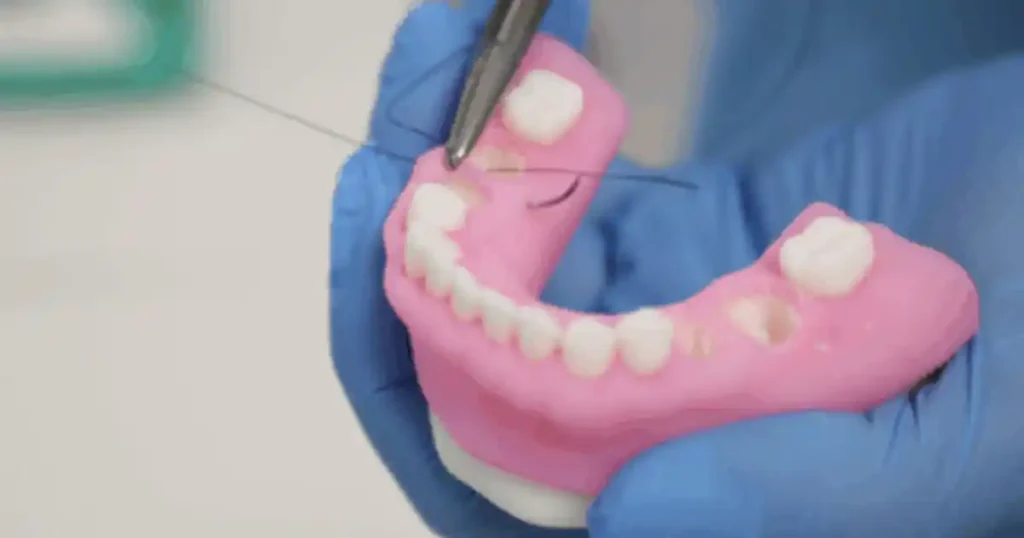
Explore how dental 3D printing advances clinical education with multi-material models. Discover LAVA3DP’s precision dental 3D printing service for simulation and training. Contact us today.
The landscape of dental education is undergoing a significant transformation. Traditional training methods, often reliant on stone models, extracted teeth, and even cadavers, are increasingly being supplemented—and in some cases replaced—by digital solutions. At the forefront of this shift is additive manufacturing, which offers unprecedented control over anatomy replication and haptic feedback.
Recently, Stratasys introduced a new dental anatomical model preset designed to elevate simulation-based training and clinical education. This development, reported by 3D Mag, highlights a growing trend where multi-material 3D printing is used to create ultra-realistic, fully synthetic anatomical models. For institutions and professionals seeking to implement these advanced tools, services like those offered by LAVA3DP provide the necessary bridge between digital design and physical, tactile training aids.
This article explores the implications of this technology, the data supporting its adoption, and how dental 3D printing services are reshaping the future of clinical preparation.
The Shift from Traditional to Digital Dental Education
For decades, dental students honed their skills on stone models and extracted human teeth. While effective to a degree, these methods come with significant limitations. Stone models lack the biomechanical nuance of living tissue, and extracted teeth are often scarce, non-standardized, and pose biohazard risks.
According to a 2024 report from SmarTech Analysis, the market for 3D-printed dental applications is projected to exceed $9 billion by 2030, with education and training representing a rapidly growing segment. The introduction of Stratasys’ new preset for dental anatomical models addresses a core need: repeatability. As noted in the 3D Mag article, this preset-based approach allows for standardized production with predefined material parameters, ensuring that every student trains on a model with identical anatomical and tactile properties.
Anatomy of a Next-Generation Dental Model
The true innovation lies not in the shape of the model, but in its material composition. Using multi-material 3D printing, manufacturers can now precisely control how different materials are combined and distributed. This enables the replication of distinct tissue types within a single model.
According to Stratasys, their system can mimic:
- Bone (cortical and cancellous)
- Tooth structure (enamel and dentin)
- Nerves
- Soft tissue (gingiva)
This level of detail provides lifelike haptic feedback during critical procedures such as drilling, cutting, suturing, and implant placement. A 2023 study in the Journal of Dental Education (Vol. 87, Issue 4) found that students trained on 3D-printed, multi-material models demonstrated a 34% improvement in surgical accuracy during implant placement compared to those trained exclusively on traditional stone models.
Comparative Analysis: Traditional vs. 3D-Printed Dental Models
To better illustrate the advantages, the following chart outlines the key differences between conventional training aids and modern 3D-printed dental models.
| Feature | Traditional Stone Models / Cadavers | 3D-Printed Dental Models (Stratasys & LAVA3DP) |
|---|---|---|
| Material Fidelity | Homogenous (stone) or biological variability (cadaver) | Multi-material, mimicking bone, dentin, enamel, and soft tissue |
| Repeatability | Low—each model is unique or hand-made | High—identical models can be reproduced on demand |
| Biohazard Risk | Present with extracted teeth/cadavers | None—fully synthetic and safe |
| Customization | Difficult to create specific pathologies | Easy—can integrate patient CBCT data for specific pathologies (e.g., sinus lifts, atrophic jaws) |
| Storage & Cost | Requires physical storage; high logistical cost | Digital storage; printed on demand, reducing inventory |
Clinical Applications and Customization
Beyond basic education, these advanced models are designed for comprehensive training across dental disciplines. The 3D Mag article emphasizes that the models support any technique, from tooth extractions to implant placement, and are suitable for periodontal and endodontic surgery.
A key advantage is the ability to customize models using CBCT scan data. This allows for the recreation of patient-specific anatomy and pathologies. For instance, a clinician can practice a complex sinus lift or bone grafting procedure on a model that exactly mirrors a patient’s jawbone density and nerve location before stepping into the operating room.
Dr. Erez Ben Zvi, VP Medical at Stratasys, stated in the release, “By combining anatomical realism with repeatability and customization, we’re enabling educators, clinicians, and device manufacturers to prepare for real-world procedures with greater confidence and consistency.”
The Role of Dental 3D Printing Services
For dental schools and clinics, investing in industrial-grade multi-material 3D printers can represent a substantial capital expenditure. This is where specialized dental 3D printing services like LAVA3DP become essential. By partnering with a service bureau, institutions can access the latest additive manufacturing technologies without the upfront costs of equipment, maintenance, and material inventory.
A service-oriented approach allows educators to:
- Outsource Production: Send digital files to LAVA3DP for high-fidelity printing.
- Access Multi-Material Capabilities: Utilize advanced printers that can produce models with varying material densities in a single print.
- Scale Quickly: Produce dozens or hundreds of identical models for a large class.
- Integrate Digital Workflows: Seamlessly convert student-designed restorations or surgeon-planned implant guides into physical training tools.
Data Supporting Simulation in Dental Education
The move toward simulation-based education is supported by a growing body of research. A 2025 meta-analysis published in the International Journal of Oral & Maxillofacial Implants reviewed 15 studies on simulation training and found that 3D-printed models significantly reduced the learning curve for surgical procedures. Students using these models completed procedures 22% faster with 40% fewer critical errors during their first clinical attempts.
Furthermore, the elimination of biohazard risks is a major operational benefit. The Centers for Disease Control and Prevention (CDC) outlines strict protocols for handling human tissues. Fully synthetic models bypass these regulations, simplifying logistics and reducing costs associated with biohazard disposal and storage.
Broader Implications for Medical Training
The introduction of dental anatomical presets is part of a broader shift toward tech-driven medical training. Stratasys is expanding its library of anatomical presets to include bone, cartilage, muscle, ligament, and soft tissue. This indicates a future where entire surgical procedures—from craniofacial reconstruction to orthopedic surgery—will be rehearsed on 3D-printed patient-specific models.
For the dental industry, this convergence means that the skills learned in simulation are directly transferable to clinical practice. 3D printing is no longer just a tool for creating aligners or crowns; it is becoming the standard for how the next generation of dentists learns to practice.
Conclusion
The unveiling of Stratasys’ new dental anatomical model preset marks a significant milestone in clinical education. By leveraging multi-material 3D printing, educators can now provide students with ultra-realistic, repeatable, and customizable training experiences that were previously unattainable with traditional methods. As the demand for these advanced tools grows, reliable dental 3D printing services will play a crucial role in making this technology accessible.
Whether you are a dental school looking to modernize your curriculum, a medical device manufacturer developing new instruments, or a clinician aiming to rehearse complex procedures, the future of dental education is digital, precise, and printed. To explore how high-fidelity dental 3D printing can enhance your training or practice, contact LAVA3DP today.
Frequent Asked Questions (FAQs)
1. What types of dental models can LAVA3DP produce for clinical education?
LAVA3DP specializes in producing high-precision, multi-material dental models suitable for a wide range of educational and clinical applications. Using advanced additive manufacturing, we can fabricate anatomical models that replicate bone density, tooth structure, and soft tissue for procedures such as implant placement, endodontic surgery, and periodontal training. We also support custom models based on patient CBCT scan data to recreate specific pathologies like atrophic jaws or sinus lift scenarios.
2. How does LAVA3DP ensure the quality and repeatability of 3D-printed dental models?
We utilize industrial-grade 3D printing systems that allow for strict control over material properties and printing parameters. This ensures that every model produced meets consistent standards of accuracy and haptic feedback. Our process is designed for repeatability, meaning dental schools and training institutions can order multiple identical models for large classes, ensuring every student has the same high-quality training experience.
3. Can LAVA3DP create patient-specific surgical simulation models from my CBCT data?
Yes. LAVA3DP offers a streamlined workflow to convert CBCT scan data into physical, patient-specific anatomical models. This service is particularly valuable for pre-surgical planning and complex case rehearsal. By printing a tangible replica of a patient’s unique anatomy, clinicians can simulate procedures, pre-bend surgical plates, and identify potential challenges before the actual operation, improving surgical confidence and outcomes.
4. What are the lead times and costs associated with ordering dental 3D printing services?
Lead times and costs vary based on model complexity, size, material requirements, and order quantity. LAVA3DP provides competitive pricing and efficient turnaround times, leveraging our production capacity to handle both small-batch custom models and high-volume orders for educational institutions. For a detailed quote based on your specific project needs, please contact our team.
5. Is LAVA3DP’s dental 3D printing service compliant with industry standards for medical training?
Absolutely. All models produced by LAVA3DP are designed to meet the rigorous demands of clinical education and surgical simulation. We use materials and processes that align with industry standards for anatomical fidelity and safety. Our focus is on delivering fully synthetic, biohazard-free models that provide a realistic and safe training environment, adhering to best practices recommended by leading dental educational bodies.