
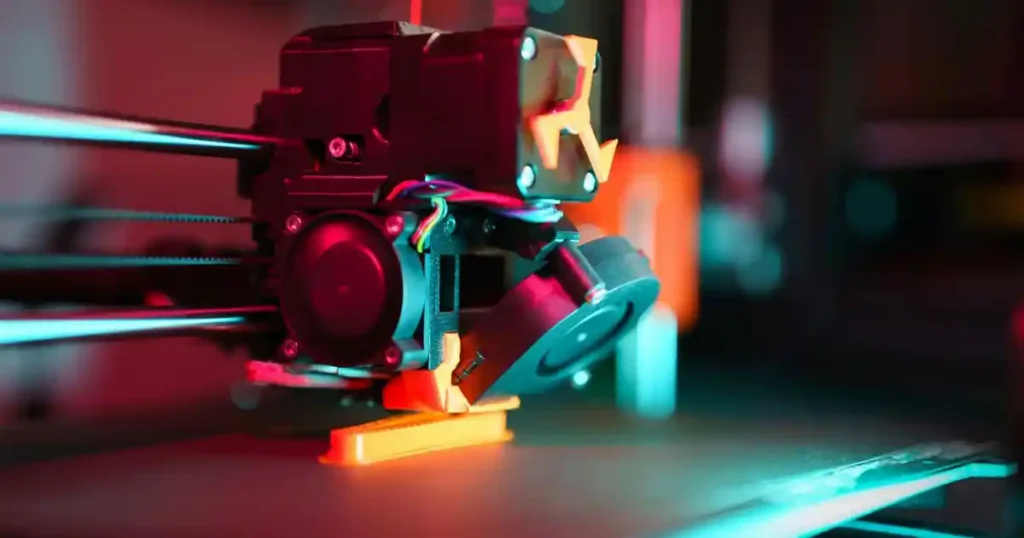
Discover key trends from TCT Asia 2026, including industrial production, smart materials, and automation. LAVA3DP offers expert 3D printing services to bring your projects to life. Get a quote today!
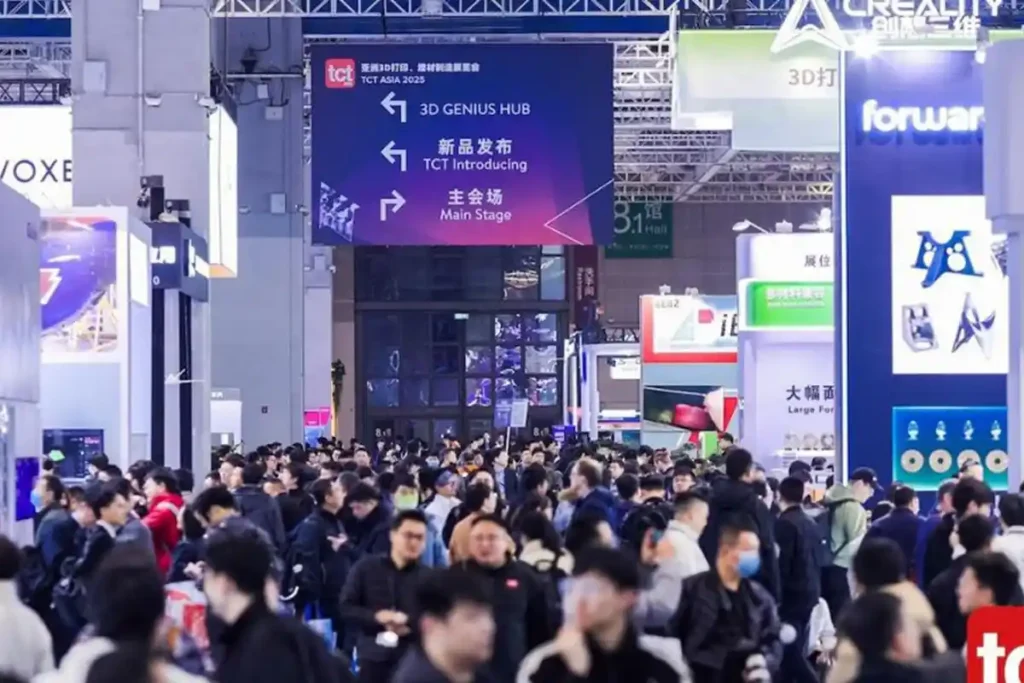
The twelfth edition of TCT Asia, the premier event for the additive manufacturing industry in the Asia-Pacific region, has firmly established itself as the global benchmark for 3D printing innovation. Held from March 17-19, 2026, at the National Exhibition and Convention Center (NECC) in Shanghai, the event showcased a record-breaking 55,000+ square meters of exhibition space, hosting over 550 exhibitors and attracting more than 40,000 visitors . This year’s theme, centered around “Application Driven Change,” signaled a definitive maturation of the industry, moving beyond prototyping to focus on industrial production, intelligent ecosystems, and mass customization .
For businesses looking to navigate this rapidly evolving landscape, understanding the trends unveiled at TCT Asia 2026 is crucial. Whether you are an engineer seeking metal additive manufacturing solutions or a designer exploring new materials, the insights from this show will shape the year ahead. At LAVA3DP, we translate these cutting-edge industrial trends into accessible, high-quality 3D printing services for our global clients.
The Core Trends Defining TCT Asia 2026
This year’s exhibition was distinctly bifurcated into two primary halls: Hall 7.1, the dedicated Metal Additive Manufacturing zone, and Hall 8.1, focusing on the full 3D printing industry chain, including polymers, software, and scanning . Across both halls, three major trends emerged.
1. The Rise of Production-Grade Materials
The material innovations on display signaled a clear pivot from “prototyping plastics” to production-grade ecosystems. Exhibitors moved beyond standard formulas to introduce “super polymers” and intelligent materials designed for end-use parts .
- Metal Replacement: Companies like Polymaker showcased their Fiberon™ series, including PPS-GF20, a glass fiber-reinforced polyphenylene sulfide offering heat deflection temperatures above 230°C and UL94 V0 flame retardancy, making it ideal for automotive engine bay components . Similarly, UnionTech presented Temp-R220, a high-temperature SLA resin capable of withstanding 250°C, directly competing with metal for tooling applications like tire molds .
- Vertical Mass Production: In specialized sectors like dental and footwear, materials are solving workflow bottlenecks. HeyGears debuted its Multi-Material Fusion Technology with OnePrint Dentures, allowing rigid teeth and flexible gum bases to be printed in a single job, eliminating post-processing assembly . eSUN introduced FlexOne, a single-component elastic resin that replaces traditional two-part mixing for high-durability shoe soles .
2. Automation and Smart Ecosystems
As 3D printing scales for production, the need for automation and reliability has become paramount. This year, the spotlight was on “smart materials” that communicate directly with hardware.
- RFID Integration: Major consumer brands are pushing for seamless user experiences. Creality unveiled its Hyper Series filament with RFID technology, designed to work with the K2 Pro CFS. The spool automatically communicates its color, type, and optimal print parameters to the printer, eliminating manual guesswork . Bambu Lab countered with its Vortek System, a hardware solution aimed at solving the “cross-contamination” issue when switching between different engineering materials like PA6-GF and PC-FR, ensuring reliable multi-material support .
Image Placeholder: A chart showing the percentage of TCT Asia 2026 exhibitors by category (e.g., Metal AM Equipment, Polymer Materials, Software/Scanning, Services) based on the 550+ exhibitor list. [Source: Data compiled from ]
3. Equipment Stability Over Raw Speed
A significant shift in hardware philosophy was evident in 2026: the end of the “parameter wars.” Exhibitors emphasized stable output, tooling, and vertical specialization rather than just marketing maximum speeds .
- Industrial Tooling: Machines are being designed as reliable production tools. Tianjin Leiming showcased its LiM-X400 line, positioned not just as a printer but as a “dark factory” solution for modular, automated manufacturing . AVIMETAL emphasized its full-series metal machines focused on the consistency and dimensional accuracy required for aerospace and precision components .
- Vertical Specialization: The market is seeing a rise in machines designed for specific industries. Ruitong Additive presented the RXDent-D130, a DLP printer optimized specifically for dental applications, with hardware and software tuned to a fixed material system for predictable production cycles . On the consumer side, Elegoo‘s Saturn 4 Ultra 16K demonstrated that even desktop machines now prioritize “idiot-proof” reliability with features like heated vats and tilted release mechanisms to ensure high success rates for intricate models .
4. Global Collaboration and Content Depth
Beyond the show floor, TCT Asia solidified its role as a knowledge hub. The conference program was restructured to guide attendees through the “trend → technology → application → commercialization” lifecycle . Key sessions included the TCT Asia Summit, which dedicated days to Healthcare, Aviation & Aerospace, and Consumer Goods, featuring voices like Dr. Hao Yongqiang from The Ninth People‘s Hospital discussing 3D-printed biological bone organs .
The introduction of the “World Premier Selection” program highlighted the show’s role in global product launches, while the “3D Genius Hub” transformed into a creative intersection of 3D printing, IP culture, and design .
How LAVA3DP Leverages TCT Asia Insights
At LAVA3DP, we continuously monitor events like TCT Asia to ensure our service offerings remain at the forefront of the industry. We understand that navigating the shift toward production-grade parts requires expertise. Whether your project demands the high-temperature resistance of the new polymers or the precision of specialized dental resins, we are equipped to advise and manufacture.
We bridge the gap between the complex industrial trends seen in Shanghai and your specific project needs. By partnering with us, you gain access to a network of technologies and materials that are defining the future of manufacturing.
Bring the Future to Your Doorstep with LAVA3DP
Inspired by the innovations at TCT Asia 2026? You don’t need a $550,000 industrial printer or a team of PhDs to leverage these technologies. LAVA3DP offers professional 3D printing services that make these advanced capabilities accessible to everyone—from engineers and startups to artists and educators.
We provide expert guidance on material selection, design for additive manufacturing (DfAM), and reliable production runs. Let us handle the complexity while you focus on your vision.
Ready to start your next project?
Explore Our 3D Printing Services at LAVA3DP or Contact Us for a Consultation.
Frequently Asked Questions (FAQs)
1. What types of 3D printing services does LAVA3DP offer?
LAVA3DP provides a comprehensive range of additive manufacturing services catering to both businesses and individuals. Our capabilities include FDM (Fused Deposition Modeling) for large, functional prototypes, SLA (Stereolithography) for high-detail, smooth-surface models, and SLS (Selective Laser Sintering) for durable, nylon-based end-use parts. We also offer expert design assistance, model repair, and a variety of finishing options to meet your specific project requirements.
2. How do I choose the right material for my 3D printing project?
Choosing the right material depends on your part’s intended use. For functional prototypes needing strength and heat resistance, engineering filaments like our Nylon or Polycarbonate options are ideal. For visual models, concept mockups, or jewelry patterns, our high-resolution resins provide a flawless surface finish. If you need flexible parts, we offer TPU materials. Our team at LAVA3DP can guide you through our material library based on your mechanical needs, budget, and timeline. You can view a detailed list on our materials page.
3. What is the typical turnaround time for a 3D printing order?
Turnaround times vary based on the complexity and size of your project, as well as the chosen technology. For standard prototypes and small batch production, we typically begin printing within 24-48 hours after file approval. We offer various shipping options to get your parts to you quickly. For larger production runs, we will provide a custom timeline in your quote. For urgent needs, please mention your deadline in your inquiry so we can prioritize your project.
4. Can you help me if my 3D model file has errors?
Absolutely. This is one of our most common services. We understand that not everyone is a 3D modeling expert. Our in-house team of specialists can review and repair common file issues such as non-manifold edges, inverted normals, and holes in the mesh. We offer design for additive manufacturing (DfAM) consulting to optimize your model for printability, ensuring it is strong, cost-effective, and meets your specifications. You can send us your file for a free feasibility review.
5. Does LAVA3DP handle both prototyping and large-volume production?
Yes, we do. LAVA3DP is built to scale with your project. Whether you need a single prototype to test a concept, a small batch of 50 parts for a market launch, or thousands of units for full-scale production, we have the capacity to deliver. We utilize industrial-grade machinery and quality control processes to ensure consistency from the first part to the last, making us a reliable partner for every stage of your product lifecycle. Contact us to discuss your production needs.