

Vacuum Casting Service for High-Quality Low-Volume Production & Rapid Prototyping
Are you an engineer, product designer, or startup founder looking to bridge the gap between 3D printing and mass production? Do you need functional prototypes, market-testing batches, or end-use parts that look and feel like injection-molded quality? If so, vacuum casting might be the perfect low-volume manufacturing solution for your project.
At LAVA, we specialize in turning complex designs into reality with our advanced vacuum casting service and rapid prototyping service capabilities. This comprehensive guide will explain everything you need to know about vacuum casting, its benefits, and how it can accelerate your product development cycle.
What Is Vacuum Casting (Urethane Casting)? Process, Materials & Industrial Applications
Vacuum casting is a sophisticated manufacturing process used to produce high-quality plastic or rubber-like components in low to medium volumes (typically 10-50 parts, though up to 100+ is possible). It involves creating RTV silicone molds through silicone mold casting from a master pattern (often a 3D printed part) and then using a vacuum chamber to complete the vacuum mold process by casting liquid polyurethane resin into the mold without trapping air bubbles. This advanced polyurethane casting technique delivers custom plastic parts with exceptional surface finish, fine detail, and material properties that closely mimic production-grade thermoplastics like ABS, PP, PC, or even flexible materials like TPE using engineering-grade resins.
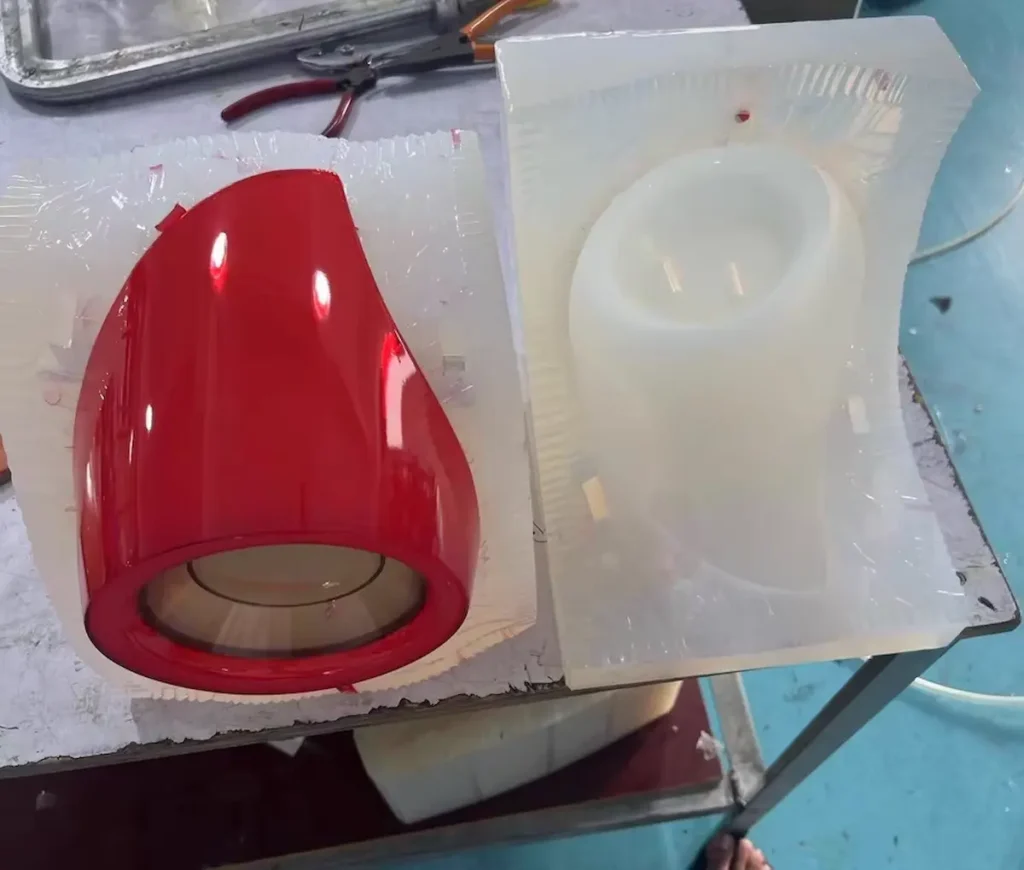
How the Vacuum Casting Process Works: Silicone Mold Making to Resin Curing (Step-by-Step Guide)
The magic of vacuum casting lies in its precision and dimensional accuracy. Here’s how our experts at Lava3DP execute the process as part of our industrial vacuum casting workflow:
- Master Pattern Creation: The process begins with a flawless master model, typically produced using high-resolution SLA or DLP 3D printing. This pattern must be perfect, as any defect will be replicated in every cast part and affect final tolerance ±0.1 mm requirements.
- Silicone Mold Making: The master pattern is placed in a casting box and liquid silicone is poured over it. This stage of silicone mold casting is then placed in a vacuum chamber to remove any air bubbles, ensuring a perfect, defect-free mold. The silicone is then cured in an oven.
- Mold Cutting and Pattern Removal: Once cured, the solid silicone block is carefully cut open. The master pattern is removed, leaving a precise negative cavity of the part inside the mold.
- Resin Casting: The two halves of the silicone mold are closed. A pre measured mixture of polyurethane resin—selected through expert material selection guidance for desired properties like color, flexibility, or strength—is poured into the mold’s pouring channel as part of our professional resin casting service.
- Vacuum Degassing: The closed mold is placed back into the vacuum chamber. The vacuum removes all trapped air from the resin, preventing bubbles and ensuring the material fills every intricate detail of the cavity.
- Curing and Demolding: The mold is then transferred to a curing oven. After the resin has fully cured, the silicone mold is opened, and the final cast part is carefully removed.
- Post-Processing: The part is cleaned, and any necessary support material (sprues and gates) is trimmed and finished to meet strict quality control and ISO quality standards through detailed engineering inspection.
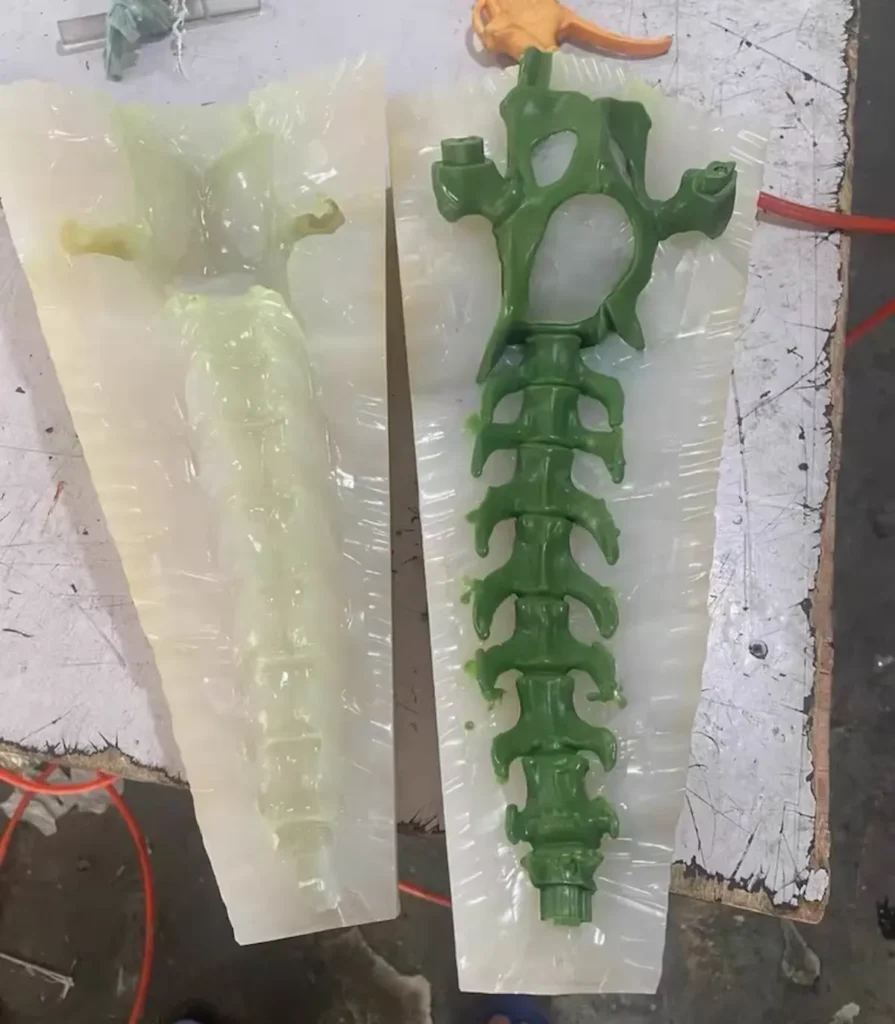
Advantages of Vacuum Casting for Functional Prototypes & Short-Run Production
Why do leading companies choose vacuum casting for their prototyping and bridge production manufacturing needs?
- Exceptional Surface Quality: Achieve near-injection-molded finish with fine details, smooth surfaces, and no layer lines—ideal for production-grade prototypes.
- Material Versatility: Choose from a vast library of polyurethane resins to simulate ABS, PP, PC, Nylon, transparent materials, or even rubber-like silicones using advanced urethane casting materials.
- Cost-Effectiveness for Low Volumes: Avoid the high cost of injection molding tools. Vacuum casting is ideal for batches of 10 to 50+ parts and supports small batch production and short-run manufacturing.
- Rapid Turnaround: Silicone molds can be produced much faster than metal tooling. Get functional parts in hand in days, not weeks with our fast turnaround casting service.
- Color and Material Customization: Easily add colors, tints, and additives to the resin for branding or functional testing while maintaining consistent mechanical properties.
Vacuum Casting vs Injection Molding: Cost, Lead Time & Production Volume Comparison
| Feature | Vacuum Casting | Injection Molding |
|---|---|---|
| Ideal Volume | Low-Volume (1 – 100+ parts) | High-Volume (1,000+ parts) |
| Tooling Cost | Low ($ hundreds – low thousands) | Very High ($ thousands – tens of thousands) |
| Lead Time | Days to a few weeks | Weeks to months |
| Design Changes | Easy and inexpensive | Difficult and expensive |
| Material Options | Wide range of simulating resins | Vast range of production thermoplastics |
Verdict: Use vacuum casting for prototyping, pilot runs, and bridge production. Switch to injection molding when your production volumes justify the high initial tooling investment—especially when evaluating casting vs injection molding for scalability.
Industrial Applications of Vacuum Cast Polyurethane Parts
- Functional Prototypes: Test form, fit, and function with parts that behave like the final product and support product design validation.
- Pre-Production and Pilot Runs: Create small batches for market testing, clinical trials, or crowdfunding campaigns with support from a reliable rapid prototyping company.
- End-Use Parts: Ideal for low-volume manufacturing in industries like aerospace, automotive, and medical devices, including automotive prototype parts, medical device housings, and industrial equipment components.
- Consumer Goods: High-quality housings for electronics, cosmetic cases, consumer product enclosures, and electronic casings for wearable device prototypes.
- Simulation Models: Accurate anatomical models for medical training and surgical planning.
Our Vacuum Casting Capabilities at Lava3DP: Precision, Quality Control & Engineering Expertise
At Lava3DP.com, we don’t just make parts; we help you innovate faster with engineering-grade manufacturing and support from experienced prototyping engineers. Our vacuum casting service is designed for designers and engineers who refuse to compromise on quality.
Why Choose Lava3DP as Your Trusted Vacuum Casting Partner?
- Expert Consultation: Our engineers provide technical consultation, design for manufacturability (DFM) support, and expert material selection guidance to help you select the best material and process for your application.
- State-of-the-Art Equipment: We operate an advanced vacuum casting facility equipped with industrial-grade equipment to deliver consistent, high-quality results as your custom vacuum casting supplier.
- Rapid Quotes & Lead Times: Get a competitive quote quickly with our fast response time, transparent pricing, and reliable on-time delivery guarantee for affordable short-run production.
- Commitment to Quality: Every part is rigorously inspected under strict quality control procedures to ensure it meets our high standards and your specifications.
Request a Quote for Custom Vacuum Casting Services
Unlock the potential of low-volume manufacturing with stunning quality from a trusted precision engineering company and certified manufacturing partner. Upload your 3D model today for a free, instant quote on our vacuum casting services. Let Lava3DP be your partner in creation.
FAQ
- What is vacuum casting in rapid prototyping, and how is it used for low-volume polyurethane part production?
Vacuum casting is a manufacturing process used to produce high-quality prototypes and small batches of plastic or rubber parts. It involves pouring polyurethane resin into a silicone mold within a vacuum chamber, which ensures exceptional detail by eliminating air bubbles. This method is ideal for functional testing, pre-series production, and creating prototypes that closely mimic the final product’s quality, especially in industries like consumer electronics, automotive, and medical devices. - What are the benefits of vacuum casting compared to injection molding and 3D printing?
Vacuum casting offers several distinct benefits:- Cost-Effective for Small Batches: It is more economical than injection molding for low-volume production, typically up to about 30 parts per mold.
- High-Quality Details: It excels at reproducing complex geometries, fine details, and smooth surface finishes, including textured surfaces and 3D logos.
- Material Versatility: A wide range of polyurethane resins is available, including materials that mimic ABS, polyethylene, polypropylene, and even transparent polycarbonate, offering diverse mechanical properties.
- Rapid Turnaround: The process avoids the need for expensive hard tooling, allowing for faster production times compared to traditional methods.
- Which polyurethane resins and engineering-grade materials are suitable for vacuum casting?
The process supports a variety of polyurethane (PUR) resins that simulate the properties of common production plastics. Available options include ABS-like, PP-like, PE-like, and PC-like resins, as well as flexible materials such as TPU (thermoplastic polyurethane) and rubber-like silicones. There are also specialized resins for creating transparent parts, allowing for functional and aesthetic testing across a broad spectrum of material requirements. - What design guidelines, tolerances, and mold limitations should be considered in vacuum casting?
To ensure the best results for your parts, keep these design guidelines in mind:- Draft Angle: Include a draft angle of at least 1 to 2 degrees on vertical walls to facilitate easy removal from the mold without damage.
- Wall Thickness: Maintain a uniform wall thickness where possible. A recommended minimum for small to medium parts is 1.0 to 1.5 mm to ensure strength and avoid defects like warping or sink marks.
- Ribs and Bosses: Design ribs with a thickness less than 60% of the nominal wall thickness. For bosses, keep the wall thickness at or below 60% of the nominal wall to prevent sinking.
- Undercuts: While vacuum casting can handle some undercuts, they can complicate mold design. It’s best to consult with your manufacturing expert on how to approach them.
- What is the typical lead time for vacuum casting prototypes and short-run production?
The lead time depends on the part’s complexity, size, and the required number of copies. The process itself involves creating a 3D-printed master pattern, building a silicone mold around it, and then casting the parts. While simpler parts may be completed in a matter of days, more complex geometries or projects requiring multiple units can take longer. The vacuum casting process is generally valued for its speed compared to traditional manufacturing methods for small batch