

Turning (Lathing)
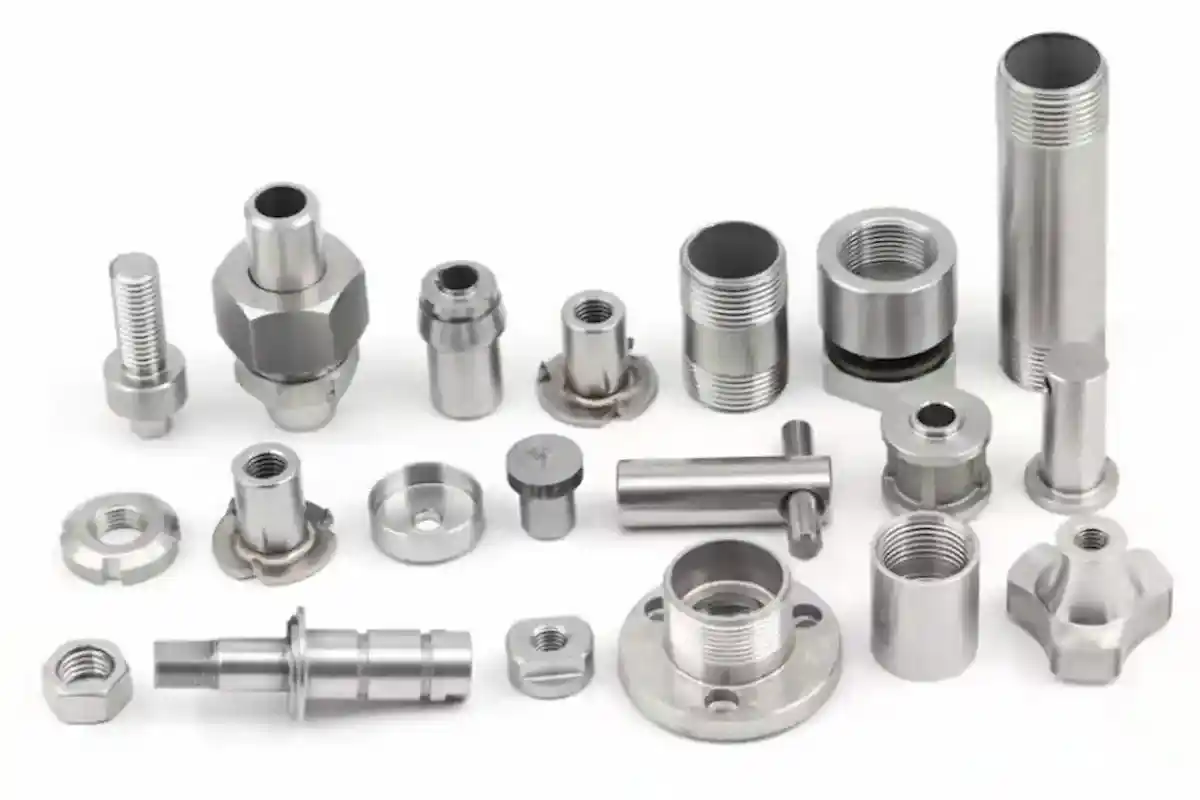
At LAVA, we are your global partner in digital manufacturing and a trusted CNC machining services company. Our mission is to bridge the gap between your innovative designs and physical reality. While we have built our reputation on the forefront of 3D printing services, our full suite of capabilities is designed to offer the perfect manufacturing solution for every project. When it comes to creating high-precision, robust, and cylindrical components, our CNC turning service and CNC lathing services stand as indispensable and highly efficient subtractive manufacturing process solutions for advanced cylindrical component manufacturing and rotational part machining.
This comprehensive guide will delve into everything you need to know about computer numerical control turning—from its fundamental principles and historical roots to its modern applications and how it compares to other manufacturing technologies like 3D printing. As a global CNC manufacturing partner and reliable CNC parts supplier, we provide scalable prototype to production turning solutions
Get an Instant QuoteWhat Is CNC Turning & Lathing? Process, Machines, and Precision Engineering Explained
Let’s start by demystifying the terminology. While often used interchangeably, “turning” and “lathing” have a subtle distinction:
- Turning refers to the specific machining action: a workpiece rotates while a stationary cutting tool removes material to create a cylindrical shape—this is the foundation of high precision turning and tight tolerance machining.
- Lathing is the process of using a machine called a lathe to perform turning operations, also known as CNC lathe machining within modern precision engineering services.
The advent of Computer Numerical Control (CNC) has revolutionized this ancient craft. Modern CNC Lathes are sophisticated computer-controlled systems that follow digital blueprints (CAD models) with microscopic precision through advanced CAD/CAM machining solutions. This automation eliminates human error, enables the production of incredibly complex geometries, and guarantees that every single part in a production run is identical—ideal for large volume CNC turning and small batch machining a like.
The Evolution of Lathe Machining: From Manual Lathes to Advanced CNC Turning Technology
The lathe is one of the oldest machine tools in human history, with evidence of its use dating back to ancient Egypt around 1300 BCE. These “roaming lathes” were operated by two people: one would rotate the workpiece with a rope while the other used a sharp tool to shape the wood.
The Industrial Revolution ushered in the era of powered lathes, dramatically increasing their capability and precision. However, the true transformation occurred in the mid-20th century with the integration of computer control. CNC technology unlocked unprecedented levels of speed, accuracy, and complexity, solidifying turning as a cornerstone of modern manufacturing and today’s advanced CNC equipment within an ISO-certified CNC machining company environment.
The CNC Turning Process Explained: From CAD Design to High-Precision Machined Parts
The journey of a custom-turned part at Lava 3DP is a seamless, digital-to-physical workflow supported by our engineering support team and experienced CNC machinists:
- Digital Blueprint (CAD Model): It all begins with your 3D CAD model (e.g., a .STEP, .IGES, or .SLDPRT file). This model contains all the critical information: dimensions, tolerances, threads, and surface finish requirements—essential for custom CNC turned parts and precision turned components.
- CNC Programming (CAM): Our expert engineers use Computer-Aided Manufacturing (CAM) software to analyze your CAD file. This software translates the 3D geometry into a set of precise instructions, known as G-code, which dictates every movement of the CNC lathe—from spindle speed and tool path to feed rate and depth of cut—ensuring accurate CNC shaft machining and professional thread cutting service capabilities.
- Machine Setup: This is a critical phase where we prepare the physical machine inside our in-house machining facility. The appropriate cylindrical bar stock (the “workpiece”) is selected and securely clamped into the lathe’s chuck, which is attached to the rotating spindle—commonly known as bar stock machining. The correct cutting tools, chosen based on the material and features required, are loaded into the machine’s turret for multi-axis CNC turning when required.
- Precision Machining: With the setup complete, the automated process begins. The spindle rotates the workpiece at high speeds (often thousands of RPM). The turret indexes the correct tools, which then move along linear and radial paths to precisely shear away material—this is professional metal turning services and production of plastic turned parts with strict tolerance control. Operations performed can include:
- Facing: Creating a flat surface on the end of the part.
- OD (Outside Diameter) Turning: Reducing the outer diameter to a specific dimension.
- ID (Inside Diameter) Turning (or Boring): Enlarging and shaping internal diameters.
- Drilling: Creating axial holes.
- Tapping: Cutting internal threads.
- Grooving: Cutting a narrow channel on the OD or ID.
- Parting/Cutoff: Severing the finished part from the remaining bar stock.
- Post-Processing & Quality Assurance: Once the part is machined, it may undergo secondary operations such as deburring, polishing, or professional surface finishing for turned parts. Crucially, the part is then inspected using precision tools like calipers, micrometers, and even CMMs (Coordinate Measuring Machines) for quality inspection with CMM, ensuring tolerance ±0.01mm machining, ISO quality controlled machining, and full material traceability, PPAP documentation, and RoHS compliant machining before being shipped to you.
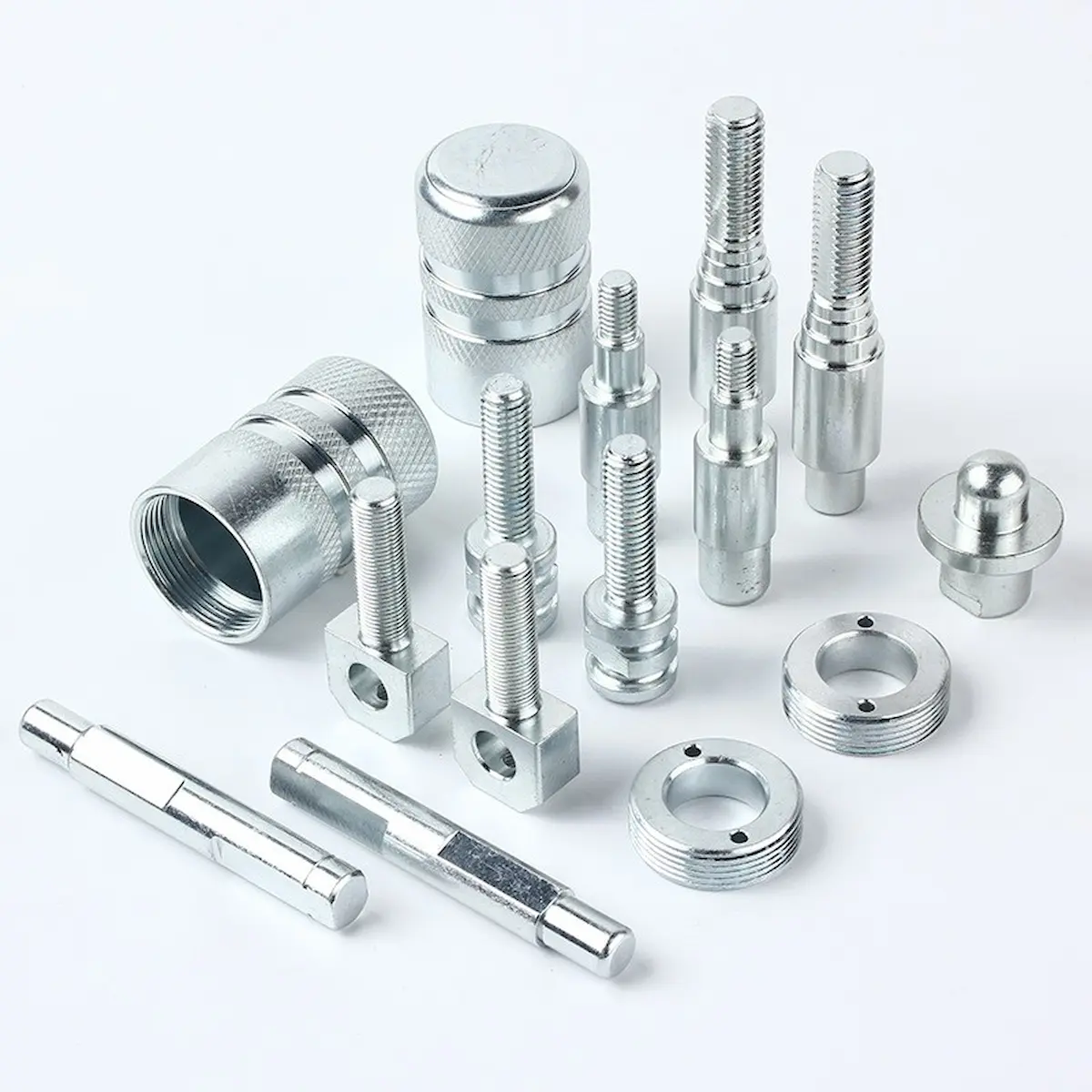
Advantages of CNC Turning Services: Accuracy, Efficiency & Scalable Production
CNC turning is the optimal choice for a vast range of projects due to its compelling set of benefits:
- Superior Accuracy and Repeatability: CNC lathes routinely hold tolerances as tight as ±0.0002 inches (±0.005 mm). This makes them ideal for components that must interface perfectly in assemblies—supported by strict tolerance control and advanced precision measurement tools.
- Exceptional Surface Finishes: The continuous, shearing action of a single-point cutting tool can produce exceptionally smooth surfaces, often eliminating the need for secondary finishing.
- High-Speed Production for Round Parts: For axisymmetric components, turning is significantly faster than machining processes like milling. This makes it ideal for industrial turned parts and scalable large volume CNC turning.
- Excellent Material Integrity: Unlike additive processes, turned parts are manufactured from a solid block of proven, homogeneous material. This results in components with superior strength and mechanical consistency, especially critical in CNC machining for aerospace, CNC machining for automotive, CNC machining for medical devices, and CNC machining for industrial equipment.
- Incredible Material Versatility: CNC turning can efficiently process engineering alloys and polymers, making us a trusted custom machined components supplier for engineering-grade materials machining.
CNC Turning vs. 3D Printing: Comparing Precision, Materials, Cost & Production Speed
At Lava3DP, we provide both subtractive and additive solutions because we understand that the “best” technology is the one that best suits your specific project requirements.
When to Choose CNC Turning:
- Geometry: Your part is fundamentally cylindrical or has rotational symmetry.
- Material: You require the full, isotropic strength of a wrought or forged metal or plastic.
- Precision: You need very tight tolerances and ultra-smooth surface finishes right off the machine.
- Volume: You are producing medium to high volumes where the speed of turning becomes highly cost-effective.
When to Choose 3D Printing:
- Geometry: Your part has highly complex, organic shapes, intricate internal channels, or undercuts that are impossible to machine with a single-point tool.
- Prototyping: You need to iterate designs rapidly and cost-effectively without the cost of tooling or setup.
- Consolidation: You can combine multiple assembled components into a single, integrated 3D printed part.
- Customization: You are producing highly customized, one-off parts (e.g., medical implants tailored to a specific patient).
Materials Available for CNC Turning: Metals, Plastics & Engineering-Grade Alloys
We offer an extensive selection of materials for your custom-turned parts, ensuring your project has the exact properties it needs to succeed.
- Metals:
- Aluminum (e.g., 6061, 7075): Lightweight, strong, and with excellent machinability, ideal for aerospace, automotive, and consumer electronics.
- Stainless Steel (e.g., 304, 316): Offers superb corrosion resistance and strength, perfect for medical, marine, and food-processing applications.
- Brass: Known for its excellent machinability, corrosion resistance, and aesthetic appeal, often used for decorative fittings and electrical components.
- Titanium (e.g., Grade 2, Grade 5): Provides an exceptional strength-to-weight ratio and biocompatibility, critical for aerospace and medical implants.
- Alloy Steel (e.g., 4140): Offers high strength and toughness for demanding industrial applications.
- Plastics:
- Delrin® (POM): A low-friction, dimensionally stable engineering plastic with superb stiffness and wear resistance.
- Nylon (PA 6, PA 66): Tough, wear-resistant, and has good chemical resistance, suitable for gears, bushings, and bearings.
- PEEK: A high-performance thermoplastic with excellent thermal, chemical, and mechanical properties, used in the most demanding aerospace, automotive, and medical environments.
- PTFE (Teflon®): The ultimate choice for exceptional chemical resistance and low friction.
- ABS & Polycarbonate: Great for prototypes and functional parts requiring good impact strength and rigidity.
Industrial Applications of CNC Turned Parts Across Aerospace, Automotive & Medical Sectors
CNC-turned components are the unsung heroes inside countless products across every industry. Here are some common examples:
- Aerospace & Defense: Hydraulic fittings, connector pins, valve stems, and landing gear components where reliability and precision are non-negotiable.
- Medical & Dental: Bone screws, surgical instrument shafts, implantable device components, and dental implant abutments, requiring biocompatible materials and flawless surfaces.
- Automotive: Engine pistons, transmission shafts, fluid system connectors, and wheel studs that demand high strength and durability.
- Electronics & Semiconductors: Precision spacers, connector pins, and housings for sensitive electronic equipment.
- Industrial Machinery: Drive shafts, rollers, bushings, and fasteners that keep the world’s production lines running.
Why Choose Precintl for CNC Turning Services? Certified Expertise & Quality Assurance
We operate as a competitive CNC turning manufacturer China option while maintaining global standards, offering transparent CNC turning service price, optimized CNC turning service cost, and instant custom CNC turning quote access through our online CNC turning service platform. Whether you’re searching for CNC lathing near me or a dependable CNC turning supplier, our CNC turning parts factory delivers scalable production backed by NDA protected manufacturing and over 10+ years manufacturing experience.
Ready to experience the precision and reliability of CNC turning?
Get an Instant Quote