

Engineering
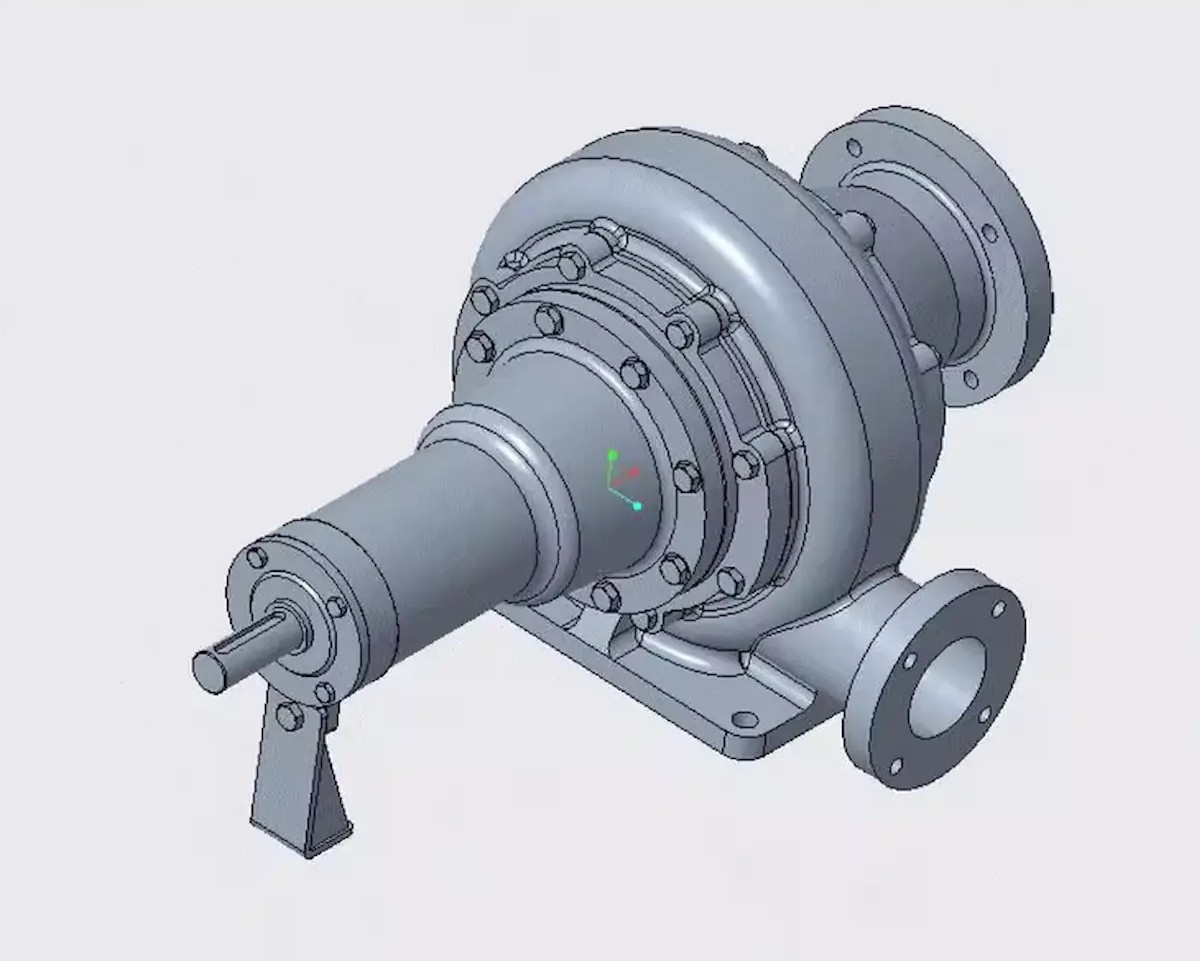
Engineering has always been the cornerstone of human progress, transforming abstract scientific concepts into tangible solutions that address real-world challenges. Today, this foundational discipline is undergoing a digital transformation that is reshaping how engineers design, simulate, and construct everything from microscopic circuits to monumental structures. The integration of advanced computational methods, cutting-edge materials science, and revolutionary manufacturing techniques like 3D printing has created an unprecedented paradigm shift in engineering capabilities. This article explores the current landscape of engineering innovations, with particular emphasis on how emerging technologies are enabling more efficient, sustainable, and complex engineering solutions across diverse sectors. As we examine these developments, we’ll highlight their practical applications and implications for the future of manufacturing, construction, and design.
Get an Instant QuoteThe Digital Transformation of Engineering
Computational Modeling and Simulation
The adoption of sophisticated computational modeling represents one of the most significant advancements in modern engineering. Contemporary engineers now leverage multi-scale simulations that operate from the molecular level to full-system integration, providing unprecedented insights into performance characteristics before physical prototyping begins. These virtual environments allow for rapid iteration and optimization that would be prohibitively expensive and time-consuming through traditional methods.
Recent developments in physics-aligned interactive benchmarks like BuildArena have created new possibilities for evaluating engineering construction through language-driven instructions. This innovative framework enables comprehensive testing of structural viability under various physical constraints, allowing engineers to transform natural language specifications into physically viable structures through complex integrated reasoning. Such systems comprehensively evaluate capabilities for language-driven and physics-grounded construction automation, pushing the boundaries of how engineers interact with computational design tools .
Advanced Visualization and Analysis
Parallel advancements in visualization technologies have dramatically enhanced engineers’ ability to interpret complex data and simulation results. The Community Coordinated Modeling Center (CCMC), for instance, has pioneered interactive visualization tools that utilize open-source Python packages like Kamodo to provide dynamic views of model output with innovative options for coordinate transformations and data analysis. These tools enable researchers to interact with simulation data in intuitive ways, identifying patterns and relationships that might remain obscured in traditional two-dimensional representations .
Similarly, the R package Shiny enables the creation of interactive data applications that support the development of research data and software competencies. By lowering barriers to accessibility and promoting transparency, Shiny provides a flexible environment where complex engineering data workflows can be operationalized intuitively and reproducibly. This approach not only facilitates technical learning but also fosters long-term skills in reproducible research and collaborative data science practice—essential capabilities for today’s engineering teams .
Materials Science and Engineering Innovations
Composite Materials and Performance Optimization
Advances in materials science continue to drive engineering innovation, particularly through the development of sophisticated composite materials with tailored properties. Recent research into trench-architectured all-solid-state batteries with composite polymer electrolytes demonstrates how material engineering enables specialized applications—in this case, medical devices requiring exceptional safety and geometric adaptability. These systems face significant mechanical integrity challenges due to stress accumulation at critical interfaces, necessitating integrated approaches that combine synergistic experimentation with coupled electrochemical-mechanical modeling .
Studies have revealed that structural optimization through balanced inorganic filler content, increased trench arc radius, and reduced discharge rates can effectively mitigate mechanical failure risks in these systems. This research establishes a data-driven framework for designing mechanically robust non-layered heteromorphic structural batteries by synchronizing electrolyte bulk strength, interfacial adhesion, and geometric configurations—principles that apply equally to other composite material applications .
Concrete and Construction Materials
In construction materials, innovation continues at an impressive pace. The development of Lavacrete, a rapid-curing polymer concrete with a compressive strength of 6000 psi (approximately 422 kg/cm²), represents a significant advancement in 3D-printable construction materials. This strength level exceeds the 5000 psi threshold typically required for structures needing high impact resistance, extreme durability, or radiation shielding capabilities. The material’s rapid curing time of 12-24 hours makes it particularly suitable for field deployment and rapid construction scenarios .
Table: Advanced Engineering Materials and Their Properties
| Material | Compressive Strength | Key Properties | Applications |
|---|---|---|---|
| Lavacrete Concrete | 6000 psi (422 kg/cm²) | Rapid curing (12-24 hours); Radiation shielding; High durability | Military fortifications; Nuclear facilities; Extreme environment structures |
| Composite Polymer Electrolytes | Variable | Geometric adaptability; Enhanced safety; Flexible applications | Medical devices; All-solid-state batteries; Wearable electronics |
| Advanced Alloys | Varies by composition | High strength-to-weight ratio; Temperature resistance; Corrosion resistance | Aerospace components; Automotive parts; Energy systems |
| Carbon Fiber Composites | 200-500 ksi (varies) | Ultra-lightweight; High tensile strength; Design flexibility | Aircraft structures; High-performance vehicles; Sporting goods |
The Artificial Intelligence Revolution in Engineering
AI-Driven Design and Optimization
Artificial intelligence is fundamentally transforming engineering design processes through generative algorithms that explore solution spaces far beyond human capacity. Nature-inspired metaheuristics like the Rain-Cloud Condensation Optimizer (RCCO) demonstrate how biological processes can inform engineering optimization. This novel algorithm maps cloud microphysics to population-based search, with candidate solutions (“droplets”) evolving under a dual-attractor dynamic toward both a global leader and a rank-weighted cloud core. The approach incorporates time-decaying coefficients that progressively shift emphasis from exploration to exploitation—a balanced approach crucial for solving complex engineering problems .
The RCCO algorithm preserves diversity through domain-aware coalescence and opposition-based mirroring while enabling long jumps through heavy-tailed “turbulence gusts” implemented as Cauchy perturbations. This sophisticated approach has demonstrated competitive to superior accuracy and stability compared with 21 state-of-the-art optimizers across the CEC 2022 benchmark suite, achieving top results on eight functions, including in high-dimensional regimes. Its effectiveness has been further proven on five structural engineering problems: cantilever stepped beams, pressure vessels, planetary gear trains, ten-bar planar trusses, and three-bar trusses .
Computer Vision and Spatial Reasoning
Engineering applications are also benefiting from advances in computer vision and 3D spatial reasoning. New vision-language models like LLaVA-3D and Video-3D LLM are overcoming traditional limitations in spatial relationship perception by directly leveraging multi-view image information rather than relying on scarce 3D point cloud data. These approaches retain the semantic understanding of mature 2D vision models while incorporating depth information and camera parameters to derive 3D spatial awareness—capabilities with significant implications for engineering inspection, quality control, and spatial planning .
Similarly, the SPAR framework (From Flatland to Space) demonstrates how visual-language models can learn to perceive and reason in 3D using only 2D image data, mirroring human capability to implicitly reconstruct 3D spaces from 2D observations. By training on a massive dataset of 7 million synthesized question-answer pairs generated from 3D truths but requiring only 2D images during inference, SPAR achieves impressive 3D spatial understanding without explicit 3D data input—an approach that could dramatically reduce the cost and complexity of spatial reasoning systems for engineering applications .
Additive Manufacturing and Engineering at Scale
Large-Scale 3D Printing Applications
Additive manufacturing has evolved beyond prototyping to become a viable production-scale solution across engineering disciplines. In construction, the capabilities of systems like the “Vulcan” 3D printer demonstrate how additive manufacturing can address practical challenges in field deployment. Weighing approximately 1724 kg, this system can construct substantial concrete structures in remarkably short timeframes—producing a 26×13×15-foot rocket launch shelter in just 36 hours, for example. The resulting structures provide superior protection against environmental factors and even ballistic threats compared to traditional wooden structures or earthen fortifications .
The engineering significance of these systems extends beyond rapid construction to encompass geometric freedom—the ability to produce complex curves, internal channels, and customized geometries that would be cost-prohibitive or impossible with traditional formwork-based concrete placement. This capability enables structures optimized for their specific mechanical, environmental, and functional requirements rather than being constrained by manufacturing limitations.
Multi-Scale Additive Manufacturing
The applications of additive manufacturing in engineering span dramatically different scales, from micro-scale components with precision-measured in microns to architectural-scale structures measuring meters in dimension. This range demonstrates the remarkable versatility of layer-based manufacturing approaches across engineering disciplines:
- Micro-scale: Production of specialized components for medical devices, micro-electronics, and laboratory equipment
- Mesoscale: Fabrication of functional prototypes, custom tooling, and specialized industrial components
- Macro-scale: Construction of architectural elements, structural components, and eventually complete buildings
The throughline across these applications is the ability to create complex geometries and customized designs without the economic constraints of mass production tooling, enabling solutions optimized for specific performance requirements rather than manufacturing convenience.
Future Directions in Engineering
Emerging Trends and Technologies
The trajectory of engineering innovation points toward several promising developments that will likely define the field’s future. Interdisciplinary approaches that combine insights from traditionally separate domains are yielding novel solutions to persistent challenges. The integration of statistical modeling with engineering design, exemplified by Professor Jun Liu’s work on variational approximation and neural networks for statistical modeling, demonstrates how methodological cross-pollination can enhance engineering capabilities. His research shows how variational methods can handle statistical estimation and inference tasks involving complex latent structures, while neural networks improve upon well-studied classical statistical problems in engineering contexts .
Similarly, international conferences like the Conference on Applied Statistics, Modeling and Advanced Algorithms (ASMA) and the Symposium on Statistics, Mathematical Modeling and Analysis (SMMA) continue to foster cross-disciplinary collaboration between statisticians, data scientists, and engineers. These forums facilitate the exchange of advancements in numerical analysis, stochastic modeling, physical simulation, and advanced algorithms—all essential capabilities for the future of engineering .
The Path Toward Autonomous Engineering Systems
Looking further ahead, the convergence of artificial intelligence, additive manufacturing, and advanced materials points toward increasingly autonomous engineering systems capable of self-optimization based on real-time performance data and environmental conditions. The development of foundational benchmarks like BuildArena for evaluating physics-aligned reasoning represents an early step toward this future, creating frameworks for assessing how computational systems can translate specifications into viable physical structures .
As these capabilities mature, we can anticipate engineering systems that not only design and fabricate structures but also continuously monitor and adaptively reconfigure them in response to changing conditions—creating truly responsive environments that optimize themselves for safety, efficiency, and comfort.
Conclusion
The field of engineering is in the midst of a profound transformation driven by digital technologies, advanced materials, and innovative manufacturing methods. The integration of sophisticated computational modeling, artificial intelligence, and additive manufacturing has created unprecedented opportunities for solving complex challenges across industries. From 3D-printed concrete structures that can be deployed in hours to composite materials enabling new medical devices, and from nature-inspired optimization algorithms to spatial reasoning systems that understand 3D environments, these advances are redefining what’s possible in engineering design and construction.
As these technologies continue to mature and converge, they promise to further blur the boundaries between digital and physical engineering, creating a future where design iteration is nearly instantaneous, customization is economically viable at any scale, and structures can adapt to their environments and uses. For organizations engaged in manufacturing, construction, and product development, understanding and engaging with these trends is no longer optional—it’s essential for remaining competitive in an increasingly technologically sophisticated landscape. The engineering revolution is well underway, and its implications will reshape our built environment in ways we are only beginning to imagine.
Get an Instant Quote