

Sand Binder Jetting
What is Sand Binder Jetting?
Sand Binder Jetting 3D Printing is redefining the possibilities in custom parts fabrication, offering unprecedented design freedom, cost efficiency, and material versatility for industries worldwide. This sand binder jetting 3D printing service represents a new era of industrial sand 3D printing and sand additive manufacturing service capabilities. This advanced manufacturing approach combines the structural integrity of traditional sand casting with the precision and flexibility of additive manufacturing, enabling the production of complex geometries that were previously impossible or prohibitively expensive to manufacture. At LAVA, we’re leveraging this cutting-edge binder jetting sand printing technology to deliver superior custom parts that meet the exacting standards of our global clientele while significantly reducing lead times and production costs through on demand sand casting molds and custom sand mold 3D printing.
Get an Instant Quote
How Sand Binder Jetting 3D Printing Technology Works
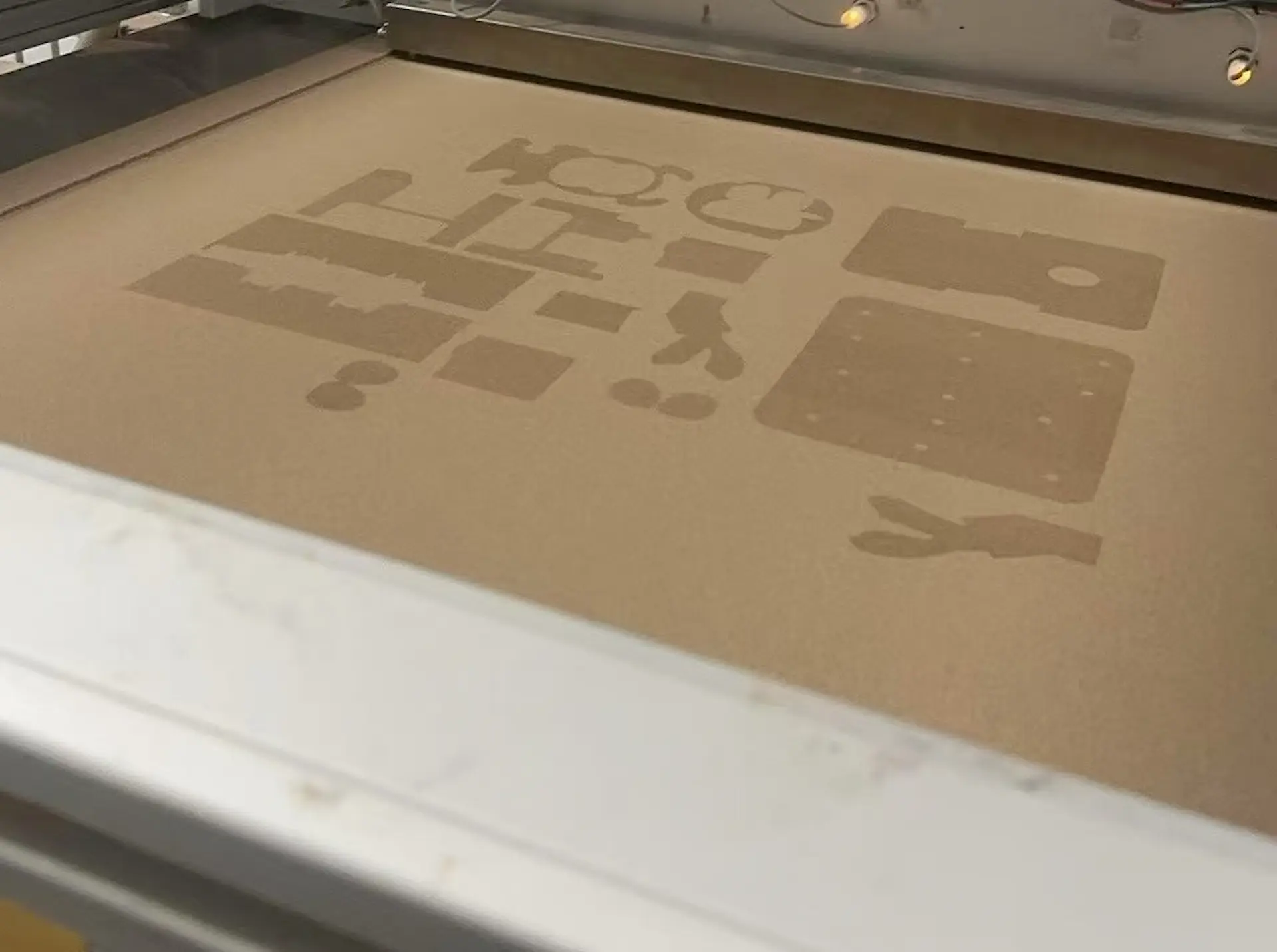
Sand binder jetting is an additive manufacturing process that builds complex sand structures layer by layer directly from digital CAD models without the need for traditional patterns or molds. This sand binder jetting technology is widely used in digital sand casting solutions and sand mold additive manufacturing. The process begins with the creation of a detailed 3D model, which is then digitally sliced into thin cross-sectional layers. During printing, a recoating blade or roller spreads a thin layer of sand powder, typically between 100-500 microns thick, across the build platform in a sand powder bed printing environment. A print head then moves across the powder bed binder jetting system, depositing liquid binding agents through binder deposition technology in the shape of the first cross-section according to the digital design.
The binder solidifies the sand particles in the designated areas, while the surrounding loose powder remains to support subsequent layers. The build platform then lowers, and the process repeats—spreading new sand powder, depositing binder, and solidifying the next cross-section—until the complete binder jetting sand molds or part is formed. Once printing is complete, the finished structure is carefully extracted from the powder bed, and any excess unbonded sand is removed through blowing or vacuuming. The resulting 3D printed foundry tooling and molds can then undergo post-processing treatments such as curing or coating before being used for sand casting mold 3D printing applications or serving as finished products themselves.
Sand binder Jetting can make colorful parts. What sets colorful foundry sand 3D printing apart is the incorporation of specialized coloring agents directly into the binding process. Advanced printing systems can deposit multiple colored binders during the build process, enabling the creation of sand molds and parts with intricate color patterns, instructional markings, or branding elements integrated directly into the material. This color integration occurs at the structural level, meaning the coloration persists throughout the depth of the material rather than merely being a surface treatment used in advanced casting mold fabrication.
Industry Adoption and Growth of Sand Binder Jetting Technology
The sand 3D printing sector is experiencing significant expansion, reflecting its growing importance across industrial manufacturing segments. This growth highlights the rapid adoption of industrial additive manufacturing services and sand 3D printing for metal casting technologies. According to QYResearch, the global sand 3D printing market is projected to reach ¥34.8 billion by 2031, with a compound annual growth rate (CAGR) of 7.5% from 2025-2031. This growth trajectory underscores the technology’s increasing adoption and commercial viability for production applications beyond mere prototyping and supports the rise of rapid sand mold production.
The broader 3D printing products market, within which sand printing operates, demonstrates even more explosive growth potential. 6Wresearch estimates the overall 3D printed products market was valued at $24.3 billion in 2024 and is projected to reach $68.5 billion by 2031, expanding at a remarkable CAGR of 14.8% during the forecast period. This growth is fueled by increasing adoption across aerospace, automotive, and healthcare sectors, alongside continuous advancements in printing technologies and materials supporting industrial additive manufacturing solutions and large scale additive manufacturing.
Global Market Trends for Sand 3D Printing in Foundry Manufacturing
Table: Global Sand 3D Printing Market Forecast(Source: QYResearch )
| Year | Market Size (Billion RMB) | Growth Rate |
|---|---|---|
| 2025 | Baseline | — |
| 2031 | 34.8 | 7.5% CAGR |
China’s market for sand 3D printing has evolved rapidly, with the country accounting for a significant portion of the global market share. QYResearch’s analysis of the Chinese market indicates substantial growth opportunities, particularly as domestic manufacturers continue to adopt advanced manufacturing technologies to maintain competitive advantages in global markets .
Advanced Materials Used in Sand Binder Jetting 3D Printing
While traditional silica sand remains a fundamental material in sand 3D printing, recent material innovations have significantly expanded the applications and performance characteristics of printed sand components. Advanced materials such as silica sand 3D printing powders and chromite sand printing solutions have enhanced the durability and thermal resistance of molds. Chromite sand has emerged as a particularly valuable material, offering superior properties including high hardness, exceptional temperature resistance, and excellent gas permeability. These characteristics make it ideal for casting processes involving high-temperature metals and alloys, where thermal stability is critical to preventing casting defects in high temperature casting molds.
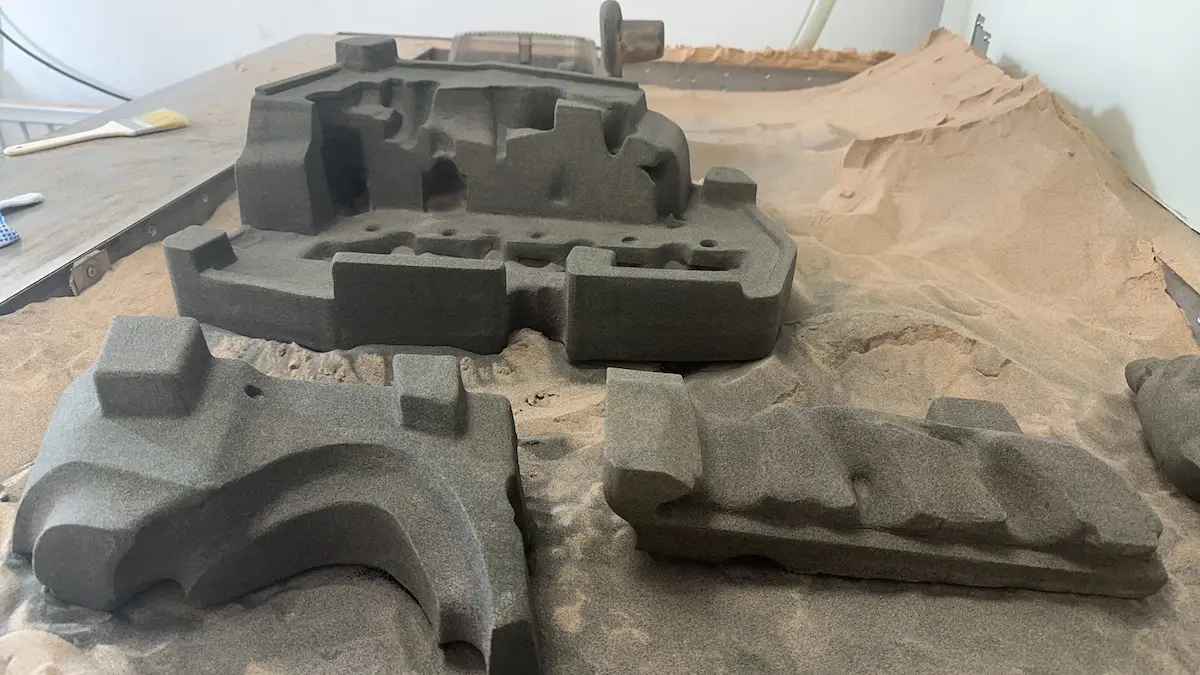
The incorporation of chromite sand into the Online 3D printing process enables the production of sand molds and cores capable of withstanding the extreme temperatures encountered in steel and alloy casting applications. Research documented in the China Mining Magazine indicates that chromite sand’s low thermal expansion coefficient significantly reduces vein-like casting defects common in traditional sand casting, particularly for complex geometries. This translates to higher quality castings with improved surface finish and dimensional accuracy in precision casting mold fabrication.
At Lava3DP, we’ve incorporated advanced coloring methodologies that allow for full-color sand printing without compromising the structural integrity or casting performance of the molds. As an experienced additive manufacturing provider, we apply engineering design optimization techniques and advanced materials engineering to ensure reliable performance. By integrating colorants directly into the binding process or applying specialized surface treatments, we can produce visually distinctive sand molds that enhance identification, convey instructional information, or incorporate branding elements directly into the manufacturing tooling.
A significant advancement in sand 3D printing economics has been the development of effective sand recycling and regeneration processes. These innovations support sustainable digital manufacturing solutions and reduce operational costs in industrial sand printing systems.
Traditional 3D printing processes often generated substantial waste in the form of unused powder, but modern systems have addressed this limitation through sophisticated material recovery systems that support large format sand printing environments.
Voxeljet has pioneered dry sand recycling processes that can reuse up to 95% of unbound sand from previous print jobs. Even more impressively, thermal regeneration processes can now process used printed sand, removing residual binders and contaminants to produce recycled sand with properties nearly identical to virgin material. According to industry assessments, closed-loop systems combining sand reuse and thermal regeneration can reduce tonnage sand material costs to under ¥500, making it cost-competitive with traditional sand casting materials used in foundry additive manufacturing.
Table: Sand Recycling Methods and Efficiency
| Recycling Method | Reclamation Rate | Cost Per Ton | Key Benefit |
|---|---|---|---|
| Dry Recycling | Up to 95% | — | Reduces new sand consumption |
| Thermal Regeneration | ~95% | Under ¥500 | Returns sand to near-original state |
| Combined Approach | >95% | Highly competitive | Minimizes waste, maximizes economy |
This recycling capability not only improves the economic equation for sand 3D printing but also aligns with growing sustainability priorities across manufacturing sectors by dramatically reducing solid waste generation.
Industrial Applications of Sand Binder Jetting 3D Printing
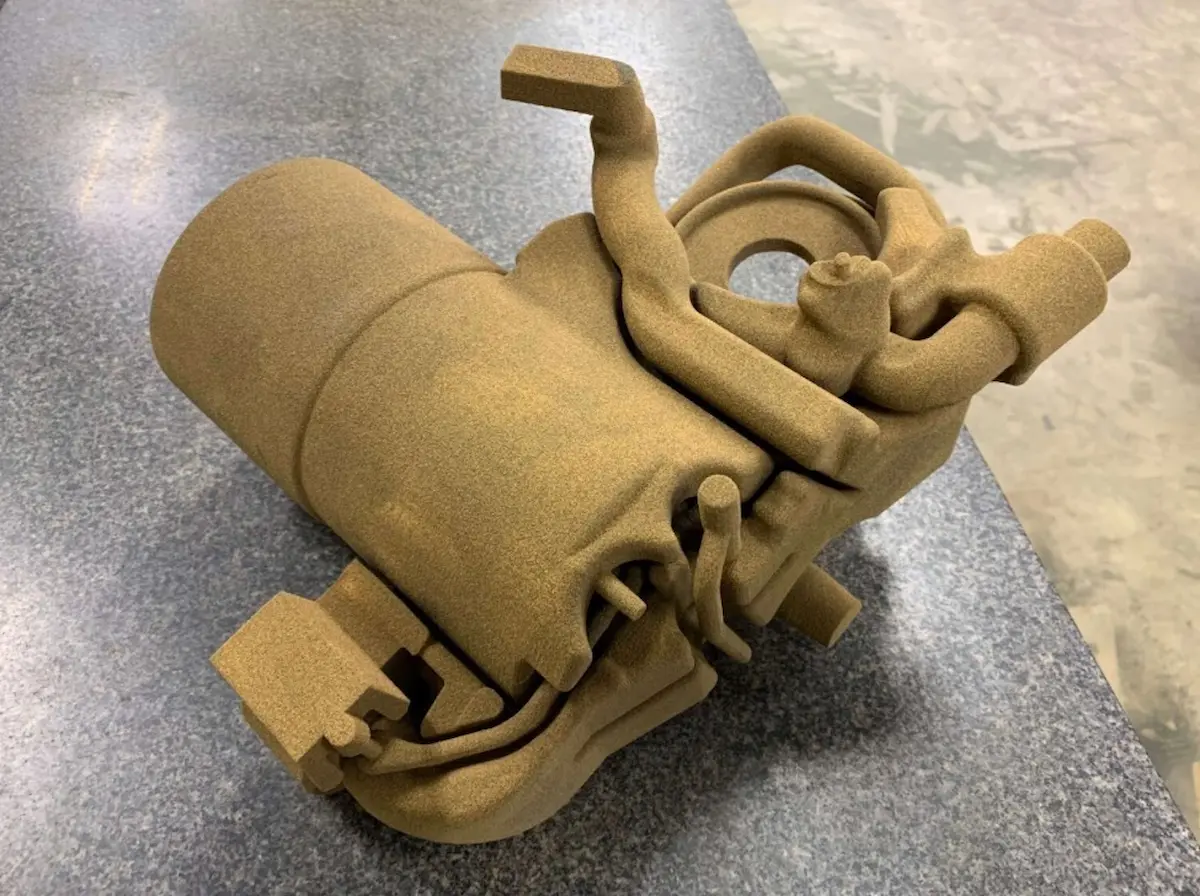
Sand 3D printing’s unique capabilities have enabled its adoption across diverse industrial sectors, each benefiting from the technology’s particular advantages in design freedom, rapid iteration, and complex geometry production.
4.1 Automotive Industry
The automotive sector represents one of the largest application segments for sand 3D printing, utilizing the technology primarily for producing complex engine components, lightweight structural elements, and specialized tooling. Automotive manufacturers benefit from the ability to rapidly iterate prototype designs for components such as cylinder heads, intake manifolds, and transmission cases without the time and expense of traditional pattern making. The technology enables optimization of internal cooling channels and complex internal geometries that improve performance while reducing weight—a critical consideration in vehicle design.
4.2 Aerospace and Defense
The aerospace industry demands exceptionally high-performance components with complex internal structures, making it a natural fit for sand 3D printing applications. The technology produces lightweight yet strong castings for turbine blades, engine components, and structural airframe elements.
4.3 Industrial Machinery
Manufacturers of industrial machinery increasingly rely on sand 3D printing for producing large, complex components in limited quantities, particularly for heavy equipment, pumps, valves, and specialized manufacturing systems. The technology enables consolidation of what would traditionally be multiple assembled components into single integrated structures, reducing potential failure points and simplifying assembly processes. The ability to produce large-scale sand molds—Voxeljet’s VX2000 system can produce molds measuring 2×1×1 meters—makes it possible to manufacture substantial industrial components without the size limitations of conventional casting patterns .
Advantages of Sand Binder Jetting Over Traditional Casting Methods
Sand 3D printing offers several compelling advantages that explain its rapid adoption across industrial sectors:
- Design Freedom: Sand 3D printing eliminates the geometric constraints of traditional pattern making, enabling the production of highly complex casting geometries including internal channels and optimized shapes through patternless casting process manufacturing methods.
- Accelerated Timelines: Traditional sand casting requires design and fabrication of patterns and core boxes—a process that can take weeks or months. Sand 3D printing bypasses these steps entirely, converting CAD to sand mold manufacturing directly into finished molds through sand mold rapid prototyping.
- Cost-Effective Customization: While traditional pattern making becomes economically viable only at production volumes, sand 3D printing has minimal economies of scale, making it ideally suited for rapid casting mold development, prototypes, and low volume manufacturing.
- Integrated Color and Markings: Unlike traditional manufacturing methods that require secondary processes for adding color or identification markings, colorful sand 3D printing incorporates coloration directly during the build process. This integration allows for permanent, wear-resistant color coding, instructional markings, or branding that persists through the casting process in functional casting cores and molds.
Future Trends in Sand Binder Jetting and Digital Foundry Manufacturing
The future trajectory of sand 3D printing points toward continued expansion of capabilities and applications. Several key developments are poised to further enhance the technology’s value proposition:
Research into advanced sand composites and specialized binding systems continues to yield materials with enhanced properties, including higher temperature resistance, improved surface finish, and expanded color capabilities. These advancements are strengthening engineering grade sand molds used in industrial grade additive manufacturing applications.
The emergence of cloud-based printing platforms and distributed manufacturing networks is making sand 3D printing more accessible while enabling new business models in global custom parts manufacturing service networks. These platforms allow for seamless transfer of digital designs to geographically distributed printing facilities, supporting the trend toward localized production and on-demand manufacturing.
Ongoing cost reduction through improved recycling technologies and the development of more affordable printing systems continues to expand the economic viability of sand 3D printing for an increasingly broad range of applications. As the technology continues to mature, its adoption is expected to grow from prototyping toward full-scale production across multiple industrial sectors using professional foundry solutions.
Why Sand Binder Jetting Is Transforming Modern Casting
Sand Binder Jetting 3D printing represents a transformative approach to custom parts fabrication, merging the design freedom of additive manufacturing with the structural capabilities of traditional sand casting. The technology’s ability to produce complex geometries with integrated color, combined with its economic advantages for low-volume production, positions it as an increasingly vital manufacturing solution across automotive, aerospace, industrial equipment, and architectural sectors.
At Lava3DP, we’ve built our service platform around this revolutionary technology, combining state-of-the-art printing equipment with material expertise and engineering knowledge to deliver superior solutions for our global clientele through high precision casting tooling and advanced manufacturing capabilities. Our commitment to advancing sand printing capabilities continues to push the boundaries of what’s possible in custom parts fabrication, enabling our customers to innovate without constraints while optimizing their manufacturing economics.
As the technology continues to evolve through material innovations, process improvements, and expanded color capabilities, we anticipate even broader adoption across manufacturing sectors. The future of custom parts fabrication is colorful, flexible, and increasingly digital—and sand binder jetting 3D printing stands at the forefront of this manufacturing revolution supporting custom sand mold 3D printing service instant quote demand and global sand binder jetting 3D printing service expansion.
Get an Instant Quote