

Forging
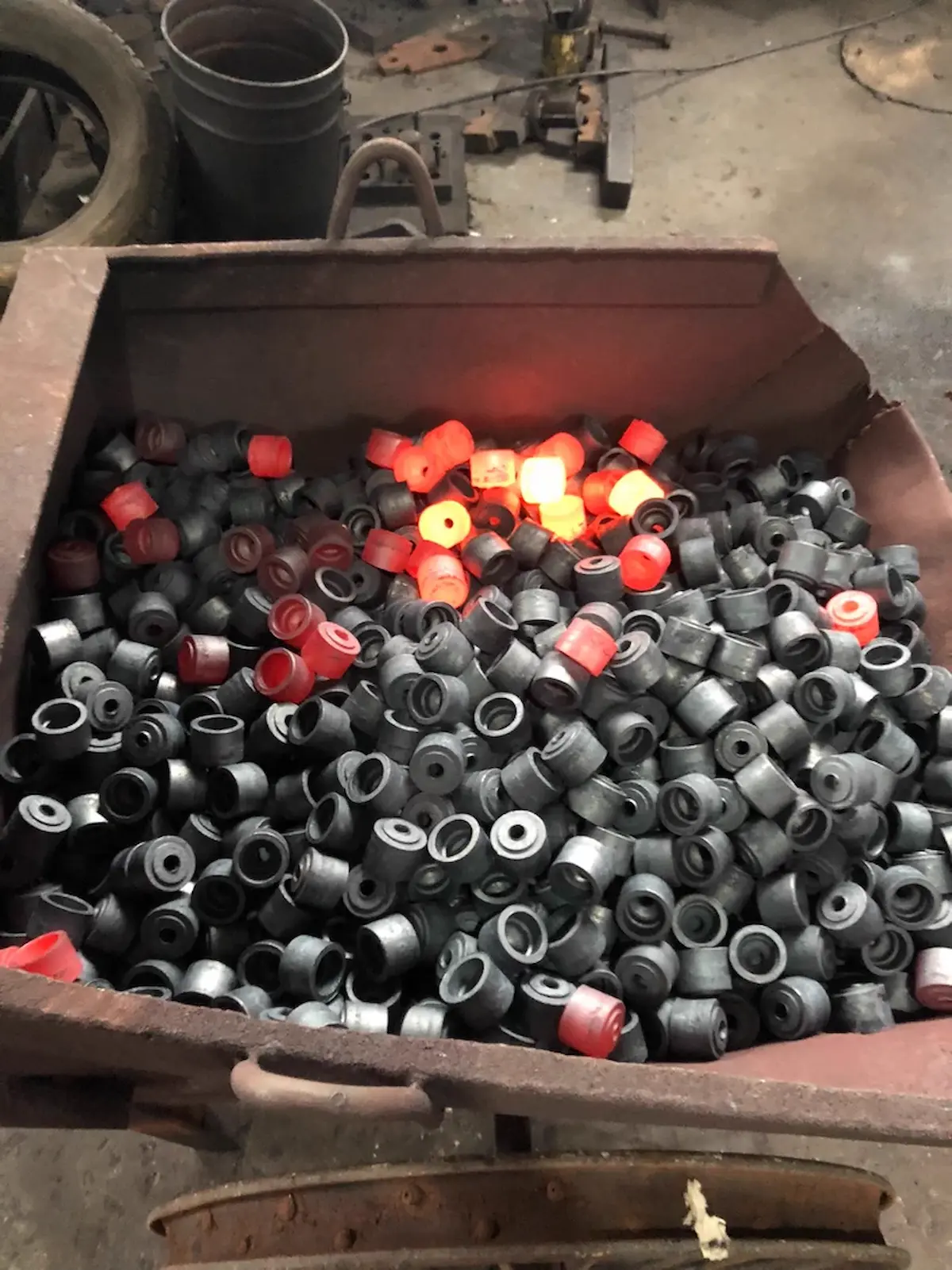
What is Metal Forging?
Forging is a manufacturing process where metal is shaped using localized compressive forces, typically from hammers, presses, or dies. This mechanical working of metal results in significant improvement of its mechanical properties, creating parts with superior strength, toughness, and structural integrity compared to those made by casting or other methods, making it a preferred choice in metal forging services and precision forging. This article explores how forging services, including custom forging services and industrial forging services, enable custom manufacturing services to create high-performance, durable parts for the most demanding environments.
The fundamental principle behind forging’s effectiveness lies in how it alters the metal’s internal structure. Unlike casting where metal solidifies from a liquid state, forging works solid metal through plastic deformation, which refines the grain structure, closes internal voids, and creates continuous grain flow lines that follow the contour of the part. This grain orientation provides directional strength, making forged components particularly resistant to impact and fatigue, especially in high strength forged parts and load bearing metal parts.
Forging can be performed at various temperatures, which determines its classification:
Hot Forging: Performed above the metal’s recrystallization temperature (typically above 800°C for steel), commonly used in the hot forging process
Cold Forging: Performed at or near room temperature, also known as the cold forging process
Warm Forging: Performed at intermediate temperatures (300-800°C for steel)
Each approach offers distinct advantages for different applications, material types, and performance requirements in custom metal forging and forged metal parts manufacturing.
Get an Instant QuoteBenefits of Forging: Strength, Durability & Performance
Forged components offer numerous advantages that make them the preferred choice for critical applications where failure is not an option, especially when working with an experienced forging supplier or reliable forging partner.
Superior Mechanical Properties
The most significant advantage of forging is the enhancement of mechanical properties. The forging process breaks up and refines the coarse as-cast structure of ingots, eliminates defects such as porosity and inclusions through compression, and creates a fine, uniform grain structure . This results in:
- Higher Strength: Forged parts typically demonstrate better tensile strength, yield strength, and fatigue resistance compared to cast or machined equivalents, particularly in forged steel components.
- Improved Toughness: The refined grain structure provides better impact resistance and fracture toughness.
- Enhanced Reliability: With reduced internal defects, forged components offer more predictable performance and longer service life, especially in engineering grade forged components.
As demonstrated in comparative studies, the mechanical properties of forged components generally exceed those of cast parts, with one analysis showing forged titanium alloy exhibiting approximately 3.4% higher yield strength than cast equivalents .
Material and Production Efficiency
Modern forging techniques, particularly precision forging methods, offer remarkable material efficiency. Advanced processes like closed die forging services and precision forging can produce parts that require minimal secondary machining, significantly reducing material waste and supporting near net shape forging.
The implementation of innovative forging configurations has demonstrated dramatic improvements in production efficiency. These efficiency gains translate to both economic and environmental benefits for manufacturers, especially in industrial component production.
Economic Benefits Across the Product Lifecycle
While the initial production cost of forged components may be higher than alternative manufacturing methods, the total cost of ownership is often lower due to:
- Reduced maintenance and downtime
- Longer service life
- Fewer catastrophic failures
- Lower replacement frequency
This combination of performance, efficiency, and reliability explains why forging remains indispensable for heavy duty industrial parts and durable metal components across industries.
Types of Forging Processes: Open-Die, Closed-Die & More
Modern manufacturing utilizes several distinct forging processes, each suited to particular part geometries, production volumes, and performance requirements.
Free Forging
Free forging, also known as open-die forging, involves shaping metal between simple dies that do not confine the metal flow completely. It’s characterized by:
- Flexibility: Suitable for a wide range of part sizes, from small components to massive industrial parts
- Lower Tooling Costs: Simple dies reduce initial investment
- Manual Skill Dependence: Highly dependent on operator expertise
- Applications: Typically used for large, simple shapes or low-volume production
Die Forging
Die forging, or closed-die forging, confines metal flow in cavities that impart the desired shape to the workpiece. This category includes:
- Conventional Die Forging: Uses a series of die cavities to gradually form the final shape
- Precision Die Forging: Produces parts closer to final dimensions, minimizing secondary operations
Precision forging technologies continue to advance, with research focused on multi-impression systems that significantly increase productivity while maintaining strict quality parameters .
Specialized Forging Processes
Several specialized forging methods have been developed for specific applications:
- Roll Forging: Uses opposing rolls to reduce cross-section and elongate parts
- Ring Rolling: Forms seamless rings of various sizes by gradually reducing wall thickness while increasing diameter
- Impact Forging: High-speed process suitable for mass production of small to medium components
Table: Comparison of Major Forging Processes
| Process | Typical Applications | Dimensional Accuracy | Production Volume |
|---|---|---|---|
| Free Forging | Large shafts, simple shapes | Lower | Low to medium |
| Conventional Die Forging | Automotive components, tools | Medium | Medium to high |
| Precision Die Forging | Gears, aerospace components | High | High |
| Cold Forging | Fasteners, small complex parts | Very High | Very high |
Forging Materials Guide: Steel, Aluminum & Advanced Alloys
Forging can process a wide range of metallic materials, each offering different properties and suited to specific applications in custom metal part manufacturing.
Common Forging Materials
- Carbon and Alloy Steels: The most commonly forged materials, widely used in steel forging services for strength and cost-effectiveness
- Stainless Steels: Used for applications requiring corrosion resistance
- Aluminum and Magnesium Alloys: Preferred for weight-sensitive applications
- Titanium Alloys: Used in aerospace and medical applications for their exceptional strength-to-weight ratio, especially in applications of forging in aerospace
- Copper Alloys: Selected for electrical and thermal conductivity
Advanced and Specialty Alloys
Recent material developments continue to expand forging possibilities. Innovative alloys enhance strength and energy absorption capabilities, particularly in high performance forged alloys and alloy forging services, making them valuable in safety-critical applications.
Table: Typical Forging Temperatures for Common Materials
| Material Category | Hot Forging Temperature Range (°C) | Key Characteristics |
|---|---|---|
| Carbon Steel | 850-1250 | Good formability, balance of properties |
| Stainless Steel (Austenitic) | 925-1260 | Corrosion resistant, work hardens |
| Aluminum Alloys | 380-480 | Low density, good corrosion resistance |
| Titanium Alloys | 815-954 | High strength-to-weight ratio |
| Copper Alloys | 600-900 | Excellent conductivity |
Industrial Applications of Forged Components Across Sectors
Forged components play critical roles across virtually every industrial sector, particularly where reliability, strength, and safety are paramount.
Automotive and Transportation
The automotive industry represents one of the largest markets for forged components, including:
- Powertrain Components: Crankshafts, connecting rods, transmission gears
- Steering and Suspension Parts: Kingpins, axle beams, torsion bars
- Safety Components: Wheel hubs, bearing races
The trend toward electric vehicles continues to create new applications for forged components, such as sophisticated stator housings that require extreme precision and high-strength materials .
Aerospace and Defense
The aerospace industry demands the highest standards for component reliability, making forging the preferred manufacturing method for:
- Aircraft Structures: Landing gear components, wing spars, engine mounts
- Jet Engine Parts: Turbine disks, compressor blades, fan shafts
- Aircraft Hardware: High-strength bolts, fasteners
Energy and Industrial Equipment
The energy sector, including oil and gas, nuclear, and renewable energy, relies on forged components for:
- Power Generation Equipment: Turbine and generator shafts
- Oilfield Equipment: Drill bits, valves, wellhead components
- Nuclear Components: Reactor vessel internals, steam generator parts
Step-by-Step Forging Process: From Raw Material to Precision Part
Creating a forged component involves a carefully controlled sequence of operations designed to optimize material properties while achieving the required geometry in forged metal parts manufacturing.
Key Stages in the Forging Process
- Billet Preparation: Raw material is cut to precise weight and volume for the specific part
- Heating: Billets are heated to the appropriate forging temperature using furnaces carefully controlled to prevent excessive oxidation or metallurgical damage
- Forming: The heated billet is shaped using one or more forging operations, which may include:
- Pre-forming to distribute material
- Blocking to establish basic shape
- Finishing to achieve final geometry
- Secondary Operations: Additional processes may include:
- Trimming to remove excess material (flash)
- Heat treatment to optimize mechanical properties
- Calibration to ensure dimensional accuracy
- Surface treatment for improved appearance or corrosion resistance
- Inspection and Testing: Comprehensive quality assurance ensures the forged component meets all specifications, potentially including dimensional inspection, non-destructive testing, mechanical property testing, and metallurgical analysis
Advancements in Process Control
Modern forging operations increasingly utilize sophisticated monitoring and control systems to ensure consistent quality. Thermal imaging cameras verify optimal forging temperatures, while coordinate measuring machines (CMM) provide detailed dimensional analysis . Finite element method (FEM) simulations allow for detailed process analysis and optimization before physical trials, reducing development time and cost .
Forging vs Casting & Machining: Key Differences Explained
Understanding how forging compares to other manufacturing processes helps in selecting the optimal production method for specific applications.
Forging vs. Casting
While casting involves pouring molten metal into molds, forging works solid metal through plastic deformation. Key differences include:
- Mechanical Properties: Forgings generally demonstrate superior mechanical properties due to their refined grain structure and absence of casting defects
- Material Efficiency: Casting can produce more complex geometries in a single operation, potentially reducing material waste for intricate shapes
- Tooling Costs: Casting often requires less expensive tooling for low to medium production volumes
- Production Rate: Some casting processes can achieve higher production rates for complex parts
Studies comparing laser additive manufacturing (a specialized form of casting) with conventional forging confirm that forged materials generally demonstrate superior mechanical properties, with forged titanium alloy showing approximately 3.4% higher yield strength than cast equivalents .
Forging vs. Machining
While machining removes material to achieve the desired shape, forging displaces material while improving its properties:
- Material Utilization: Near-net-shape forging significantly reduces material waste compared to machining from solid stock
- Strength Characteristics: Machining can cut through natural grain flow, while forging aligns grain flow with part contours
- Production Economics: For high-volume production, forging often offers lower per-part cost despite higher initial tooling investment
Forging vs. Additive Manufacturing
Additive manufacturing (3D printing) offers unique capabilities for complex geometries and rapid prototyping, but forging provides:
- Superior Material Properties: Wrought structures from forging generally outperform the layered structures of additive manufacturing
- Production Volume: For high-volume requirements, forging typically offers faster production rates
- Surface Quality: Forged components generally require less post-processing to achieve functional surfaces
Innovations in Forging Technology & Modern Manufacturing Trends
Forging continues to evolve with advancements in materials, process control, and equipment technology driving improvements in capability, efficiency, and sustainability.
Digitalization and Industry 4.0
The integration of digital technologies is transforming forging operations through:
- Simulation and Modeling: Advanced FEM software allows for virtual process development and optimization
- Real-time Monitoring: IoT sensors and thermal imaging enable continuous process monitoring and control
- Data Analytics: Collection and analysis of process data to identify optimization opportunities and predict maintenance needs
Sustainability and Efficiency
Modern forging developments increasingly focus on environmental and economic sustainability:
- Energy Reduction: Cold and warm forging processes significantly reduce energy consumption compared to traditional hot forging
- Material Efficiency: Precision forging techniques minimize material waste and reduce machining requirements
- Process Optimization: Multi-impression systems and other innovations increase productivity while reducing energy consumption per part
Advanced Materials Development
Material science continues to expand forging capabilities through:
- High-performance Alloys: New alloy formulations with enhanced properties for extreme environments
- Hybrid Processes: Combinations of casting and forging that leverage the advantages of both processes
- Tailored Properties: Process control techniques that create customized property distributions within single components
Why Forging Remains Essential in Advanced Manufacturing
Despite the emergence of alternative manufacturing technologies, forging remains indispensable for producing high-strength, high-reliability components across critical industries. The unique ability of forging to enhance material properties while creating precise, durable shapes ensures its continued relevance in modern global forging manufacturer networks and international forging supplier markets.
For custom parts fabrication services, understanding forging capabilities is essential when working with a forging manufacturer for OEM or sourcing from a bulk forging services supplier. Whether producing components for aerospace, energy, or industrial equipment, forging offers a proven path to creating parts that withstand demanding environments.
As forging technology continues to advance through digitalization and innovation, it strengthens its role in sustainable metal forging, delivering stronger and more efficient components for modern manufacturing challenges.
Get an Instant Quote