

Wire EDM
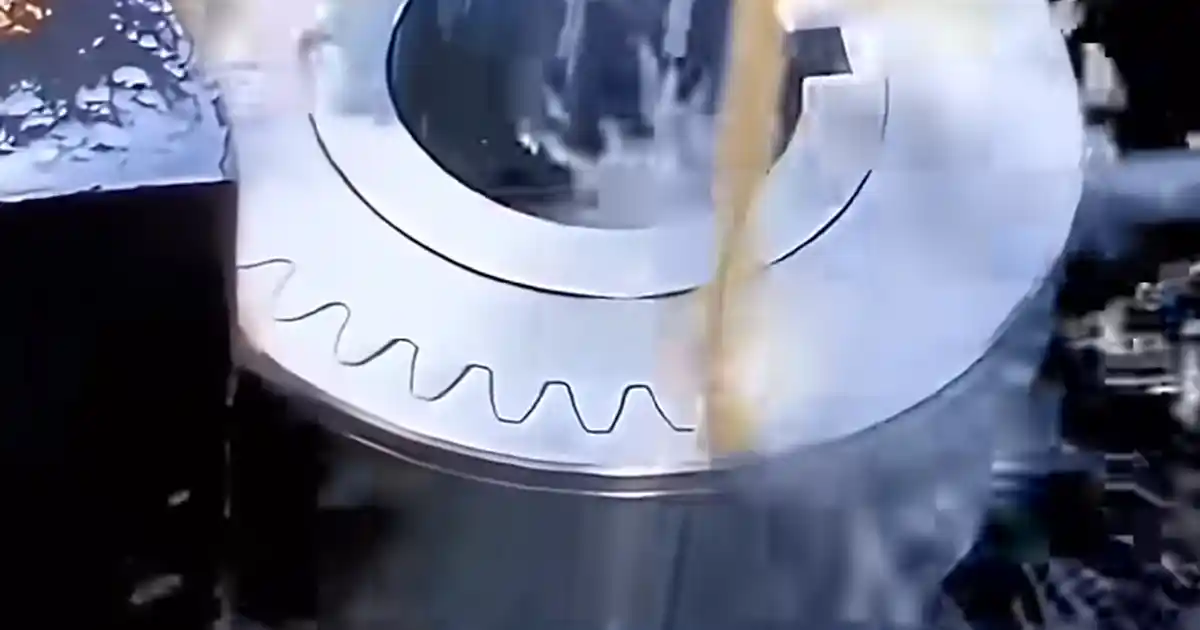
Wire EDM Services: Precision “Electric Cutting” in Modern Manufacturing
In the world of custom metal part fabrication and wire edm manufacturing, certain challenges consistently frustrate engineers and designers: How do you cut hardened tool steel without distorting it? How do you create sharp internal corners in complex geometries? How do you achieve micron-level precision on delicate components without introducing mechanical stress?
The answer lies in one of manufacturing’s most sophisticated yet elegant technologies: Wire Electrical Discharge Machining (Wire EDM), a leading non contact machining process used in high precision edm cutting.
Unlike traditional machining that relies on cutting tools physically removing material—often compared to a “strongman” forcing its way through metal—wire edm machining operates like a “precision artist.” It uses a thin, electrically charged wire to create thousands of controlled sparks per second, literally eroding metal at the microscopic level without ever touching the workpiece.
At LAVA3DP, we have integrated advanced cnc edm technology into our online wire edm services platform to offer global clients a solution for the parts that other methods simply cannot handle. Whether you need prototype wire edm machining, medical implants, aerospace turbine components, or complex mold inserts, understanding how wire edm works is the first step toward unlocking a new level of design freedom.
This comprehensive guide explores how wire edm machining services work, the advantages of wire edm machining, its compatibility with different materials, and why it might be the perfect solution for your next project. For immediate assistance with your design, feel free to contact our engineering team for a wire edm machining quote.
What is Wire EDM? Process, Accuracy & How Spark Erosion Works
Wire EDM, short for Wire Electrical Discharge Machining, is a non contact machining process and advanced edm machining service. The principle might sound like science fiction, but it is grounded in precise physics.
The Basic Principle
Imagine a thin metal wire—typically brass, zinc-coated, or molybdenum—used in electrical discharge machining wire processes, with a diameter ranging from 0.1mm to 0.3mm. This wire is stretched taut between two mechanical guides and continuously fed from a spool. The workpiece, made of any electrically conductive material, is submerged in a tank of deionized water, which acts as a dielectric fluid.
Here is what happens next:
- A pulse generator applies a high-voltage electrical charge between the wire (electrode) and the workpiece.
- The voltage creates an intense electrical field in the microscopic gap (typically 0.025mm to 0.05mm) between the wire and the part.
- This field ionizes the dielectric fluid, creating a plasma channel.
- A controlled electrical spark jumps across the gap, generating localized temperatures of approximately 8,000°C to 12,000°C .
- This extreme heat melts and vaporizes a minute particle of the workpiece material.
- The spark de-energizes, and the deionized water flushes the microscopic eroded particle away.
- This cycle repeats thousands of times per second, with the CNC-controlled path moving the wire along the desired contour using cnc wire edm services.
Because the wire never physically contacts the workpiece, there are zero cutting forces. This fundamental characteristic allows precision wire edm to achieve results impossible with traditional milling or turning.
A Brief History
The roots of EDM trace back to the 1940s when Soviet scientists discovered that electrical discharges eroded metal contacts. By the 1960s, the concept of using a continuously moving wire as an electrode emerged, revolutionizing the tool and die industry. Today, CNC technology and advanced power supplies have transformed edm wire cutting service into a high-speed, automated, and exceptionally precise manufacturing process.
Key Advantages of Wire EDM for High-Precision Metal Parts
Why choose wire edm services over CNC machining, laser cutting, or waterjet cutting? The advantages are compelling, particularly for complex geometry machining and tight tolerance machining applications.
1. Extreme Precision and Accuracy
Wire EDM is the gold standard for precision. Modern machines can consistently hold tolerances of ±0.002mm. This level of accuracy is essential for applications requiring wire edm tolerance capabilities such as fuel injection nozzles, medical stents, and precision stamping dies.
2. No Mechanical Stress or Deformation
Since the process is non-contact, there is no tool pressure on the workpiece . This is critical for:
- Thin-walled parts that would buckle under cutting forces.
- Fragile or delicate structures that cannot be clamped tightly.
- Materials with internal stresses that might distort during conventional cutting. Wire EDM cuts through them without releasing stress in a way that causes warping.
3. Machining Ultra-Hard Materials
Hardness is not an obstacle for Wire EDM; conductivity is. If a material conducts electricity, Wire EDM can machine it, regardless of its hardness or toughness . This makes it the ideal process for:
- Carbide (HRA 90+) .
- Hardened tool steels (H13, D2, SKD11) .
- Titanium alloys (Ti-6Al-4V) .
- Inconel and other superalloys .
4. Complex Geometries and Sharp Corners
Traditional milling cutters have a radius, making it impossible to create a perfectly square internal corner. Wire EDM, however, uses a wire so thin that it can create sharp internal corners with a radius as small as the wire’s diameter . It excels at cutting intricate contours, gears, splines, and complex profiles.
5. Superior Surface Finishes
While the initial “rough cut” leaves a matte finish, subsequent “skim cuts” or “trim passes” can achieve surface finishes down to Ra 0.1 μm . This high-quality finish often eliminates the need for secondary grinding or polishing operations.
6. Burr-Free Cutting
Because material is vaporized and flushed away, Wire EDM produces parts that are completely burr-free . This saves significant time and cost compared to processes that require deburring as a secondary step.
7. High Repeatability
Once a program is proven, Wire EDM can reproduce parts with exceptional consistency, making it suitable for both prototyping and high-volume production runs .
Wire EDM Machines & Technology: Core Components Explained
To achieve such remarkable results, Wire EDM machines rely on several precisely engineered systems. Understanding these components helps clarify why the process is so capable.
- The Wire Electrode: This is the “cutting tool.” Common wires include brass wire (for general-purpose cutting), zinc-coated wire (for improved speed and finish), and molybdenum wire. The wire is used only once, meaning a fresh electrode is constantly presented to the work, eliminating tool wear concerns .
- Dielectric System (Deionized Water): The water serves three critical purposes: it acts as an electrical insulator until the spark is needed, it cools the process, and it flushes away eroded particles .
- CNC Control System: This is the “brain” of the operation. It controls the movement path, spark frequency, power settings, and wire tension with incredible precision .
- Wire Guides and Tensioning Device: These components ensure the wire remains perfectly straight and in the exact programmed position. Any deviation here would result in inaccurate parts .
- Power Supply: The pulse generator determines the energy of each spark. Modern generators allow for precise control over spark energy, enabling the fine finishes and high speeds seen in today’s machines .
Materials Compatible with Wire EDM: Metals, Alloys & Limits
As mentioned, the primary requirement for Wire EDM is electrical conductivity. This opens the door to a vast range of materials, from common metals to exotic alloys. The table below outlines common materials and their applications.
| Material Category | Common Examples | Key Properties & Applications |
|---|---|---|
| Tool Steels | D2, H13, SKD11, A2 | High wear resistance; ideal for stamping dies, injection molds, and punches. Machined post-heat treatment . |
| Stainless Steels | 304, 316, 420, 17-4 PH | Corrosion resistance; used for medical instruments, food processing equipment, and precision mechanical parts . |
| Titanium Alloys | Ti-6Al-4V (Grade 5) | High strength-to-weight ratio, biocompatible; essential for aerospace components and medical implants . |
| Carbide | WC-Co | Extremely hard (up to HRA90); used for punching tools, wear parts, and precision dies. Wire EDM is the primary method for shaping it . |
| Superalloys | Inconel 718, Hastelloy | Maintain strength at high temperatures; critical for turbine blades and engine components in aerospace and energy sectors . |
| Aluminum Alloys | 6061, 7075 | Lightweight, good conductivity; used for prototypes, electronic enclosures, and aerospace structures . |
| Copper & Brass | C110, C3604 | Excellent conductivity; used for electrical connectors, EDM electrodes, and heat sinks . |
| Shape Memory Alloys | NiTi (Nitinol) | Unique superelastic properties; used in medical devices like stents and guidewires. Research shows Wire EDM effectively machines these alloys without altering their phase transformation properties . |
Wire EDM Applications Across Aerospace, Medical & Tooling Industries
The unique capabilities of wire edm machining make it indispensable across industries.
Aerospace
The aerospace industry demands components that can withstand extreme conditions. Wire EDM is used to machine turbine blades, engine disc fir-tree slots, fuel system components, and landing gear parts from tough materials like Titanium and Inconel. The process ensures the ±0.005mm accuracy required for these safety-critical parts without inducing stress .
Medical
In medical manufacturing, precision is a matter of life and death. Wire EDM produces orthopedic implants (knee and hip replacements), dental implants, surgical tools, and stents. The burr-free finish and ability to machine biocompatible titanium and stainless steel make it an ideal choice .
Mold and Die Making
This industry was the original driver of Wire EDM technology. It is used to create plastic injection molds, die casting dies, stamping dies, and extrusion tools. The ability to cut hardened steel and create sharp corners with a fine surface finish dramatically reduces lead times for tooling .
Automotive
From prototyping to production, Wire EDM supports automotive manufacturing. It is used for cutting precision gears, fuel injection components, prototype parts, and the punches and dies used in stamping body panels .
Electronics and Semiconductors
The miniaturization trend in electronics relies on micro-machining. Wire EDM creates precision connectors, lead frames, heat sinks, and the micro-punches and dies used to produce billions of tiny electronic components .
Wire EDM vs CNC Machining: Accuracy, Cost & Use Case Comparison
While Wire EDM offers exceptional benefits, it is essential to understand its economic positioning relative to other processes. A study comparing fabrication methods for intricate stainless steel parts revealed some interesting insights .
The following table illustrates a generalized comparison of relative costs and capabilities. (Note: Actual costs vary based on geometry, quantity, and material.)
| Process | Typical Tolerance | Relative Cost per Part (Low Volume / 100pcs) | Relative Cost per Part (High Volume / 50,000pcs) | Best Application |
|---|---|---|---|---|
| Wire EDM | ±0.002 mm | Low | High | High-precision, complex, hard materials, low volume |
| CNC Machining | ±0.025 mm | Medium | Low | Versatile, 3D shapes, wide material range, medium-high volume |
| Laser Cutting | ±0.1 mm | Low-Medium | Medium | 2D profiles in sheet metal, fast, medium volumes |
| Waterjet Cutting | ±0.1 mm | Medium | Medium | Thick materials, no heat-affected zone, any material type |
| Photo Etching | ±0.025 mm | High | Low | Very thin, complex 2D parts, high volume, no burrs |
Key Insight: For simple parts in low volumes (e.g., 100 pieces), Wire EDM can be the most economical choice—sometimes 30% of the cost of other methods—because it requires no hard tooling . For high volumes of complex parts, processes like photo etching or stamping become more cost-effective due to their speed, despite higher initial setup costs .
Latest Innovations in Wire EDM Technology & Automation
Wire EDM is not a static technology. Continuous innovation is making it faster, more efficient, and more versatile.
- Reduced Wire Consumption: Modern generators with advanced spark control, such as High-Speed Spark Detection Systems, optimize the spark shape. This allows for slower wire speeds without sacrificing performance, reducing wire consumption by over 60% in some cases and lowering operating costs .
- Reliable Automation and “Lights-Out” Machining: Improvements in automatic wire threading (AWT) are critical. New systems anneal the wire tip to create a perfectly straight “needle point,” enabling reliable threading even in broken-wire situations. This allows machines to run unattended for hours or even overnight, boosting productivity .
- Hybrid Machining: Researchers are exploring hybrid platforms that combine Wire EDM roughing with Wire Electrochemical Machining (Wire ECM) finishing. This strategy leverages the high speed and accuracy of EDM for bulk removal and the damage-free, mirror-like finish of ECM in a single setup, potentially offering the best of both worlds .
- Micro-Machining Capabilities: With finer wires and precise energy control, Wire EDM is pushing into true micromachining territory, creating features smaller than 0.1mm with tolerances in the 1-micron range for medical and electronic devices .
- Machine Learning Integration: Advanced data analysis is now being used to optimize machining parameters. Machine learning algorithms can predict surface roughness and optimal cutting conditions for difficult materials like titanium alloys, ensuring first-time-right quality .
Why Choose LAVA3DP for Precision Wire EDM Machining Services
At LAVA, we bridge the gap between complex engineering requirements and accessible online manufacturing. We offer a seamless platform for uploading your designs and receiving instant feedback on their manufacturability via Wire EDM.
- Global Reach: We serve clients worldwide, shipping precision parts from our ISO-compliant facilities.
- Engineering Expertise: Not sure if your part is optimized for Wire EDM? Our team of engineers provides Design for Manufacturing (DFM) feedback to ensure your project’s success .
- Comprehensive Capabilities: From prototypes to production runs, we handle a vast array of materials, including stainless steel, titanium, carbide, and superalloys.
- Quality Assurance: Every part undergoes rigorous inspection to ensure it meets the specified ±0.01mm tolerances or better .
Ready to bring your most challenging designs to life? Upload your files today for an instant wire edm quote or request a wire edm machining online quote. For a detailed discussion, please contact our engineering support team.
Get High-Precision Wire EDM Parts with Fast Turnaround
Wire EDM stands as a pinnacle of precision manufacturing. Its ability to machine the hardest materials with microscopic accuracy, zero cutting forces, and burr-free finishes makes it an indispensable tool for industries pushing the boundaries of technology. Whether you are designing the next generation of aircraft engines, life-saving medical devices, or high-precision tooling, understanding the power of Wire EDM opens up a world of possibilities.
By partnering with a trusted and experienced wire edm service provider like LAVA3DP, you gain access to precision wire edm usa level capabilities without heavy investment.
Get an Instant Quote