

Gold / Silver Plating
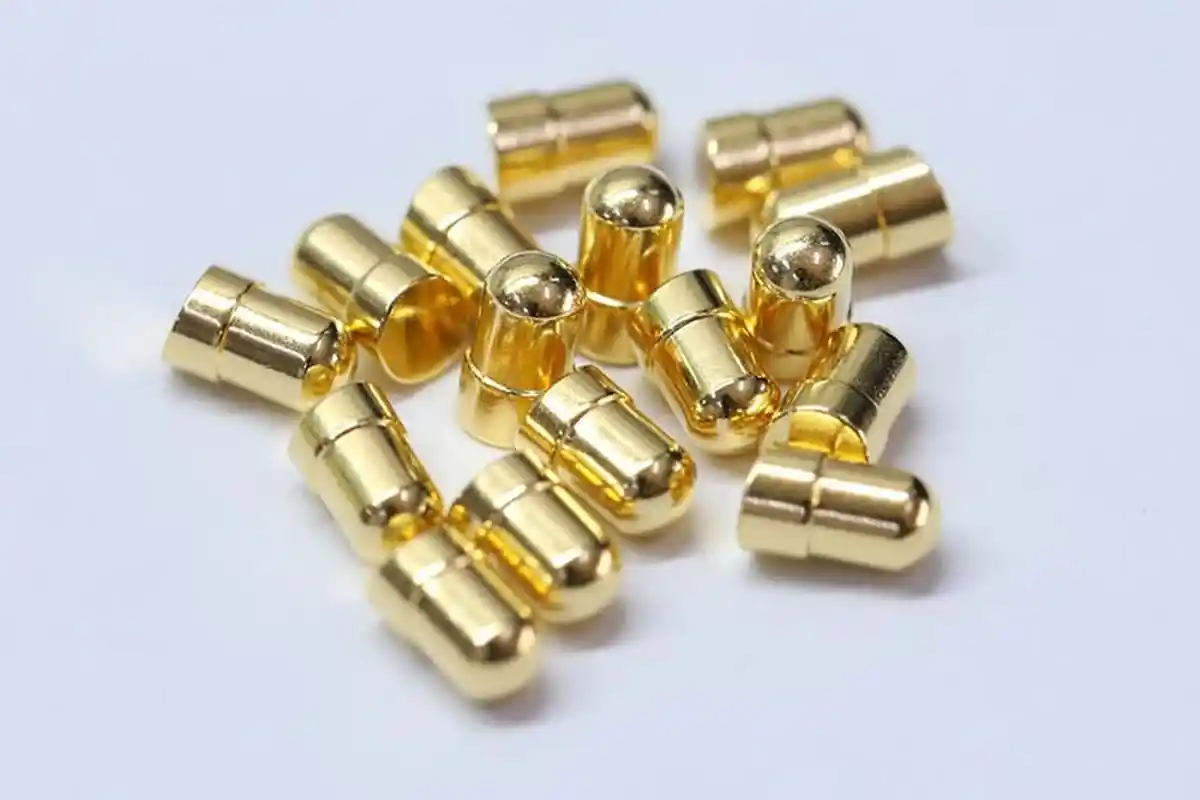
What is Gold and Silver Plating?
Gold and Silver Plating for custom parts: Boost conductivity, corrosion resistance & biocompatibility. LAVA3DP offers precision plating services, gold plating services, and silver plating services for 3D printed & CNC parts. Get a free quote today from a trusted electroplating services provider.
Among the most sought-after surface finishing solutions are Gold Plating and Silver Plating. These aren’t merely aesthetic choices; they are sophisticated electroplating process solutions based on electrochemical deposition process principles that imbue components with superior electrical conductivity, corrosion resistance, and thermal management capabilities using conductive metal coating technologies.
This article provides a deep dive into the science, benefits, and applications of gold and silver plating, specifically tailored for engineers, product designers, and procurement specialists looking to leverage metal finishing for custom parts and engineering-grade plating solutions for high-performance industries.
Get an Instant QuoteGold vs. Silver Plating: Key Differences & Applications
To select the correct plating method, one must understand the atomic properties of these noble metals. Both belong to the transition metals group, yet they serve distinct engineering purposes.
| Property | Gold Plating (Au) | Silver Plating (Ag) |
|---|---|---|
| Electrical Resistivity | 2.44 µΩ·cm | 1.59 µΩ·cm |
| Corrosion Resistance | Excellent (Inert) | Moderate (Tarnishes in sulfur environments) |
| Hardness (Deposited) | 20–250 HK (depending on additives) | 60–120 HK |
| Thermal Conductivity | 318 W/(m·K) | 429 W/(m·K) |
| Cost | Very High | Moderate |
| Primary Use Case | RF shielding, aerospace connectors, medical implants | High-power bus bars, RF components, decorative |
Source: ASTM B488 (Standard Specification for Electrodeposited Coatings of Gold) & ASTM B700 (Standard Specification for Electrodeposited Coatings of Silver) .
Benefits of Gold Plating for High-Performance Components
Gold is universally recognized for its noble metal status—it does not oxidize or react with oxygen under standard atmospheric conditions. For custom parts fabricated by LAVA3DP, gold electroplating offers three distinct engineering advantages as part of precision engineered coatings:
Superior Corrosion Resistance
In harsh environments, such as marine applications or chemical processing, base metals like copper or aluminum are prone to galvanic corrosion. A gold layer acts as a barrier layer, functioning as an anti-corrosion metal coating, preventing the underlying substrate from reacting with environmental agents. Studies indicate that gold plating extends the lifespan of copper-based electrical contacts by up to 10x compared to unplated variants in high-humidity environments.
Low Contact Resistance
In the electronics industry, gold remains the “gold standard” for connector pins, switches, and relay contacts. Because gold does not form an oxide film, it maintains consistent, low contact resistance over billions of cycles. This makes gold plating for connectors ideal for plating for high-reliability components in aerospace and defense applications where signal integrity cannot be compromised.
Biocompatibility
Gold is non-toxic and highly biocompatible. In the medical sector, gold-plated components are used in implantable devices and surgical tools. The FDA recognizes gold as a Class II material for permanent implants when processed correctly, making it ideal for plating for medical devices with industry-compliant metal finishing standards.
Advantages of Silver Plating for Conductivity & Cost Efficiency
While gold often steals the spotlight, silver is the unsung hero of high-power applications. Its primary advantage is thermal and electrical efficiency delivered through silver electroplating.
Highest Electrical Conductivity
Silver has the highest electrical conductivity of any element. For components that require the transmission of high currents without overheating—such as bus bars in electric vehicle (EV) batteries—silver plating for electrical conductivity offers a 5-10% performance increase over copper alone.
Lubricity and Anti-Galling
Silver plating exhibits excellent lubricity. When components are under high torque or vibration (such as threaded fasteners in automotive engines), silver prevents galling (adhesive wear) without requiring traditional lubricants that degrade over time, making it suitable for plating for wear resistance applications.
Cost-Effectiveness
For large-scale custom fabrication runs, silver plating offers a significant cost reduction compared to gold while delivering 90% of the performance in terms of conductivity, making it a preferred choice in bulk electroplating services and plating services for manufacturers, provided environmental sealing is managed.
Compatible Substrate Materials for Electroplating
At LAVA3DP, we offer custom parts in a variety of base materials that are ideal for gold and silver plating. The adhesion of the plating depends heavily on the substrate preparation and electroplating materials compatibility.
Copper and Copper Alloys
The most common substrates for electroplating. Copper’s natural affinity for noble metals allows for strong adhesion. However, copper oxidizes rapidly; therefore, parts must be plated immediately after cleaning to prevent oxide layer formation, ensuring optimal plating adhesion and durability.
Aluminum and Aluminum Alloys (e.g., 6061, 7075)
Aluminum requires a zincate immersion pre-treatment before plating. This process replaces the native aluminum oxide with a thin layer of zinc, allowing the gold or silver to adhere properly. Without this, plating on aluminum will peel due to the oxide layer’s insulating properties, making plating thickness control critical.
Stainless Steel
While corrosion-resistant, stainless steel is often plated with gold or silver to improve conductivity or to facilitate soldering. Passivation removal is critical before plating to ensure adhesion and maintain plating surface uniformity.
3D Printed Metals (Inconel, Ti64)
As a leader in additive manufacturing, we frequently plate Inconel (nickel-chromium superalloy) and Titanium Ti6Al4V using advanced plating technology.
- Inconel: Used in rocket engines and jet turbines. Silver plating acts as a high-temperature anti-seize compound and supports plating for aerospace parts.
- Titanium: Used in medical implants. Gold plating provides biocompatibility and radiopacity (visibility on X-rays), making it suitable for plating for 3D printed parts.
Industry Applications of Gold & Silver Plating (Visual Guide)
To illustrate the market distribution of these plating services, the following chart estimates the demand distribution for gold vs. silver plating across various sectors based on industry reports from 2023-2024.
| Industry Sector | Gold Plating Demand (%) | Silver Plating Demand (%) | Key Application |
|---|---|---|---|
| Aerospace & Defense | 45% | 20% | Avionics connectors, waveguide components |
| Medical Technology | 30% | 5% | Implants, surgical robotics, sensors |
| Electronics & Semiconductors | 20% | 30% | PCB edge connectors, MEMS switches |
| Automotive & EV | 5% | 40% | Bus bars, battery terminals, high-voltage contacts |
| Telecommunications | 0% | 5% | RF antennas, 5G infrastructure |
Data aggregated from: Precedence Research (2024), MarketsandMarkets (Electroplating Market Report), and Grand View Research (2023).
Electroplating Process Explained: From Design to Finished Part
For customers utilizing LAVA custom parts fabrication service, understanding the workflow ensures proper design tolerances are maintained through quality-controlled electroplating and strict quality inspection process.
- Design & Fabrication: The part is produced via CNC machining or 3D printing (SLA, SLS, or DMLS), supporting plating for CNC machined parts.
- Surface Preparation: This is the most critical step. The part undergoes ultrasonic cleaning, degreasing, and acid etching to remove contaminants. For 3D printed parts, we ensure surface roughness (Ra) is optimized to between 0.8 and 1.6 µm to allow the plating to bond without creating stress risers.
- Strike Layer: A thin “strike” layer of nickel or copper is often applied first. This acts as a diffusion barrier, preventing the base metal (e.g., copper) from migrating into the gold layer, which would cause embrittlement over time.
- Plating Bath: The part is submerged in a chemical bath. For gold, we use hard gold (alloyed with cobalt or nickel) for wear resistance in connectors, or soft gold (pure 24k) for wire bonding and soldering. For silver, we utilize cyanide-based or non-cyanide baths depending on the substrate complexity.
- Quality Assurance: Post-plating, we conduct adhesion tests (tape test), thickness measurement (X-ray fluorescence), and salt spray testing for corrosion validation per ISO 9227, aligning with precision manufacturing standards.