

Black Oxide Coating
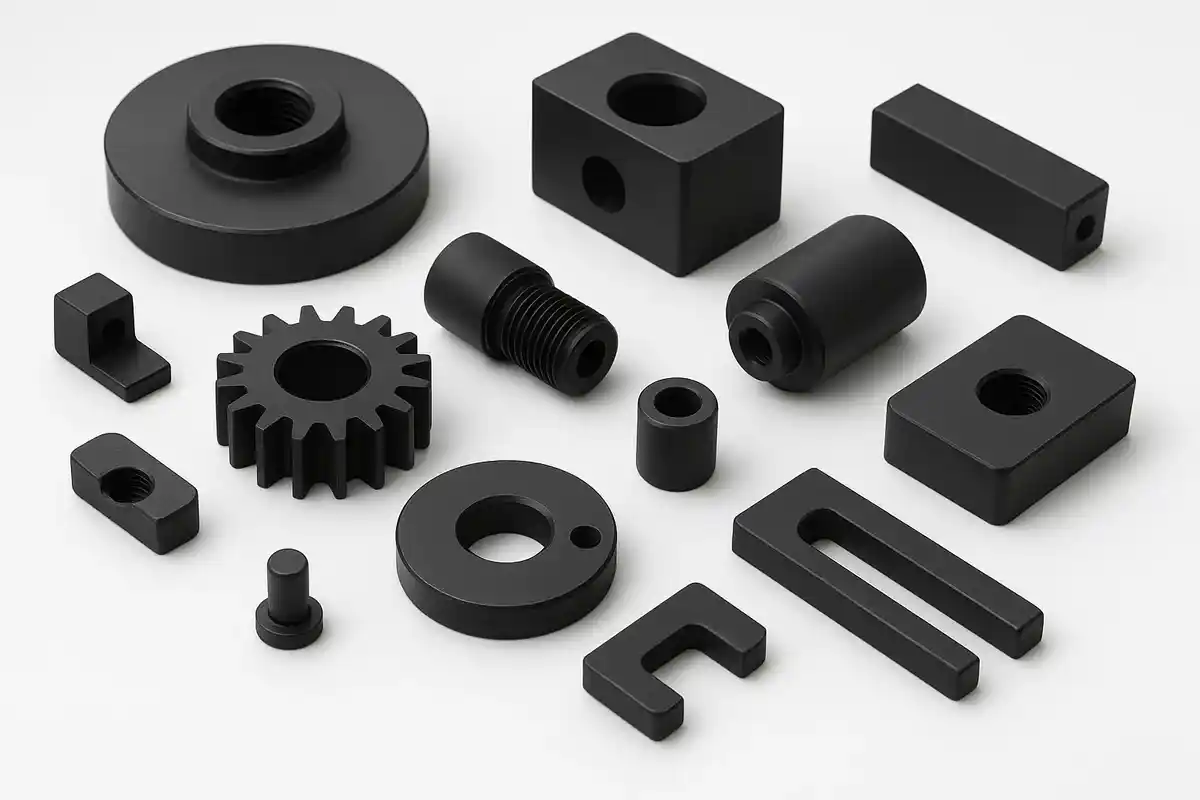
Introduction: Precision Surface Finishing for High-Performance Parts
At LAVA3DP, we specialize in bridging the gap between digital design and physical reality. Our global clientele relies on us for high-precision custom parts, and our black oxide finishing services and industrial black oxide coating capabilities are designed to meet the rigorous demands of aerospace, automotive, defense, and consumer electronics. This comprehensive guide explores the chemistry, benefits, and applications of black oxide conversion coating, demonstrating why it is the preferred choice for functional components and precision engineered finishing applications.
Discover Black Oxide finishing for custom parts, LAVA3DP offers durable, precision black oxide coating and black oxide coating services for steel, stainless steel, and copper. Enhance corrosion resistance and aesthetics with our custom black oxide finishing solutions. Contact us for a quote today.
Get an Instant QuoteWhat is Black Oxide Coating? Understanding Conversion Finishing
Black Oxide (often referred to as blackening or gun bluing) is a surface conversion coating and conversion coating process for ferrous metals, stainless steel, copper, and copper-based alloys. Unlike paint or plating, which deposit a layer on top of the metal, Black Oxide becomes part of the metal surface itself.
This process involves a chemical reaction where the metal’s surface is converted into Magnetite (Fe₃O₄). Magnetite coating is a black iron oxide layer that provides a unique combination of properties:
- Matte Black Aesthetic: A uniform, non-reflective dark matte black metal finish.
- Minimal Dimensional Change: Typically adds less than 0.00001 inches (0.25 microns) to the surface, making it ideal for threaded fasteners, threaded component finishing, and precision machined components coating applications.
- Corrosion Resistance: When sealed with oil or wax, including oil sealed black oxide, it offers significant protection against rust and supports metal corrosion prevention.
How the Black Oxide Process Works
Understanding the Black Oxide process helps clients appreciate why it is superior for complex geometries. The standard process involves a high-temperature alkaline salt bath (often referred to as hot black oxide process) or a room-temperature alternative such as cold black oxide coating.
Hot Black Oxide Process for Industrial Metal Components
- Cleaning: Parts undergo rigorous alkaline cleaning to remove oils and shop dirt.
- Rinsing: Thorough washing ensures no contaminants interfere with the chemical reaction.
- Oxide Bath: Parts are immersed in a heated caustic solution (typically 285°F to 310°F or 140°C to 155°C) containing sodium hydroxide, nitrates, and nitrites. The chemical reaction creates the black Magnetite layer through the blackening process for steel.
- Post-Treatment Rinse: Neutralizing the alkali residue.
- Sealing: The most critical step. Parts are immersed in a rust-preventative oil, wax, or dry-film sealant to fill the porosity of the magnetite layer and create a corrosion resistant coating.
Visualizing the Data
To illustrate the dimensional stability of this process, consider the following comparison:
| Feature | Black Oxide (Conversion) | Zinc Plating (Electroplating) | Powder Coating |
|---|---|---|---|
| Coating Thickness | 0.5 – 1.5 µm | 5 – 25 µm | 50 – 250 µm |
| Dimensional Change | Negligible (<0.0001″) | Moderate | High |
| Hardness | High (Magnetite) | Moderate | High |
| Reflectivity | Matte (0% Gloss) | Glossy | Variable |
Heat Treatment & Mechanical Properties
One of the overlooked advantages of Black Oxide is that the operating temperature of the hot bath (~300°F) is significantly lower than the tempering temperatures of most hardened steels. Therefore, it does not risk causing hydrogen embrittlement—a common concern with electroplated coatings.
Benefits of Black Oxide Coating for Custom Parts
When sourcing custom parts through LAVA3DP, opting for black oxide coating for CNC machined parts and custom black oxide services offers distinct engineering and commercial advantages.
1. Dimensional Integrity
For clients utilizing CNC Machining or 3D Printing (SLS, MJF), tolerances are often held to ±0.005 inches or tighter. Because Black Oxide adds virtually no thickness, it preserves tight tolerances on press-fit pins, mating threads, and sliding mechanisms. This dimensional stable coating characteristic is impossible with powder coating or thick anodizing.
2. Enhanced Lubricity
The Magnetite structure has a slightly porous nature that holds oil well. This results in a surface with a lower coefficient of friction than bare steel. In sliding applications—such as gears, cams, and hydraulic cylinders—this reduces galling and wear and supports wear resistant coating performance.
3. Cost-Effectiveness
Compared to electroless nickel plating or hard chrome, Black Oxide is a highly economical metal black oxide treatment option. It allows for high-volume batch processing without the premium cost associated with complex plating setups and remains a preferred industrial surface treatment solution.
4. Anti-Galling Properties
Stainless Steel 316 and stainless steel parts are notorious for galling (cold welding) when threads are mated. A Black Oxide finish on stainless steel creates an anti-galling coating that breaks the metallic bond, preventing galling without compromising the corrosion resistance of the base material.
5. Corrosion Resistance (Salt Spray)
The level of corrosion resistance depends on the sealant. Unsealed black oxide offers minimal rust protection. However, with a premium oil or wax seal, parts can pass ASTM B117 salt spray resistance testing from 72 to 120 hours, making them suitable for indoor and light outdoor applications and steel protection treatment requirements.
Compatible Materials for Black Oxide Surface Treatment
Not all metals can be blackened effectively. At LAVA3DP, we specialize in applying Black Oxide to the following materials:
| Material Type | Specific Grades | Common Applications |
|---|---|---|
| Carbon Steel | 1018, 1045, 12L14, 4140, 4340 | Fasteners, tool bodies, automotive chassis |
| Stainless Steel | 303, 304, 316, 17-4 PH | Medical instruments, marine hardware, food equipment |
| Tool Steel | D2, A2, O1, S7 | Mold bases, cutting tools, dies |
| Copper & Brass | C110, C360, C260 | Electrical terminals, plumbing fixtures, architectural hardware |
Black Oxide Applications Across Aerospace, Automotive & Industry
Aerospace & Defense
In defense, light reflectivity can be a tactical disadvantage. Black Oxide provides a non-glare, matte finish required for weapon components, optical mounts, and aerospace interior fittings. Furthermore, the lack of hydrogen embrittlement makes it safe for high-strength aerospace fasteners (SAE AMS 2485).
Automotive & Motorsports
For high-performance automotive parts—such as suspension bolts, brake caliper brackets, and engine components—Black Oxide offers a factory-style finish that resists oil corrosion and hides dirt. It is the standard finish for many OEM powertrain components.
Medical Devices
Stainless steel surgical tools often utilize Black Oxide to reduce glare under operating lights and to increase the surface lubricity, allowing for smoother incisions and instrument manipulation. The coating is biocompatible when properly sealed.
Electronics & Optics
For custom heatsinks, enclosures, and camera components, Black Oxide improves emissivity. The matte black surface enhances heat radiation by up to 25% compared to bare aluminum or steel . This is critical for LED lighting and high-power computing housings.
Black Oxide vs Other Metal Finishing Methods
To help our global clients make informed decisions, we have compiled a comparative analysis of surface finishes available at LAVA3DP.
| Attribute | Black Oxide | Powder Coating | Electroless Nickel | Anodizing (Aluminum) |
|---|---|---|---|---|
| Max Temp Resistance | 600°F (316°C) | 400°F (204°C) | 1,200°F (649°C) | 2,000°F (1093°C) |
| Hardness (HV) | 250-350 | 60-80 | 550-700 | 300-500 |
| Tolerance Change | None | Loose | Moderate | Tight |
| Cost | $ | $$ | $$$ | $$ |
| Conductivity | Excellent | Insulator | Good | Insulator |
Black Oxide Standards, Specifications & Quality Compliance
At LAVA3DP, our quality assurance protocols align with international standards to ensure every part meets global expectations. Our Black Oxide process adheres to:
- MIL-DTL-13924 black oxide: Military specification for Black Oxide coating of ferrous metals.
- AMS 2485 black oxide specification: Aerospace Material Specification for Black Oxide treatment.
- ASTM B633: Standard specification for electrodeposited coatings (referenced for prep work).
- ISO 11408 black oxide: Chemical conversion coatings—Black oxide on ferrous materials.
These standards support military specification coating, aerospace grade black oxide, and industrial quality coating standards requirements.
Why Choose LAVA3DP for Precision Black Oxide Coating Services?
Choosing the right partner for custom parts manufacturing is as important as choosing the right material or finish. LAVA combines advanced CNC machining, 3D printing, and in-house finishing to deliver turnkey solutions.
Our black oxide coating manufacturer expertise and black oxide treatment provider capabilities stand out because we understand the nuance of geometry. We ensure that blind holes do not trap chemicals, that threads remain clean, and that the aesthetic black finish is uniform across complex surfaces.
Whether you are prototyping a medical device in Germany using CNC black oxide Germany, producing automotive fasteners in Japan with black oxide coating Japan, or developing defense hardware in the United States requiring aerospace black oxide USA, LAVA3DP ensures that your parts meet the highest standards of durability and precision.
Contact us today to upload your CAD file and request a black oxide coating quote for our online black oxide services. Let us transform your raw metal into a precision-engineered masterpiece.
Get an Instant Quote