

Thermal Spray
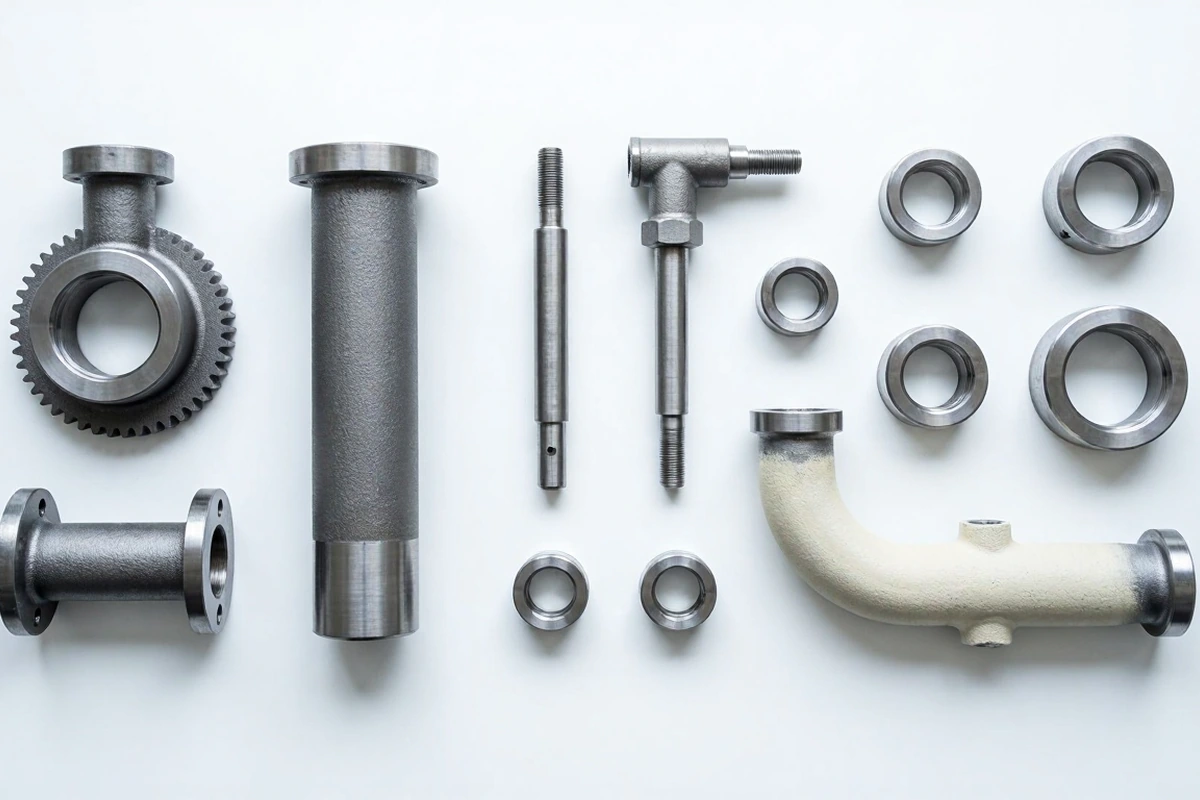
Introduction to Thermal Spray for Custom Manufacturing
Thermal Spray is a family of coating processes that has emerged as a cornerstone technology for extending component life, restoring damaged surfaces, and enabling new material properties. For businesses seeking custom parts fabrication, understanding how thermal spray works—and why it matters—unlocks design possibilities that were previously impossible or prohibitively expensive.
At LAVA3DP, we integrate thermal spray into our online custom parts service, offering global clients a seamless way to specify, order, and receive coated components. Whether you need wear-resistant coatings for mining equipment, thermal barriers for turbine blades, or anti-corrosion layers for marine hardware, thermal spray delivers measurable results. This article provides a comprehensive, data-driven introduction to the technology, its materials, its applications, and how LAVA3DP can bring these benefits to your next project.
Thermal Spray coating services for custom parts. Enhance wear resistance, corrosion protection & thermal barriers. LAVA3DP delivers precision. Request your quote today!
Get an Instant QuoteWhat is Thermal Spray? The Core Principle
Thermal spray refers to a group of coating processes in which feedstock material (powder, wire, or rod) is heated to a molten or semi-molten state and accelerated toward a prepared substrate. Upon impact, the particles flatten, quench, and mechanically bond to the surface, building up a lamellar coating layer by layer.
The key characteristic of thermal spray is its ability to deposit a wide range of materials—metals, ceramics, polymers, and composites—without significantly heating the underlying part (substrate temperatures typically stay below 200°C for many processes). This makes it ideal for coating sensitive base materials, finished components, or large structures.
How It Differs from Other Coating Technologies
| Property | Thermal Spray | PVD/CVD | Electroplating | Paint/Organic |
|---|---|---|---|---|
| Bond type | Mechanical & limited metallurgical | Atomic diffusion | Electrochemical | Adhesive |
| Coating thickness | 0.05–5 mm | 0.001–0.05 mm | 0.01–0.5 mm | 0.02–0.5 mm |
| Material versatility | Very high | Moderate | Limited to metals | Low |
| Substrate heating | Low to moderate | High (vacuum required) | None | None |
| Porosity range | 0.5–15% (sealable) | <0.1% | <0.1% | Variable |
The flexibility of thermal spray means a single custom parts manufacturer can serve industries from aerospace to agriculture, using the same basic equipment but changing only the feedstock and process parameters.
Major Thermal Spray Processes: A Side-by-Side Comparison
Not all thermal spray is the same. Four main processes dominate industrial applications. The table below summarizes their typical operating conditions and results. These values are representative of well-controlled industrial settings.
| Process | Heat Source | Particle Velocity (m/s) | Flame Temp (°C) | Typical Porosity | Bond Strength (MPa) | Relative Cost |
|---|---|---|---|---|---|---|
| Flame Spray (wire/powder) | Combustion | 30–150 | ~2,800 | 8–15% | 10–30 | Low |
| Arc Spray | Electric arc | 100–300 | ~4,000 (arc) | 5–10% | 20–40 | Low-Medium |
| Plasma Spray (APS) | DC plasma | 200–600 | ~12,000 | 1–5% | 30–70 | Medium-High |
| HVOF (High-Velocity Oxy-Fuel) | Combustion (supersonic) | 500–1,200 | ~3,000 | 0.5–2% | 50–100+ | High |
For most custom parts requiring dense, wear-resistant coatings, HVOF and Plasma spray are the go-to choices. For large-area corrosion protection or field repairs, Flame and Arc spray remain highly cost-effective.
Materials You Can Apply with Thermal Spray
The ability to deposit almost any material that melts without decomposing makes thermal spray a true enabler for custom manufacturing. LAVA3DP maintains a broad library of feedstocks, including:
Metals & Alloys
- Stainless steels (316L, 420, 431) – Corrosion and oxidation resistance.
- Nickel-based alloys (Inconel 625, 718, NiCr, NiAl) – High-temperature strength, bond coats, and oxidation barriers.
- Cobalt-based alloys (Stellite 1, 6, 21) – Exceptional wear and galling resistance up to 800°C.
- Copper and bronzes – Electrical conductivity, anti-seizure properties.
- Molybdenum – Excellent wear resistance and anti-fretting.
- Aluminum and zinc – Sacrificial anodic corrosion protection (marine/structural).
Ceramics
- Alumina (Al₂O₃) – Hard, wear-resistant, electrically insulating.
- Chrome oxide (Cr₂O₃) – Dense, smooth, excellent against abrasive wear.
- Zirconia (ZrO₂, YSZ) – Thermal barrier coatings (TBCs) for turbine components.
- Titania (TiO₂) – Self-lubricating, good for mating surfaces.
Carbides (in metal matrix)
- Tungsten carbide (WC-Co, WC-Cr₃C₂-Ni) – Extreme abrasion and erosion resistance.
- Chromium carbide (Cr₃C₂-NiCr) – High-temperature wear resistance up to 800°C.
Polymers & Composites
- Nylon, PEEK, polyethylene – Abrasion-resistant, low-friction, chemical barriers.
- Metal-polymer blends (e.g., Al-PE) – Sealants or abradable coatings.
With this material palette, LAVA3DP can tailor coatings to nearly any performance requirement—from a soft, conformable abradable seal to a diamond-hard tungsten carbide layer.
Key Advantages of Thermal Spray for Custom Parts
When you design a custom part, you are not limited to the properties of a single bulk material. Thermal spray decouples surface function from substrate structure. Here are the most impactful advantages:
Wear Resistance – Dramatically Extend Component Life
Abrasive, adhesive, erosive, and fretting wear account for most mechanical failures. Tungsten carbide (WC-Co) coatings applied by HVOF can achieve hardnesses above 1,200 HV, with wear resistance 10–20 times greater than hardened steel. For a hydraulic piston rod, this translates from months to years of service.
Corrosion Protection in Aggressive Environments
Seawater, chemical processing, and sour oil/gas service demand barrier protection. Sealed ceramic coatings or dense metal layers (e.g., Inconel 625) provide galvanic isolation and chemical inertness. Salt spray test results (ASTM B117) for sealed plasma-sprayed alumina can exceed 5,000 hours without red rust.
Thermal Barrier Coatings (TBCs)
Gas turbine blades, exhaust valves, and diesel engine components operate above the melting point of most superalloys. Yttria-stabilized zirconia (YSZ) coatings, typically 0.25–1 mm thick, can reduce metal substrate temperatures by 150–250°C, allowing higher inlet temperatures and improved efficiency.
Dimensional Restoration and Salvage
A mis-machined shaft or worn bearing journal can be restored to original dimensions with thermal spray, avoiding expensive replacement. Coatings can be applied and then ground to precise tolerances (e.g., ±0.025 mm). This is especially valuable for obsolete or long-lead components.
Tailored Surface Functionality
Need electrical insulation on a conductive part? Alumina coating. Need a self-lubricating surface? Composite coating with graphite or MoS₂. Need a bondable surface for adhesives? Porous titanium coating. Thermal spray gives you a palette of surface properties independent of the substrate.
No Heat-Affected Zone (HAZ)
Unlike welding or cladding, the substrate rarely exceeds 200°C during spraying (except for some plasma parameters). This preserves heat treatment, avoids distortion, and allows coating of fully finished parts or sensitive assemblies.
Scalability from One-Off to Production
LAVA3DP’s online custom parts service is built for low-to-mid volume runs, prototypes, and single-piece repairs. Thermal spray processes are equally efficient for a single shaft or 1,000 units—no expensive molds or tooling required.
Real-World Applications Across Industries
Thermal spray is not a laboratory curiosity. It is a mature, daily-used industrial technology. Below are representative applications that LAVA3DP can address for global clients.
| Industry | Component | Coating Material | Process | Benefit |
|---|---|---|---|---|
| Aerospace | Turbine blade platform | YSZ + NiCrAlY | Plasma | Thermal barrier, oxidation protection |
| Oil & Gas | Drill bit bearings | WC-Co | HVOF | Erosion/abrasion resistance |
| Automotive | Brake disc wear rings | Stainless steel | Arc spray | Corrosion resistance, reduced rust |
| Marine | Propeller shaft sleeves | Alumina-titania | Plasma | Seawater corrosion + abrasion |
| Printing | Anilox roll cells | Cr₂O₃ | Plasma | High hardness, precise engraving |
| Steel | Roll neck bearings | WC-Cr₃C₂-Ni | HVOF | Fretting wear, roll life extension |
| Plastics | Extruder screws | NiCrBSi + WC | Flame spray | Wear from glass-filled polymers |
| Power gen | Boiler tubes | NiCr/Cr₃C₂ | Arc spray | High-temperature sulfidation |
Case study example: A global cement manufacturer approached LAVA3DP for a custom part—a fan blade that failed every 3 months due to abrasive dust. We applied a 300 µm HVOF tungsten carbide coating. Blade life extended to 18 months, reducing downtime and maintenance costs by 80%.
Integrating Thermal Spray with Online Custom Parts Fabrication
How does LAVA3DP make thermal spray accessible through a web-based service? The process is straightforward:
- Upload your 3D model or drawing (STEP, IGES, STL, PDF) on lava3dp.com.
- Specify substrate material (or we can supply the base part via CNC/additive).
- Choose thermal spray process & coating material from our dropdown menu, or describe your application requirements.
- Define coating thickness, finish, and sealing (if needed).
- Receive an instant quote with lead time.
We handle the entire workflow: substrate preparation (grit blasting, masking), thermal spraying (robotically controlled or manual for large parts), post-spray machining (grinding, lapping, polishing), and quality inspection (bond strength, porosity, thickness, hardness).
Quality Assurance Data You Can Expect
For a typical HVOF WC-Co coating on steel:
| Property | Typical Value | Test Method |
|---|---|---|
| Hardness | 1,100–1,300 HV0.3 | ASTM E384 |
| Porosity | <1.5% | ASTM E2109 (image analysis) |
| Bond strength | >80 MPa (on grit-blasted steel) | ASTM C633 |
| Thickness range | 0.1–1.5 mm (one layer) | Micrometer / Eddy current |
| Surface finish as-sprayed | Ra 4–6 µm | Profilometer |
| Surface finish after grinding | Ra 0.2–0.4 µm | Profilometer |
| Residual stress | Compressive (favorable) | XRD (sin²ψ method) |
These numbers mean you can design with confidence, knowing exactly what performance to expect.
Limitations and How We Address Them
No technology is perfect. Thermal spray coatings are line-of-sight (cannot coat deep blind holes or undercuts without specialized torches). Porosity (typically 0.5–5%) may allow corrosive media penetration unless sealed with organic or inorganic sealants. Also, the bond is primarily mechanical, so very high impact loads or substrate flexing can cause spallation if design rules are ignored.
LAVA3DP mitigates these limitations through:
- Process selection – HVOF for low porosity, plasma for ceramics.
- Sealing – Vacuum impregnation with epoxy, silane, or aluminum phosphate.
- Design guidance – Our engineers review your model and suggest modifications (e.g., blending radii, masking grooves) to maximize coating success.
Why Choose LAVA3DP for Thermal Spray Custom Parts?
- Global online service – No geographic barriers. Upload, quote, order, ship worldwide.
- Process diversity – Flame, arc, plasma, and HVOF under one roof.
- Material breadth – Over 150 feedstock compositions in stock.
- End-to-end – We can fabricate the substrate (metal 3D printing, CNC, casting) and apply the coating in one order.
- Transparent quality – Coating reports with every shipment.
We invite you to explore how thermal spray can elevate your next design. Whether you need a prototype, a repair, or a production run, LAVA3DP delivers precision coatings on custom parts.
Get an Instant Quote