

Shot Peening
What Is Shot Peening?
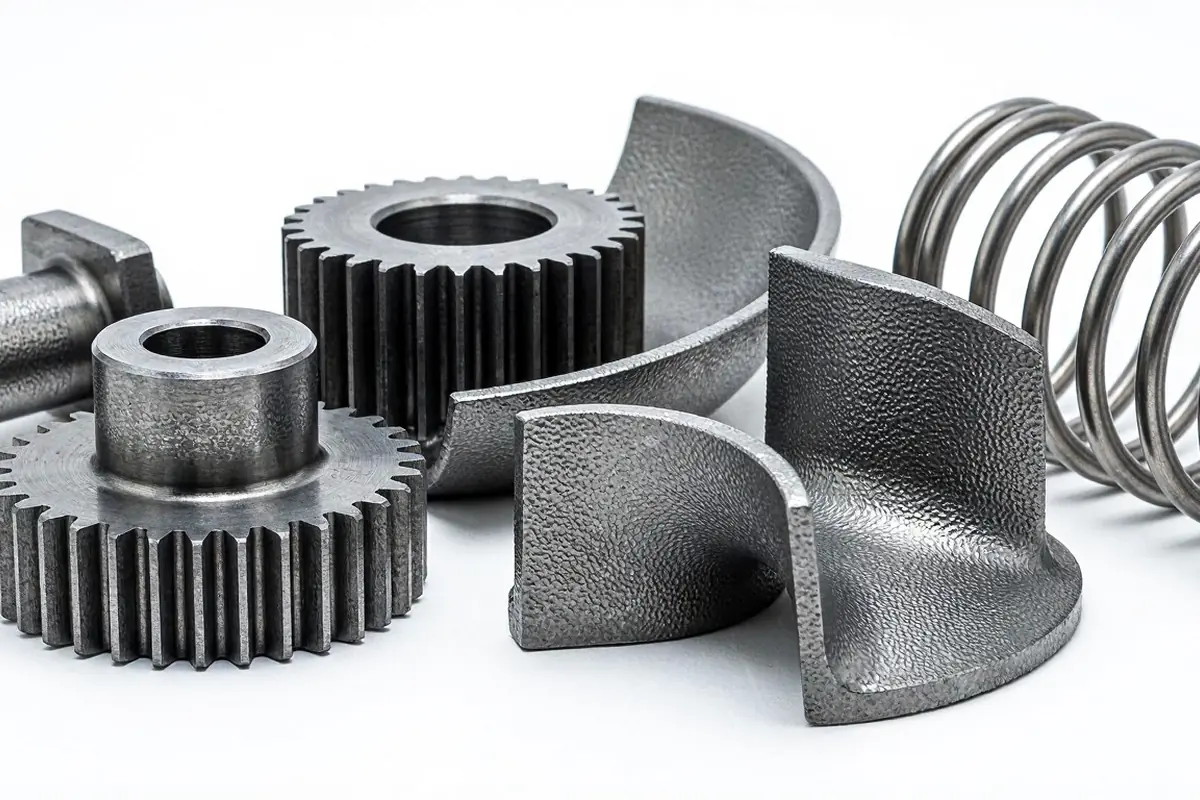
Shot peening is a cold working process used to enhance the mechanical properties of metal components. Unlike coatings that add material, shot peening bombards the surface with small spherical media—called shot—at high velocity. Each impact creates a small indentation, generating a compressive residual stress layer that dramatically improves fatigue resistance, stress corrosion cracking resistance, and overall part longevity.
For manufacturers of custom parts, shot peening is an indispensable post-processing technique. It transforms ordinary components into high-performance assets capable of withstanding extreme cyclic loads, vibration, and thermal stress. At LAVA3DP, we integrate shot peening into our custom fabrication workflow, serving industries from aerospace to automotive worldwide.
Shot peening boosts metal fatigue life by up to 1000%. Learn how LAVA3DP’s custom shot peening services enhance durability, reduce costs, and optimize performance. Contact us today for a free quote!
Get an Instant QuoteHow Shot Peening Works: The Science Behind the Process
The principle is simple yet powerful. A stream of shot media—typically steel, ceramic, or glass beads—is accelerated via air pressure or centrifugal wheel. When the shot strikes the metal surface, it creates a tiny plastic deformation zone. Below this dimple, the material’s elastic recovery generates compressive residual stress. This compressive layer counteracts tensile stresses that cause crack initiation and propagation.
The effectiveness of shot peening depends on three key parameters:
- Shot velocity (affects impact energy)
- Shot size and hardness (determines indentation depth)
- Coverage percentage (how much of the surface is peened)
Optimal peening achieves 100% to 200% coverage, ensuring uniform compressive stress without overworking the surface.
Visual: Residual Stress Profile After Shot Peening
Below is a typical depth profile of residual stress following shot peening. Compressive stress at the surface transitions to tensile stress deeper within the material.
| Depth (mm) | Residual Stress (MPa) |
|---|---|
| 0.00 | -450 (Compressive) |
| 0.05 | -520 (Peak) |
| 0.10 | -400 |
| 0.20 | -200 |
| 0.30 | -50 |
| 0.40 | +30 (Tensile) |
Key Advantages of Shot Peening for Custom Manufacturing
Integrating shot peening into your custom parts fabrication offers quantifiable benefits:
Extended Fatigue Life
Shot peening can increase fatigue life by 300% to 1000% depending on material and loading conditions. This is critical for rotating machinery, suspension components, and structural brackets.
Improved Resistance to Stress Corrosion Cracking
Compressive stresses neutralize the tensile forces that drive stress corrosion cracking (SCC). In aggressive environments—marine, chemical, or high-humidity—shot peening significantly delays failure.
| Material | Untreated Fatigue Limit (MPa) | Shot Peened Fatigue Limit (MPa) | Improvement |
|---|---|---|---|
| 4140 Steel (HRC 40) | 380 | 590 | +55% |
| 7075-T6 Aluminum | 160 | 240 | +50% |
| Inconel 718 | 450 | 680 | +51% |
| Ti-6Al-4V Titanium | 500 | 720 | +44% |
Reduced Manufacturing Costs
Instead of switching to exotic alloys or thickening sections, shot peening allows you to use cost-effective base materials while achieving high-performance targets. This keeps custom part prices competitive.
Enhanced Surface Finish and Lubricity
While primarily a strengthening process, shot peening also produces a uniform matte finish that can retain lubricants. For sliding or rolling contact applications, this reduces friction and wear.
No Dimensional Change
Unlike machining or grinding, shot peening does not alter part geometry when properly controlled. Tolerances remain intact, making it ideal for precision custom parts.
Materials Compatible with Shot Peening
Almost all metallic materials respond positively to shot peening. However, the choice of shot media and intensity must be tailored to the material’s hardness and ductility.
Metals That Benefit Most
- Steels (carbon, alloy, stainless, tool steels) – Use steel shot or ceramic shot
- Aluminum alloys (2024, 6061, 7075) – Use glass beads or ceramic shot to avoid surface contamination
- Titanium alloys (Grade 5, Grade 23) – Use ceramic shot to prevent iron embrittlement
- Nickel-based superalloys (Inconel, Hastelloy) – Use ceramic or conditioned steel shot
- Copper alloys (brass, bronze) – Use glass beads for gentler peening
- Magnesium alloys – Use glass beads with low intensity
Materials Not Suitable
- Hardened ceramics or carbides (brittle fracture)
- Very thin sections (<0.5 mm) may distort
- Some cast irons with low ductility
At LAVA3DP, we perform material-specific shot peening process validation to ensure optimal results for your custom parts.
Critical Applications Across Industries
Shot peening is not a niche treatment—it is standard practice in demanding sectors. Here are real-world applications where our clients rely on LAVA3DP’s shot peening services:
Aerospace
- Landing gear components (fatigue and corrosion resistance)
- Turbine blades and discs (high-cycle fatigue)
- Wing spar fittings (load transfer points)
- Helicopter rotor hubs (cyclic torsion)
Automotive
- Connecting rods and crankshafts
- Valve springs and suspension coils
- Gearbox shafts and synchronizer hubs
- Chassis control arms
Medical Devices
- Orthopedic implants (hip stems, bone plates) – shot peening improves fretting fatigue resistance
- Surgical instruments (reduces notch sensitivity)
Heavy Machinery & Mining
- Excavator bucket pins and bushings
- Crusher hammers and conveyor rollers
- Drill rod couplings
Oil & Gas
- Downhole tool housings
- Pipeline flanges and valve stems
- Subsea connector components
Custom Prototypes & Low-Volume Production
Even for one-off custom parts, shot peening can be cost-effective. LAVA3DP offers batch-friendly shot peening with no minimum order quantity.
Shot Peening vs. Other Surface Treatments
How does shot peening compare to alternative finishing processes? The table below clarifies the differences.
| Treatment | Primary Benefit | Creates Compressive Stress? | Dimensional Change | Cost Level |
|---|---|---|---|---|
| Shot Peening | Fatigue strength | Yes | None | Medium |
| Bead Blasting | Cleaning / Cosmetic | Minimal | None (low pressure) | Low |
| Roller Burnishing | Surface finish & hardness | Yes | Slight (diameter reduction) | High |
| Case Hardening | Wear resistance | No (core remains tensile) | Growth possible | High |
| Electropolishing | Smoothing / Deburring | No | Removal (0.01–0.05 mm) | Medium |
| Tumbling / Mass Finishing | Deburring / Edge break | No | None | Low |
For components requiring both fatigue life extension and surface finish, shot peening is often combined with other treatments. LAVA3DP can sequence shot peening before coating or after heat treatment.
Why Choose LAVA3DP for Your Shot Peening Needs?
When you upload your CAD model to LAVA3DP, you get more than just fabrication—you get engineering-grade post-processing. Here is what sets our shot peening service apart:
Process Control & Certification
We use Almen strip testing to verify peening intensity per SAE J443. Every batch receives documented coverage verification (using fluorescent tracer or inspection media). For aerospace clients, we can provide NADCAP-compliant documentation.
Media Selection Flexibility
Our shop stocks:
- Cast steel shot (S110 to S550)
- Ceramic shot (Zirconia-based, non-contaminating)
- Glass beads (100–200 mesh for delicate surfaces)
- Cut wire shot (for stainless steel and titanium)
Integration with Additive & Subtractive Manufacturing
Whether your custom part is CNC machined, 3D printed (metal powder bed fusion), or cast, shot peening is equally effective. For additively manufactured parts, shot peening closes surface porosity and removes partially fused particles.
Fast Turnaround & Global Shipping
From your digital design to finished, shot peened part, LAVA3DP delivers within 5–10 business days. We ship worldwide via DHL, FedEx, and UPS.
Engineering Support
Not sure if your part needs shot peening? Our team performs finite element analysis (FEA) to identify high-stress zones. We then recommend peening intensity, coverage, and media type—free of charge with your fabrication order.
How to Order Shot Peened Custom Parts from LAVA3DP
- Upload your 3D model (STEP, IGES, STL) or 2D drawing at LAVA3DP.
- Select material from our library of 50+ metals and alloys.
- Add “Shot Peening” as a post-processing option during checkout.
- Specify parameters (or let our engineers suggest them): intensity (0.008A to 0.020A), coverage (100–200%), and media type.
- Receive a quote within 24 hours, including production and shipping costs.
For high-volume production or ongoing contracts, contact us directly for custom pricing.
Conclusion
Shot peening is a proven, cost-effective method to multiply the service life of metal custom parts. By transforming harmful tensile stresses into beneficial compressive residual stresses, it prevents cracks, corrosion, and fatigue failures. Whether you manufacture aerospace brackets, automotive drivetrain components, or medical implants, integrating shot peening into your production workflow delivers measurable ROI.
At LAVA3DP, we combine precision fabrication with industrial-grade shot peening—all under one roof. No minimum orders, full material traceability, and worldwide shipping. Upload your design today and experience the difference that compressive stress makes.
Get an Instant Quote