

Chemical Polishing
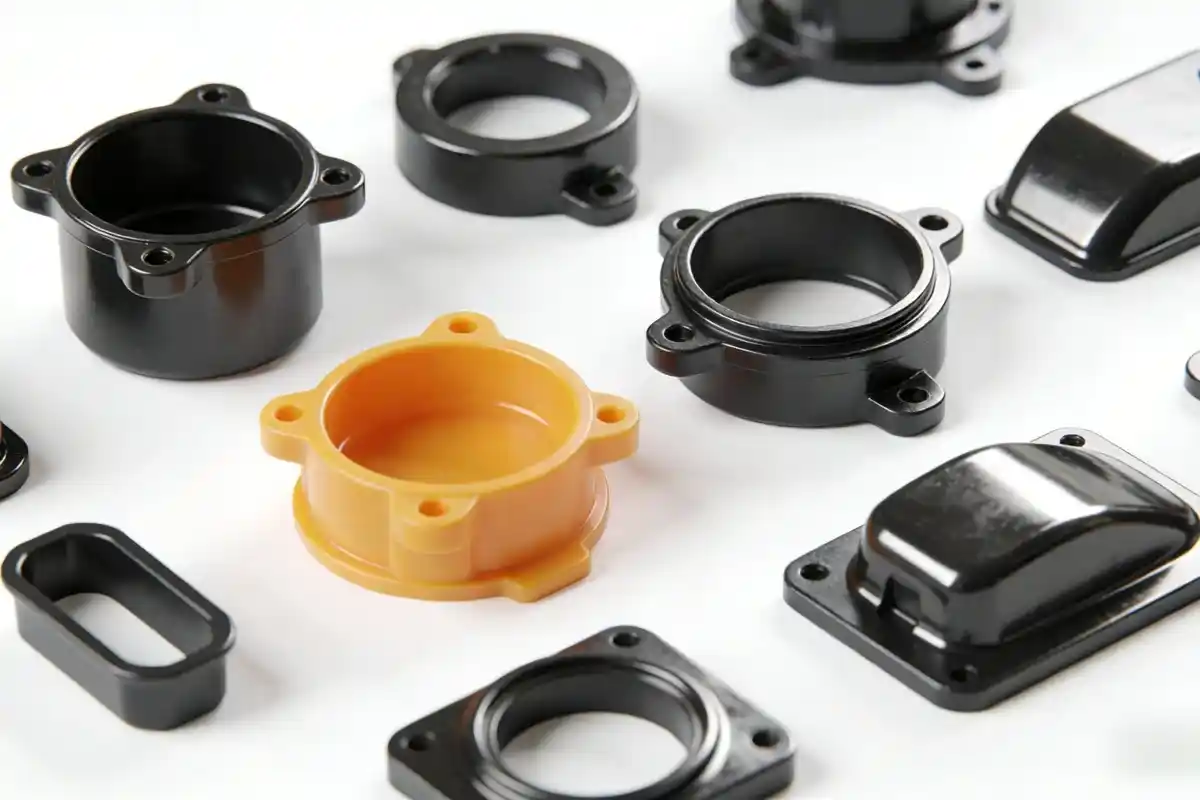
Chemical Polishing for Custom Parts
The surface quality of a component can be as critical as its dimensional accuracy. Whether you are producing prototypes, medical implants, or aerospace brackets, a smooth, defect-free finish improves performance, longevity, and visual appeal. Chemical Polishing Services have emerged as a highly effective, scalable, and cost-efficient surface finishing technique for custom parts.
At LAVA3DP, we specialize in on-demand fabrication of complex geometries using CNC machining, 3D printing, and injection molding. Our Professional Polishing Services and Industrial Chemical Polishing solutions offer a reliable way to achieve mirror-like surfaces, eliminate microscopic burrs, and prepare parts for coating or assembly – all without altering intricate details. This comprehensive guide explains how chemical polishing works, its advantages over mechanical methods, compatible materials, and why it is the go-to solution for industries worldwide.
Chemical Polishing for custom parts improves surface finish, removes burrs, and enhances aesthetics. Learn benefits, materials & applications. Get instant quotes from LAVA3DP – contact us today!
Get an Instant QuoteHow the Chemical Polishing Process Works
The process relies on diffusion-controlled dissolution. In an acidic bath (e.g., phosphoric-sulfuric-nitric mixtures for stainless steel), the reaction rate is higher on protruding micro-peaks than in valleys because the diffusion of fresh etchant to peaks is faster. Over time, the surface becomes progressively smoother. A typical workflow includes:
- Cleaning – Parts are degreased and descaled to remove contaminants.
- Masking (optional) – Selective areas can be protected with acid-resistant tapes or coatings.
- Immersion – Parts are submerged in the heated chemical bath (typically 50–90°C) for 1–10 minutes, depending on material and desired finish.
- Rinsing – Thorough washing with deionized water stops the reaction.
- Passivation (for stainless steel) – A nitric-based dip restores the chromium oxide layer, enhancing corrosion resistance.
- Drying & Inspection – Parts are dried and measured for roughness, gloss, or dimensional change.
This controlled process is widely used in Industrial post processing, Advanced surface engineering, and Surface treatment for 3D printed parts where repeatable quality and consistent finishes are critical.
Typical Roughness Reduction by Chemical Polishing
| Material | Initial Ra (μm) | After Chemical Polishing (μm) | Reduction % |
|---|---|---|---|
| Stainless Steel 304 | 3.2 | 0.4 | 87.5% |
| Aluminum 6061 | 2.5 | 0.3 | 88.0% |
| Copper C110 | 2.0 | 0.2 | 90.0% |
| Titanium Grade 5 | 3.0 | 0.5 | 83.3% |
Ra = Arithmetic average roughness. Values are representative for machined surfaces.
Benefits of Chemical Polishing vs Mechanical Finishing
Choosing chemical polishing for your custom parts brings multiple benefits that mechanical finishing cannot match:
- No Mechanical Stress or Deformation – Abrasive processes can induce residual stresses, micro-cracks, or work hardening. Chemical polishing is stress-free, preserving the part’s structural integrity.
- Uniform Results on Complex Geometries – Internal bores, sharp corners, and freeform surfaces are polished equally. No “over-polishing” of edges, unlike with buffing wheels.
- Burr Removal & Edge Smoothing – The chemical action rounds sharp edges and removes tiny burrs left from machining or laser cutting, improving safety and assembly.
- Excellent for Thin-Walled or Delicate Parts – Since no force is applied, fragile components (e.g., thin-walled tubes, lattice structures) can be polished without risk of distortion.
- Repeatable and Scalable – Bath parameters (temperature, concentration, time) are easily controlled, ensuring batch-to-batch consistency. Large quantities can be processed simultaneously.
- Enhanced Corrosion Resistance – For stainless steel, chemical polishing is often combined with passivation, which removes free iron and restores the passive layer.
- Improved Adhesion for Coatings – The smooth, clean surface increases bonding strength for paints, platings, or adhesives.
- Disadvantage to consider: Chemical polishing removes a small amount of material (typically 5–30 μm per side). It is not suitable for correcting deep scratches or significant form errors. For those cases, mechanical pre-polishing may be required.
These advantages make chemical polishing ideal for High-performance part finishing, Functional and aesthetic surface finishing, and End-use part finishing solutions across demanding industries.
Compatible Materials for Chemical Vapor Polishing
Not all metals respond equally to chemical polishing. At LAVA3DP, we offer validated processes for the following materials:
- Stainless Steels (Austenitic: 304, 316, 17‑4 PH) – Achieve bright, passivated surfaces. Ideal for food, medical, and marine applications.
- Aluminum Alloys (6061, 7075, 5083) – Produce a smooth, slightly matte to glossy finish. Excellent for electronic housings and automotive parts.
- Copper & Copper Alloys (C110, brass, bronze) – Yield a highly reflective, oxide‑free surface suitable for electrical components and decorative items.
- Titanium & Titanium Alloys (Grade 2, Grade 5 Ti‑6Al‑4V) – Remove alpha case and achieve a uniform satin or bright finish for aerospace and medical implants.
- Nickel & Nickel Alloys (Inconel, Monel) – Reduce surface roughness and improve fatigue resistance.
- Tool Steels (limited) – May require specific bath chemistries; contact us for evaluation.
These capabilities support industries seeking Aerospace surface finishing solutions, Medical-grade 3D print finishing, and Reliable custom manufacturing partner services.
Industrial Applications of Chemical Polishing Services
Chemical polishing is widely adopted in custom manufacturing for sectors where surface quality directly impacts function or aesthetics:
- Medical & Dental – Surgical instruments, orthopaedic implants, dental abutments, and needle hubs require ultra‑smooth surfaces to minimize bacterial adhesion and tissue irritation.
- Aerospace & Defense – Hydraulic fittings, turbine blades, and structural brackets benefit from reduced stress concentrations and improved fatigue life.
- Food & Beverage – Stainless steel tanks, pipe fittings, and valves are polished to prevent product adhesion and facilitate cleaning (CIP).
- Electronics & Semiconductors – Heat sinks, EMI shields, and connector housings achieve low contact resistance and high reflectivity.
- Automotive – Decorative trim, fuel system components, and exhaust flanges gain both corrosion resistance and visual appeal.
- Additive Manufacturing (3D Printing) – Metal printed parts often have surface roughness (Ra 8–12 μm). Chemical polishing can lower Ra to < 1 μm, making them usable for fluid flow or mating surfaces.
Chemical Polishing Process Parameters & Performance Data
To help you estimate the outcome, we have compiled typical process windows for common alloys. The chart below shows material removal rate (MRR) as a function of immersion time for stainless steel 316 at 80°C.
| mmersion Time (minutes) | Material Removal per Side (μm) | Surface Roughness Ra (μm) – Initial Ra 3.2 μm |
|---|---|---|
| 0 | 0 | 3.20 |
| 2 | 8 | 1.80 |
| 4 | 16 | 0.95 |
| 6 | 24 | 0.55 |
| 8 | 31 | 0.38 |
| 10 | 37 | 0.30 |
| 12 | 42 | 0.26 |
Key numerical values to consider:
- Surface roughness reduction: From Ra 3.2 μm to Ra 0.4 μm achievable in 5–8 minutes for stainless steel.
- Material removal per side: Typically 10–25 μm for bright finishing; up to 50 μm for heavy smoothing.
- Dimensional change: For a 10 mm diameter rod, the diameter may decrease by 20–50 μm after polishing both sides.
- Processing cost: Approximately 15–30% lower than mechanical polishing for complex geometries, due to reduced labor and no tooling wear.
- Batch throughput: Up to 500 small parts per 50‑liter bath per hour (depending on part size and geometry).
LAVA3DP provides free process feasibility analysis and tolerance evaluation before production – contact us for a detailed quote.
Why Choose LAVA3DP for Chemical Polishing?
When you partner with LAVA, you gain access to a one-stop custom parts fabrication ecosystem. We integrate chemical polishing into our broader manufacturing workflow:
- End-to-end support – From raw material sourcing, CNC machining, 3D printing, or injection molding, to finishing and quality inspection.
- Precision control – We monitor bath temperature (±1°C), concentration, and immersion time to ensure consistent Ra values within ±0.1 μm.
- Masking capabilities – Protect critical mating surfaces, threads, or logos using precision laser-cut masks.
- Quality assurance – Surface roughness measurement (profilometer), gloss units (gloss meter), and salt spray testing for corrosion resistance.
- Global shipping – Fast, tracked delivery to any country, with customs documentation handled.
- Competitive pricing – No minimum order quantity (MOQ). Prototypes and low-volume runs are welcome.
Our engineering team works with you to select the optimal polishing process – chemical, electropolishing, or mechanical – based on your material, geometry, and cost constraints. As a provider of ISO quality polishing services, Expert post-processing solutions, and Manufacturing finishing services, we help global manufacturers improve quality, performance, and consistency.
Final Thoughts on Chemical Polishing Services
Chemical Polishing is a powerful, cost-effective method to achieve superior surface finishes on custom metal parts, especially those with complex shapes or delicate features. It removes burrs, reduces roughness, enhances corrosion resistance, and prepares surfaces for post-processing – all without mechanical stress.
At LAVA3DP, we combine advanced chemical polishing with agile manufacturing to serve clients worldwide. Whether you need a single prototype or 10,000 production parts, our team delivers precision and reliability through Custom additive manufacturing finishing services and Industrial additive manufacturing finishing expertise.
Ready to improve your parts’ surface quality? Upload your 3D CAD file or contact our finishing specialists today. Get an instant quote or reach out to our team – we are here to help you succeed with On-demand polishing services and High-quality surface finishing for prototypes.
Get an Instant Quote