

2K Injection Molding
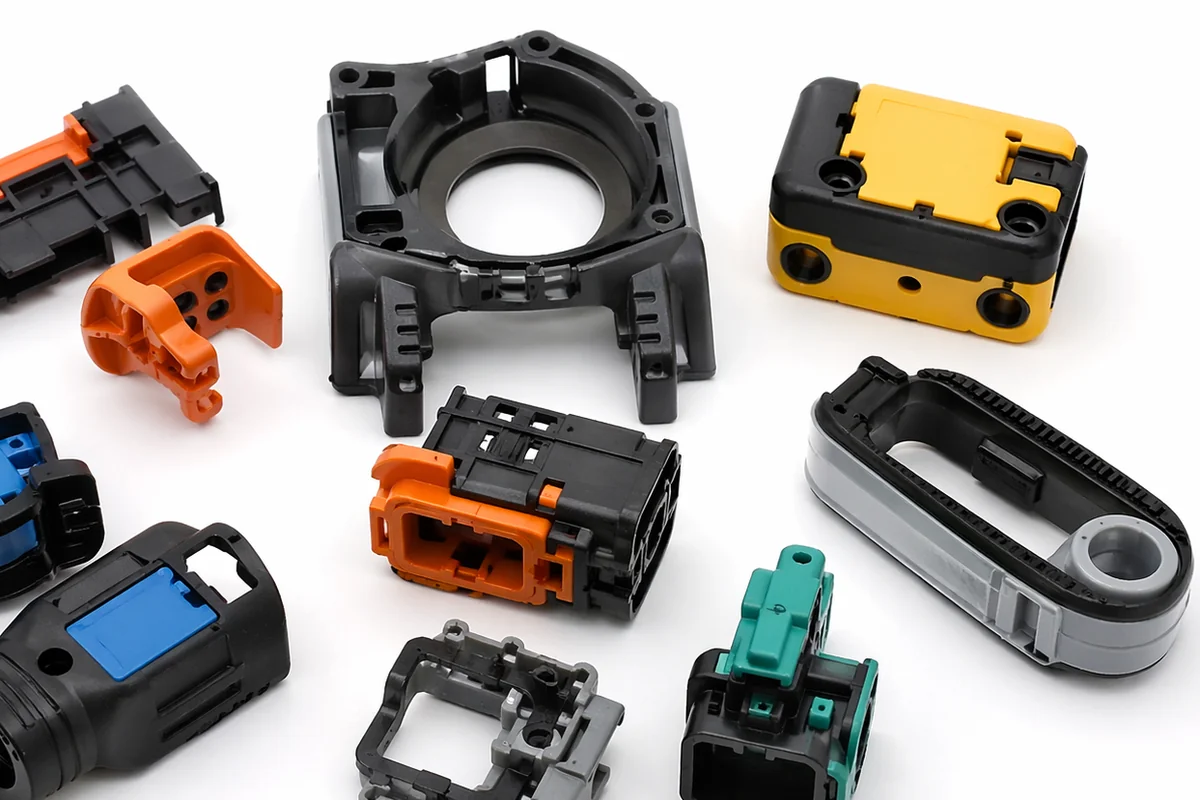
2K injection molding, two-shot injection, and dual-material injection explained. Discover how LAVA3DP delivers custom parts with enhanced durability, reduced assembly, and superior aesthetics. Get your 2K injection molding quote today!
In modern manufacturing, the demand for components that seamlessly combine multiple materials or colors in a single, integrated part has never been greater. Traditional single-shot injection molding often falls short when products require soft-touch grips alongside rigid structural frames, or when two distinct colors must be perfectly aligned without secondary assembly. This is where 2K injection molding services (also known as two shot injection molding or dual material molding) emerges as a transformative solution.
LAVA3DP specializes in custom 2K molded parts and advanced multi material injection molding, empowering global clients to produce high-performance, multi-material components with unparalleled precision and efficiency. Whether you are in automotive, medical devices, consumer electronics, or industrial equipment, understanding the principles, advantages, and applications of 2K molding is essential for staying competitive in today’s fast-paced manufacturing landscape.
Get an Instant QuoteWhat Is 2K Injection Molding? Two-Shot & Dual-Material Explained
2K injection molding, also referred to as double shot molding or two-component (2C) molding, is an advanced manufacturing process that injects two different materials—or two colors of the same material—into a single mold cavity within one automated production cycle. Unlike conventional molding methods that require separate molding steps followed by manual or adhesive-based assembly, multi shot injection molding produces a fully bonded, finished part directly from the mold.
The term “2K” derives from the German word “Zwei-Komponenten,” meaning two components. This technology enables manufacturers to combine materials with complementary properties—such as a rigid polycarbonate substrate with a soft thermoplastic elastomer (TPE) overmold—resulting in a single part that exhibits the best characteristics of both materials, including rigid and soft touch molding performance.
The Fundamental Difference: 2K vs. Traditional Overmolding
While traditional overmolding involves molding a substrate in one machine, manually transferring it to a second mold, and injecting the second material, two material injection molding accomplishes both injections within the same machine and the same cycle. The substrate remains precisely indexed throughout the process, eliminating alignment errors and reducing labor costs. This distinction is critical for high-volume production where consistency, speed, and cost-efficiency are paramount.
How 2K Injection Molding Works: A Step-by-Step Process
The 2K injection molding process relies on specialized injection molding machines equipped with two or more injection units and a rotating or shuttle mold system. The workflow can be broken down into four core stages of the 2K molding process:
Step 1 — First Injection (Substrate Formation): The first material (typically a rigid thermoplastic such as ABS, PC, or PA) is injected into the primary cavity of the mold, forming the structural substrate or base of the component used in engineering grade plastic molding.
Step 2 — Mold Rotation or Transfer: After the first material has partially cooled and solidified, the mold rotates 180 degrees, or a robotic arm transfers the substrate to the secondary cavity. This transfer occurs entirely within the same injection molding machine and the same molding cycle.
Step 3 — Second Injection (Overmold Application): The second material (often a softer thermoplastic elastomer, TPU, or a different color of the same polymer) is injected onto, into, or around the substrate. The second material bonds either chemically (molecular diffusion) or mechanically (via undercuts or interlocking geometries) to the first, enabling thermoplastic elastomer overmolding and TPE over ABS molding.
Step 4 — Cooling and Demolding: The fully fused, multi-material part is cooled and then ejected from the mold as a single, finished component—requiring no subsequent assembly steps.
Throughout the entire cycle, injection timing, temperature control, and mold positioning are managed by computer-controlled systems, ensuring repeatable precision across thousands or millions of production cycles for high precision dual shot molding.
Key Advantages of 2K Injection Molding for Custom Parts
Adopting 2K injection molding delivers a compelling combination of quality, efficiency, and cost benefits that traditional manufacturing methods cannot match.
Elimination of Secondary Assembly
By consolidating two materials into a single molding cycle, 2K technology eliminates the need for gluing, welding, snap-fitting, or other post-molding assembly operations. This reduces labor costs, minimizes assembly-related defects, and accelerates time-to-market in high volume plastic production.
Enhanced Product Durability and Integrity
The molecular bond formed between the two materials during the 2K process is significantly stronger than adhesive bonding. Parts produced via two-shot molding are far more durable than separately molded pieces that are later assembled; they exhibit superior shock resistance, form stronger seals, and maintain color patterns that will not wear off over time. Bond strengths exceeding 18 MPa are achievable on engineering-grade material combinations such as PA66/TPE, creating elastomer bonded plastic parts.
Superior Aesthetics and Design Freedom
2K injection molding enables complex color combinations, seamless material transitions, and multi-texture surfaces that are molded directly—not painted or applied afterward. Designers can integrate soft touch grips, transparent windows, colored logos, or ergonomic contours into a single part without compromising structural integrity.
Reduced Production Costs at Scale
While the initial tooling investment for 2K molds is higher than for single-shot molds, the per-part cost drops significantly at higher volumes due to eliminated assembly steps, reduced cycle times, and lower scrap rates. For programs exceeding 10,000 units, the return on investment becomes highly favorable for any high volume molding supplier.
Tight Tolerances and Precision
Well-designed 2K injection molded parts can achieve standard commercial tolerances of ±0.1 mm to ±0.25 mm. For high-performance applications requiring fine precision—such as medical devices or electronic connectors—tolerances as tight as ±0.025 mm to ±0.05 mm are achievable with superior-grade molds and highly stable machines, ensuring tight tolerance molded parts.
2K Injection Molding – Key Advantages at a Glance
| Advantage Category | Key Benefit | Impact on Production |
|---|---|---|
| Assembly Elimination | No gluing, welding, or mechanical joining | Reduces labor costs by 30–50% |
| Durability | Molecular bond stronger than adhesive | Eliminates delamination risk |
| Aesthetic Quality | Seamless finishes, multi-texture surfaces | No secondary painting or coating |
| Cost Efficiency | Lower per-part cost at high volumes | ROI positive above 10,000 units |
| Precision | ±0.1 mm to ±0.05 mm achievable | Suitable for medical & electronics |
2K vs Two-Shot vs Dual-Material Molding: Key Differences
The terminology surrounding multi-component molding can be confusing, as different regions and industries use overlapping terms. At LAVA3DP, we clarify these distinctions to help clients communicate their requirements precisely when working with a global manufacturing supplier.
Understanding the Terminology
2K Injection Molding (or 2K molding) is the most widely used term globally, derived from the German “Zwei-Komponenten.” It refers specifically to the injection of two different materials into a single mold.
Two-Shot Injection Molding (or 2-shot molding) emphasizes the sequential nature of the process—the first shot forms the substrate, and the second shot applies the overmold. This term is common in North American manufacturing and widely used by any two shot molding company.
Dual-Material Injection is a descriptive term focusing on the combination of two distinct material families (e.g., rigid plastic + elastomer) rather than the process mechanics.
When to Use Each Term
For engineering and manufacturing discussions, “2K injection molding” or “two-shot injection molding” are preferred. For material-focused conversations—such as selecting a rigid substrate with a soft-touch overmold—”dual-material injection” may be more appropriate. Regardless of terminology, LAVA3DP applies the same advanced process controls and quality standards to every custom 2K project.
Material Selection for 2K Injection Molding (TPE, ABS, TPU & More)
Successful 2K injection molding depends critically on the compatibility of the two materials used. They must be physically, chemically, and thermally compatible to achieve a permanent bond without delamination or warping.
Substrate Materials (First Shot)
The substrate forms the structural backbone of the 2K component and must withstand the pressure and temperature of the second injection without deforming. Common substrate materials include:
- Polyamide (PA / Nylon): High strength, heat resistance, and wear resistance; ideal for automotive and industrial components.
- Polycarbonate (PC): Excellent impact resistance and optical clarity; widely used in medical devices and electronics.
- Polypropylene (PP): Cost-effective, chemical-resistant, and lightweight; suitable for consumer goods and packaging.
- Acrylonitrile Butadiene Styrene (ABS): Good impact strength and surface finish; common in automotive interiors and electronic housings.
- Polybutylene Terephthalate (PBT): Dimensional stability and electrical insulation; preferred for connectors and switches.
Overmold Materials (Second Shot)
The second shot typically consists of a softer material that provides ergonomic, sealing, or aesthetic properties. Compatible overmold materials include:
- Thermoplastic Elastomers (TPE): The most common overmold family, offering variable hardness (Shore A to D), excellent grip, and weather resistance. Subtypes include TPE-S (styrenic), TPE-U (polyurethane), TPE-E (copolyester), and TPE-A (polyamide).
- Thermoplastic Polyurethane (TPU): Superior abrasion resistance and mechanical strength; ideal for high-wear applications such as power tool grips.
- Liquid Silicone Rubber (LSR): Biocompatible and thermally stable; used in medical devices and baby products.
- Same material, different color: For multi-color aesthetic parts where material properties are identical.
Material Compatibility: The Critical Factor
Not all material combinations are compatible. The two materials must have sufficiently similar melting temperatures, chemical affinities, and shrinkage rates to achieve a permanent bond. Well-established compatible pairs include:
- ABS + TPU: Forms strong chemical bonds; commonly used for consumer electronics with soft-touch surfaces.
- PC + TPE: Excellent adhesion for medical device handles and automotive interior components.
- PA + TPE: High bond strength (exceeding 18 MPa) for industrial and automotive applications.
- PP + TPE: Suitable when mechanical interlocks are designed due to PP’s lower surface energy.
For incompatible material pairs, mechanical interlocking features—such as undercuts, keyways, or through-holes—are required to ensure a permanent bond.
Compatible Material Pairs for 2K Injection Molding
| Substrate Material | Compatible Overmold Materials | Common Applications |
|---|---|---|
| ABS | TPU, TPE-S | Electronic housings, remote controls |
| PC | TPE, TPU | Medical handles, automotive trim |
| PA (Nylon) | TPE, TPU | Power tools, industrial grips |
| PP | TPE (with mechanical lock) | Consumer goods, packaging |
| PBT | TPU, TPE | Electrical connectors, switches |
Industry Applications of Custom 2K Injection Molded Parts
The global 2K injection molding market was valued at approximately $2.86 billion in 2024 and is projected to reach $5.47 billion by 2032, representing a compound annual growth rate of 7.4%. This growth is driven by increasing demand across automotive, medical, consumer electronics, and industrial sectors, especially in 2K injection molding services USA and two shot molding manufacturer Europe markets.
Automotive Industry
The automotive sector accounts for nearly 38% of all 2K molding applications. Two-shot injection molding enables the production of lightweight, integrated components that combine rigid structural elements with soft-touch surfaces, seals, or decorative features. This includes automotive two shot molding and custom 2K injection molding services for automotive parts.
Medical Devices
The medical industry is increasingly adopting 2K injection molding for surgical instruments, diagnostic devices, and wearable medical technology, including dual material plastic molding for medical devices. The ability to mold biocompatible soft-touch grips onto rigid structural frames—in a single sterile process—has proven particularly valuable. The medical 2K molding segment is forecast to grow at over 8% CAGR through 2032, driven by aging populations and rising healthcare expenditures.
Consumer Electronics
Smartphone cases, wearable devices, remote controls, computer keyboards, and gaming controllers all benefit from consumer electronics molding and two color plastic components. The integration of soft-touch elastomers with rigid plastic frames enhances user comfort and product durability while enabling distinctive two-color branding. Mobile phones, remote controls, and wearable devices are common examples of components manufactured using this technique.
Industrial and Power Tools
Handles and grips on power tools require both structural strength and ergonomic comfort, making industrial dual shot molding services ideal. 2K injection molding delivers precisely that: a rigid reinforced core combined with a vibration-dampening, non-slip elastomeric overmold.
Household and Consumer Goods
Electric toothbrushes, razors, and appliances increasingly rely on multi material plastic parts and dual color injection molding to combine hard glossy plastics with soft rubber-like grips, producing seamless, aesthetically pleasing, and functional products.
2K Injection Molding – Industry Applications Summary
| Industry | Key Applications | Primary Benefits |
|---|---|---|
| Automotive | Interior trim, dashboards, seals, door handles | Weight reduction, durability, integrated sealing |
| Medical | Surgical instruments, diagnostic tools, wearables | Biocompatibility, ergonomic grip, sterile process |
| Consumer Electronics | Smartphone cases, remote controls, wearables | Soft-touch finish, branding colors, durability |
| Industrial Tools | Power tool grips, equipment handles | Vibration dampening, slip resistance, strength |
| Household Goods | Toothbrushes, razors, smart home devices | Aesthetic appeal, seamless finish, hygiene |
Design Guidelines for High-Quality 2K Injection Molded Parts
Proper part design is essential for achieving a high-quality, manufacturable 2K component. The following guidelines represent best practices that LAVA3DP applies to every custom 2K project.
Substrate as the Structural Core
The first-shot substrate forms the structural backbone of the entire component. It must be sufficiently rigid to withstand the injection pressure and heat of the second shot without warping or deforming. A well-designed substrate defines bond line locations, gate placements, and cooling behavior. Neglecting this core component is a common reason for failure in 2K projects.
Wall Thickness Management
Consistent wall thickness is more critical in 2K molding than in single-shot molding. Both the substrate and overmold should have as uniform a thickness as possible to ensure even plastic flow and consistent cooling. As a general rule, the overmold layer should be designed at 40–60% of the substrate’s thickness. An excessively thick overmold can create immense pressure on the substrate during injection and generate sufficient shrinkage force to warp the entire component as it cools.
Bonding Surface Design
To maximize bond strength, designers should maximize the bonding surface area between substrate and overmold. When space is limited, adding texture to the bonding surface (increasing roughness) or designing mechanical interlock structures—such as undercuts, keyways, or through-holes—can significantly enhance adhesion.
Draft Angles
Draft angles are essential for smooth demolding. In 2K molding, the first-shot part should adhere to the moving mold side, while the second-shot part should be positioned on the ejection side. Proper draft angle design prevents scratches, damage, or part distortion during mold rotation.
Gate Location and Material Flow
Gate locations must be carefully selected to ensure balanced filling of both cavities. The second shot’s gate should be positioned to promote optimal flow over the substrate surface without creating air traps or weld lines that could weaken the bond.
2K Injection Molding – Design Parameter Quick Reference
| Design Parameter | Recommended Value / Guideline |
|---|---|
| Standard Commercial Tolerance | ±0.1 mm to ±0.25 mm |
| Fine Precision Tolerance | ±0.025 mm to ±0.05 mm |
| Overmold-to-Substrate Thickness Ratio | 40–60% of substrate thickness |
| Minimum Overlap Geometry | ≥ 0.5 mm overlap or undercut |
| Second Shot Maximum Thickness | ≤ 70% of first shot thickness |
| Injection Pressure Range | 100–150 MPa |
2K Injection Molding vs Overmolding vs Insert Molding
Understanding the distinctions between 2K injection molding, traditional overmolding services, and insert molding helps clients select the optimal manufacturing approach for their specific project requirements.
Comparison Overview
2K Injection Molding (Two-Shot): Both materials are injected within the same machine and same cycle using a rotating mold. The substrate remains precisely indexed, ensuring perfect alignment. Best suited for high-volume production (10,000+ units) where automation delivers the lowest per-part cost for production-grade 2K molding and high volume molding supplier requirements.
Traditional Overmolding (Pick-and-Place): The substrate is molded in one tool, then manually or robotically transferred to a second tool for the overmold shot. This approach requires lower initial tooling investment ($5,000–$12,000 range) but has higher labor costs per part. It is ideal for low-to-mid volume production (100–10,000 units) or prototyping, especially for overmolding services and flexible production needs.
Insert Molding: A pre-manufactured component (often metal) is placed into the mold cavity, and plastic is injected around it. This is the preferred method for creating plastic-metal hybrids, such as threaded inserts or electrical contacts, commonly used in insert and overmold parts applications.
Comparative Analysis: 2K Molding vs. Traditional Overmolding vs. Insert Molding
| Process Feature | 2K Injection Molding | Traditional Overmolding | Insert Molding |
|---|---|---|---|
| Tooling Investment | $15,000–$50,000+ | $5,000–$12,000 | Moderate |
| Cycle Automation | Fully automated | Semi-automated | Manual or automated |
| Per-Part Cost (High Volume) | Lowest | Higher | Moderate |
| Alignment Precision | Excellent (mold-indexed) | Operator-dependent | Tool-dependent |
| Ideal Volume Range | 10,000+ units | 100–10,000 units | 1,000+ units |
Challenges and Considerations in 2K Injection Molding
While 2K injection molding offers substantial benefits, successful implementation requires addressing several technical and economic challenges.
Higher Initial Tooling Costs
2K injection molds are more complex than single-shot molds, typically costing 2–3 times more due to rotary mechanisms, multiple injection cavities, and precision alignment features. A complete 2K molding system—including specialized injection molding machines, robotic systems, and advanced tooling—typically requires investments ranging from $500,000 to $2 million. However, for high-volume programs, these upfront costs are rapidly amortized through lower per-part production costs.
Material Compatibility Constraints
Not all thermoplastics are compatible in a 2K process. Materials that do not share similar melting temperatures or chemical affinities may fail to bond, resulting in delamination. Traditional thermoset compounds (such as nitriles, fluorocarbons, and EPDM) are generally not suitable for 2K injection molding. At LAVA3DP, our materials engineers evaluate compatibility early in the design phase and recommend proven material pairings.
Differential Shrinkage
Every plastic shrinks as it cools from its molten state. In a 2K process, two different materials with different shrinkage rates can induce internal stress, leading to warpage or dimensional instability. For example, a rigid polypropylene substrate might shrink by 1.5%, while a soft TPE overmold bonded to it might shrink by 2.0%. LAVA3DP uses advanced mold flow analysis software to simulate shrinkage behavior and optimize part geometry and injection timing accordingly.
Mold Design Complexity
2K molds require precise design of rotating cores, indexing plates, or transfer systems. Shut-off surfaces must be engineered and polished precisely to ensure clean material transitions and prevent burrs or flashing at the material interface.
Future Trends in Multi-Material & 2K Injection Molding
The 2K injection molding market is poised for significant growth, driven by technological advancements and evolving industry demands.
All-Electric and Hybrid Servo Drives
The transition from hydraulic to all-electric or hybrid servo systems is the most impactful shift in current machine generations. All-electric 2K platforms deliver energy savings of 40–65% compared to equivalent hydraulic presses and achieve injection position repeatability of ±0.005 mm—critical for thin-wall optical and medical parts.
AI-Assisted Process Control
Machine intelligence has moved from static recipe storage to real-time adaptive control. AI-powered systems analyze melt viscosity fluctuations shot-by-shot and auto-correct injection speed and switchover points. In controlled trials with glass-filled engineering polymers, these systems reduced part-weight variation from ±1.8% to under ±0.3% without operator intervention.
Sustainable Manufacturing
Environmental regulations and corporate sustainability goals are driving adoption of 2K molding, as the process typically reduces material waste by 15–20% compared to traditional multi-stage processes. Sandwich injection molding techniques now enable the use of recycled materials as a core layer, encapsulated by virgin material to avoid direct product contact while maintaining surface quality.
Micro 2K Molding and 3K/4K Capabilities
Advancements in micro-injection molding are enabling 2K production of miniature components for medical devices, wearables, and electronics. Meanwhile, 3K and 4K multi-component molding systems—capable of injecting three or four different materials in a single cycle—are emerging for highly complex, multi-functional parts.
Why Choose LAVA3DP for Custom 2K Injection Molding Services?
At LAVA3DP, we combine deep technical expertise, state-of-the-art 2K injection molding services, and a customer-centric approach to deliver precision multi-material components that exceed expectations. Our comprehensive service offering includes:
- End-to-End Project Support: From material selection and design for manufacturability (DFM) analysis to prototyping, production molding, and quality inspection with full DFM support for molding.
- Advanced 2K Molding Capabilities: Horizontal and vertical injection molding presses with precision servo-electric drives and AI-assisted process control for high precision dual shot molding.
- Material Expertise: Extensive knowledge of compatible material pairings including ABS, PC, PA, PP, TPU, TPE, and LSR, supporting ABS and TPE injection molding and other combinations.
- Tight Tolerance Control: Commercial tolerances of ±0.1 mm to ±0.25 mm for most applications, with fine precision tolerances down to ±0.025 mm for high-performance requirements, ensuring tight tolerance molded parts.
- Global Quality Standards: Rigorous quality management systems ensure consistent, repeatable results across production runs of any size as a trusted global manufacturing supplier.
Whether you need a low-volume prototype run for validation or high-volume production of thousands of custom parts, LAVA delivers reliable, cost-effective custom 2K molded parts and advanced multi-material solutions.
Request your custom 2K injection molding quote today !
Get an Instant Quote