

Introduction
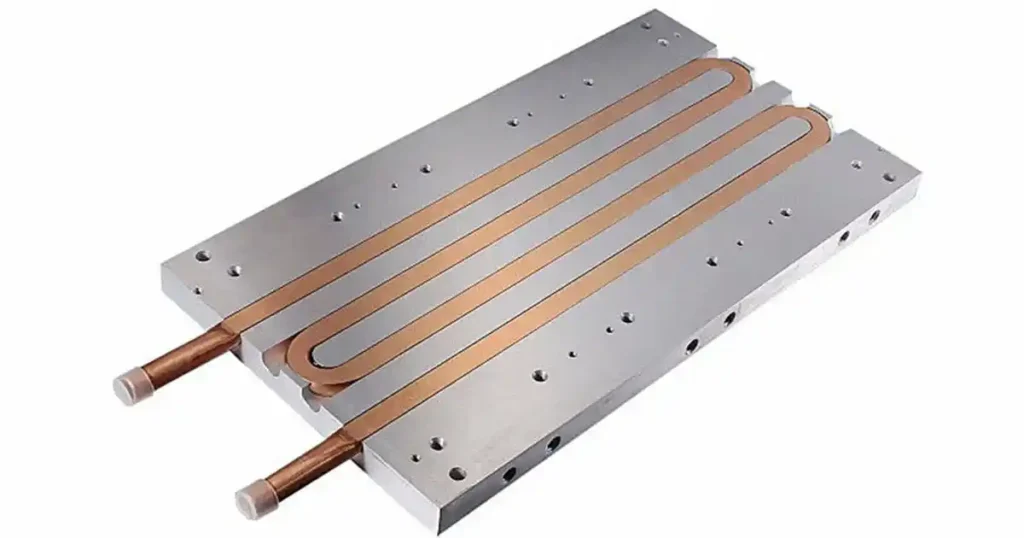
In the rapidly advancing fields of electronics, electric vehicles, and high-performance computing, thermal management has emerged as a central engineering challenge. Effective heat dissipation is essential for maintaining system reliability, performance, and longevity. Among the array of solutions available, CNC machined copper tube insert aluminum cooling plates stand out for their exceptional performance and design flexibility. This article explores the technical intricacies, manufacturing processes, and diverse applications of this hybrid thermal solution, detailing why it is a preferred choice for engineers worldwide.
The Science of Hybrid Cooling: Why Copper and Aluminum?
The fundamental principle behind a hybrid cooling plate lies in leveraging the distinct material properties of both copper and aluminum to create a component that outperforms single-material solutions.
Copper is renowned for its outstanding thermal conductivity, rated at approximately 401 W/m·K. This property makes it exceptionally efficient at rapidly absorbing and transferring heat from a concentrated source, such as a power semiconductor or laser diode. Its malleability also allows it to be formed into complex, leak-proof tube paths.
Aluminum, with a thermal conductivity of around 237 W/m·K, is lighter and more cost-effective than copper. It excels at distributing heat over a larger surface area, facilitating effective dissipation to the ambient environment or a secondary coolant. Its high strength-to-weight ratio and excellent machinability make it an ideal structural chassis.
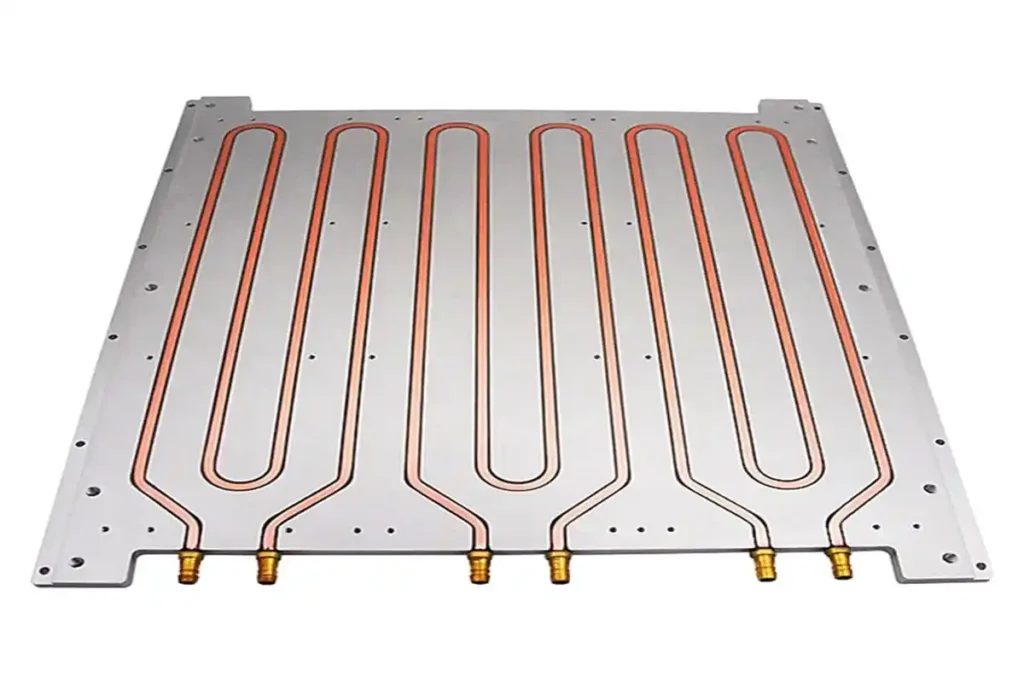
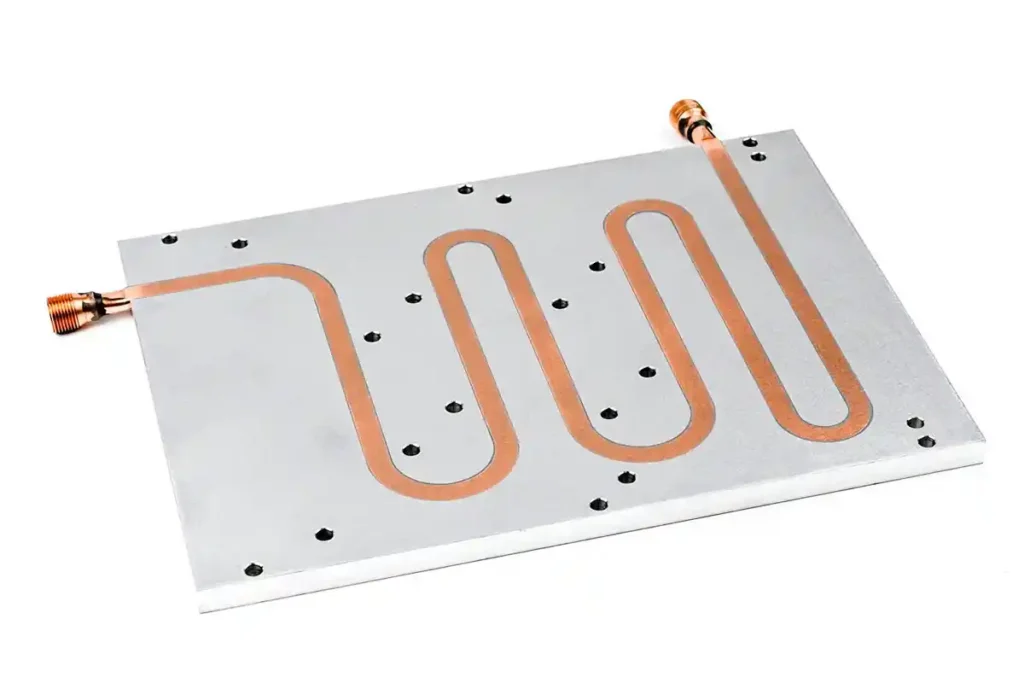
By integrating a copper tube insert within a CNC machined aluminum plate, engineers achieve a synergistic effect. The copper efficiently captures high-intensity heat, which is then conducted to the aluminum body. The aluminum spreads the thermal load and interfaces with extended surfaces like fins or cold plates. This combination optimizes performance, weight, and cost.
Material Property Comparison
Chart: Comparative Material Properties for Thermal Management
| Property | Copper (C11000) | Aluminum (6061-T6) | Unit |
|---|---|---|---|
| Thermal Conductivity | 391 – 401 | 151 – 237 | W/m·K |
| Density | 8.94 | 2.70 | g/cm³ |
| Specific Heat Capacity | 0.385 | 0.897 | J/g·°C |
| Yield Strength | 69 | 276 | MPa |
| Approximate Cost (Relative) | High | Medium | – |
The Precision Manufacturing Process at LAVA3DP
The performance and reliability of these components are directly tied to their manufacturing precision. At LAVA3DP, the production of copper tube insert aluminum cooling plates follows a meticulous, multi-stage process enabled by advanced CNC machining.
- Design and Simulation: The process begins with computational fluid dynamics (CFD) and thermal finite element analysis (FEA) to model fluid flow, pressure drop, and heat transfer. This virtual prototyping ensures optimal tube geometry and plate design before manufacturing begins.
- CNC Machining of the Aluminum Plate: A solid aluminum billet is mounted on a CNC milling machine. The machine, guided by digital CAD models, precision-cuts the plate to exact dimensions, creating mounting holes, interface surfaces, and the complex internal channel or groove that will house the copper tube. Surface flatness is critical here to ensure minimal thermal interface resistance.
- Copper Tube Bending and Preparation: Annealed copper tubing is bent, often using computer-controlled mandrel benders, to match the precise 3D path designed in the aluminum plate. This ensures smooth bends that minimize flow restriction and pressure drop.
- Insertion and Bonding: The formed copper tube is inserted into the machined groove. The key to performance is the thermal joint between the tube and the aluminum. Techniques such as:
- Thermal Epoxy Bonding: Fills microscopic air gaps with a thermally conductive adhesive.
- Soldering or Brazing: Creates a metallurgical bond for the highest possible thermal conductivity across the interface.
- Mechanical Swaging/Expansion: Physically deforms the tube or plate to create an interference fit.
- Finishing and Testing: The assembled unit undergoes surface finishing (e.g., anodizing for corrosion resistance), and each plate is typically subjected to pressure testing and leak testing to ensure integrity under operational conditions.
Key Advantages and Technical Benefits
The hybrid design offers several compelling advantages over standard cold plates or heat sinks:
- Enhanced Thermal Performance: The high conductivity of copper at the point of heat ingress, combined with aluminum’s efficient heat spreading, results in lower thermal resistance from the source to the coolant. Studies, such as those cited in the Journal of Electronic Packaging, demonstrate that hybrid designs can reduce junction temperatures by 15-20% compared to all-aluminum designs under high heat flux conditions.
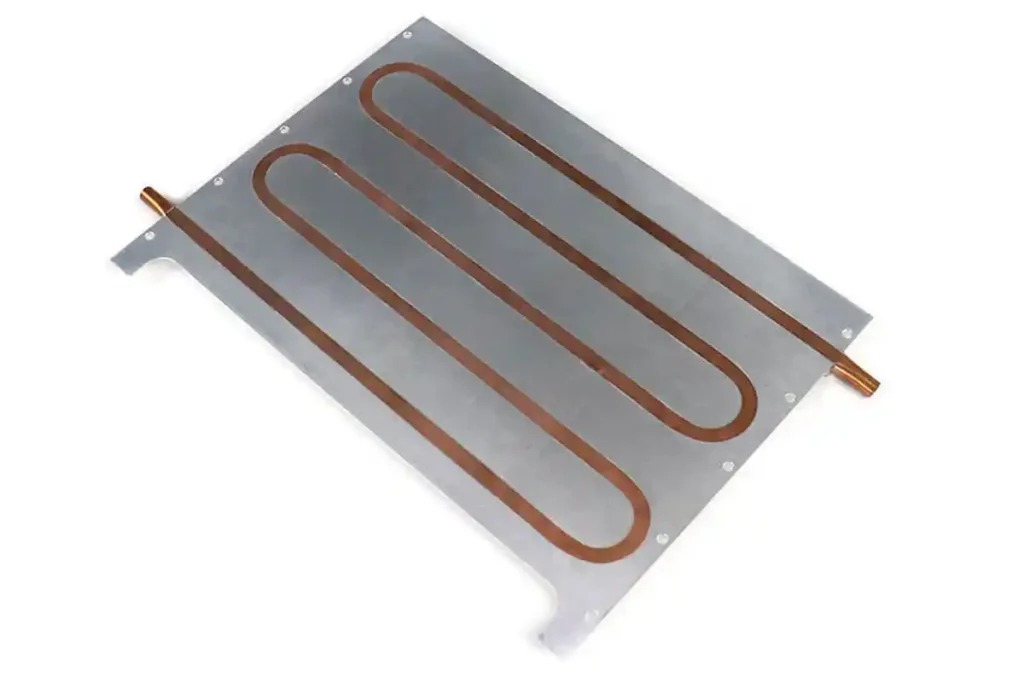
- Design Flexibility and Customization: CNC machining allows for nearly unlimited geometric complexity. Plates can be designed with multiple inlets/outlets, customized footprints for irregular components, and integrated mounting features. This is ideal for prototyping and low-to-medium volume production.
- Corrosion Resistance and System Longevity: Using copper for the fluid path is advantageous in water-cooling systems. Copper is less prone to galvanic corrosion with many common coolants than aluminum. When the aluminum exterior is hard-anodized, it provides a durable, insulating, and corrosion-resistant shell.
- Optimized Weight and Cost: By strategically using copper only where its superior conductivity is most needed, the overall component is lighter and more economical than a solid copper equivalent. This is particularly important in aerospace and automotive e-mobility applications.
- Reliability and Leak Prevention: The mechanical integrity provided by the CNC machined aluminum body, combined with robust bonding techniques, creates a highly reliable assembly capable of withstanding vibration and thermal cycling, as outlined in reliability standards like IPC-9592 for power electronics.
Primary Applications Across Industries
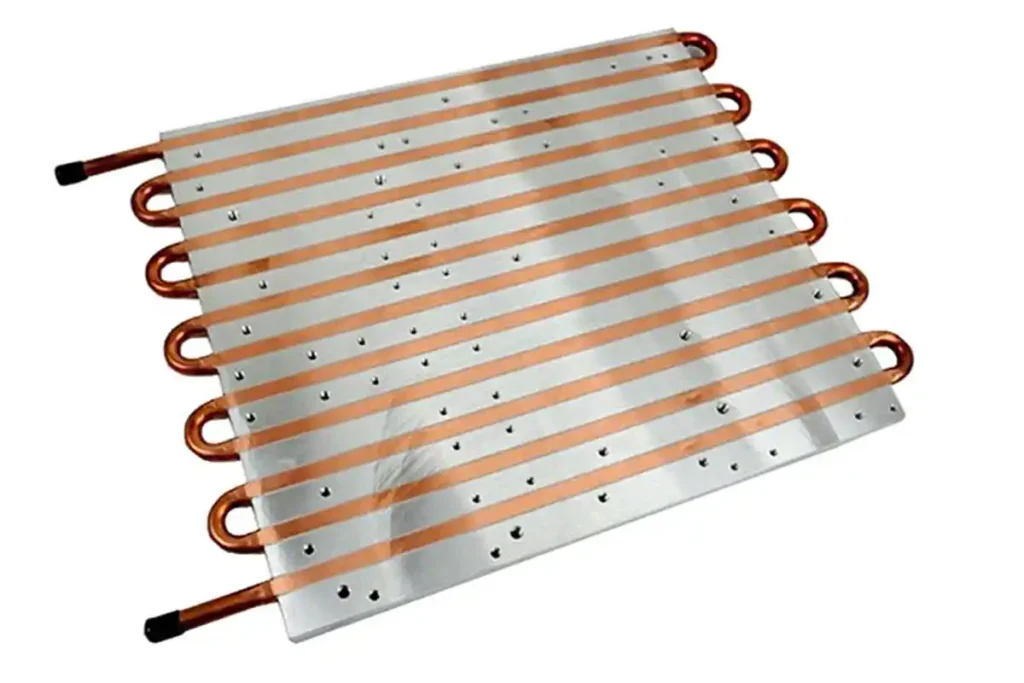
The unique attributes of CNC machined hybrid cooling plates make them suitable for demanding applications across several sectors.
- Electric Vehicle (EV) Power Electronics: They are used to cool IGBT modules, silicon carbide (SiC) inverters, and onboard chargers. Effective thermal management directly impacts power density, charging speed, and vehicle range.
- High-Power LED Lighting: Managing the intense heat generated by high-lumen LED arrays is essential for maintaining light output and lifespan. These plates offer a compact, efficient cooling solution for street lights, stadium lighting, and industrial fixtures.
- Laser Systems: Diode lasers and CO2 laser cavities generate significant waste heat. Precise temperature control via liquid cooling is necessary for wavelength stability and output power consistency.
- Telecommunications and 5G Infrastructure: Base station power amplifiers and emerging RF components require robust thermal management to ensure signal integrity and network reliability.
- Medical and Defense Electronics: For equipment like MRI machines, radar systems, and avionics, where performance and reliability are non-negotiable, these precision cooling plates provide dependable thermal control.
Design Considerations and Best Practices
When integrating a copper tube insert cooling plate into a system, several factors require attention:
- Thermal Interface Materials (TIMs): The performance bottleneck often lies between the heat-generating component and the cooling plate surface. Selecting the correct thermal paste, pad, or phase-change material is essential.
- Flow Rate and Pressure Drop: The internal diameter, path length, and number of bends in the copper tube dictate the hydraulic performance. Balancing a high flow rate for cooling with an acceptable pressure drop for the pump is a key design task.
- Connection and Manifolding: The design must account for leak-proof fluid connections, often using standard fittings like barbed, compression, or AN fittings. For cooling multiple components, a manifold design may be necessary.
Conclusion
CNC machined copper tube insert aluminum cooling plates represent a sophisticated and highly effective solution to modern thermal management challenges. By synergistically combining the best properties of two metals through precision manufacturing, they deliver superior cooling performance, design adaptability, and reliability. As industries from electric vehicles to advanced computing continue to push power densities higher, the role of these engineered thermal solutions will only become more prominent.
For engineers seeking to optimize thermal performance in their next project, exploring the capabilities of custom hybrid cooling plates is a logical step. To discuss a specific application or request a design consultation, please contact LAVA3DP .
Frequent Asked Questions (FAQs)
1. What are the main benefits of a copper tube insert versus a machined channel in aluminum?
A copper tube insert offers two primary benefits. First, copper’s higher thermal conductivity (approx. 401 W/m·K) absorbs and transfers heat from the source more efficiently than an aluminum channel. Second, the copper tube provides a smooth, sealed fluid path that is highly resistant to corrosion from coolants, enhancing system longevity and reliability, especially in water-cooled applications.
2. How does LAVA3DP ensure a good thermal bond between the copper tube and the aluminum plate?
LAVA3DP employs several robust techniques to maximize thermal interface conductivity. These include thermal epoxy bonding with high- conductivity adhesives, soldering or brazing for a metallurgical bond, and mechanical methods like swaging. The chosen method depends on the application’s thermal, pressure, and environmental requirements, and is validated through thermal performance testing.
3. Can you create cooling plates for very high-pressure liquid cooling systems?
Yes. The CNC machined aluminum body provides structural integrity, and the bonded copper tube assembly can be designed to withstand elevated pressures. By specifying material wall thickness, bond type, and incorporating proper support features, cooling plates can be manufactured for systems with pressure requirements significantly above standard operation. Each design is analyzed and can be pressure tested to validate its rating.
4. What finishing options are available for the aluminum housing?
The aluminum plate can be supplied in its raw machined state or with various surface finishes. The most common is hard anodizing, which increases surface hardness, provides excellent electrical insulation, and improves corrosion resistance. Other options include powder coating for specific colors or chemical film conversion coatings (e.g., Alodine) for basic protection.
5. What information is needed to request a custom cooling plate design or quote?
To provide an accurate design consultation or quote, please prepare the following information: 1) Detailed mechanical footprint and mounting hole locations; 2) Thermal requirements (total heat load, target component temperature); 3) Fluid type and available flow rate/pressure; 4) Inlet/outlet port location and fitting type preferences; 5) Any environmental constraints (vibration, temperature extremes). You can submit these details via the LAVA3DP contact form to begin the process.
Sources & Further Reading:
- Incropera, F.P., & DeWitt, D.P. (2007). Fundamentals of Heat and Mass Transfer.
- ASM International. (1990). Properties and Selection: Nonferrous Alloys and Special-Purpose Materials.
- Journal of Electronic Packaging, Transactions of the ASME.
- IEC 62047-22:2014 Standard for Semiconductor Devices.
- IPC-9592B Standard for Power Electronics Conversion.
- Bergman, T.L., et al. (2011). Fundamentals of Heat and Mass Transfer.
- SAE International Standards for Vehicle Thermal Management (e.g., J2936).
- IEEE Transactions on Components, Packaging and Manufacturing Technology.
- The Aluminum Association (aluminum.org).
- Copper Development Association (copper.org).
- International Journal of Heat and Mass Transfer.
- Han, J., & Wang, Q. (2019). “Review of Advanced Thermal Management for Electric Vehicles.”
- Proceedings of the ASME 2020 International Technical Conference on Packaging.
- Materials Science and Engineering: A Journal.
- U.S. Department of Energy Reports on Electric Vehicle Technologies.
- Laser Focus World Technical Articles on Thermal Management.
- 5G Infrastructure Market & Technology Reports (GSMA, etc.).
- Medical Device and Diagnostic Industry (MD+DI) Magazine.
- Additive Manufacturing Journal for related cooling channel design studies.
- ASTM Standards for Material Testing and Properties (B88, B209, etc.).