

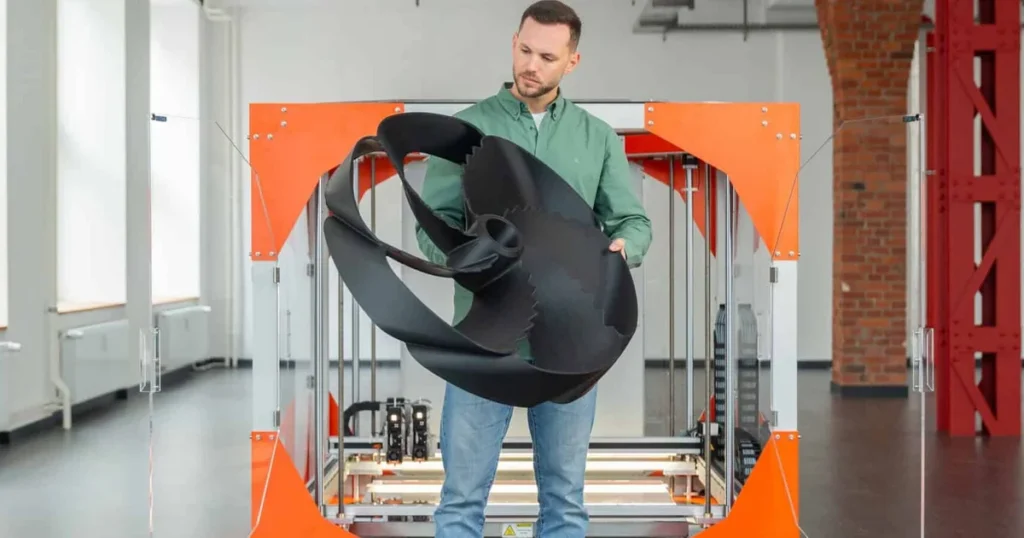
Choosing a large format 3d printer requires evaluating build volume, material compatibility, and hidden operational costs. Read our expert, hands-on review of the 10 best large 3d printers in 2026 to find the perfect industrial or desktop machine for your production line today.
Industrial manufacturing lines and engineering labs look vastly different today than they did five years ago. Production managers no longer view additive manufacturing as a mere tool for tiny plastic gadgets. Instead, they rely on a large format 3d printer to build functional automotive dashboards, aerospace ducting, and full-scale investment casting molds in a single piece.
Investing in a large 3d printer means eliminating the structural weakness of glued or bolted components. When you scale up your print bed, you change the physical dynamics of thermal management and mechanical stability. A big 3d printer requires rigid frame engineering, specialized motion systems, and advanced extrusion technology to prevent catastrophic warp halfway through a 60-hour print cycle.
Choosing the best large format 3d printer for your specific operational workflow involves balancing initial capital expenditures against long-term maintenance realities. This evaluation at LAVA3dp breaks down the leading huge 3d printer options available in 2026, offering direct insights based on rigorous industrial prototyping testing.
What Is a Large Format 3D Printer?
A large scale 3d printer is defined by its ability to construct parts that exceed standard desktop limitations without requiring sectioning. In practical industry terms, any machine offering a large build volume 3d printer footprint greater than 400 mm x 400 mm x 400 mm qualifies for this category. These systems are engineered to handle prolonged thermal stress and heavy payload movements over extended production periods.
| Printer Class | Typical Build Volume | Core Motion Mechanics | Target Material Profiles | Primary Use Case |
|---|---|---|---|---|
| Standard Desktop | 220 × 220 × 250 mm | V-slot wheels, rubber belts, single lead screws | Standard PLA, PETG, TPU filaments | Rapid visual modeling, hobbyist items, small-scale enclosures |
| Professional Large Volume | 400 × 400 × 400 mm | Linear guide rails, closed-loop steppers | ABS, Polycarbonate, Nylon composites | Functional prototyping, production jigs, architectural models |
| Industrial Grade Titan | 1000 × 1000 × 1000 mm | Precision ball screws, continuous servo drives | Carbon Fiber PEEK, Ultem, raw plastic pellets | End-use factory parts, automotive body panels, aerospace ducts |
As you look at largest 3d printers on the market, the technology splits into two main industrial additive manufacturing systems: fused deposition modeling (FDM) and resin-based stereolithography (SLA). A large format FDM 3d printer excels at processing robust, engineering-grade thermoplastics via filament or pellet forms. Conversely, finding the best large 3d printer resin system is essential when your application demands isotropic strength and flawless surface cosmetics for complex industrial prototyping solutions.
Related: 10 Best Beginner 3D Printers in 2026 (Easy Setup + Hands-On Tested)
How We Evaluated the Best Large Format 3D Printers
Our evaluation protocol bypasses manufacturer marketing brochures to focus on real-world reliability data, frame deflection rates, and thermal uniformity. We analyzed these large scale 3d printers based on hours of continuous operation under industrial factory floor conditions.
Our scoring matrix grades machines on five core engineering pillars:
Key Features to Consider Before Buying
Selecting a 3d printer for large objects requires a deep understanding of your final part specifications. A common mistake is focusing solely on the physical build box while ignoring the mechanical ecosystem required to sustain successful long-term extrusion.
Motion Systems and Frame Construction
A giant 3d printer carrying a heavy toolhead needs a robust gantry. Ball screws and linear guide rails are mandatory for the Z and XY axes to prevent layer shifting. Standard rubber belts degrade quickly under the weight of large-scale print runs. Look for a professional large build volume printer that utilizes closed-loop servo motors. These motors track their exact positioning, preventing a random power spike or mechanical skip from ruining a 10-kilogram print.
Thermal Control and Heated Chambers
If you are printing with industrial-grade materials like ABS, Polycarbonate, or Ultem, an open-frame machine will fail. Massive parts shrink as they cool, leading to devastating split layers. An extra large 3d printer intended for functional prototypes must feature an actively heated chamber reaching at least 60°C to 90°C. For PLA or PETG usage, a well-ventilated enclosure is sufficient, but thermal stability remains paramount.
Nozzle Diameter and Volumetric Flow Rates
Printing a large part with a standard 0.4 mm nozzle is a recipe for logistical failure. It can take weeks to complete a single object. A production-ready 3d printing setup uses 0.8 mm to 1.2 mm nozzles, or transitions entirely to a large format 3d printer pellet system. Pellet extrusion feeds plastic pellets directly into a high-capacity melting zone, dropping material costs by up to 80% while dramatically increasing volumetric deposition rates.
10 Best Large Format 3D Printers in 2026
| Machine Model | Build Volume (mm) | Extrusion Type | Primary Target Segment | Starting Price Range |
|---|---|---|---|---|
| Modix Big-Meter | 1000 × 1000 × 1000 | Filament / Dual | Custom Large Part Manufacturing | $13,500 – $16,000 |
| Raise3D Pro3 Plus | 300 × 300 × 605 | Filament / Dual | Prototyping & Education | $5,500 – $7,500 |
| CreatBot D600 Pro 2 HS | 600 × 600 × 600 | Filament / High Temp | Aerospace & Automotive | $15,900 – $18,000 |
| Formlabs Form 4L | 353 × 196 × 350 | Low Force Stereolithography | High-Precision Engineering | $9,000 – $11,000 |
| EXT 1070 Titan Pellet | 1070 × 1070 × 1118 | Pellet | Industrial Production | $65,000+ |
| Mingda MD-600D | 600 × 500 × 600 | Dual High-Temp Filament | Industrial Prototyping | $18,000 – $19,999 |
| Elegoo OrangeStorm Giga | 800 × 800 × 1000 | Multi-Nozzle Filament | Affordable Large Scale | $2,000 – $2,400 |
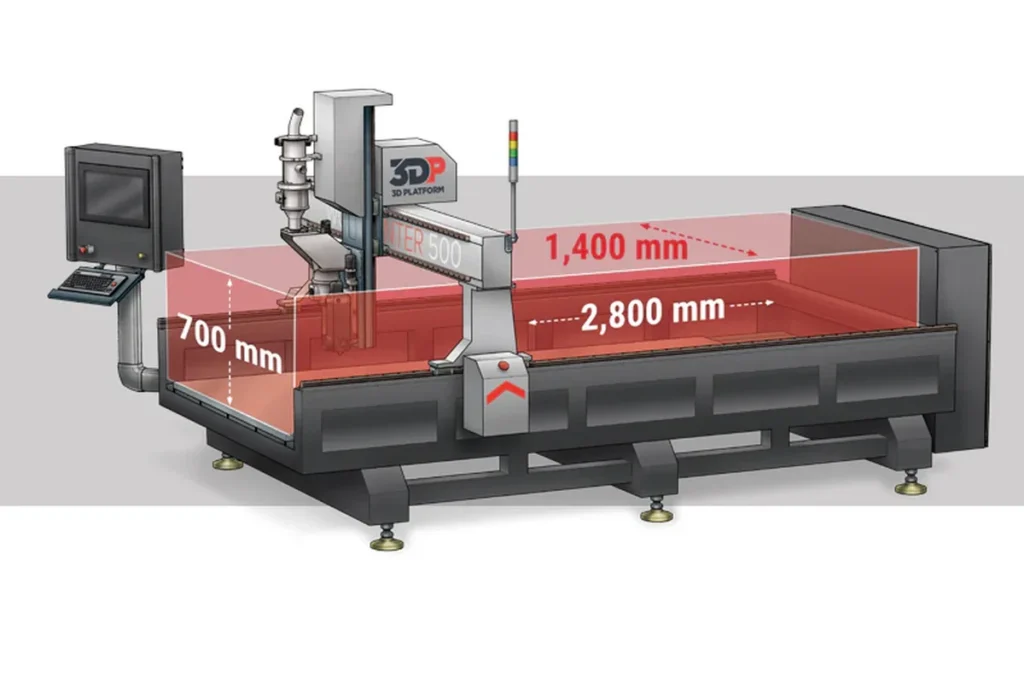
| 3D Platform WorkCenter | 1400 × 2800 × 700 | Heavy-Duty Filament / Pellet | Heavy Industrial Parts | $120,000+ |
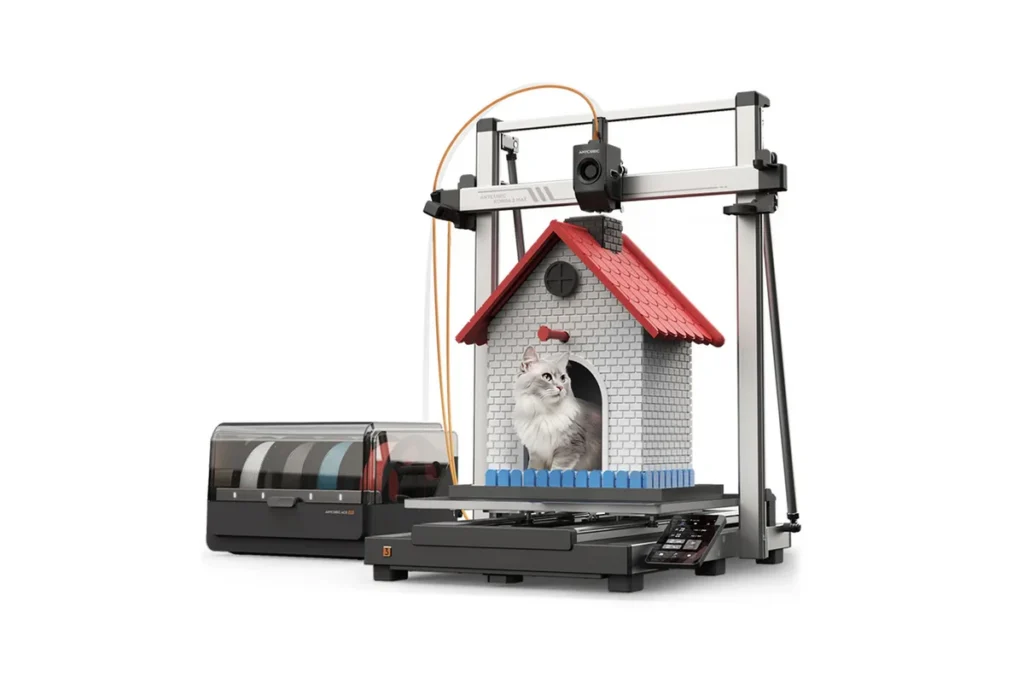
| Anycubic Kobra 3 Max Combo | 420 × 420 × 500 | Multi-Color Filament | Prosumers & Small Business | $549 – $798 |
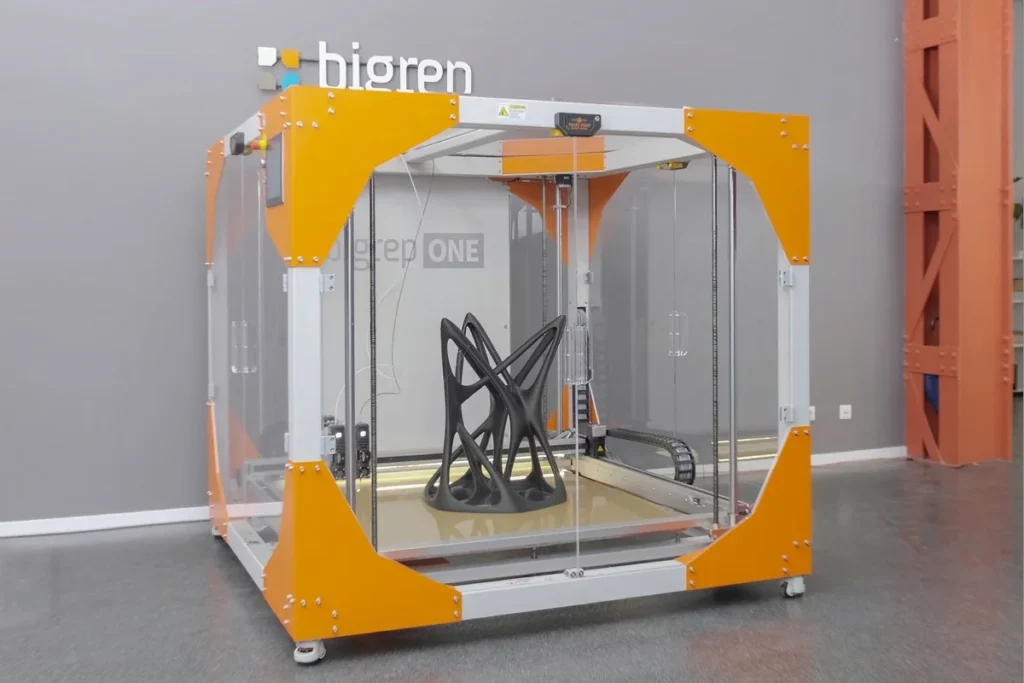
| BigRep ONE | 1005 × 1005 × 1005 | Power Extruder Filament | Factory Jigs & Fixtures | $60,000+ |
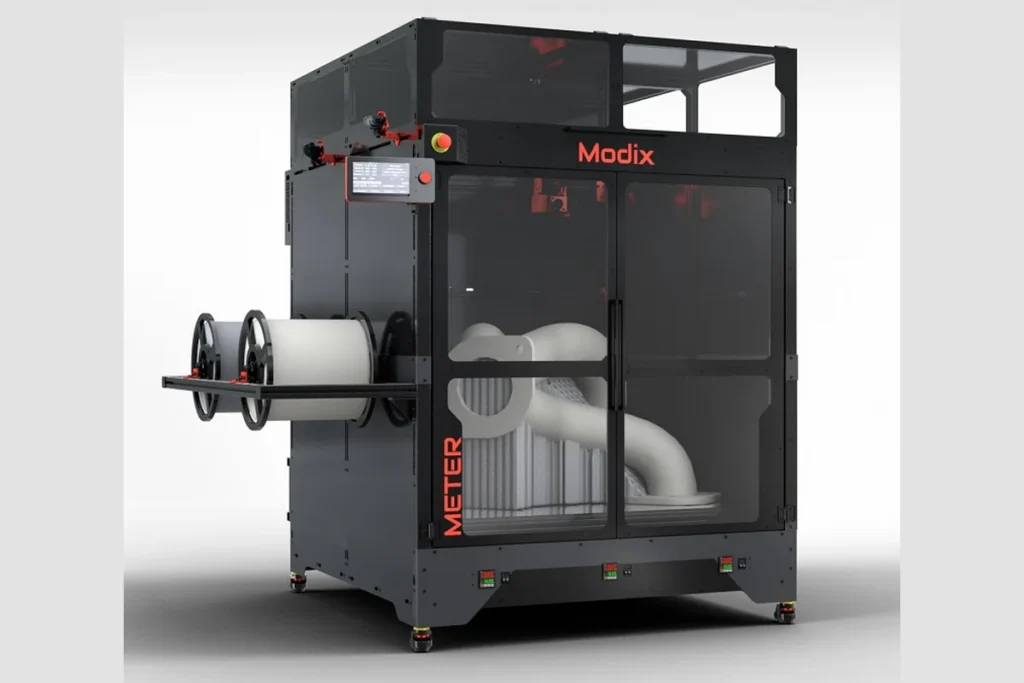
Modix Big-Meter
The Modix Big-Meter represents the benchmark for a true 1m 3d printer near me for businesses seeking massive capacity without six-figure capital investments. Its massive 1000 mm x 1000 mm x 1000 mm build space handles massive industrial prototyping solutions easily.
- Key Advantage: The heavy-duty aluminum chassis uses premium Hiwin linear rails and dual-zone heated beds, ensuring the print platform remains dead flat.
- Best For: Engineering teams executing custom large part manufacturing who require a dependable open-architecture platform.
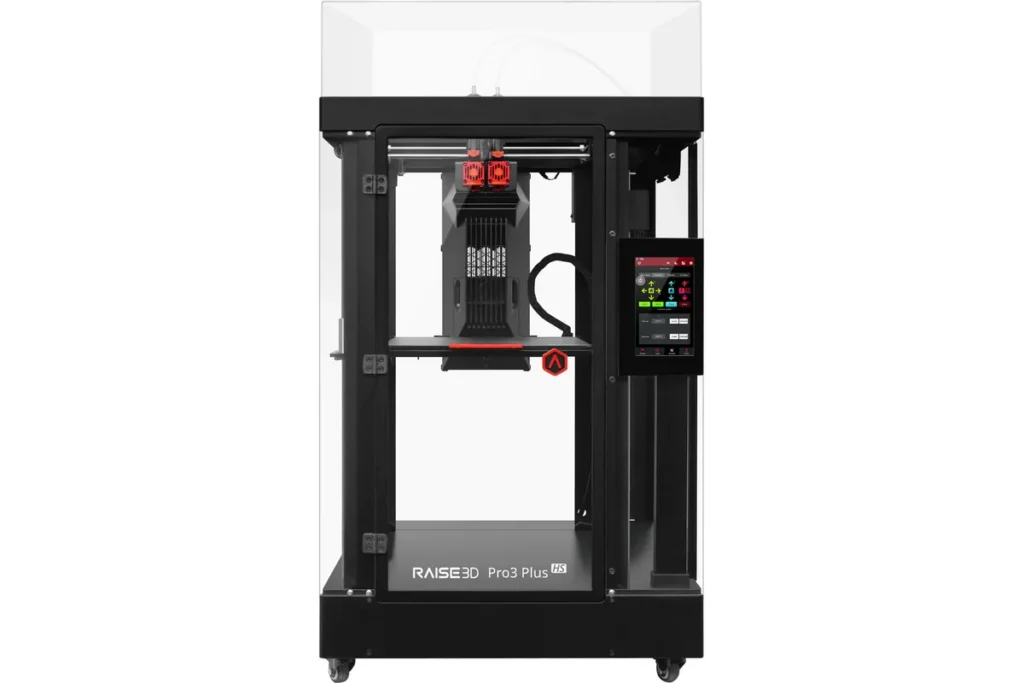
Raise3D Pro3 Plus
Engineered as a professional large build volume printer, the Pro3 Plus focuses heavily on workflow automation and reliable dual-extrusion. It is a highly capable 3d printer with large print volume designed to sit right inside an engineering office.
- Key Advantage: It features an interchangeable hotend system and an air-flow manager that stabilizes internal enclosure temperatures for tricky warp-prone materials.
- Best For: Manufacturing teams requiring flawless multi-material execution and soluble support integration.
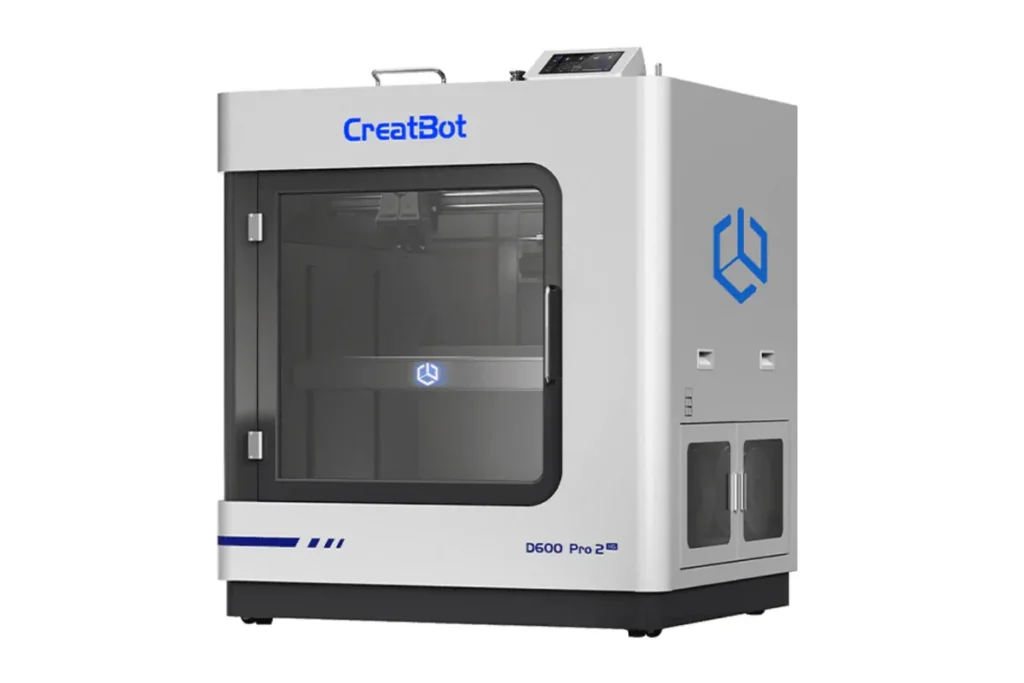
CreatBot D600 Pro 2 HS
This large industrial additive manufacturing solutions machine is built like a tank. It targets the industrial grade large 3d printer segment by offering a fully enclosed, actively heated chamber that reaches 70°C, combined with 420°C hotends.
- Key Advantage: It natively handles engineering-grade 3d printing substrates like Carbon Fiber nylon, ULTRA, and PC without structural delamination.
- Best For: Producing end-use structural components and high-strength industrial 3d printing applications.
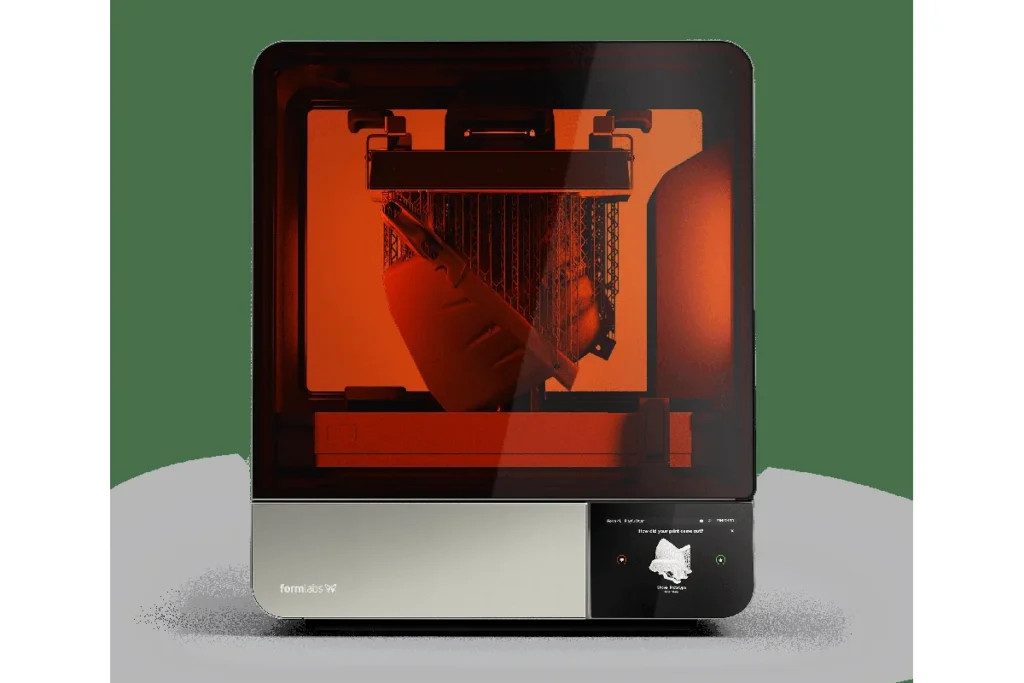
Formlabs Form 4L
When precision outweighs outright scale, the Form 4L stands out as the best large 3d printer resin option on the market. It utilizes Formlabs’ proprietary Low Force Stereolithography technology to deliver unparalleled surface finishes.
- Key Advantage: Incredible accuracy across its entire fluid resin volume, reducing post-processing time down to nearly zero for complex geometries.
- Best For: Medical device prototyping, investment casting patterns, and high-fidelity aerospace visual models.
Related: Best 3D Printer for Kids in 2026: Safe, Easy & Fun Picks for Beginners
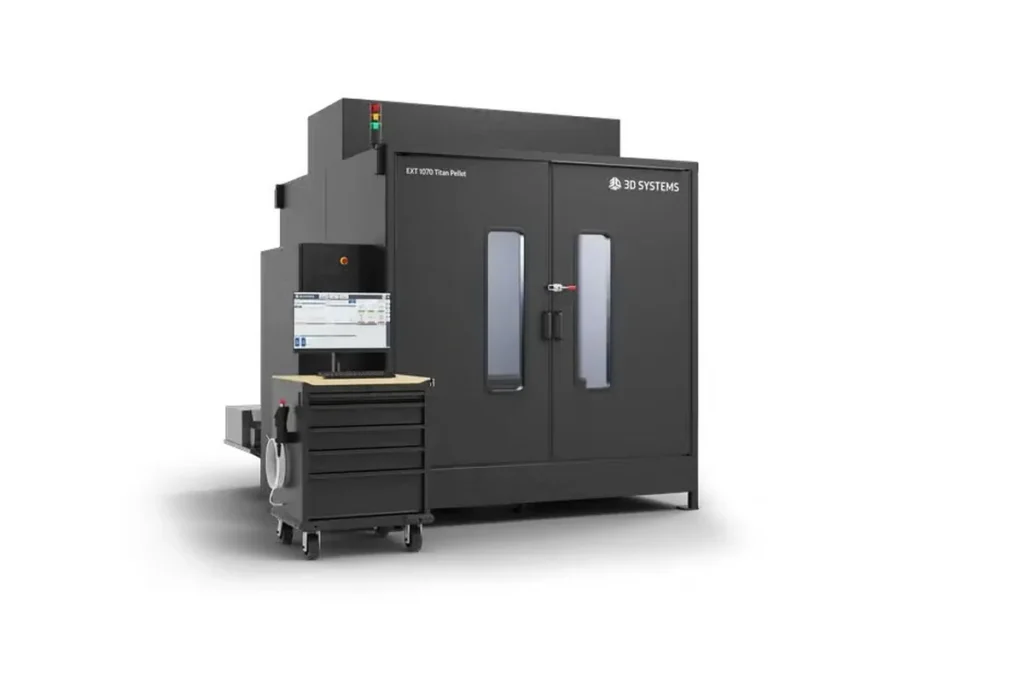
EXT 1070 Titan Pellet
As a premium industrial 3d printer with large build volume, the Titan Atlas can be configured as a large format 3d printer pellet machine. This option cuts material operating costs significantly by bypassing filament production lines entirely.
- Key Advantage: Pellet extrusion speeds are up to ten times faster than conventional filament extrusion, turning massive prints from weeks into hours.
- Best For: High volume 3d printing machine needs within the automotive and maritime production sectors.
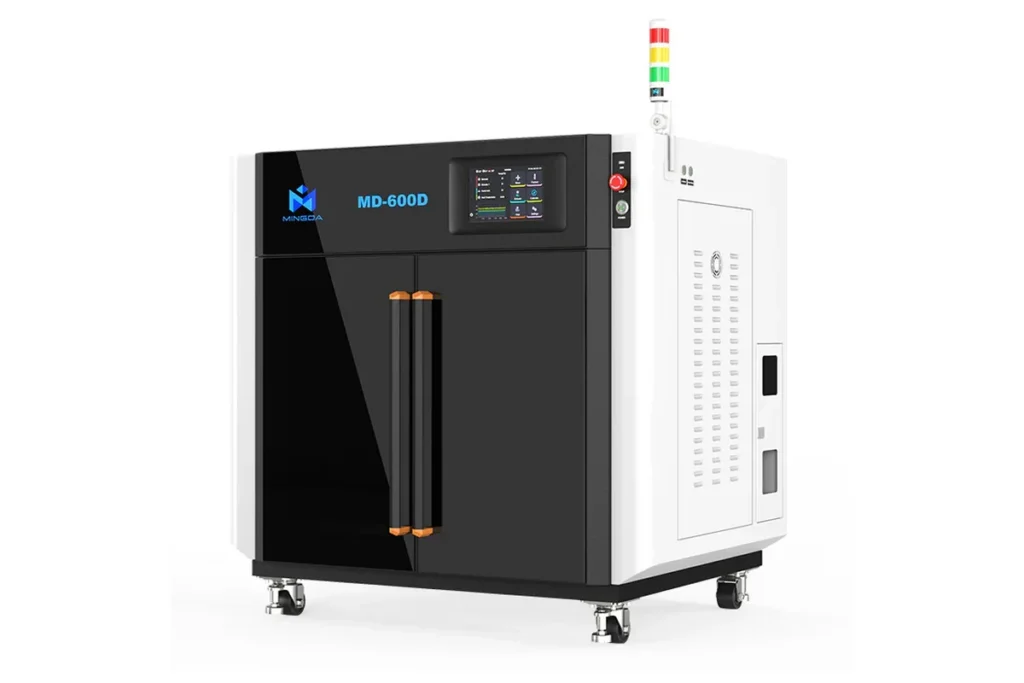
Mingda MD-600D
For industrial facilities seeking a true high volume 3d printing machine without western-brand markup, the Mingda MD-600D represents the pinnacle of heavy-duty manufacturing engineering. Offering a substantial 600 mm x 600 mm x 600 mm print envelope, this system is entirely built around a customized CNC sheet metal integrated chassis designed to operate on continuous, 24/7 factory production cycles.
- Key Advantage: It pairs a Klipper-optimized motion gantry with premium HIWIN linear guide rails and closed-loop servo motors. This combination allows it to drive dual high-temperature extruders (up to 350°C) at speeds up to 500 mm/s with a peak volumetric flow of 40 mm³/s, eliminating the risk of lost steps during massive print runs.
- Best For: Factory floor applications requiring custom large part manufacturing, carbon-fiber reinforced jigs, and high-strength industrial prototyping solutions.
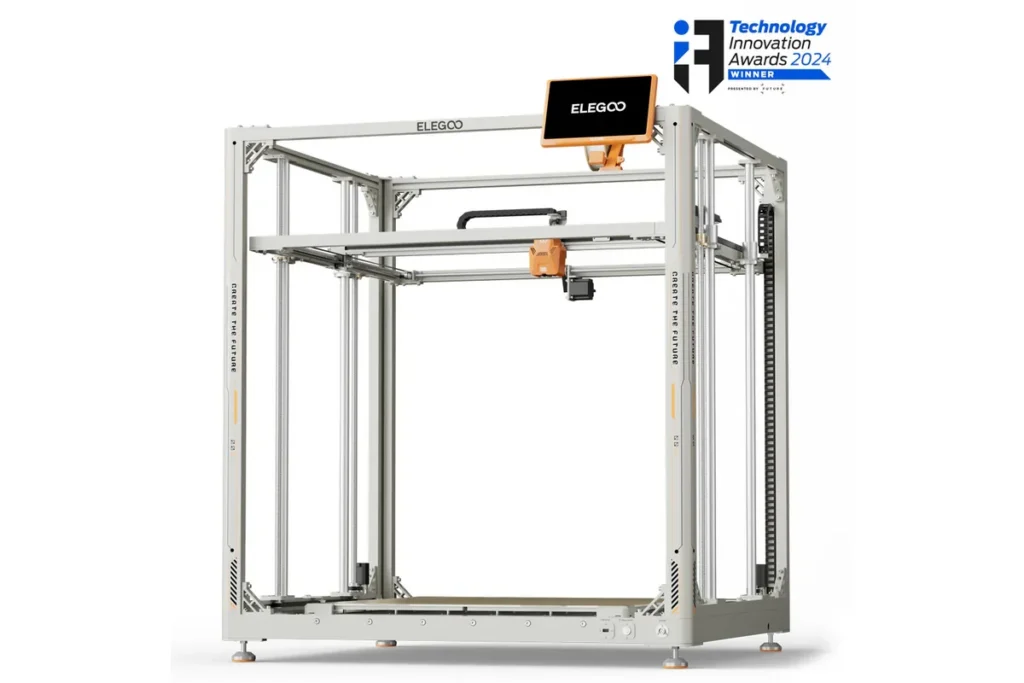
Elegoo OrangeStorm Giga
For organizations searching for an affordable large 3d printer, the OrangeStorm Giga provides an open-frame, multi-nozzle configuration that allows users to run multiple identical parts simultaneously.
- Key Advantage: Unmatched volume-to-cost ratio, giving educators and small workshops massive scale without breaking budgets.
- Best For: Budget-conscious shops needing a big cheap 3d printer for low-stress PLA architectural mockups and artistic sculptures.
3D Platform WorkCenter
The WorkCenter represents the peak of manufacturing with large format 3d printers. Its custom industrial gantry can be expanded to fit specific assembly line footprints, making it a modular titan.
- Key Advantage: Massive mechanical torque allows it to drive wide-diameter nozzles effortlessly, yielding ultra-thick, structural layers designed for immediate industrial service.
- Best For: Direct factory floor integration for large industrial additive manufacturing solutions.
Anycubic Kobra 3 Max Combo
For multi-color makers and functional prototyping businesses looking to maximize their spatial capacity without cross-mortgaging their workshop, the Anycubic Kobra 3 Max Combo redefines the affordable large 3d printer sector. Boasting an expansive 420 mm x 420 mm x 500 mm build envelope ($88$ liters of volume), this high-speed gantry system is standard-equipped with the advanced ACE Pro multi-material management hub.
- Key Advantage: It successfully pairs ultra-high-volume execution with flawless 4-to-8-color synchronized capabilities. Crucially, the accompanying ACE Pro module functions as an active filament drying box (sustaining internal temperatures up to 55°C), entirely eliminating the moisture-absorption structural defects that plague long-duration large scale 3d printing workflows.
- Best For: Acting as an exceptional best large 3d printer for beginners and creative entrepreneurs who specialize in oversized multi-color cosplay props, automotive interior concept mockups, and complex display models.
BigRep ONE
The BigRep ONE is widely regarded as the ultimate large scale 3d printer for production parts. Its open layout is engineered specifically to give factory operators unhindered access to huge 3d printer beds for quick part removal.
- Key Advantage: Tactile, bulletproof controls and dual power extruders optimized for continuous 24/7 heavy factory output.
- Best For: Creating large prototype 3d printing setups, functional jigs, and direct assembly fixtures for automotive factories.
Real-World Applications Across Industries
Large format 3d printing has shifted from niche exploratory departments directly into core operational workflows. Understanding how different industries deploy these machines highlights their versatile financial return on investment.
Automotive and Transportation
Engineers rely heavily on a large format 3d printer for automotive parts to avoid the expensive tooling phase. Instead of waiting months for injection molding steel dies, design teams print full-scale bumper assemblies, interior dashboards, and custom air intakes overnight. This approach reduces design verification lifecycles from quarters to days.
Aerospace and Defense
Aerospace facilities utilize engineering-grade 3d printing to consolidate multi-part assemblies into single, optimized structures. Large scale 3d printers build lightweight environmental control system ducting and carbon-fiber-reinforced internal bracketry that reduces overall aircraft weight while maintaining strict mechanical safety factors.
Foundry and Pattern Making
Traditional sand casting patterns take weeks to carve out of wood or machine out of aluminum. Foundries now deploy a large 3d printer for large objects to print patterns directly using specialized low-ash materials. The printed parts go straight into the sand mold boxes, cutting tooling lead times by up to 90%.
Materials Used in Large-Scale 3D Printing
As your build envelope grows, your material strategy must adapt. Using the wrong polymer on a massive build bed guarantees failure.
- Industrial Commodity Polymers (PLA / PETG): Ideal for large prototype 3d printing where structural strength and high thermal resistance are secondary to visual form verification. These materials exhibit minimal shrinkage, making them reliable on open-frame machines.
- Engineering-Grade Filaments (ABS / Polycarbonate / Nylon): Used extensively for creating a large 3d printer for production parts. These require enclosed, heated build spaces to avoid warping and ensure robust layer adhesion.
- High-Performance Thermoplastics (PEEK / PEI / Ultem): The pinnacle of additive manufacturing for production. These materials deliver metal-replacement strength and flame-retardant capabilities, but require advanced, specialized industrial hardware capable of sustaining extreme nozzle and chamber temperatures.
- Industrial Plastic Pellets: Used in systems like the Titan Atlas, pellet feeding allows companies to purchase raw material at industrial scale prices ($2 to $5 per kilogram) rather than premium wound spools ($25 to $60 per kilogram), radically changing production cost equations.
Cost Breakdown: Purchase, Operation, and Maintenance
Understanding the true financial commitment of running a large format 3d printer price calculation requires looking past the initial purchase invoice.
Capital Expenditure (Initial Purchase)
Hardware costs vary widely based on capabilities. A prosumer best large 3d printer under $1000 or a big cheap 3d printer can handle basic PLA geometries. True industrial-grade large 3d printer hardware capable of processing advanced materials ranges anywhere from $15,000 to over $100,000 for continuous factory floor operation.
Operational Expenditures (Materials and Power)
A massive build cycle can easily consume 5 to 15 kilograms of material. If you use specialized filament, a single print run can cost $500 in raw materials alone. Furthermore, running a 1000W heated print bed and an active chamber heater continuously for 4 days adds measurable utility expenses to your factory overhead.
Maintenance and Downtime
Large format machines undergo massive mechanical wear. Linear rails require regular lubrication, and large-diameter nozzles handling abrasive carbon-fiber filaments must be replaced frequently. Budgeting for preventative maintenance schedules is critical to avoid unscheduled downtime, which can derail tight corporate prototyping schedules.
Large Format 3D Printing vs. Traditional Manufacturing
| Evaluation Metric | Large Format 3D Printing (Additive) | CNC Machining (Subtractive) | Injection Molding (Formative) |
|---|---|---|---|
| Upfront Tooling Cost | $0 (Direct from CAD to build chamber) | Minimal (Requires specific fixtures/jigs) | High (Steel/Aluminum molds cost $15,000 – $80,000) |
| Geometric Complexity | High (Handles internal channels & lattices) | Limited (Constrained by tool bit access paths) | Moderate (Requires draft angles & uniform walls) |
| Material Waste Factor | Minimal (Only utilizes required model & support media) | High (Raw blocks are milled down into scrap chips) | Low (Sprues and runners can often be recycled) |
| Lead Time to First Part | Hours (Typically 12 to 72 hours per massive component) | Days (Requires setup, path programming, and staging) | Weeks/Months (Requires design, cut, and test of hard tools) |
| Optimal Production Run | 1 to 200 units (Ideal for custom setups) | 10 to 500 units (Mid-tier mechanical components) | 1,000 to 100,000+ units (High-volume consumer items) |
When comparing large scale 3d printing services and hardware against CNC machining or injection molding, the primary differentiator is tooling cost and geometric freedom.
Traditional injection molding requires massive upfront investments in steel molds, rendering low-volume production runs financially impossible. CNC machining wastes immense amounts of raw material when milling out hollow, organic geometries.
Large-format additive manufacturing enables toolless production. You can alter a digital CAD file and begin manufacturing version two immediately, without throwing away expensive physical tooling. However, for production runs exceeding thousands of identical units, traditional automated molding lines remain faster and more cost-effective per piece.
Common Buying Mistakes to Avoid
Ignoring the Facility Footprint
Many buyers purchase a large scale 3d printer without checking their facility’s physical constraints. These machines often require industrial three-phase power, dedicated ventilation infrastructure, and doorways wide enough to fit a palletized industrial crate.
Underestimating Post-Processing Requirements
A massive print requires massive cleanup. Removing dense support structures, sand-blasting surfaces, or curing large-format resin prints requires large auxiliary wash and cure stations that take up significant shop space.
Buying Open-Frame for Technical Materials
Trying to save capital by purchasing an open-frame machine to print massive ABS or Nylon enclosures is a recipe for constant failure. If the material profile requires thermal management, an enclosed, heated chamber is a non-negotiable requirement.
Large Format FDM vs. Resin 3D Printing
Choosing between a large format FDM 3d printer and a resin-based system comes down to a choice between mechanical utility and cosmetic accuracy.
FDM systems utilize a wide range of rugged, anisotropic thermoplastic filaments and pellets. They are the clear choice for functional jigs, heavy wear-and-tear factory fixtures, and structural automotive components. FDM layers are visible, but the parts are physically resilient.
Resin systems deliver unmatched isotropic strength and clean, smooth surfaces right off the build platform. This makes them the ultimate choice for highly detailed visual models, transparent housings, and complex medical prototypes. However, large resin prints are heavier, require intensive chemical washing, and the raw material is typically more expensive per liter.
Related: 11 Amazing 3D Printed Toys Kids and Adults Will Love in 2026
Future Trends in Large-Scale Additive Manufacturing
The large-scale printing market is shifting quickly toward hybrid manufacturing platforms. Modern factory systems are increasingly combining high-output pellet extrusion heads with secondary CNC milling spindles on the same gantry. The system prints a near-net shape rapidly, then instantly cuts back the outer surface with the milling tool to achieve aerospace-grade tolerances.
Simultaneously, machine learning integration is transforming factory yield rates. Real-time optical layer monitoring systems track material deposition as it happens. If a flaw or localized warp is detected, the machine automatically adjusts extrusion temperatures or compensation factors on the fly, preventing costly multi-kilogram print failures before they occur.
Frequently Asked Questions
What is the largest 3D printer I can buy?
For standard industrial environments, systems like the BigRep ONE or the 3D Platform WorkCenter offer build volumes exceeding one cubic meter. On a heavy industrial construction scale, custom crane-based gantry systems can print entire concrete houses or large maritime hulls spanning dozens of meters.
Are large 3D printers worth it?
Yes, if your workflow requires low-volume production of large parts or frequent prototyping. They eliminate the need to section models into smaller pieces and glue them together, saving hours of manual labor and ensuring the final component retains full structural integrity.
What is considered a large 3D printer?
In the current additive market, any machine providing a usable build envelope greater than 400 mm x 400 mm x 400 mm is considered a large format system. Machines smaller than this fall into the standard desktop or mid-size professional categories.
What is the best large format 3D printer for industrial use?
The Titan 3D Atlas and the CreatBot D600 Pro 2 are exceptional choices. The Titan Atlas excels due to its high-speed pellet extrusion options, while the CreatBot offers an affordable, heavily insulated high-temperature environment for processing advanced engineering polymers.
How much does a large 3D printer cost?
An entry-level, open-frame large format printer costs between $1,500 and $3,000. Professional, enclosed dual-extrusion systems range from $5,000 to $20,000. True industrial-grade manufacturing systems featuring actively heated chambers and pellet compatibility cost anywhere from $50,000 to over $120,000.
What industries use large format 3D printing?
It is heavily used in automotive design, aerospace engineering, maritime construction, architectural modeling, and foundry pattern making. It is also highly effective for scenic design studios creating large-scale props for film and theater production.
Is large-scale 3D printing suitable for production?
Yes, for low-to-medium volume production runs, specialized end-use parts, or highly customized products. It allows businesses to run agile manufacturing cycles without the massive lead times and capital expenses associated with traditional injection molding tooling.