

Want to dominate the arena with a custom top? Learn how to design, print, and balance a high-performance 3D Printed Beyblade using pro engineering tactics. Read our guide at LAVA3dp and build your ultimate spinner today!
Introduction: The New Frontier of Blade Battles
Bladers have always looked for ways to get a competitive edge in the stadium. In the past, you were limited to factory-made parts from retail shelves. If a specific spin track or attack ring didn’t exist, you had to change your strategy. Desktop manufacturing changes this dynamic completely, allowing any hobbyist to become an independent beyblade maker right from home.
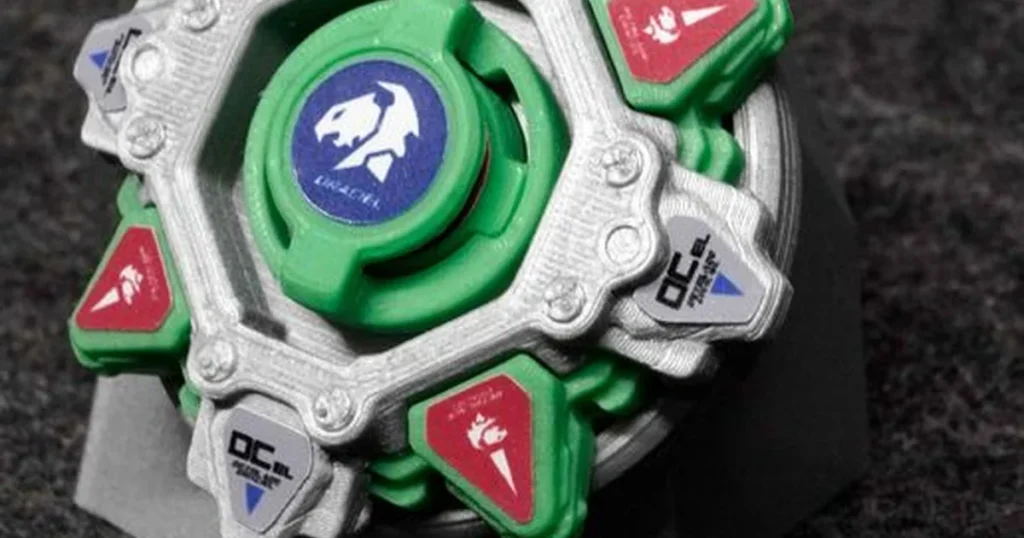
A 3D Printed Beyblade is a fully functional battle top built from the ground up using additive manufacturing. By taking control of the digital design process, you dictate the weight distribution, perimeter shape, and contact points of your top. If you have ever wondered, “Can you 3D print a Beyblade?” or “Can you actually 3D print a working Beyblade?” the answer is a definitive Yes.
This approach changes the hobby from simple collection to active engineering, giving you the power to make your own beyblade customized for your local meta. You do not have to rely on standard retail releases.
Instead, you can construct a custom beyblade that targets the specific weaknesses of your opponent’s favorite build. Whether your goal is to recreate classic designs like a 3d printed beyblade metal fusion top, experiment with modern formats like a beyblade x 3d print, or craft a completely original homemade beyblade, the technology is accessible enough for any maker to start spinning.
How to Design a Custom 3D Printed Beyblade
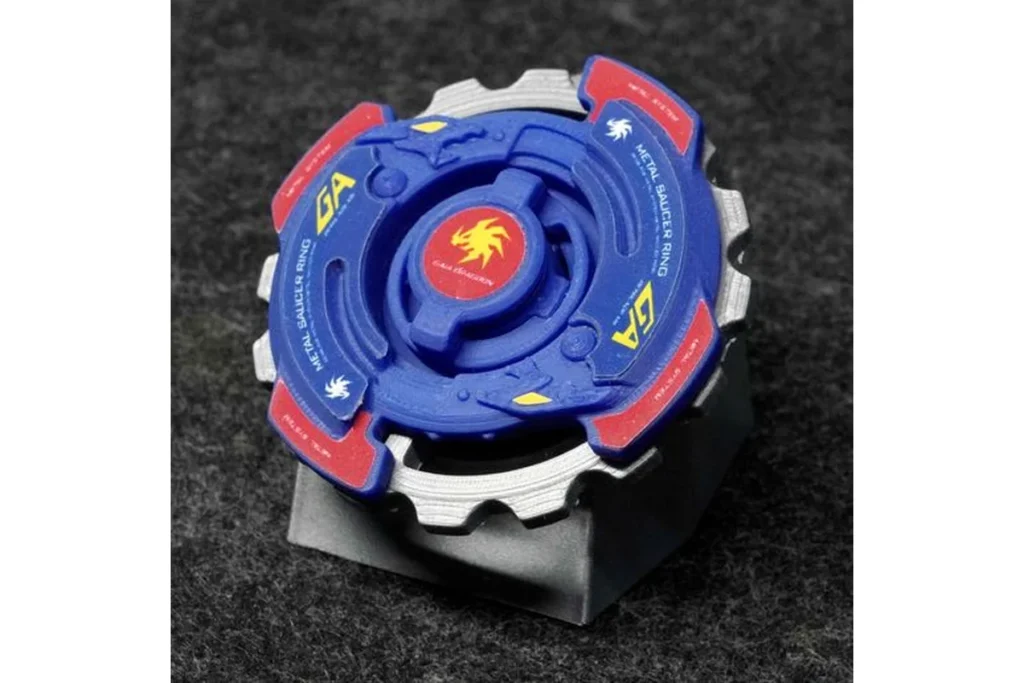
Building a competitive battle top requires a solid digital foundation. While you can easily jump online for a quick Beyblade STL download, understanding how to create your own beyblade gives you total control over how the top behaves during high-velocity collisions.
Choosing Your Software and Sourcing Files
For physical parts that must fit together mechanically, parametric modeling software works best. A Fusion 360 Beyblade tutorial is the most effective starting point for creators because the software allows you to adjust internal clearances on the fly.
If you aren’t ready to sketch from scratch, downloading a pre-made free Beyblade 3D model for or utilizing community assets like free Beyblade STL files can save you hours of development time. Once you import a baseline beyblade stl into your software, you can modify its geometry to create a completely custom Beyblade STL tailored to your tactical needs.
The Engineering Workflow
To create a functional Beyblade CAD model, you must follow a precise sequence to ensure the final printable Beyblade actually functions with your existing launchers:
Understanding Attack, Defense, and Stamina Types
Every top falls into a specific performance category. Your geometric choices determine how your custom top handles impact energy and transfers momentum, allowing you to engineer a highly competitive 3D printed Beyblade.
Related: From Cats to Dragons: Popular Cute 3D Printed Animals You Should Try
| Beyblade Type | Perimeter Geometry | Weight Concentration | Primary Combat Strategy |
|---|---|---|---|
| Attack | Aggressive hooks, jagged jaws | Outward, concentrated on points | Smash opponents out of the ring via kinetic shock |
| Defense | Smooth, circular, wide slopes | Centered and low to the ground | Deflect hits, absorb impact energy without bursting |
| Stamina | Perfect uninterrupted circles | Distributed evenly along the extreme rim | Outlast opponent spin time by minimizing friction |
Beyblade Attack Type Design
Attack types focus on maximum kinetic energy transfer. To build a high speed 3D printed Beyblade, design an outer layer with three or four prominent, jagged blades. These protrusions act as hammers, striking the opponent with massive force. The inherent risk here is self-recoil; aggressive wings will destabilize your own top if they do not deliver an immediate knockout blow.
Beyblade Defense Type Design
A Beyblade defense type design aims to minimize impact damage. Keep the outer shape as close to a perfect circle as possible. Use downward-sloping edges to force opposing attack tops to slide underneath, lifting them off the ground and destroying their stability. Smooth surfaces ensure that attack wings glance off without gripping your top’s perimeter.
Beyblade Stamina Type Design
A Beyblade stamina type design prioritizes aerodynamic efficiency. The perimeter must be perfectly smooth to reduce air resistance. Minimize drag by keeping the top profile low to the ground. Stamina designs do not care about hitting hard; they win matches by maintaining a stable center of gravity until the opponent runs out of momentum.
Tips for Better Balance and Performance
A beautiful design will fail instantly if it wobbles in the arena. Proper Beyblade weight distribution design is the hidden secret to winning close matches against stock factory tops.
Centrifugal force dictates that weight pushed to the extreme outer edge increases momentum. This concept is crucial when engineering a durable 3D printed spinning top. When working on your custom spinning top design, place denser geometries or hardware pockets near the outer rim.
Perfect symmetry is non-negotiable for a strong 3D printed Beyblade. If one side of your attack blade weighs even $0.1 grams more than the other, the top will precess, wobble, and scrape the stadium floor. Use the mirroring and circular pattern tools in your CAD software to distribute mass perfectly around the central axis, maximizing your overall Beyblade performance tips implementation.
How to 3D Print a Beyblade
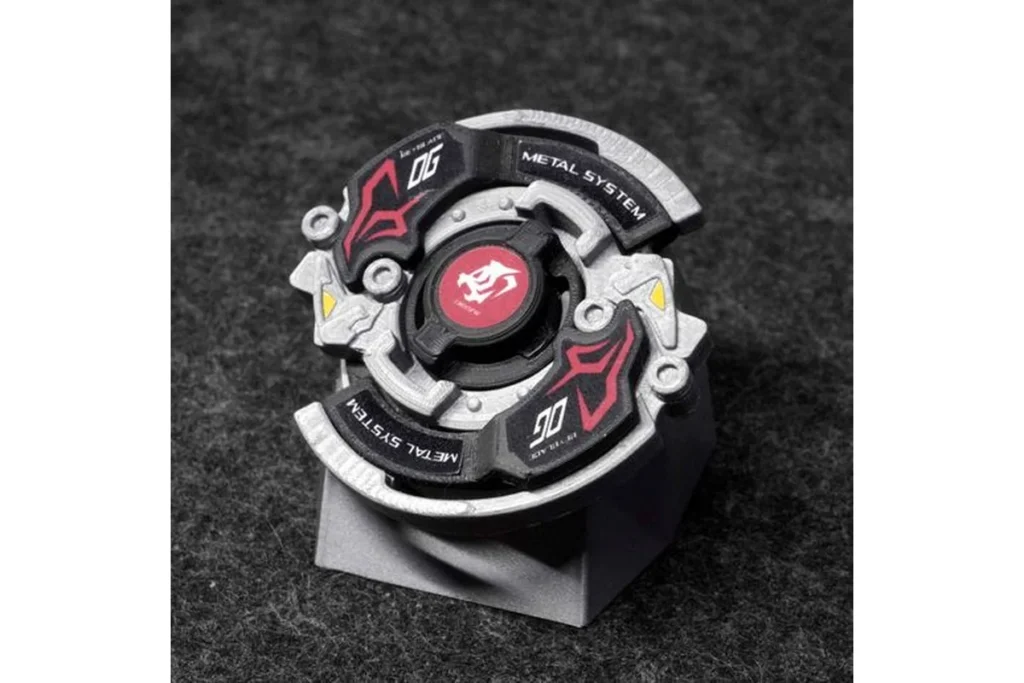
Turning a digital file into a physical, high-performance homemade Beyblade with 3D printer technology requires specific slicing strategies. Standard default print settings will result in a top that shatters during its very first high-speed collision.
Choosing the Best Filament for Beyblade Printing
Recommended Print Settings
To successfully execute toy 3D printing projects like this, set aside standard configurations. Whether you are running a beginner 3D printing toy project or printing a complex multi-piece 3D printed beyblade kit, use these structural optimizations in your slicing software:
Post-Processing and Assembly
Your work is not finished when the print bed cools down. Proper finishing transforms a rough plastic chunk into a precision racing instrument.
Remove support material carefully using flush cutters. Any remaining support nubs will throw off the rotational balance of your spinning top 3D print. Use fine-grit sandpaper (400-800 grit) to smooth out the outer edges and the bottom tip. A smooth bottom tip reduces friction against the floor of your Beyblade arena 3D print.
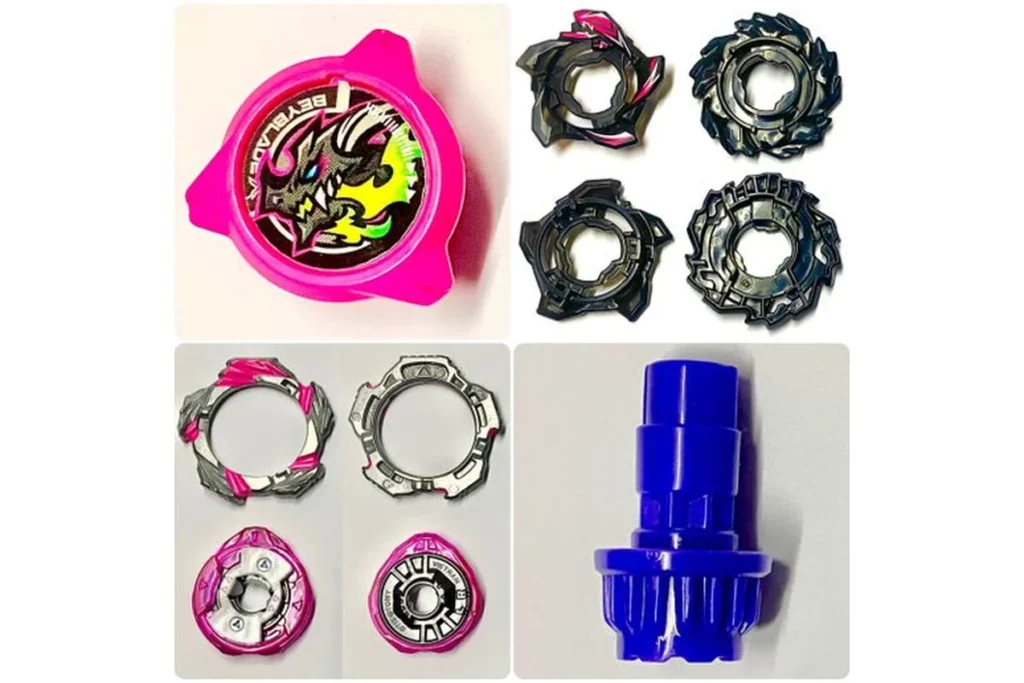
If you are assembling a multi-piece top, ensure the layers lock together firmly without play. Use small metal screws or a dab of cyanoacrylate glue if your design does not use mechanical locking tabs. For a massive performance boost, consider embedding a standard metal washer or a custom metal ring between the printed plastic layers to boost weight.
Related: 11 Amazing 3D Printed Toys Kids and Adults Will Love in 2026
Testing and Improving Beyblade Performance
The real engineering happens in the test stadium. Do not expect your first prototype to break world records without refinement.
Spin Time and Stability
Launch your top alone in a quiet environment. Time the spin from launch to complete stop. A baseline print should spin for at least 60 to 90 seconds without interference. Watch the central axis; if the top wanders or shakes violently right out of the launcher, your balance is off.
Common Design Adjustments
3D Printed Beyblade vs Official Beyblade
How does a printable battle top stack up against mass-produced commercial toys?
| Feature | 3D Printed Beyblade | Official Beyblade |
|---|---|---|
| Material Customization | High (Nylon, PETG, PC, TPU) | Fixed (ABS Plastic and Zinc Alloy) |
| Shape Geometry | Infinite possibilities, custom hooks | Limited to official retail models |
| Cost Per Unit | Very low (approx. $0.50 to $2.00 in plastic) | $15 to $30 per top retail |
| Legality | Custom tournaments, casual circuits | Official sanctioned tournaments only |
Official tops benefit from high-density die-cast zinc weight rings, which are difficult to replicate purely with plastic filaments. However, a custom build allows for radical geometry shapes that official manufacturers would never produce due to safety or manufacturing constraints. While a pure plastic top might struggle against a heavy metal model, smart material choices can hold their own in a casual backyard circuit, making them excellent kids 3D printing toys.
Pro Tactics for Winning Beyblade Battles
- Match Your Launcher: Ensure your launcher attachment points match your top perfectly. You can download a Beyblade launcher STL or a Beyblade launcher 3D print file to manufacture a custom 3D printed beyblade launcher that fits your grip perfectly.
- Optimize the Arena: For the best combat experience, print a dedicated Beyblade stadium STL model. A properly scaled 3D printed Beyblade battle arena features the exact slope curvature required to force tops toward the center for aggressive collisions.
- Bank Your Shots: When using an attack type, do not launch flat. Angle your launcher slightly (the sliding shoot technique) to force your top into a fast, looping pattern that smashes into the center of your Beyblade arena 3D print.
Final Verdict: Engineering the Perfect Spinner
3D printing strips away the manufacturing limitations of commercial toy lines, allowing players to step into the role of a true designer. Success in the arena comes down to iterative testing.
By tweaking your infill, optimizing your wall counts, and balancing your design’s outer geometry, you can build a custom top that rivals commercial builds in casual matches. Load up your slicer, prep your print bed, and start manufacturing your own competitive edge.
Frequently Asked Questions
Is it possible to 3D print Beyblades?
Yes. By using precise CAD models and robust filaments like PETG or Nylon, you can create fully functional printable battle tops that launch and battle just like commercial models.
Can you actually 3D print a working Beyblade?
Yes, you can. The key to a working top is replicating the exact dimensions of the attachment interface so it locks onto a standard launcher and holds together during impacts.
What is the best filament for a 3D printed Beyblade?
Nylon and Polycarbonate are the best choices for durability. For beginners, PETG offers a great balance of impact resistance and ease of printing without requiring a high-temperature enclosure.
Are 3D printed Beyblades as good as official Beyblades?
They offer unmatched design flexibility and cost around $0.50 to $2.00 in raw material. However, they are usually lighter than official tops unless you design custom slots to insert metal weights or washers.
Where can I find free Beyblade STL files?
Popular 3D printing repositories like Printables, Thingiverse, and Thangs have extensive collections. Search for terms like “Beyblade STL download” or “free Beyblade STL files” to find community-tested designs.
How do I make my 3D printed Beyblade spin longer?
Concentrate the weight on the outermost edge of the design, use a high infill percentage, and thoroughly sand the bottom performance tip to minimize friction against the stadium floor.