

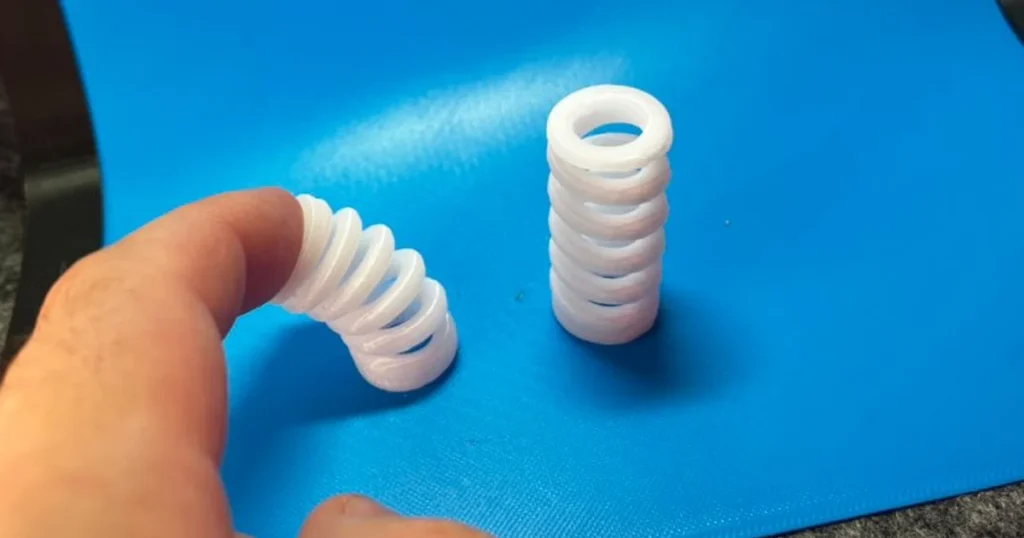
Engineers and product designers frequently encounter a major wall when transitioning from rapid prototyping to functional end-use production: rigid plastics like PLA, ABS, and Nylon snap or deform permanently under impact, cyclic bending, or compression.
Modern additive manufacturing overcomes this barrier through elastomeric polymers and photopolymers. Choosing the right flexible 3D printing materials requires matching physical properties—such as elongation at break, tear resistance, and durometer—to the manufacturing process and mechanical demands of your part.
Understanding how flexible 3D printing operates across FDM, SLS, and SLA technologies enables you to select the precise polymer formulation for your functional components, gaskets, and shock-absorbing structures.
What Are Flexible 3D Printing Materials?
Flexible materials in additive manufacturing belong to the elastomer family—polymers that exhibit viscoelasticity, combining high elongation with low elastic modulus. Unlike rigid thermoplastics that undergo permanent plastic deformation under strain, flexible 3D printing filament, powders, and resins absorb kinetic energy and return to their original geometry after deformation.
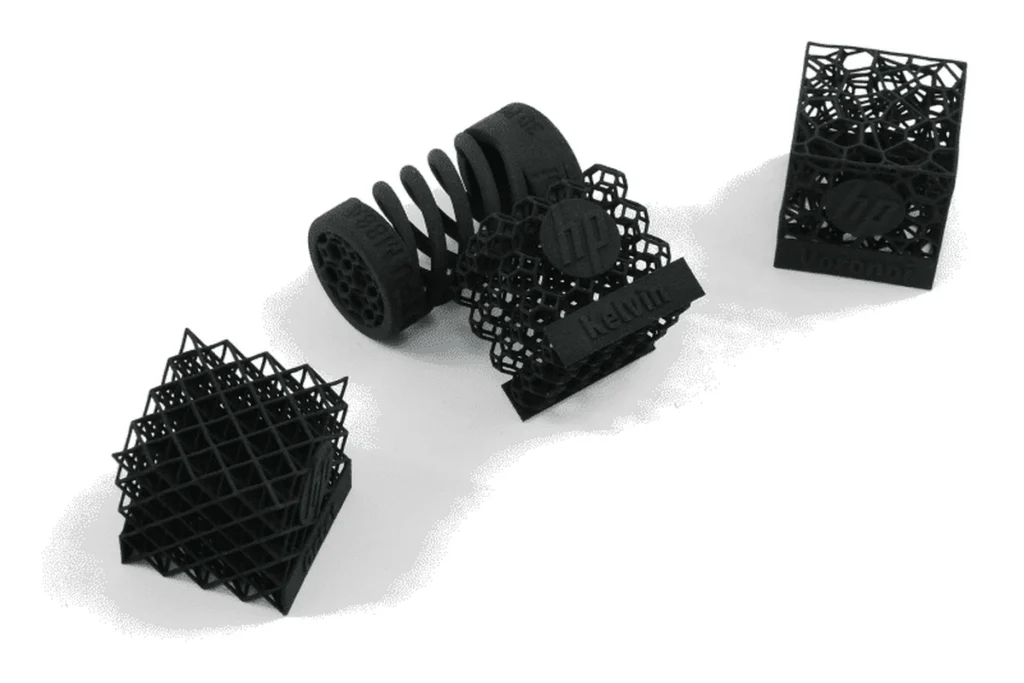
When evaluating what are flexible 3D printing materials, three primary mechanical behaviors define their utility:
The physical state of raw stock dictates how these materials process:
Related: Custom Overmolding Services: Design, Materials, Manufacturing & Pricing Guide (2026)
Types of Flexible 3D Printing Materials
Flexible 3D Printing Materials Overview
| Material Category | Chemistry / Base | Key Characteristics |
|---|---|---|
| TPU | Polyurethane | Balance of structural strength and rubber-like elasticity; high wear resistance |
| TPE | Elastomer Family | Softer feel, lower Shore hardness ratings, close to natural vulcanized rubber |
| TPC | Copolyester | Superior resistance to high temperatures, dynamic fatigue, and chemicals |
| Flexible Resins | Photopolymers | Fine details, isotropic properties, ultra-smooth surface finish |
TPU (Thermoplastic Polyurethane)
Thermoplastic polyurethane (TPU) stands as the workhorse of industrial flexible 3D printing. As a block copolymer consisting of alternating hard and soft segments, TPU 3D printing provides an optimal balance of structural strength and rubber-like elasticity.
Key characteristics include:
- Superior abrasion resistance compared to standard rubber alloys.
- High impact energy absorption.
- Resistance to oils, greases, and industrial solvents.
Common applications range from protective bumpers, automotive vibration dampers, and cable strain reliefs to industrial grips, custom footwear midsoles, and pneumatic tubing.
TPE (Thermoplastic Elastomer)
Thermoplastic elastomer (TPE) represents a broader umbrella category of rubber-like synthetic polymers, including styrene-block copolymers (TPS). While TPU is technically a sub-category of TPE, pure TPE formulations typically offer a softer touch, lower Shore hardness ratings (down to 60A or softer), and a closer feel to natural vulcanized rubber.
TPE 3D printing requires careful thermal management during processing because soft TPE grades exhibit lower melt strength and higher surface tackiness during extrusion.
TPC and Other Flexible Thermoplastic Elastomers
Thermoplastic Copolyester (TPC) and specialized engineering elastomeric blends handle aggressive environments where standard TPU fails. TPC exhibits high resistance to chemical exposure, continuous UV radiation, and elevated operating temperatures (up to 120°C).
Engineers select TPC for under-the-hood automotive components, bellows exposed to outdoor weathering, and industrial seals subjected to repeated flexing across thermal cycles.
Flexible 3D Printing Resins
Vat photopolymerization uses flexible 3D printing resin formulations engineered with long-chain crosslinking monomers. Photopolymers yield smooth surface finishes, hyper-precise details, and isotropic mechanical properties along all print axes.
Because chemical formulations differ significantly between resin manufacturers, liquid flexible resins range from soft, gel-like elastomers to firm, rubberized compounds suitable for medical devices, soft-touch buttons, and custom flexible 3D printed parts.
Comparing Flexible 3D Printing Materials
Material performance varies based on exact material grades, additive packages, and process parameters. The table below outlines general operational windows for core elastomeric material families:
| Material Type | Typical Flexibility | Abrasion Resistance | Elastic Recovery | Manufacturing Process | Suitable Applications | Important Limitations |
|---|---|---|---|---|---|---|
| TPU Filament / Powder | Moderate to High (85A – 95A) | High | High | FDM, SLS | Bumpers, footwear, tires, ducting | High moisture absorption; strict drying needed |
| TPE Filament | High to Very High (60A – 80A) | Moderate | Very High | FDM | Soft grips, dampers, medical models | Extremely difficult to extrude via Bowden setups |
| TPC Filament | Moderate (45D – 60D) | High | Moderate | FDM | Outdoor bellows, chemical tubing | Higher stiffness; lower maximum elongation |
| Flexible Resin | Soft to Medium (50A – 80A) | Low to Moderate | Moderate | SLA / DLP | High-detail seals, wearable devices, prototypes | Can become brittle under prolonged UV exposure |
Which 3D Printing Processes Can Produce Flexible Parts?
Choosing the optimal process requires matching part geometry, batch volume, and accuracy goals against machine capabilities.
3D Printing Process Matrix
| Process | Feedstock | Key Advantage |
|---|---|---|
| FDM | Spooled Filament | Cost-effective for single prototypes |
| SLS | Powder Bed | Complex geometry, no supports required |
| SLA / DLP | Liquid Photopolymer | High precision & smooth surface finish |
FDM 3D Printing With Flexible Filaments
Fused Deposition Modeling utilizing FDM flexible filament requires specialized hardware setups. Because flexible 3D printing filament acts like wet spaghetti when pushed through a drive gear, direct-drive extruders with constrained filament paths are essential to prevent buckling.
Key material handling tips:
- Hygroscopic control: TPU and TPE absorb atmospheric moisture rapidly, leading to steam bubbles, stringing, and weak layer adhesion. Desiccant storage and active filament drying at 60–70°C for 4–6 hours prior to printing are required.
- Extrusion speed: Print slowly (15–30 mm/s) with minimal retraction to prevent drive-gear jamming.
SLS 3D Printing With TPU Powder
Selective Laser Sintering using SLS TPU 3D printing eliminates support structures entirely. Unsintered powder supports part overhangs during printing, unlocking complete geometric freedom for internal channels, lattice structures, and nested assemblies.
Powder-bed production creates fully isotropic elastic 3D printed parts with high tear strength, consistent wall density, and excellent surface durability, making it the preferred method for end-use industrial components and functional prototypes.
SLA 3D Printing With Flexible Resins
Stereolithography utilizes focused light sources to cure photopolymer resins layer-by-layer. When producing flexible 3D printing materials for gaskets and seals, SLA guarantees fine dimensional tolerances and leak-proof internal densities that fused filament processes struggle to maintain without custom slicer tuning.
Post-processing requires IPA washing followed by controlled UV post-curing to achieve full cross-linking density without over-embrittling the surface.
Applications of Flexible 3D Printing Materials
Instead of relying on single-purpose off-the-shelf rubbers, manufacturers use flexible 3D printing service production to produce custom geometries tailored to specific engineering demands:
- Gaskets and Seals: Custom flexible 3D printed parts resist fluid penetration under low-to-medium clamping pressure. TPU and TPC maintain structural seal shape under compression.
- Protective Covers and Bumpers: High impact absorption makes abrasion-resistant 3D printing materials ideal for field equipment enclosures, drone frames, and robotic end-effectors.
- Grips and Ergonomic Components: Custom durometer ratings allow overmolding-like capabilities on hand tools, medical instruments, and cycling handlebars.
- Footwear and Cushioning Structures: Energy-returning lattice topologies replace traditional foam midsoles, delivering tuned mechanical damping.
- Flexible Prototypes and Wearable Components: Rapid validation of snap-fits, watch bands, seals, and flexible 3D printing materials for functional prototypes accelerates product development cycles.
- Industrial Components Requiring Elasticity: Dust bellows, coupling dampers, drive belts, and suction cups designed for automated assembly systems benefit from localized elastomeric properties.
How to Choose the Right Flexible 3D Printing Material
Selecting the best flexible materials for 3D printing involves analyzing environmental exposure, mechanical stress, and manufacturing constraints.
Material Selection Framework
| Selection Step | Key Parameters to Evaluate | Primary Considerations |
|---|---|---|
| 1. Mechanical Strain | Shore Hardness & Elongation | Required flexural resistance, tensile load, cyclic deformation |
| 2. Environmental Exposure | Temp, UV & Chemical Contact | Weathering, oil exposure, heat limits, wear resistance |
| 3. Process & Geometry | Process Fit (FDM / SLS / SLA) | Part complexity, internal features, tolerance, budget |
Compare Shore Hardness and Elasticity
Shore hardness measures resistance to surface indentation, typically classified on Shore A (soft to rigid rubber) and Shore D (hard rubber to semi-rigid plastic) scales:
- Important: Shore hardness alone does not define flexural modulus or elastic recovery. A 95A TPU part printed with 10% lattice infill will flex more easily in practice than an 85A solid part printed with 100% infill.
- Evaluate elongation at break alongside Shore rating. High elongation ratings (>400%) indicate superior strain resistance before failure.
Evaluate Strength, Wear, and Environmental Resistance
Determine how strong are flexible 3D printed parts under continuous fatigue:
- Cyclic Loading: Check flex fatigue limits if the component bends repeatedly during operation.
- Abrasion Resistance: TPU excels in dynamic wear environments compared to silicone or soft TPE.
- Environmental Exposure: If exposed to oils, ozone, UV, or elevated thermal conditions, TPC or specialized SLS TPU powders perform reliably over long service lifespans.
Match the Material to the Manufacturing Process
Part geometry drives process selection:
- Large, simple enclosures with thick walls: FDM TPU.
- Intricate lattices, internal channels, or medium-batch end-use production: SLS TPU.
- Micro-scale details, ultra-smooth tactile surfaces, or precise sealing lips: SLA Flexible Resin.
Related: Laser Cutting Services: Process, Materials, Tolerances, Design Guide, Applications & Cost (2026)
Advantages and Limitations of Flexible 3D Printing
Advantages
- Design Freedom: Consolidate multi-piece rubber assemblies into single, topology-optimized elastomeric parts.
- Rapid Prototyping: Compress gasket and seal iteration cycles from weeks (via injection molding tooling) down to hours.
- Tailored Density: Adjust internal lattice structures to create variable durometer zones within a single part geometry.
Limitations
- Process Complexity: Soft FDM filaments jam easily; flexible resins require delicate support removal to prevent surface pitting.
- Dimensional Tolerances: Elastomers deflect during cooling and post-processing, making tight dimensional tolerances harder to hold than with rigid PLA or Nylon.
- Cost Constraints: High-performance elastomeric powders and specialty UV resins carry higher raw stock costs than standard commodity plastics.
Custom Flexible 3D Printing Services From Lava3DP
When your application demands engineered elastomeric parts without the hassle of extruder jams, moisture contamination, or post-curing setups, partnering with an industrial partner streamlines production.
At Lava3DP, material selection aligns directly with part geometry, mechanical strain parameters, batch size, and operating environments. Utilizing state-of-the-art SLS TPU powder systems, SLA photopolymer technology, and high-precision direct-drive FDM platforms, Lava3DP turns complex CAD designs into durable, production-grade elastomeric components.
Ready to bring your flexible parts to life? Explore Lava3DP’s TPU Material Capabilities and submit your CAD files today to receive an instant manufacturing quote and DFM analysis.
Ready to Manufacturing with LAVA3dp?
Upload your CAD file today and receive instant pricing, expert engineering support, fast production, and worldwide delivery.
Get an Instant Quote →Frequently Asked Questions
What are the best flexible 3D printing materials?
The best choice depends on functional requirements. TPU is the industry standard for tough, wear-resistant parts. TPE provides a soft, rubber-like feel. TPC delivers high thermal and chemical resistance, while flexible photopolymer resins excel in fine-detail SLA applications.
What is the most flexible material for 3D printing?
Low-durometer TPE filaments (around Shore 60A–70A) and specialized soft photopolymer resins offer the highest elasticity. Flexibility depends heavily on material grade, Shore hardness, wall thickness, and interior infill density.
What is the difference between TPU and TPE for 3D printing?
TPE is an overarching family of thermoplastic elastomers. TPU is a specific rigid-block subgroup within the TPE family. In practice, TPU offers higher abrasion resistance, tensile strength, and easier FDM printability, whereas pure TPE offers a softer, lower-durometer tactile feel.
Can you 3D print rubber-like parts?
Yes. Thermoplastic elastomers (TPU, TPE, TPC) and flexible photopolymers emulate vulcanized rubber behavior closely. While they are synthetic elastomers rather than natural vulcanized rubber, they deliver comparable shock absorption, flexibility, and dynamic sealing properties.
Is TPU stronger than regular 3D printing filament?
TPU offers vastly higher impact resistance, tear strength, and strain-to-failure limits than rigid plastics like PLA or ABS. However, rigid filaments exhibit higher tensile modulus and structural stiffness under static loads.
Can SLS 3D printing produce flexible parts?
Yes. SLS technology processes TPU powders into complex, highly durable elastomeric components without support structures. This yields isotropic flexible parts suitable for functional prototypes and end-use production.
What Shore hardness should I choose for flexible 3D printed parts?
Select 60A–75A for soft grips and dampening pads; 80A–85A for flexible gaskets, seals, and shoe soles; and 95A for firm, high-impact bumpers, drive belts, and protective cases.
How much does custom flexible 3D printing cost?
Production costs vary based on chosen material volume, part dimensions, geometric complexity, manufacturing technology (FDM, SLA, or SLS), batch quantity, and required surface finishing. Request a direct quote from Lava3DP for precise job pricing.