

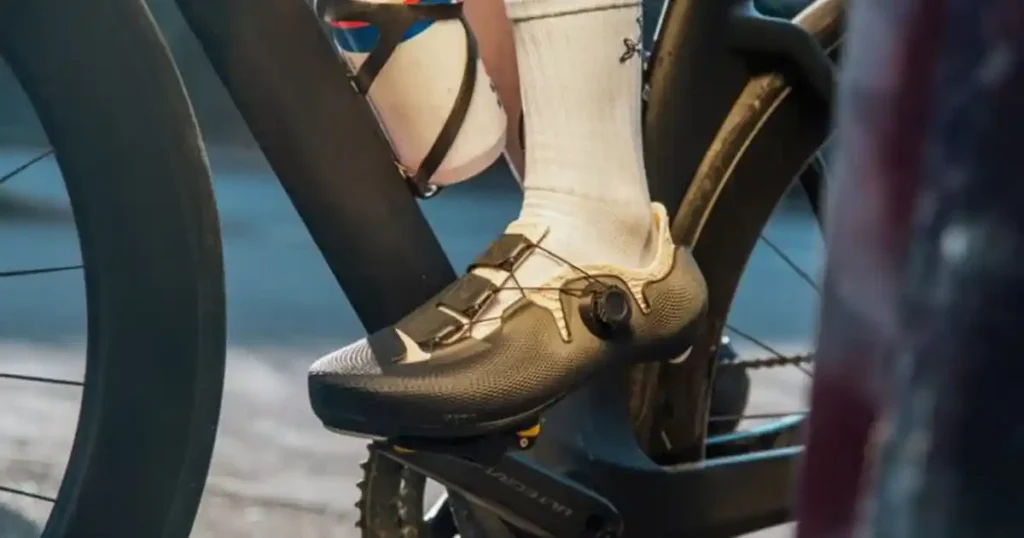
Discover how affordable custom 3D printed cycling shoes use smartphone foot scan technology. Explore the benefits of 3D scanning and printing for perfect fit and performance. Start your custom project with LAVA3DP today!
For decades, cyclists have faced a common dilemma: choose mass-produced shoes that almost fit, or invest a small fortune in expensive, hand-made custom options. Ill-fitting shoes can lead to discomfort, numbness, and lost power, hindering performance and enjoyment. However, a significant shift is underway. The convergence of two powerful technologies—smartphone 3D scanning and additive manufacturing—is democratizing access to personalized footwear. As reported in mid-March 2026, companies are now able to produce affordable custom 3D printed cycling shoes using nothing more than a few photos taken with a smartphone .
This article explores how this technology works, its benefits, and how it represents a major leap forward for cyclists everywhere. At LAVA3DP, we are at the forefront of leveraging these innovations to bring customized solutions to athletes and individuals. You can explore how we apply similar precision to your projects by visiting LAVA3DP.
The Problem with One-Size-Fits-All Cycling Footwear
The human foot is a complex structure of 26 bones, 33 joints, and over 100 muscles, tendons, and ligaments. No two feet are exactly alike. Traditional cycling shoe manufacturing relies on standardized lasts (foot-shaped molds) based on average foot sizes . This approach inevitably leads to compromises:
- Pressure Points and Hot Spots: Areas where the foot deviates from the standard last can experience excessive pressure, leading to pain and numbness.
- Power Loss: A shoe that doesn’t fit snugly allows the foot to move slightly within the shoe during the pedal stroke, wasting energy that should be transferred to the pedals.
- Inefficient Comfort: While some discomfort can be mitigated with aftermarket insoles, this is often a band-aid solution that doesn’t address fundamental fit issues with the shoe’s upper and sole .
The Game-Changing Solution: Smartphone Foot Scan Technology
The breakthrough in making custom shoes accessible lies in the data capture method. Previously, creating a custom shoe required a visit to a specialist for a plaster cast or a scan with an expensive, industrial-grade 3D scanner. Now, smartphone photogrammetry is changing the game.
A prime example of this innovation is German startup HEZO Sports. They have developed a system that allows users to capture their feet using a standard smartphone . Here’s how the process typically works:
- The Scan: The user takes a series of photographs of their feet from multiple angles using a dedicated mobile application. For instance, HEZO’s app captures roughly three images per foot to generate approximately 1,000 individual data points .
- Data Processing: These images are uploaded to the cloud, where photogrammetry software stitches them together to create a precise 3D digital model of the foot. A 2026 study published in BioMedical Engineering OnLine validated the accuracy of this method, finding that smartphone photogrammetry achieved a dimensional error of just 0.89 ± 0.51 mm compared to clinical-grade structured-light scanners, with excellent reliability across different users .
- Design & Customization: This digital model is then used as the foundation for designing the shoe. Engineers can digitally manipulate the model to create a shoe that mirrors the unique contours of the athlete’s foot.
This technology effectively bridges the gap between expensive, clinical methods and the need for precise, individualized data, making custom 3D printed cycling shoes a viable option for a much wider audience.
From Digital Model to Physical Product: The 3D Printing Process
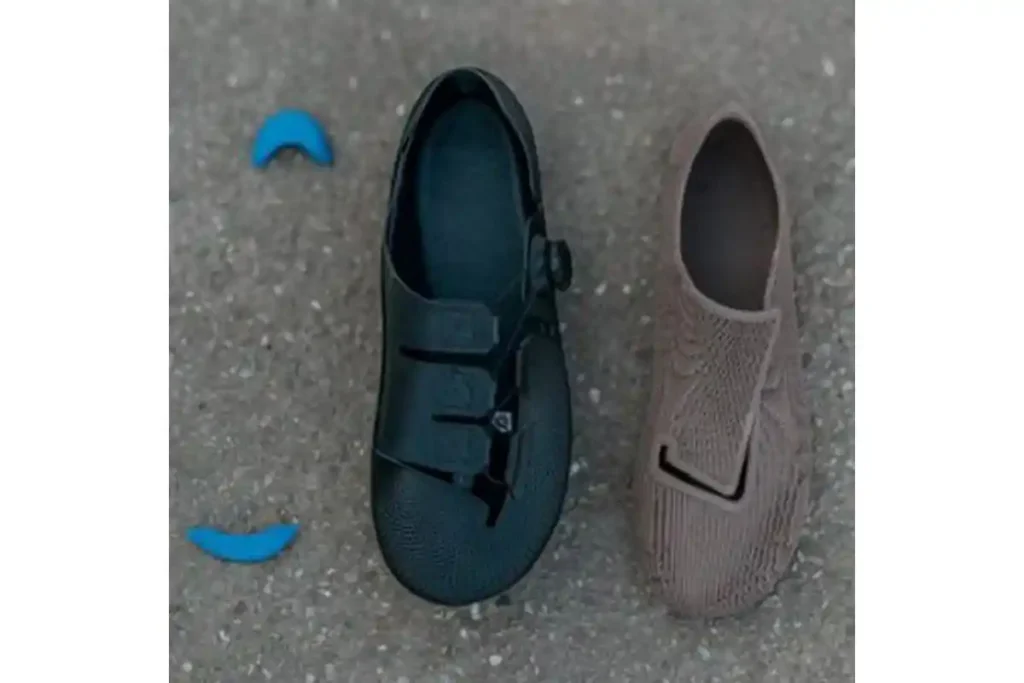
Once the foot data is captured and the shoe is designed, additive manufacturing brings it to life. The approach often involves creating the shoe in multiple layers to optimize both comfort and performance. For example, HEZO Sports describes its construction as being “like an onion,” with distinct layers :
- Inner Layer (Comfort & Cushioning): This layer, often a lattice or foam-like structure, is 3D printed using a flexible material like Thermoplastic Polyurethane (TPU). This innermost section is designed to conform perfectly to the foot’s shape, providing exceptional comfort and eliminating pressure points without the need for a separate insole.
- Outer Shell (Structure & Power Transfer): The external shell, or “MonoShell,” is printed with a rigid material to ensure efficient power transfer. Depending on the desired stiffness and weight, different materials can be used. For high-performance models, materials like polypropylene or PA6 carbon fiber composites are used to maximize stiffness and minimize weight . Research from Mondragon Unibertsitatea has shown that 3D printed soles using continuous carbon fiber reinforced polyamide can achieve at least 60% higher specific stiffness in key areas like the hallux and heel compared to conventional designs .
This layered approach allows manufacturers to create a shoe that is simultaneously soft where it meets the foot and rigid where it connects to the bike, a feat impossible with traditional mass-production methods .
The Affordability Factor and Market Impact
Perhaps the most compelling aspect of this new wave of custom 3D printed cycling shoes is their price point. While custom options have historically cost over a thousand dollars, new entrants are disrupting the market.
HEZO Sports, for instance, offers its gravel and road shoes with starting prices between €249 and €279 (approximately $284 to $319 USD) . This places them directly in competition with high-end, mass-produced offerings from established brands, making the value proposition of a perfect, personalized fit incredibly strong.
This affordability is driven by several factors:
- Elimination of Tooling: 3D printing removes the need for expensive molds and tooling required in traditional manufacturing.
- On-Demand Production: Shoes are printed only when ordered, reducing inventory waste and storage costs.
- Low-Cost Data Capture: Smartphone scanning eliminates the need for expensive in-person fitting hardware and expertise.
The Benefits for Cyclists: A Comparative Overview
To better understand the advantages, let’s compare the traditional and modern approaches to acquiring cycling shoes.
Chart 1: Comparison of Cycling Shoe Acquisition Methods
A Step Towards a More Personalized Future
The combination of smartphone foot scan technology and 3D printing is more than just a novel way to make cycling shoes; it’s a blueprint for the future of apparel and equipment. The same principles are already being explored for other sports gear, orthotics, and even prosthetics .
The high accuracy and favorable usability scores of smartphone photogrammetry, as confirmed by recent studies, validate its integration into commercial and clinical workflows . This means that the barrier to entry for perfectly fitting, high-performance gear is lower than ever before.
At LAVA3DP, we specialize in turning digital data into physical reality. Whether you are an athlete seeking a competitive edge, a designer with a new concept, or a business looking to offer customized products, our advanced 3D printing services can help. We understand the nuances of materials, from flexible TPU to rigid carbon fiber composites, ensuring your project achieves its goals.
Conclusion
The era of compromising on fit for the sake of cost is ending. Thanks to innovators leveraging smartphone scanning and additive manufacturing, cyclists can now access truly custom 3D printed cycling shoes that are both affordable and high-performing. This technology ensures that every watt of power is transferred efficiently to the road or trail, all while maintaining unparalleled comfort. As the technology matures and becomes more widespread, a perfect, personalized fit will become the new standard, not a luxury.
Ready to bring your own custom project to life? From personalized sporting goods to unique industrial parts, LAVA3DP has the expertise to make it happen. We invite you to contact us to discuss your next innovation.
Frequently Asked Questions (FAQs)
1. What types of 3D scanning services does LAVA3DP offer for creating custom products?
At LAVA3DP, we offer versatile 3D scanning solutions to meet diverse project needs. Our services range from guiding you through best practices for smartphone photogrammetry (using photos to create a model) to utilizing our industrial-grade structured-light scanners for applications requiring the highest possible precision. We work with you to determine the best capture method based on your desired product and accuracy requirements.
2. How accurate is smartphone photogrammetry compared to professional 3D scanning?
Smartphone photogrammetry has advanced significantly. When proper capture techniques are followed, it can achieve impressive accuracy suitable for many applications like custom orthotics, footwear, and ergonomic handles. Peer-reviewed studies demonstrate it can achieve dimensional errors of less than 1mm . For projects demanding even tighter tolerances, such as mechanical parts or precise engineering interfaces, LAVA3DP recommends and provides access to professional 3D scanning equipment for superior accuracy and resolution.
3. What is the typical process and timeline for getting a product 3D printed from a scan?
The process begins with you providing a 3D scan file, or we assist in capturing the data. Our team then processes this file, optimizes it for additive manufacturing, and works with you on any necessary design modifications. The timeline varies based on project complexity and size. A relatively simple, small part might take a few days from file receipt to shipping, while more complex projects requiring design iteration or larger production runs will take longer. We provide a clear timeline estimate during your initial contact
4. What materials can be used with my 3D scan to create a functional part or product?
LAVA3DP offers a wide range of materials to turn your scan into a functional object. Choices include flexible Thermoplastic Polyurethane (TPU) for comfortable, grippy items; durable and rigid materials like polypropylene (PP) and various nylons (PA); and high-performance composites like PA6 reinforced with carbon fiber for maximum stiffness and lightweight properties . We help you select the optimal material for your part’s intended use and performance requirements.
5. How much does it cost to 3D print an item from a scan, and how can I get a quote?
The cost of a project depends on several factors, including the size of the part, the total volume of material used, the complexity of the print, the chosen material, and any required post-processing or design work. Because every project is unique, we provide personalized quotes. To get an accurate estimate, please visit our contactpage and provide as much detail as possible about your project, including your 3D scan file if available.