

- Why 3D Printed Animals Actually Make Sense
- Flexible vs. Rigid: Know What You’re Printing
- Where Most Beginners Screw Up (and How You Won’t)
- Material Matters: PLA, PETG, and the TPU Question
- The Real Money Question: Selling These Things
- My Current Rotation of Reliable Models
- Beyond the Basics: Editing STL Files Yourself
- Frequently Asked Questions
Tired of failed prints and garbage STL files? Skip the hype. This guide covers the 3D printed animals that actually work—from articulated dragons to kawaii cats. Get material tips, file sources, and honest sell-or-skip advice. Start 3d printing right now!
I’ve turned seven kilos of perfectly good PLA into expensive plastic spaghetti and snapped more octopus tentacles than I care to admit. Three years ago, I printed my first 3D printed animals—a lumpy cat that looked more like a melted snowman. That failure taught me something most “top 10” listicles won’t tell you: cute 3d printed animals require more than just downloading a random file and hitting “slice.”
Here’s the raw truth. Most articulated animal 3d print models look amazing on screen but turn into brittle, stuck-together messes on your build plate. I’ve tested over 200 models across five differnet brand printers. This guide cuts through the noise. You’ll get the winners, and the exact settings that turn filament into flexible 3d printed animals that actually move.
Why 3D Printed Animals Actually Make Sense
You don’t need another dust-collecting figurine. Neither do I. But 3d printed animal toys serve a real purpose. Kids break things. Mass-produced plastic animals crack, lose limbs, and end up in landfills. With a printer and decent animal STL files, you replace a broken tail in two hours. Cost? About thirty cents.
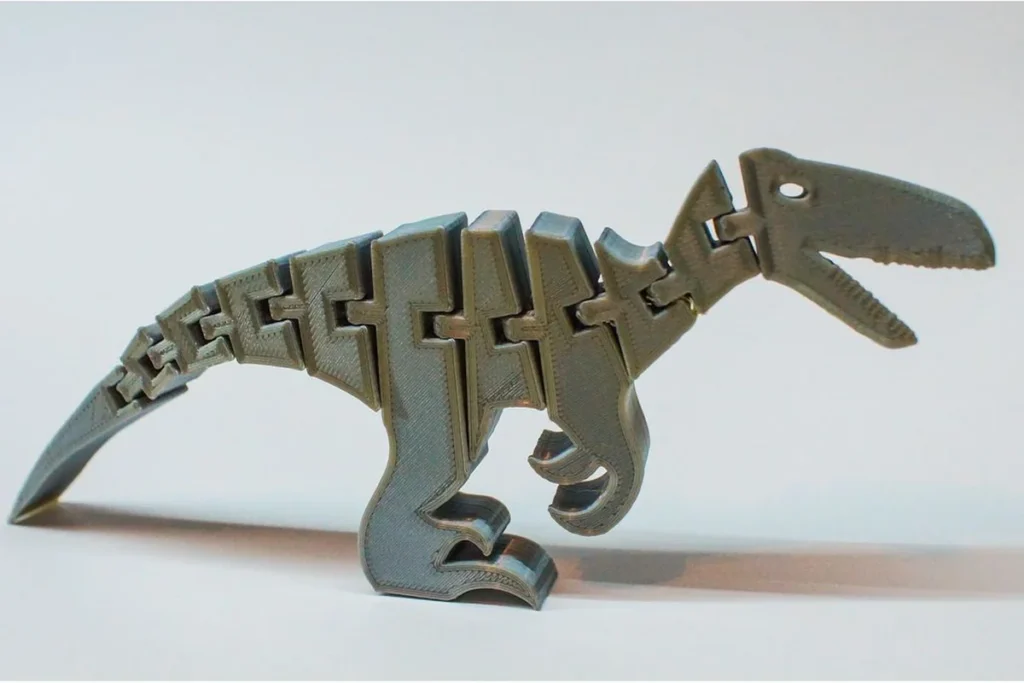
I printed a 3d printed dinosaur for my nephew last Tuesday. He dropped it from a second-story bunk bed. One leg snapped off. I re-printed just the leg, glued it, and the thing worked again. Try that with a $15 Walmart toy.
The real value isn’t just replacement parts, though. It’s customization. Want a cat with your dog’s name on the collar? Go ahead. Need a dragon in school colors? Five minutes in Tinkercad.
The Usual Suspects: Cats, Dragons, and the Articulated Obsession
Let’s talk about the models you’ll actually print more than once.
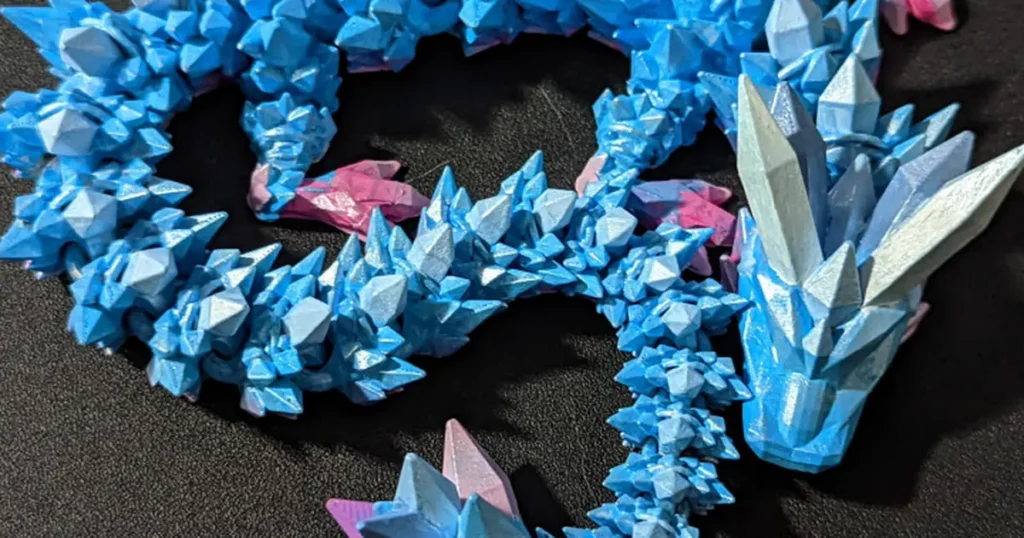
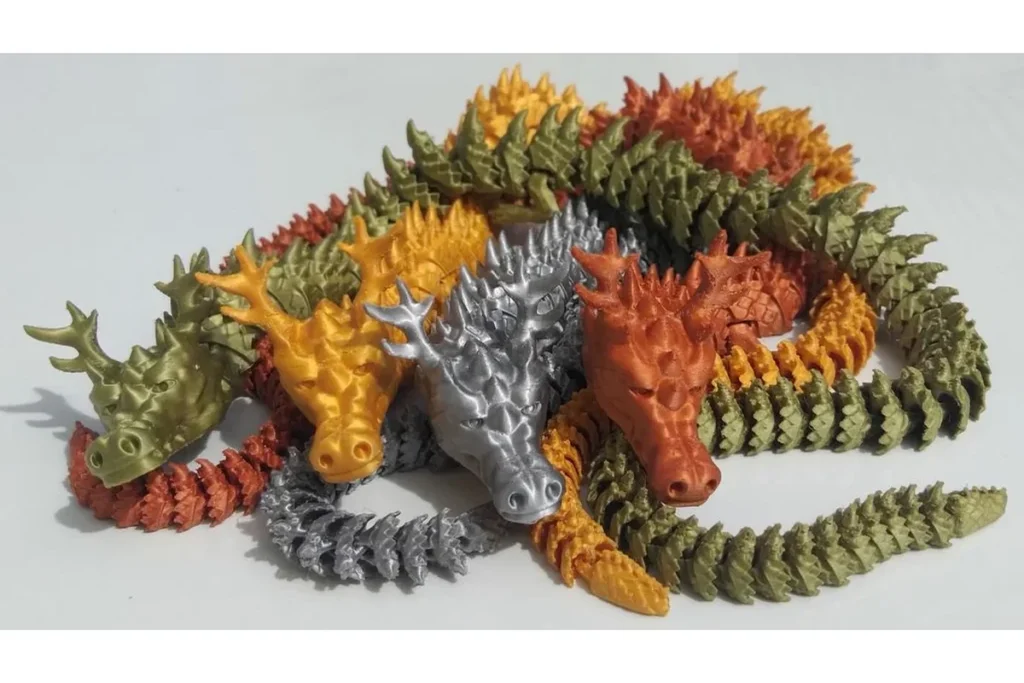
Articulated dragons dominate every STL site for a reason. A good articulated dragon STL has tight joints, zero post-processing, and that satisfying click-click movement. My favorite prints in under four hours with 0.2mm layer height. No supports needed.
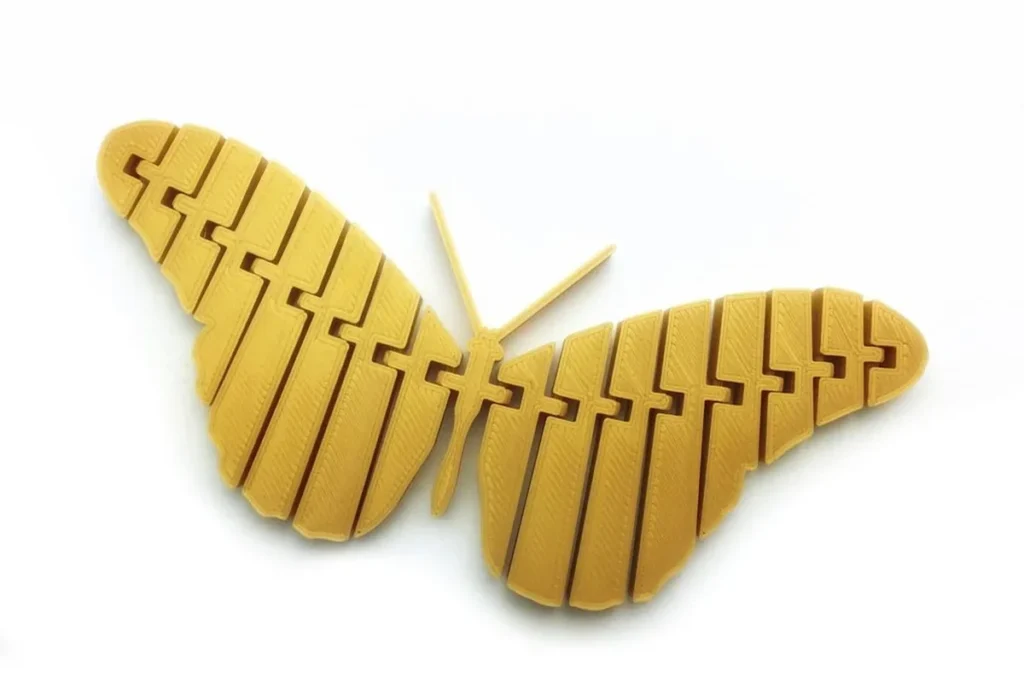
Flexi animal 3d print designs—the ones with linked segments—either nail the joint tolerance or fail completely. I’ve printed fifteen “flexi” octopuses. Only four moved freely without shaking the bed apart. The trick? Print a single segment test first. Cut the model in your slicer, print three links, and verify movement before committing to the full eight hours.
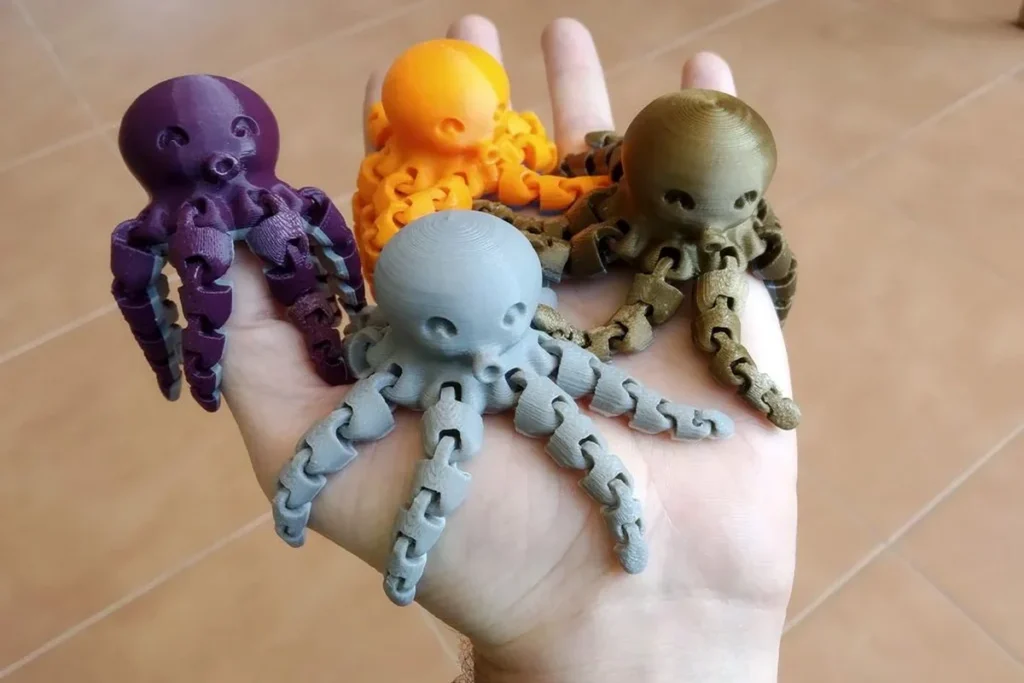
Then you have the kawaii 3d printed animals trend. Round faces. Huge eyes. Chubby bodies. They look simple, but overhangs on those big cheeks cause drooping every time. Orient the model at 45 degrees backward, not upright. Your cute articulated animals will thank you.
Flexible vs. Rigid: Know What You’re Printing
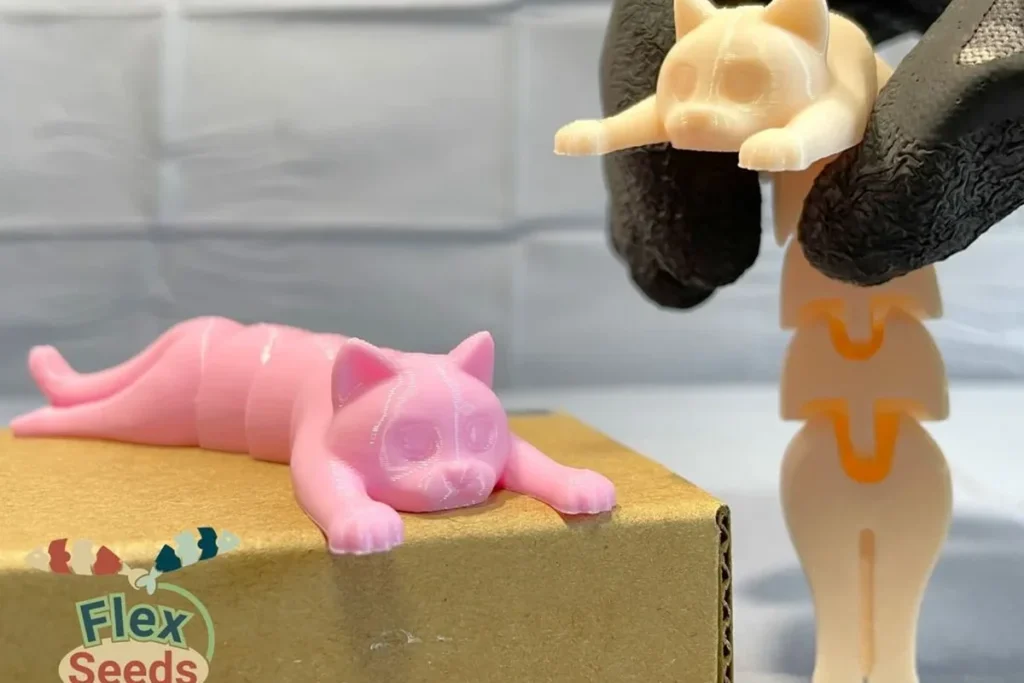
Beginners mess this up constantly. Flexible 3d printed animals use thin hinges or linked segments. They need flexible filament like TPU. Rigid animal figurines 3d print fine with standard PLA but break easily if dropped. I stick with eSun PLA+ for most printable animal models. It bends slightly before snapping.
Resin printed animal models deliver incredible detail—fur texture, tiny claws, scales you can feel. But resin prints aren’t flexible. Not even a little. For custom 3d printed animals, stick with FDM (filament) printers. Resin toxicity makes handling risky for kids’ toys anyway.
Where Most Beginners Screw Up (and How You Won’t)
Problem one: printing too fast. Those easy animal 3d prints fail at 80mm/s. Drop to 40mm/s for articulated joints. I run outer walls at 25mm/s. Yeah, it adds time. But you won’t spend twenty minutes picking broken hinge pieces off your bed.
Problem two: ignoring elephant foot. That first layer squishes out and welds movable parts together. Set your initial layer horizontal expansion to -0.2mm in Cura or PrusaSlicer. Fixes 90% of stuck joints.
Problem three: using random STL files from unverified designers. I’ve downloaded 3d printed dragon toy files that looked gorgeous in the render but had intersecting geometry and zero tolerances. Stick to designers like Cinderwing3D, LUDO, or The Articulated Vault. Their articulated dinosaur toy models actually work out of the box.
For small 3d printed animals, scale down carefully. A 50% scale 3d printed raptor changes joint clearances. Test at 75% first. I keep a “sacrificial” roll of cheap filament just for scaling tests.
Material Matters: PLA, PETG, and the TPU Question
PLA handles 80% of turtle 3d print and cat models perfectly. It’s stiff, cheap, and comes in fifty colors.
PETG bends better. Use it for 3d print squirrel models that kids will yank and pull. Downside: PETG strings like crazy on articulated parts. Dry your filament for six hours first, then print with aggressive retraction (6mm at 40mm/s).
TPU makes truly flexible 3d printed animals that feel like rubber. But if your printer has a long tube between the feeder and hotend, skip TPU entirely. Direct drive only.
For most people reading this: stick with PLA+. Add a brim. Slow down. You’ll get clean, movable prints without touching PETG or TPU.
The Real Money Question: Selling These Things
You saw Etsy listings for 3d printed animal models at $25 each. You did the math: ten prints a day equals good money. Here’s the reality check.
After filament, electricity, failed prints, packaging, and Etsy fees, your profit on a $15 articulated dinosaur toy sits around $4. You need volume. Volume means printer farms. One printer won’t cut it.
My friend sold animal figurines 3d print models at local craft fairs for six months. Made $800 total. Spent 60 hours printing and post-processing. That’s $13/hour before taxes. Not worth it unless you genuinely enjoy the process.
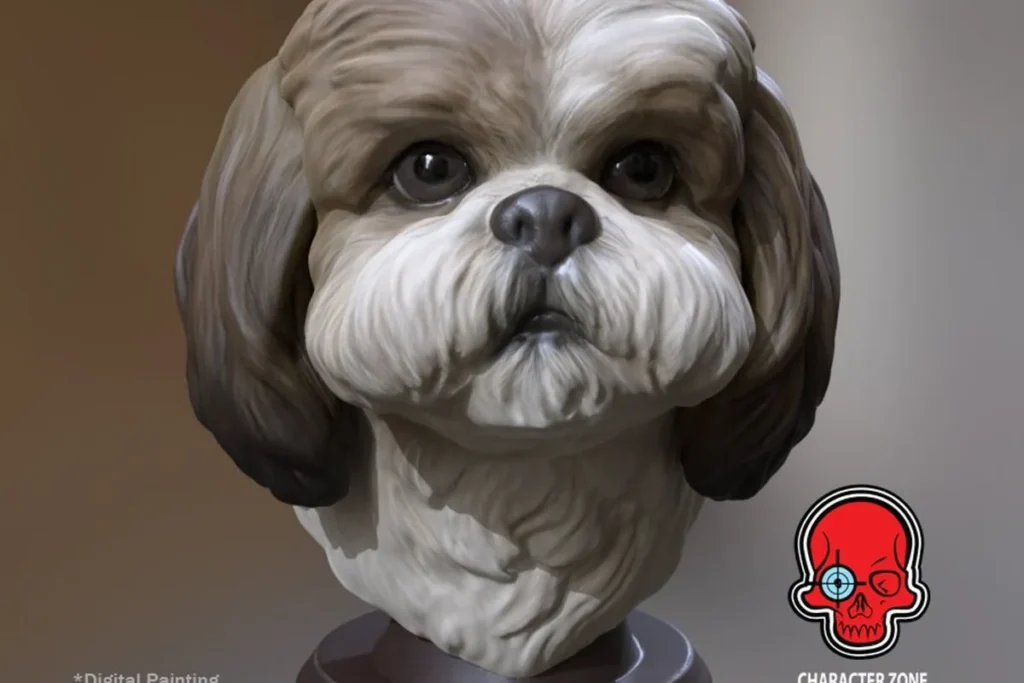
But niches exist. Custom 3d printed animals with names or dates sell for $40+. People pay for personalization, not the plastic. And resin printed animal models of someone’s pet? Those go for $60-$80 because the detail level blows filament away.
If you want profit, skip the dragons. Print pet portraits. Print memorial statues. Print 3d printed animal toys for classrooms and therapy offices. Bulk buyers pay better than individuals.
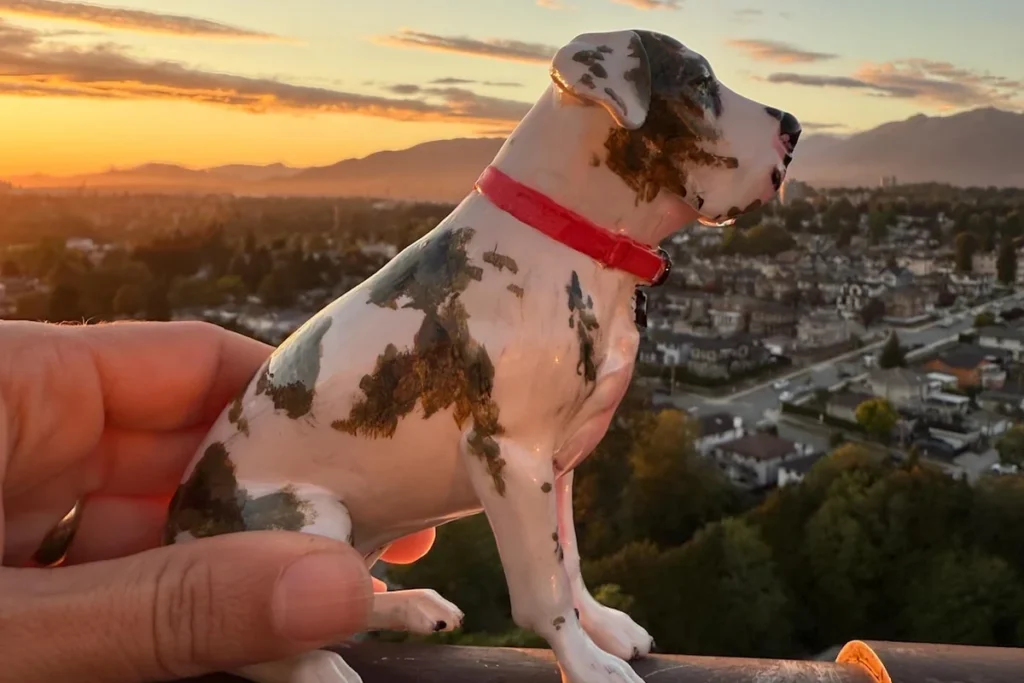
My Current Rotation of Reliable Models
After hundreds of prints, these never fail me:
- Cinderwing3D’s Crystal Dragon – The gold standard for articulated dragon STL files. Print at 0.16mm layers with a 0.4mm nozzle. No supports.
- SevenArts’ Flexi Factory Octopus – Best 3d printed octopus for beginners. Five hours at 60mm/s. Add mouse ears on the first layer to prevent curling.
- McGybeer’s Articulated Axolotl – Tighter joints than most. Use 0.12mm layers or the legs won’t move. Worth the extra time.
- Loubie’s Low-Poly Cat – Perfect 3d printed cat model for resin. Orients flat on the build plate. No supports needed.
For 3d printed raptor fans, the “Articulated Raptor” by FlexiFactory prints in six pieces. Assemble with filament pins. More work than one-piece models but way more durable for rough play.
Beyond the Basics: Editing STL Files Yourself
You don’t need to learn Blender. Download Tinkercad (free, web-based, stupid simple). Import any animal STL files you like. Add a keychain hole. Engrave a name. Combine a turtle 3d print with a platform for a pen holder.
I edited a 3d print squirrel model last month to hold a tiny acorn bowl. Added a 10mm diameter indentation on its tail. My daughter uses it for paper clips now. That took four minutes in Tinkercad.
Don’t fear modification. Most designers explicitly allow remixes for personal use. Check the license first. Non-commercial means exactly that—don’t sell remixes.
Final Raw Truth
3d printed animals won’t change your life. They won’t make you rich. But printing a cute articulated animals model that actually works—and handing it to a kid who won’t stop smiling—that’s the real reason you bought a printer anyway.
Start with a flexi animal 3d print octopus. Use PLA+. Slow your speeds. Test one joint before printing the whole thing.
Now go print something that moves.
Frequently Asked Questions
What are the best cute animals to 3D print?
Low-poly cats, articulated axolotls, flexi octopuses, and kawaii-style bears. These cute 3d printed animals have simple overhangs, minimal supports, and high success rates. Avoid detailed fur textures unless you use resin.
Which material is best for cute 3D printed animals?
PLA+ for rigid figurines and beginner-friendly prints. PETG for cute articulated animals that need slight flexibility. TPU only if you have a direct drive extruder. Resin for display pieces, not toys.
Can flexible articulated animals be 3D printed?
Yes. For animal 3d print models with segmented bodies, leave 0.2mm–0.3mm hinge gaps. Print at 40mm/s or slower. Use PLA+ or PETG. Test a three-link segment first to verify joint clearance.
Where can I find STL files for cute 3D printed animals?
Printables (best free library), Cults3D (great paid models), Thangs (fastest search). Thingivese(free model), Makerworld(Bamboo design share hubs), and MyMinifactoty.
Are cute 3D printed animals profitable to sell?
Only if you add customization (names, colors, bases) or sell in volume. Plain 3d printed animal toys earn $3–$5 profit each on Etsy after fees. Pet portrait resin printed animal models sell for $60+. Local craft fairs and therapy offices buy custom 3d printed animals at better prices than online marketplaces.