

- 1. What Are Soft Materials in Custom Manufacturing?
- 2. Vacuum Casting Soft Rubber: Process, Hardness, and Size Capabilities
- 3. Injection Soft Material: Precision and Volume Production
- 4. Mould Pressing Soft Material: Simplicity and Cost-Effectiveness
- 5. Comparative Analysis: Hardness, Size Range, and Applications
- 6. Key Applications of Soft Material Parts Across Industries
- 7. Why Choose LAVA3DP for Your Soft Material Custom Parts?
- 8. Conclusion
- 9. Frequent Asked Questions (FAQs)
Explore vacuum casting soft rubber, injection soft material & mould pressing soft material for custom parts. Get hardness options, small to large sizes, and global rapid manufacturing at LAVA3DP. Start your project today →
1. What Are Soft Materials in Custom Manufacturing?
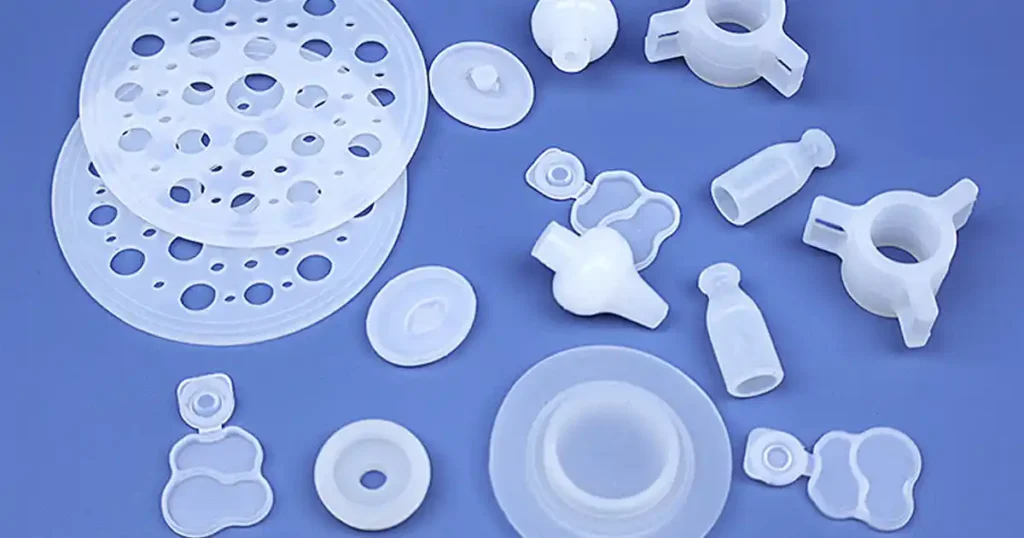
Soft materials – including silicone rubbers, thermoplastic elastomers (TPEs), polyurethanes (PU), and rubber-like photopolymers – are essential for products that require flexibility, impact absorption, sealing, or a skin-like touch. Unlike rigid plastics or metals, these materials deform elastically under load and return to their original shape. In the world of custom parts fabrication, three primary technologies dominate: vacuum casting soft rubber, injection soft material processing, and mould pressing soft material. Each method offers distinct advantages in hardness, size scalability, and production volume.
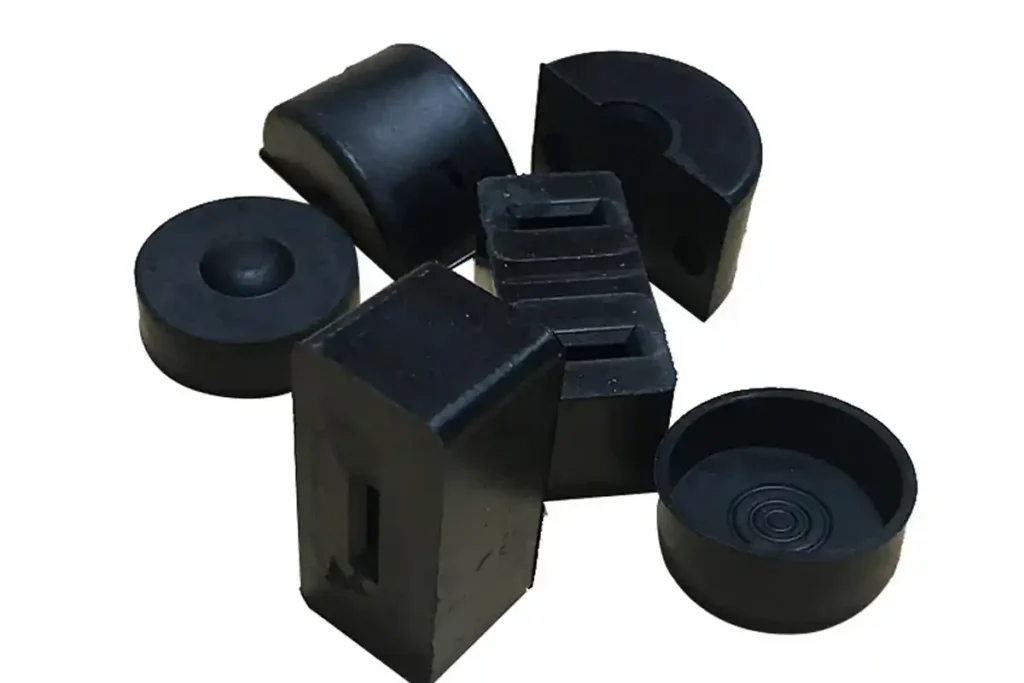
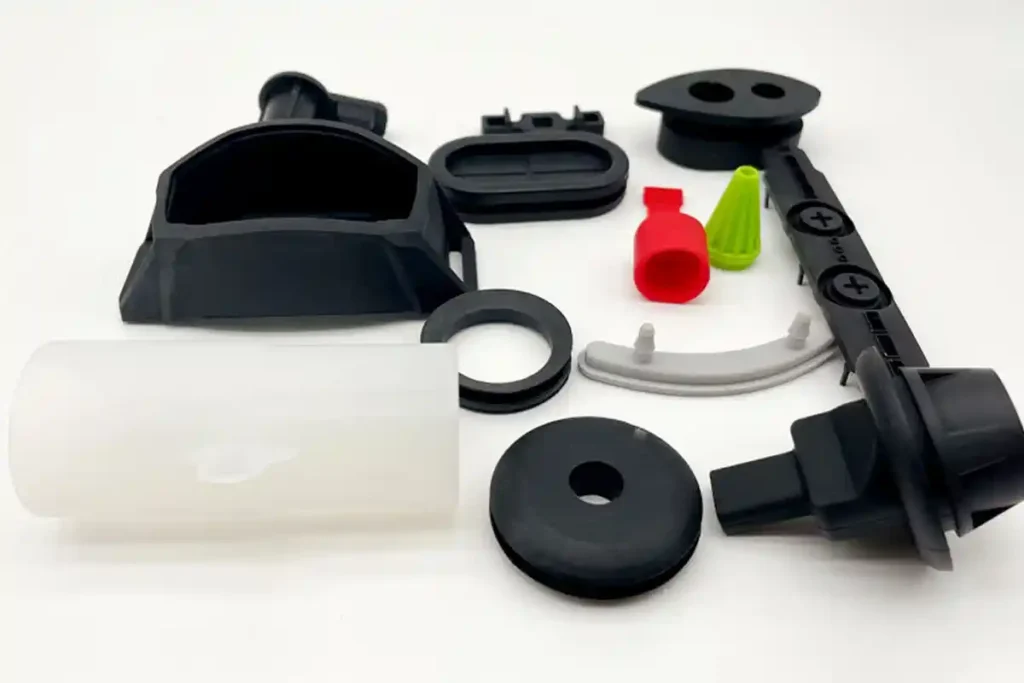
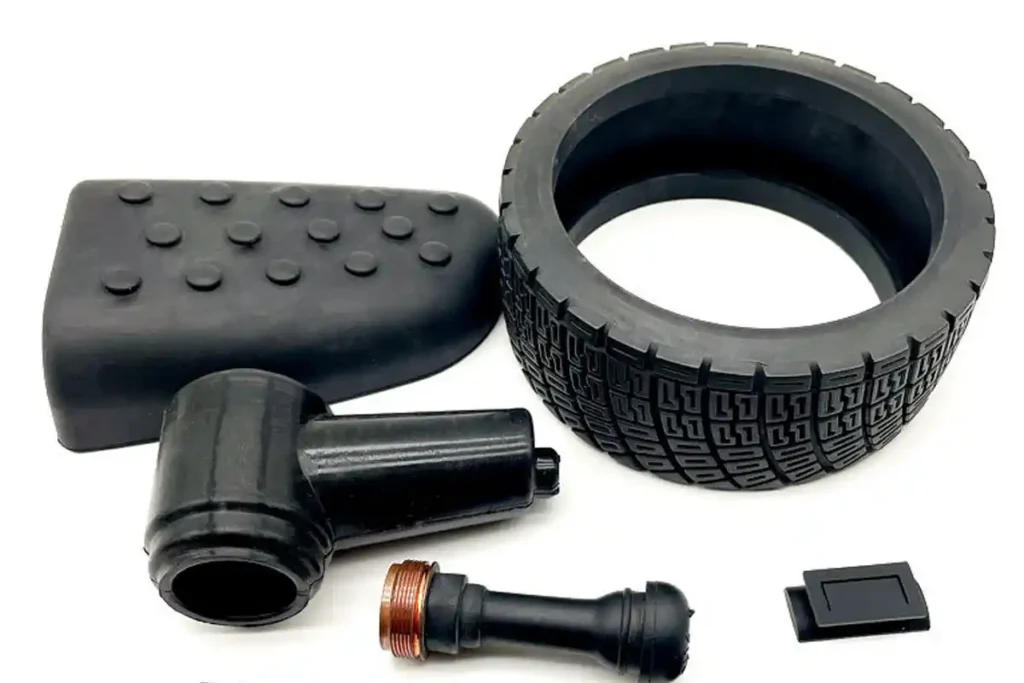
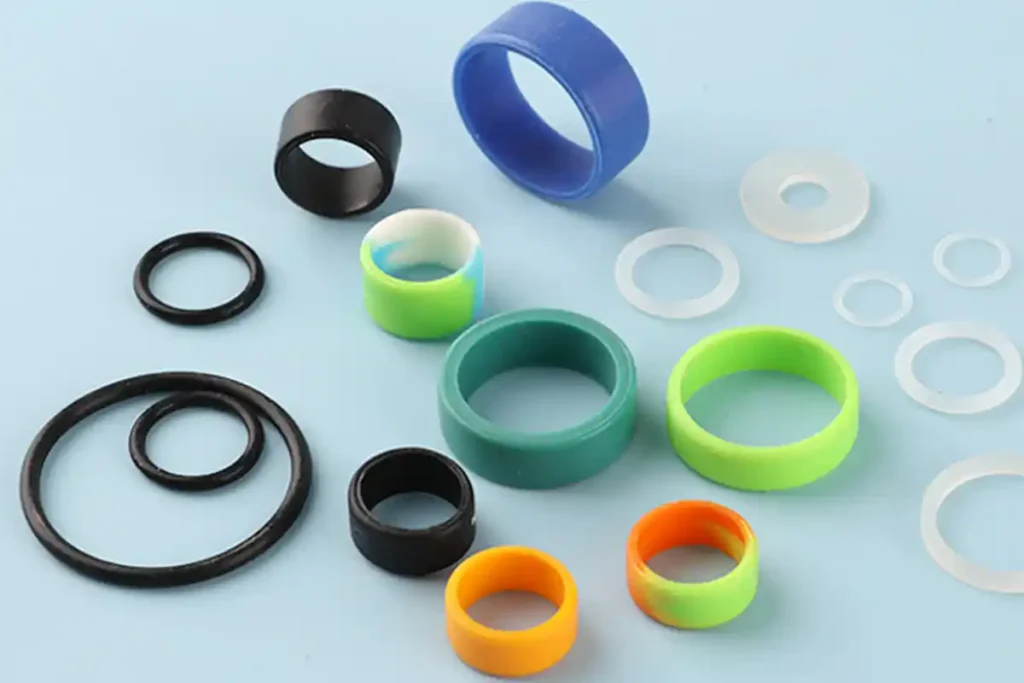
LAVA3DP specializes in all three techniques, delivering soft components from tiny grommets to large ergonomic grips for clients worldwide. Understanding the nuances of each process helps engineers and product designers select the optimal route for their project.
2. Vacuum Casting Soft Rubber: Process, Hardness, and Size Capabilities
Vacuum casting soft rubber is a low‑volume, high‑detail manufacturing process. It starts with a master pattern (often 3D printed or CNC machined), which is used to create a silicone mold under vacuum. The mold is then filled with liquid polyurethane or silicone rubber, degassed to remove bubbles, and cured in an oven. This technique is ideal for prototypes, bridge production (10–100 parts), and end‑use flexible components.
2.1 Hardness Range
Vacuum casting can achieve Shore A hardness from 10A (very soft, gel‑like) to 90A (firm, similar to a car tire). The most common grades are 30A–70A, balancing flexibility and durability. For comparison:
| Hardness (Shore A) | Feel / Application Example |
|---|---|
| 10A – 20A | Soft gel insoles, medical pads |
| 30A – 50A | Gaskets, button pads, overmolding grips |
| 60A – 80A | Industrial rollers, vibration dampers |
| 90A | Hard rubber wheels, tool handles |
2.2 Size Capabilities – From Small to Large
LAVA3DP can produce vacuum‑cast soft rubber parts ranging from 5 mm micro‑components (e.g., O‑rings, seal tips) up to 600 × 600 × 400 mm single castings. For larger parts, we use segmented molds or switch to injection/pressing methods. Typical wall thickness can be as low as 0.5 mm for delicate features.
Typical Size Range for Vacuum Casting Soft Rubber at LAVA3DP
| Part Dimension | Minimum | Maximum |
|---|---|---|
| Length / Width (mm) | 5 | 600 |
| Height (mm) | 5 | 400 |
| Wall Thickness (mm) | 0.5 | 50 |
| Tolerance (±mm) | 0.1 | 0.3 |
Advantages: fast turnaround (5‑7 days), excellent surface finish (mold replication), and low tooling cost. Limitations: not economical for thousands of parts; mold wear after ~20‑25 casts.
3. Injection Soft Material: Precision and Volume Production
Injection soft material manufacturing uses conventional plastic injection molding machines adapted for thermoplastic elastomers (TPEs) or liquid silicone rubber (LSR) injection. The material is heated, forced under high pressure into a steel or aluminum mold, cooled, and ejected. This method is the gold standard for high‑volume production (500 to 100,000+ parts) with tight tolerances.
3.1 Hardness and Material Options
Injection molding supports a broader range of soft materials than casting:
- TPE (Thermoplastic Elastomer): Shore A 5A to 95A, plus Shore D up to 60D.
- LSR (Liquid Silicone Rubber): Shore A 10A to 80A, with excellent heat resistance (-50°C to +200°C).
- TPU (Thermoplastic Polyurethane): Shore A 60A to 85A, high abrasion resistance.
3.2 Size Capabilities
Injection molding is best suited for small to medium parts due to clamp force and mold size limitations. At LAVA3DP, we can injection mold soft parts up to 500 × 400 × 200 mm (single cavity). Multiple cavities allow larger effective sizes. Minimum part weight is 0.1 gram; maximum ~2 kg per shot.
Hardness vs. Production Volume for Injection Soft Material
| Production Volume (parts/year) | Preferred Hardness Range (Shore A) | Notes |
|---|---|---|
| < 1,000 | Any (10A – 90A) | Vacuum casting is usually more cost‑effective at this volume |
| 1,000 – 10,000 | 30A – 70A (TPE / LSR) | Good balance of flow and cycle time |
| 10,000 – 100,000 | 50A – 90A | Faster cycle times with higher hardness |
| > 100,000 | > 60A (thermoplastic TPE/TPU) | Optimal for high‑volume automation |
Note: Softer materials (below 30A) can still be injection molded, but may require longer cooling cycles and specialized mold design. Contact LAVA3DP for a feasibility review of your specific hardness and volume requirements.
Advantages: extremely consistent tolerances (±0.05 mm), high output rate (15‑60 seconds per cycle), and unlimited mold life (steel tools). Disadvantages: high upfront mold cost ($2,000‑$15,000+), longer lead time (4‑6 weeks for tooling).
4. Mould Pressing Soft Material: Simplicity and Cost-Effectiveness
Mould pressing soft material (compression molding) is the oldest but still highly relevant technique. A pre‑measured amount of uncured rubber (e.g., natural rubber, silicone, or EPDM) is placed into an open, heated mold cavity. The mold closes under hydraulic pressure, causing the material to flow and fill the cavity. After curing, the part is removed and trimmed.
This method is ideal for large, thick, or simple‑shaped soft parts where injection or casting would be impractical.
4.1 Hardness Range
Compression molding works best with medium to high hardness rubbers – typically Shore A 40A to 90A. Very soft compounds (below 20A) are difficult to handle without tearing during demolding.
4.2 Size Capabilities – Emphasis on Large Parts
Mould pressing excels at producing large soft components:
- Maximum size: up to 1200 × 800 × 150 mm (single piece) at LAVA3DP.
- Minimum size: ~20 mm (due to flash removal constraints).
- Typical thickness: 2 mm to 100 mm.
Size Comparison – Vacuum Casting vs. Injection vs. Mould Pressing
| Technology | Minimum Part Size (mm) | Maximum Part Size (mm) | Best Suited For |
|---|---|---|---|
| Vacuum Casting | 5 × 5 × 0.5 | 600 × 600 × 400 | Small to medium parts |
| Injection Molding | 5 × 5 × 0.8 | 500 × 400 × 200 | Small to medium parts (high precision) |
| Mould Pressing | 20 × 20 × 2 | 1200 × 800 × 150 | Large to extra‑large parts |
Note: These dimensions represent typical single‑cavity capabilities at LAVA3DP. For specialized projects, larger sizes may be achievable through multi‑segment molding or custom tooling. Contact our engineering team for a project‑specific assessment.
Advantages: low tooling cost (aluminum molds from $500), minimal material waste, and ability to mold very thick sections without sink marks. Disadvantages: slower cycle (2‑10 minutes), flash trimming required, less suitable for complex geometries.
5. Comparative Analysis: Hardness, Size Range, and Applications
To help you choose the right process, here is a consolidated comparison:
| Feature | Vacuum Casting Soft Rubber | Injection Soft Material | Mould Pressing Soft Material |
|---|---|---|---|
| Hardness (Shore A) | 10A – 90A | 5A – 90A (plus D grades) | 40A – 90A |
| Part size (max, mm) | 600 × 600 × 400 | 500 × 400 × 200 | 1200 × 800 × 150 |
| Typical volume | 1 – 100 pcs | 500 – 100,000+ pcs | 100 – 10,000 pcs |
| Tooling cost | Low ($200‑$800) | High ($2k‑$15k+) | Low‑medium ($500‑$2k) |
| Lead time (first part) | 5‑7 days | 4‑6 weeks | 10‑14 days |
| Tolerance (±mm) | 0.1 – 0.3 | 0.03 – 0.1 | 0.2 – 0.5 |
| Surface finish | Excellent (mirror) | Very good | Good (may have flash lines) |
Key takeaway: Use vacuum casting for prototypes and low volumes with fine detail. Use injection molding for high‑volume, precision soft parts. Use mould pressing for large, thick, or simple rubber components.
6. Key Applications of Soft Material Parts Across Industries
Soft materials are ubiquitous in modern products. Here are the most common applications for each process:
6.1 Vacuum Casting Soft Rubber
- Medical devices: soft grip handles, tubing connectors, button seals.
- Consumer electronics: silicone keypads, watch bands, phone bumpers.
- Automotive prototyping: dashboard soft‑touch overlays, grommets.
6.2 Injection Soft Material
- Automotive production: weather strips, cup holder inserts, vibration mounts.
- Household goods: soft‑close bumpers, non‑slip feet, kitchen utensil handles.
- Toys and wearables: flexible action figures, fitness tracker bands.
6.3 Mould Pressing Soft Material
- Industrial machinery: large conveyor belt scrapers, heavy‑duty gaskets.
- Construction: rubber expansion joints, anti‑vibration pads for generators.
- Sports equipment: gym mat sections, large rubber bumpers.
At LAVA3DP, we have successfully delivered soft parts for robotics, aerospace (seals), medical prototyping, and consumer goods – all with custom hardness and color matching.
7. Why Choose LAVA3DP for Your Soft Material Custom Parts?
LAVA3DP is not just a service bureau; we are a one‑stop solution for soft material manufacturing. Here is what sets us apart:
- Three technologies in one place – we offer vacuum casting, injection molding, and mould pressing under the same roof. No need to split your project across multiple vendors.
- Global shipping – we serve clients in North America, Europe, Asia, and Australia with express courier options.
- Full hardness customization – from Shore A 5A (jelly‑like) to Shore D 60D (rigid rubber). We also provide durometer testing reports.
- Size flexibility – produce a 5 mm micro‑seal today and a 1.2 meter industrial gasket tomorrow.
- Engineer support – our team helps you optimize part design for the chosen process, reducing cost and lead time.
- Fast quoting – upload your 3D CAD file (STEP, STL, IGES) on our website for an automated + human‑reviewed quote within 24 hours.
Call to action: Ready to bring your soft material design to life? Contact our engineering team for a free design review and quote.
8. Conclusion
Vacuum casting soft rubber, injection soft material, and mould pressing soft material each occupy a vital niche in custom parts manufacturing. By understanding their strengths in hardness ranges, size capabilities, and production volumes, you can dramatically reduce costs and time‑to‑market. Whether you need a single soft prototype or millions of injection‑molded grips, LAVA3DP has the expertise and equipment to deliver.
From 5 mm precision seals to 1200 mm industrial bumpers, from Shore A 10A gel to 90A hard rubber – we manufacture soft parts that perform. Start your project today by uploading your design or contacting us for a consultation.
9. Frequent Asked Questions (FAQs)
1. What is the minimum order quantity (MOQ) for soft material parts at LAVA3DP?
We have no MOQ for vacuum casting soft rubber – we can make a single part. For injection soft material, MOQ is typically 500 parts due to mold costs, but we offer low‑volume injection with aluminum molds from 100 parts. For mould pressing, MOQ is 50 parts. Contact us for your specific volume.
2. How do I choose the right hardness (Shore A) for my soft part?
Hardness depends on function: 10A‑30A for sealing and cushioning, 40A‑60A for flexible grips and gaskets, 70A‑90A for wear‑resistant rollers or structural rubber. Our engineers can recommend the optimal durometer based on your application – just provide your CAD file and usage conditions.
3. Can you produce large soft parts over 1 meter in length?
Yes. Our mould pressing soft material service can manufacture parts up to 1200 mm × 800 mm × 150 mm. For even larger components, we can bond multiple pressed sections or switch to cast polyurethane systems. Vacuum casting is limited to 600 mm, injection molding to 500 mm.
4. What is the typical lead time for a soft rubber prototype using vacuum casting?
Standard lead time is 5‑7 business days for mold making and casting of up to 20 parts. Expedited service (3‑4 days) is available for an additional fee. We ship globally via DHL/FedEx. For injection or pressing, lead times range from 10 days (simple pressing) to 6 weeks (production injection mold).
5. Do you offer material certifications and hardness testing?
Absolutely. For all production orders, we provide material datasheets (TDS/MSDS), Shore A hardness test reports (per ASTM D2240), and, upon request, RoHS, REACH, or FDA‑grade compliance for food‑contact or medical soft parts. Our quality lab ensures every batch meets your specifications.