

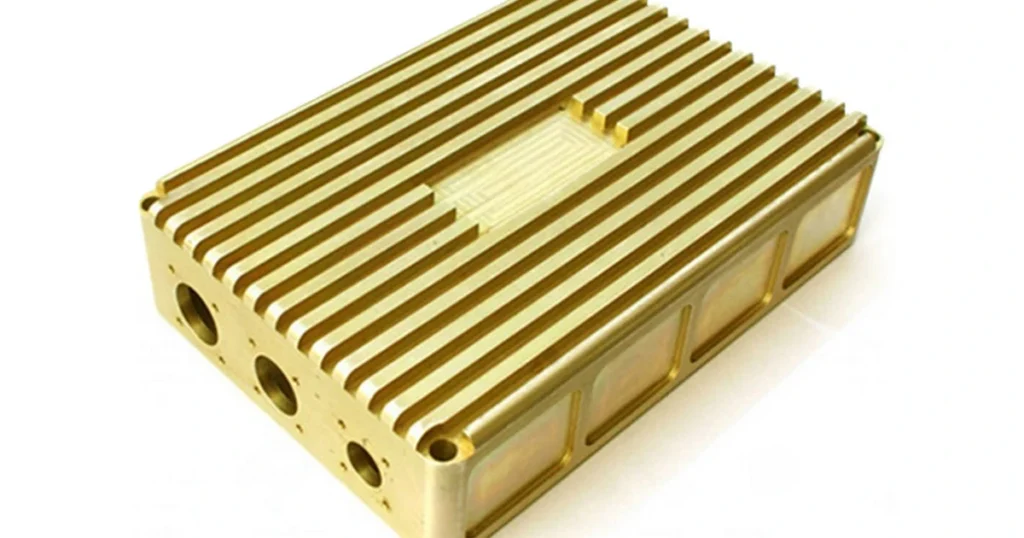
Discover comprehensive brass CNC machining services, grade options like C360, tolerances, and design tips. Optimize costs and request an instant quote from Lava3DP today!
Manufacturing precision metal parts requires a balance between material machinability, structural integrity, and production costs. Brass remains one of the most reliable copper alloys for subtractive manufacturing due to its low coefficient of friction, high thermal conductivity, and exceptional chip formation.
Brass CNC Machining Overview
| Popular Alloys | Typical Tolerances | Key Surface Finishes |
|
• C360 Free-Cutting • C260 Cartridge • C464 Naval Brass |
• Standard: ±0.005″ • Tight: ±0.0002″ • Swiss CNC: ±0.0001″ |
• As-Machined (Ra 32) • Bead Blasting • Electroplating |
What Is Brass CNC Machining?
Brass CNC machining is a subtractive manufacturing process where computer-controlled cutting tools remove stock material from a solid brass workpiece to produce a specified geometry. The process leverages pre-programmed digital CAD and CAM models to govern speed, feed rates, and tool paths.
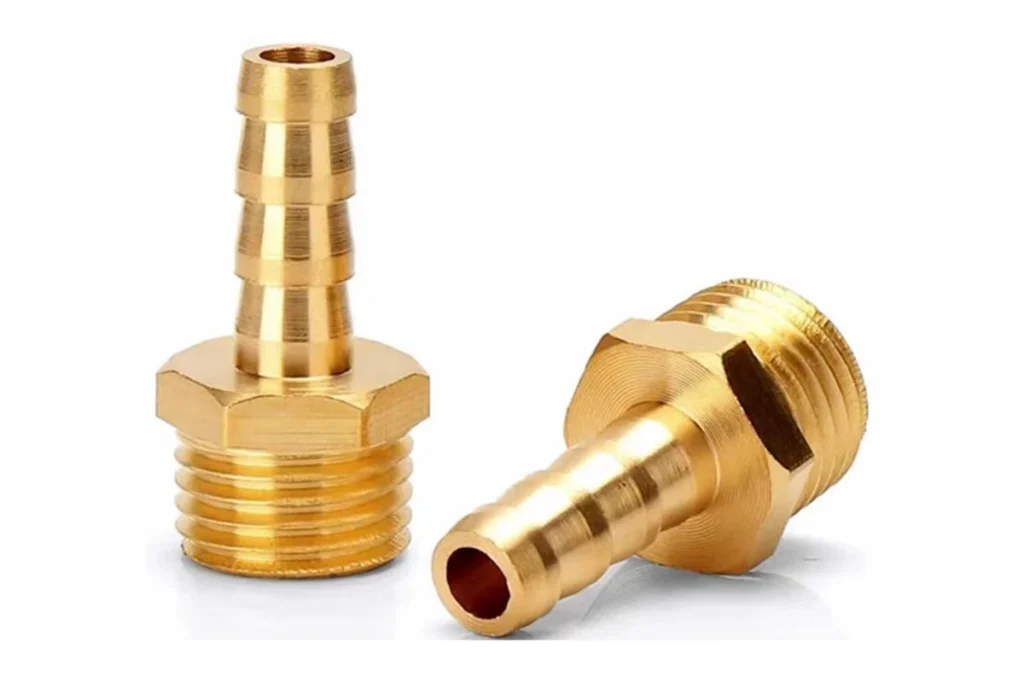
How CNC Machining Brass Works
The process begins by converting 3D models into G-code, which dictates the movement of CNC machinery. Workpieces are clamped inside 3-axis, 5-axis, or lathe turning centers. Rotating tools cut away material using end mills, drills, or inserts while liquid coolant manages friction and flushes away brass chips. High spindle speeds ensure sharp tool edges cut cleanly without tearing the metal substrate.
Why Brass Is Suitable for Precision CNC Machining
Brass offers unmatched machinability compared to carbon steels or titanium. Its microstructural composition allows cutting tools to shear chips cleanly with minimal tool wear, reducing heat buildup and eliminating burr formation. Its mechanical stability ensures tight dimensions under variable thermal conditions.
Brass CNC Machining Services
Primary Brass Machining Processes
| Machining Process | Best Used For |
| CNC Milling | Prismatic shapes, slots, complex pockets |
| CNC Turning | Cylindrical parts, shafts, threaded fittings |
| Swiss Machining | High-volume, tiny, high-precision components |
| 5-Axis Machining | Complex geometries requiring single setups |
CNC Milling for Brass Parts
Custom brass machining using CNC milling brass processes creates complex prismatic shapes, slots, and complex surface contours. Face mills and end mills operate at high RPMs to clear pockets rapidly while preserving wall stability.
CNC Turning for Brass Components
For cylindrical geometries, custom brass CNC parts rely on CNC turning brass setups. Live tooling configurations execute cross-drilling and off-center slots without removing the component from the lathe chuck, reducing total setup errors.
Precision and 5-Axis Brass CNC Machining
Complex aerospace and medical components demand 5 axis brass CNC machining to reduce multiple fixture setups. Continuous 5-axis motion maintains tool contact at optimal angles, achieving tight geometric tolerances across contoured surfaces.
Brass Drilling, Tapping, Threading & Reaming
Machining brass fittings requires deep-hole drilling and precision threading. Brass threading CNC machining allows sharp, burr-free threads, while reaming achieves hole diameter accuracy within sub-thous tolerances.
Brass Materials and Grades for CNC Machining
Selecting the right brass alloy for CNC machining dictates tool longevity, component strength, and total unit cost.
Mechanical Properties by Brass Grade
| Property | C360 Free-Cutting | C260 Cartridge | C464 Naval |
| Machinability Rating | 100% (Baseline) | 30% | 30% |
| Yield Strength | ~45 ksi | ~32 ksi | ~46 ksi |
| Corrosion Resistance | Moderate | High | Exceptional |
| Lead Content | 2.5% – 3.7% | Max 0.07% | Max 0.20% |
Related: CNC Plastic Machining: Materials, Tolerances, Cost, Design & Applications (2026)
C360 Free-Cutting Brass
C360 brass CNC machining serves as the industrial gold standard for machinability. Containing roughly 3% lead, it acts as an internal lubricant during cutting, forming short chips that prevent tool clogs.
C260 Cartridge Brass
C260 brass CNC machining focuses on applications requiring cold workability and ductile strength. With lower lead content, C260 handles bending and flaring well, though its reduced machinability rating increases cycle times compared to C360.
C464 Naval Brass
C464 naval brass machining yields marine-grade parts resistant to seawater corrosion. The addition of tin prevents zinc leaching (dezincification) in saltwater environments, making it ideal for underwater hardware.
How to Choose the Right Brass Grade
Selecting the best brass grade for CNC machining requires matching environmental demands with cost limits. Consider lead-free brass machining alloys for food-contact applications, C360 for high-volume turning, and C464 for marine environments.
Brass CNC Machining Tolerances & Surface Finish
Brass Tolerances & Finish Guide
| Feature Type | Standard Tolerance | Precision Tolerance |
| Linear Dimensions | ±0.005″ (0.127 mm) | ±0.0005″ (0.0127 mm) |
| Hole Diameters | ±0.002″ (0.050 mm) | ±0.0002″ (0.005 mm) |
| Surface Roughness (Ra) | 63 µin (1.6 µm) | 16 µin (0.4 µm) |
Standard CNC Machining Tolerances for Brass
Standard brass CNC machining tolerances sit comfortably at ±0.005 inches (0.127 mm). These tolerances allow fast cutting speeds without requiring specialized thermal control or secondary finishing steps.
Tight-Tolerance Brass Machining
High-precision brass machining achieves tight tolerances down to ±0.0002 inches (0.005 mm) through precision brass CNC machining techniques. Swiss machines maintain these parameters for small brass CNC parts by supporting stock material right at the cutting tool zone.
Brass Surface Finishes and Deburring
An as-machined finish usually delivers a smooth Ra 32–64 µin surface profile. Secondary options like bead blasting, electropolishing, or nickel plating enhance corrosion resistance and appearance while deburring removes delicate micro-burrs from internal holes.
Related: CNC Milling vs CNC Turning: Differences, Cost, Tolerances, Applications & Which Is Better? (2026)
Brass CNC Machining Design Guidelines
Design for Manufacturing (DFM) Guidelines
- Wall Thickness: Maintain wall thickness greater than 0.030″ (0.8 mm) to avoid material deflection under cutting pressure.
- Internal Radii: Set the internal corner radius to greater than 1/3 of the total pocket depth to accommodate standard cutting tools.
- Threaded Holes: Limit thread depth to 2 to 3 times the nominal hole diameter to reduce tool stress and breakage risks.
Wall Thickness, Holes & Internal Features
Maintain wall thicknesses above 0.030 inches (0.8 mm) to prevent wall flexing during high-speed passes. Deep holes should not exceed four times their diameter to prevent drill bit deflection.
Threads, Radii & Sharp Corners
Avoid sharp internal 90-degree corners. End mills are round and leave internal radii. Specify an internal corner radius slightly larger than the cutting tool radius to allow the cutter to move smoothly without stopping at sharp corners.
DFM Considerations for Lower-Cost Brass Parts
Designing custom brass components with uniform features, shallow pockets, and standardized thread sizes cuts tool changes and shortens overall run times, directly lowering production costs.
Applications of CNC Machined Brass Parts
Automotive & Transportation Components
Automotive systems use CNC machined brass parts inside sensor housings, fuel line fittings, and bushings due to the metal’s low friction coefficient and high thermal stability.
Electrical & Electronic Components
Brass provides high electrical conductivity at a lower cost than pure copper. Common parts include terminals, connectors, circuit board standoffs, and switch housings.
Plumbing, Valves & Fittings
Corrosion resistance makes brass ideal for water system components. Common uses include custom brass machined parts such as valve spools, pipe couplings, hose connectors, and manifold blocks.
Industrial Equipment, Robotics & Machinery
Robotic arms and heavy machinery rely on brass precision machining for wear strips, gears, alignment pins, and hydraulic fittings that need high wear resistance under continuous friction.
Related: Casting vs CNC Machining: Cost, Tolerance, Materials, Lead Time & Which Is Better? (2026)
Advantages of Brass CNC Machining
-
✓
Fast Cutting Speeds: Brass tolerates higher feed rates and RPMs than steel, reducing machining times by up to 50%.
-
✓
Low Friction Coefficient: Natural self-lubricating qualities protect sliding components like bearings and sleeves from premature wear.
-
✓
Corrosion Resistance: Resists rust, oxidation, and water damage without requiring costly protective coatings.
-
✓
High Thermal & Electrical Conductivity: Conducts heat and electricity efficiently, making it ideal for electrical terminals and heat exchangers.
-
✓
Excellent Surface Polish: Produces clean, bright finishes straight off the machine without extensive secondary polishing.
How Much Does Brass CNC Machining Cost?
Factors That Affect Brass Machining Cost
The overall brass CNC machining cost depends on material selection, machine setup times, overall part volume, and geometry complexity.
Cost Breakdown Factors
| Cost Driver | Impact Level | Mitigation Strategy |
| Material Stock Cost | High | Choose C360 over exotic alloys |
| Machine Run Time | High | Avoid deep pockets and narrow radii |
| Tolerances | Medium | Apply tight limits only to critical features |
| Batch Size | High | Transition from low-volume to bulk runs |
Material, Complexity, Tolerance & Quantity
Brass raw stock costs more than raw aluminum, but faster machining speeds offset that cost gap on large runs. Tight tolerances increase unit cost because they require slower feed rates, frequent tool checks, and extra quality inspections.
How to Reduce Brass CNC Machining Costs
Lower the brass machining cost per part by standardizing thread sizes, rounding internal corners, and consolidating setups. Scaling from low volume brass CNC machining to high volume brass machining drives down unit cost by spreading setup fees across more parts.
Brass CNC Machining vs Other Metals
Quality Control for Precision Brass CNC Parts
Maintaining high quality across precision brass CNC machining projects requires strict inspection steps throughout production.
Dimensional Inspection & Tolerance Verification
Technicians use Coordinate Measuring Machines (CMM), optical comparators, and air gauges to confirm part dimensions meet print tolerances before shipping.
Material Certification & Quality Inspection
Every raw brass batch requires material test reports (MTRs) to confirm chemical composition and physical properties match standards like ASTM B16 for C360.
Surface and Thread Inspection
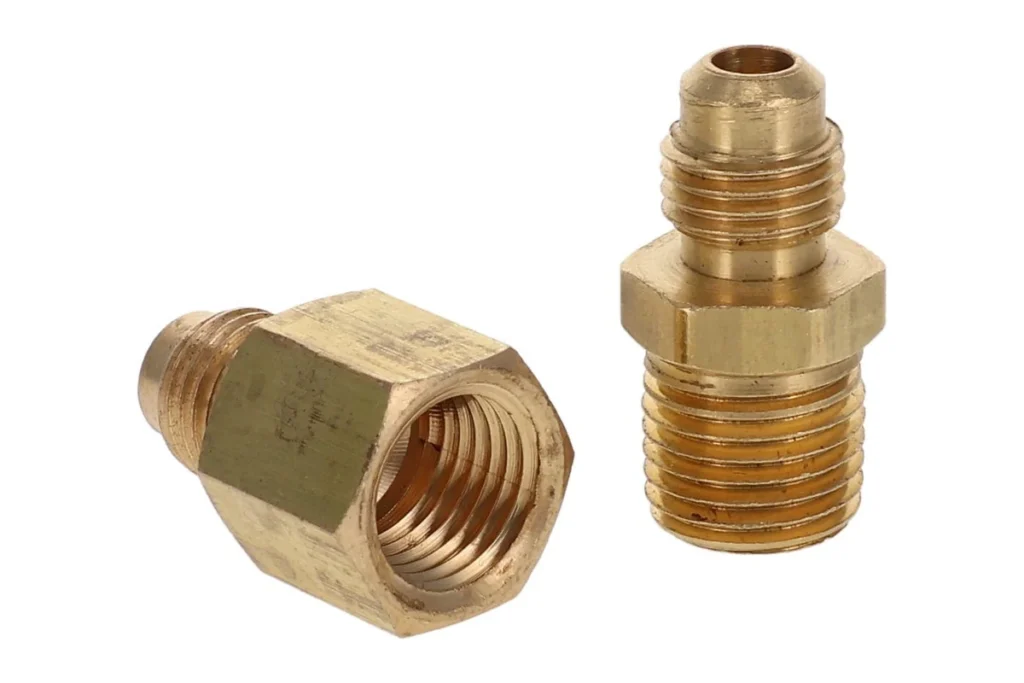
Surface roughness gauges measure Ra values, while thread plug and ring gauges confirm threads meet target class fits without burrs or cross-threading.
How to Order Custom Brass CNC Machined Parts from Lava3DP
Lava3DP simplifies ordering custom brass components through a streamlined online portal:
-
1
Upload Your CAD File for an Instant Quote: Submit your STEP or IGES files to our online brass CNC machining portal to generate pricing and review DFM feedback.
-
2
Select Material, Tolerances & Surface Finish: Choose your preferred brass grade (C360, C260, or C464), set tolerance requirements, and pick your surface finish.
-
3
DFM Review, CNC Production & Quality Inspection: Our engineering team reviews tool access and geometric constraints before starting production on high-speed CNC centers.
-
4
Prototype to Production Manufacturing: Transition smoothly from brass prototype machining to full-scale production runs backed by certified quality inspections.
Why Choose Lava3DP for Brass CNC Machining Services?
Lava3DP operates as a trusted brass machining company, delivering precision brass CNC parts for demanding industries worldwide.
-
Precision CNC Milling and Turning: Advanced 3-axis, 5-axis, and Swiss CNC machines handle tiny micro-fittings up to large prismatic blocks.
-
Prototyping and Low-Volume Production: Flexible shop capacity handles quick turnarounds for single prototypes up to production runs of thousands.
-
Engineering & DFM Support: Experienced engineers help refine designs to lower costs while keeping performance high.
-
Global Manufacturing and Shipping: Strict quality standards paired with fast global logistics ensure accurate parts arrive on schedule.
Ready to Manufacturing with LAVA3dp?
Upload your CAD file today and receive instant pricing, expert engineering support, fast production, and worldwide delivery.
Get an Instant Quote →Frequently Asked Questions About Brass CNC Machining
1 Is brass good for CNC machining?
Yes, brass is an ideal metal for CNC machining. Its chip-breaking characteristics, low tool wear, and strong thermal stability allow for exceptionally high cutting speeds and tight precision.
2 What is the best brass grade for CNC machining?
C360 free-cutting brass is widely considered the best brass grade for CNC machining due to its 100% machinability rating and small chip formation.
3 What tolerances can be achieved with brass CNC machining?
Standard machining achieves tolerances of ±0.005 inches (0.127 mm), while high-precision Swiss CNC turning centers can hold tolerances down to ±0.0002 inches (0.005 mm).
4 How much does brass CNC machining cost?
Costs vary based on part size, design complexity, tolerance requirements, and batch quantity. While raw brass costs more than aluminum, its fast cutting speeds lower actual machine time and total labor costs.
5 Can brass be CNC milled and turned?
Yes, brass supports both milling and turning. Multi-axis lathes with live tooling can execute milling, turning, drilling, and threading in a single setup.
6 What are CNC machined brass parts used for?
CNC machined brass parts serve critical roles across the automotive, plumbing, electronics, medical, and aerospace industries, showing up in everything from electrical connectors to fluid valves and custom bearings.